We arrived on Kangaroo Island on 11/7/25, driving about 90 minutes south from Adelaide to Cape Jervis, where we caught the 45-minute ferry to Penneshaw. From there, we drove about an hour to the quiet hamlet of Vivonne Bay, where we would be staying for the next couple of nights.
After settling in, we went for a short drive. The house manual for our AirBNB had suggestions for where to go to see some kangaroos. While we’ve seen a few kangaroos so far in our time in Australia, those sightings have been at some distance, and I was looking for closer encounters. We sort of got one almost immediately. On our way to the car, we spooked a wallaby (which is kind of like a small kangaroo) in our front yard. And we almost had an encounter that was too close. On our drive a kangaroo darted in front of our car forcing us to skid to a stop.
The next morning we relaxed in our house, looking out onto forests filled with chartreuse spring growth and energetic birds.
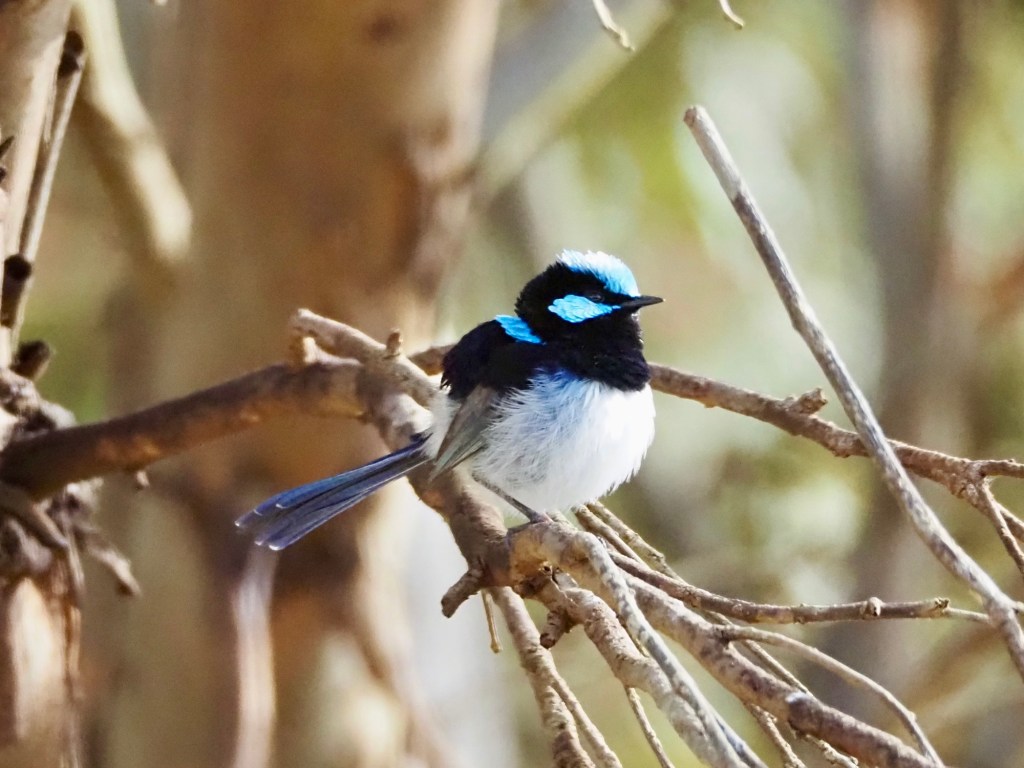
This little narcissist is a Superb Fairy Wren. Over the course of the day, we also saw quite a few cockatoos (the common white kind as well as some Glossy Black Cockatoos) and brightly colored Crimson Rosellas as well. We’re not really “birders,” but it’s hard not to get at least a little excited about the birds we’ve seen in our travels in Australia and New Zealand.
Shortly after lunch we decided to head out for a hike in the nearby Flinders Chase National Park, a huge wilderness area in the south-west part of the island. On our way to the park, we spotted a goanna (big lizard), and we stopped to usher him off the road for his own safety. We also spotted a couple of echidnas on the side of the road, and had to pull over to take a closer look.
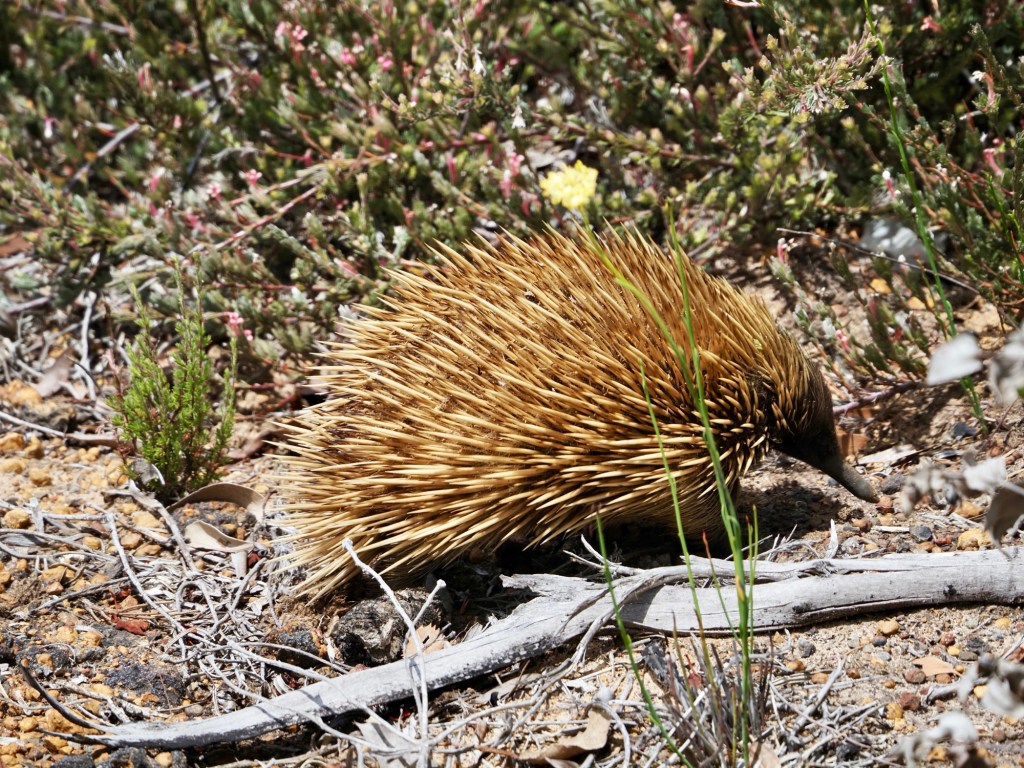
Echidnas are one of only two mammals that lay eggs (monotremes for you bio nerds). They have short quills for defense, and they lumber along somewhat slowly. We enjoyed watching the two we saw forage for bugs in the dirt.
We soon parked the car and headed off for our hike. After just a few minutes, we encountered quite a few Cape Barren Geese. These colorful birds are only found in the southern parts of Australia.
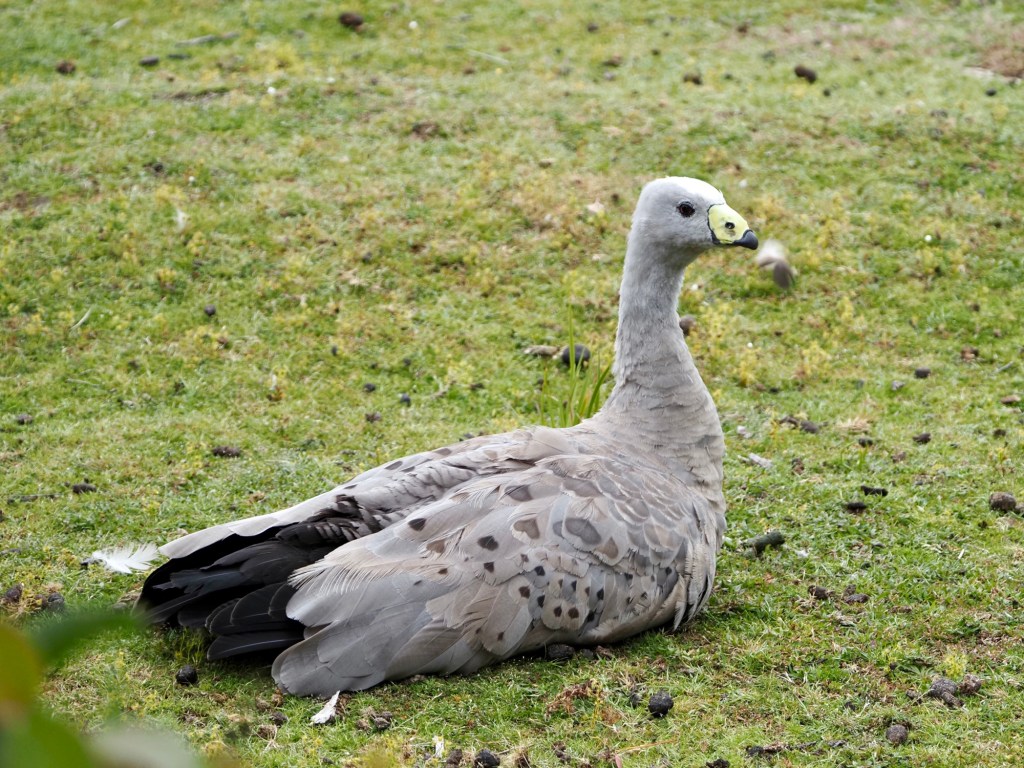
These little romantics mate for life and have hearts on some of their feathers. It almost makes me overlook the fact that there was so much goose poop.
The trail snaked through a sandy landscape with unusual plants, like spiny yakka plants. These grow very slowly, only about a centimeter per year. This one was probably more than 200 years old and might have been here when Europeans first landed on the island in the early 1800s.
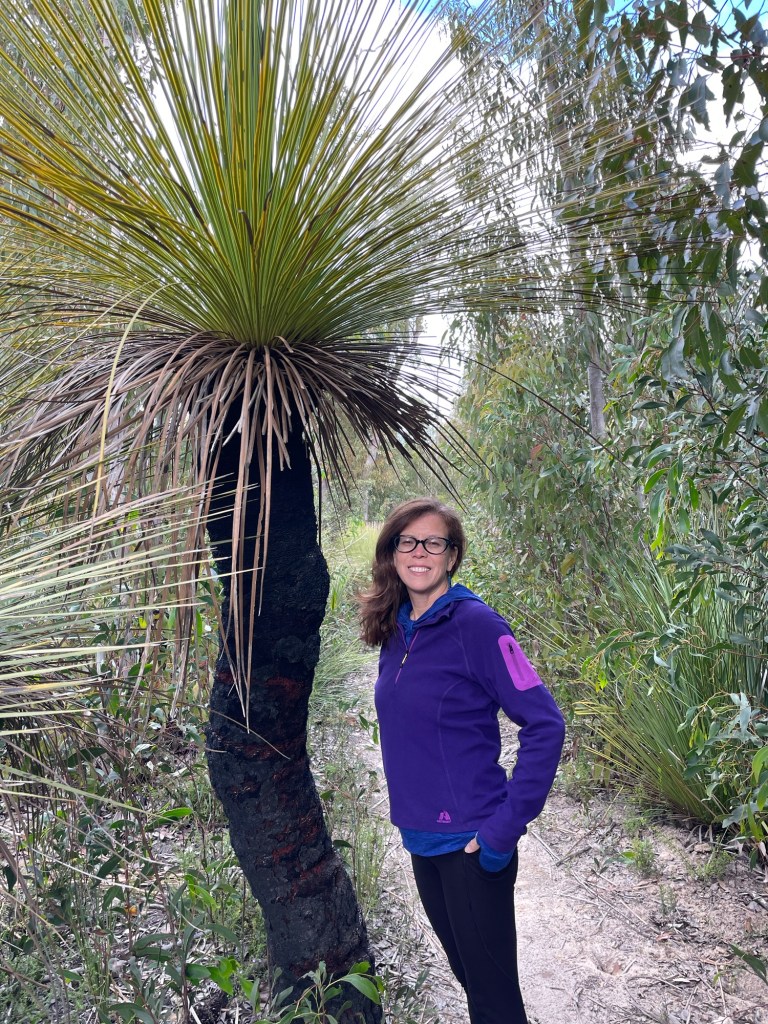
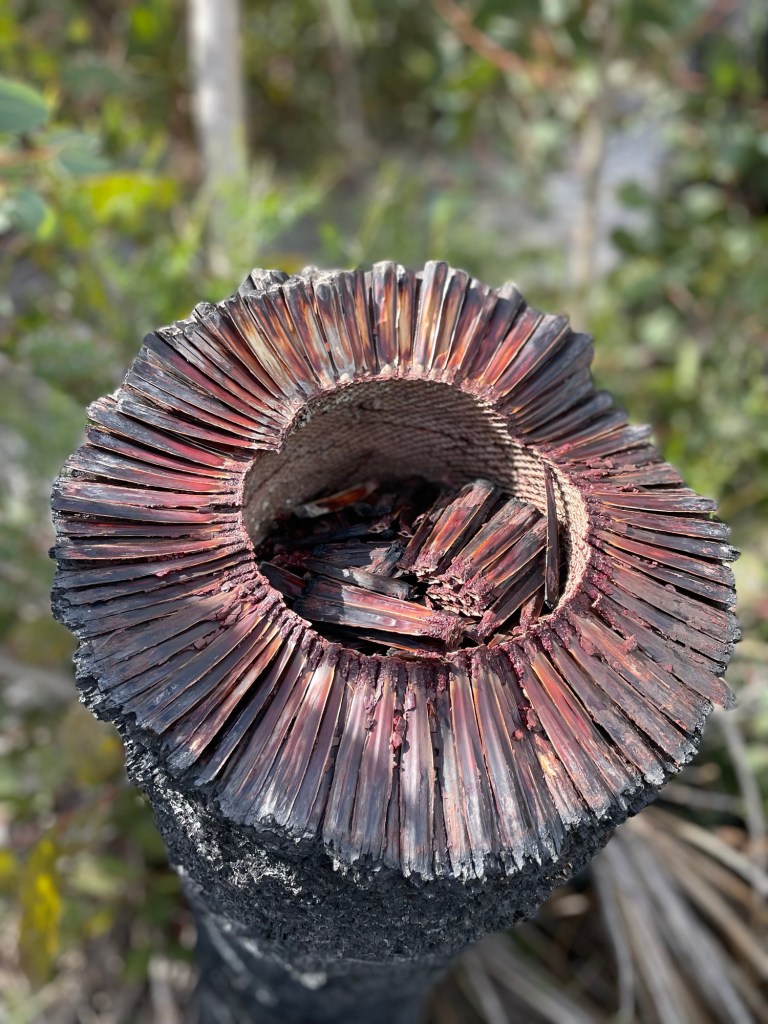
Unfortunately, there have been some bad brush fires in recent years on Kangaroo Island. We saw quite a few blackened trunks and lots of dead trees. We were impressed that the plants could survive at all. Indeed, many of these plants have evolved not only to endure the fires but to use the fires to renew their growth. The fires are simply a part of this environment. Inside of the burned yakka trunks, we could see a complex structure that helped to keep the hot temperatures from the water-bearing core.
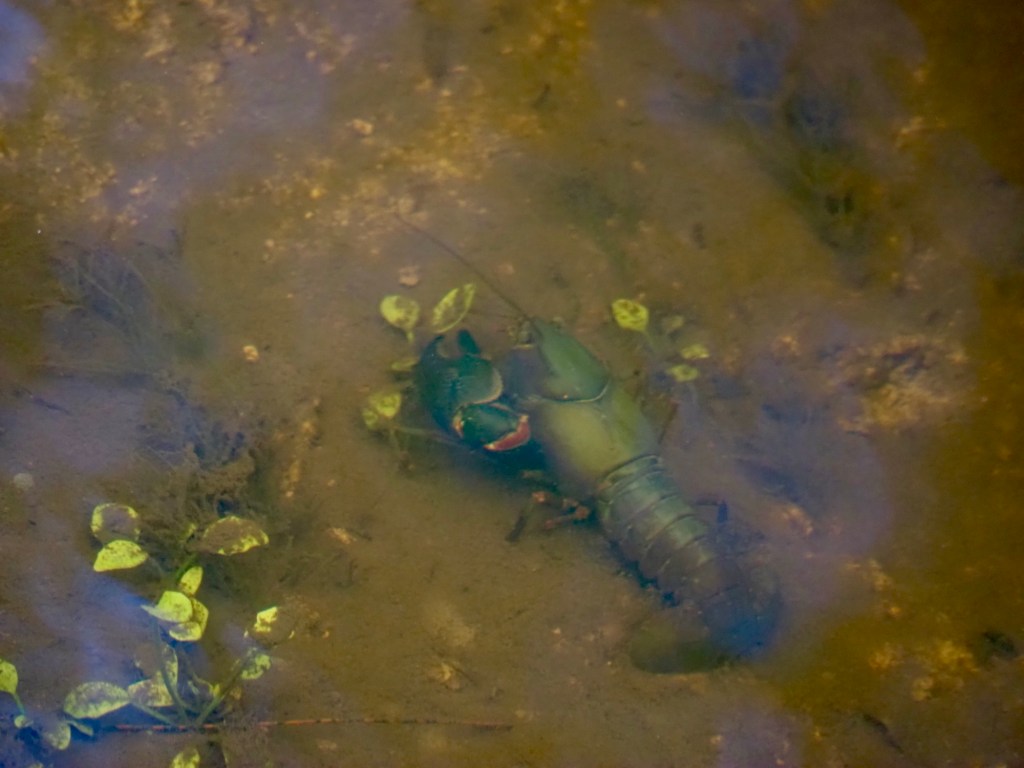
Our first big stop on the trail was a series of pools with a healthy platypus population. Allegedly. At each of the pools, we waited quietly to see if one surfaced, but all we managed to find was a big crayfish.
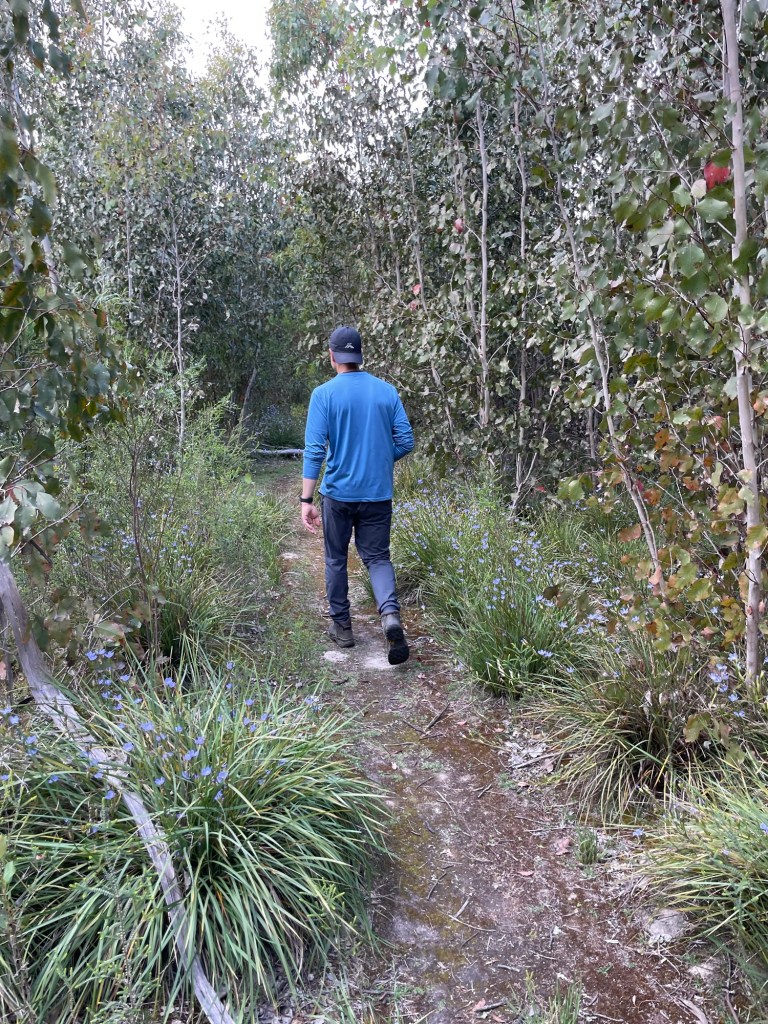
Though we didn’t see any platypuses, the hike was still beautiful. It’s springtime in Australia, and wildflowers lined the trail.
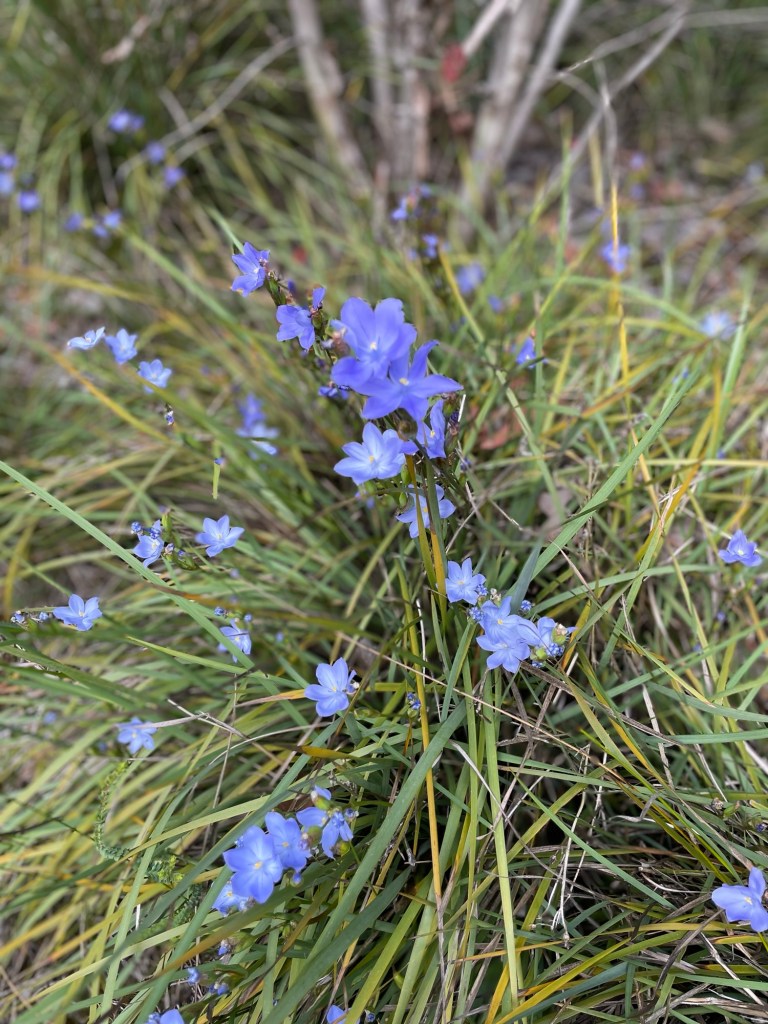
Here’s a closeup of these little blue flowers.
As the sun started sinking a bit lower, we started spotting wallabies in the thick brush alongside the trail.
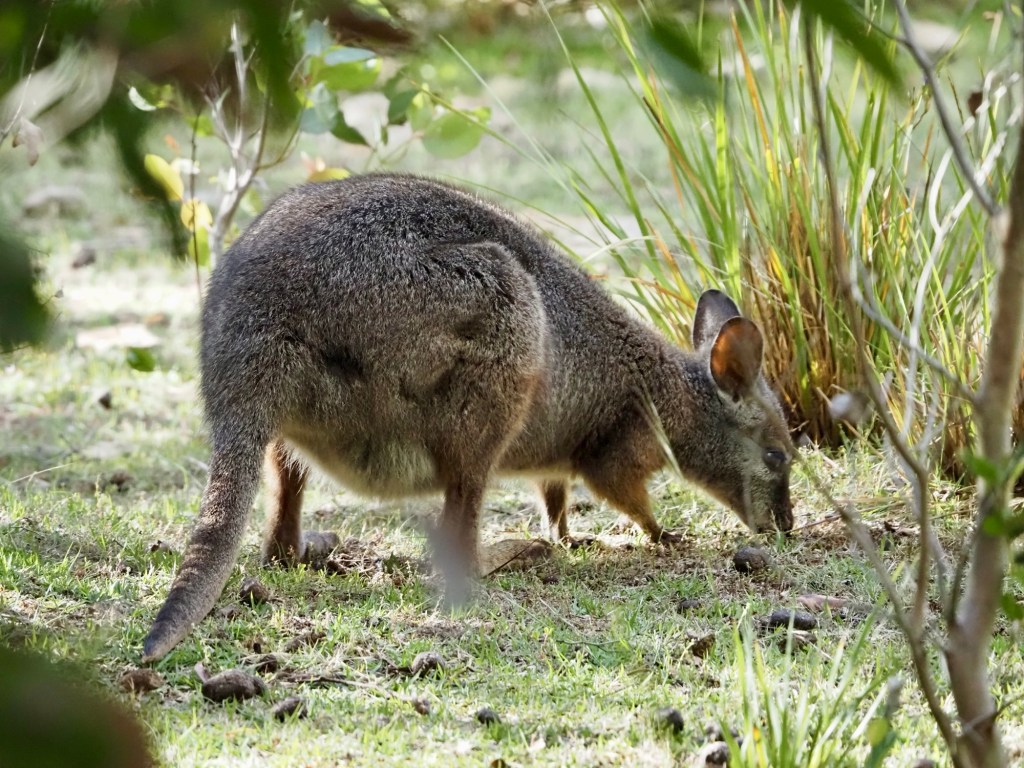
They were skittish, diving into the bushes if we got too close. Fortunately, we found more as we walked—more than half a dozen over the course of our hike.
As we started getting closer to the end of our hike, we decided to take a short spur trail. A park ranger we’d spoken to earlier in the day mentioned that koalas had been seen in the area, so we kept our eyes in the trees as we walked. They sleep 20 hours a day and blend in with the trees, making them surprisingly hard to spot.
Fortunately, we soon rounded a bend in the trail and spotted one walking down the trail right towards us.
We were a little surprised he didn’t run when he spotted us, but he seemed completely unphased.
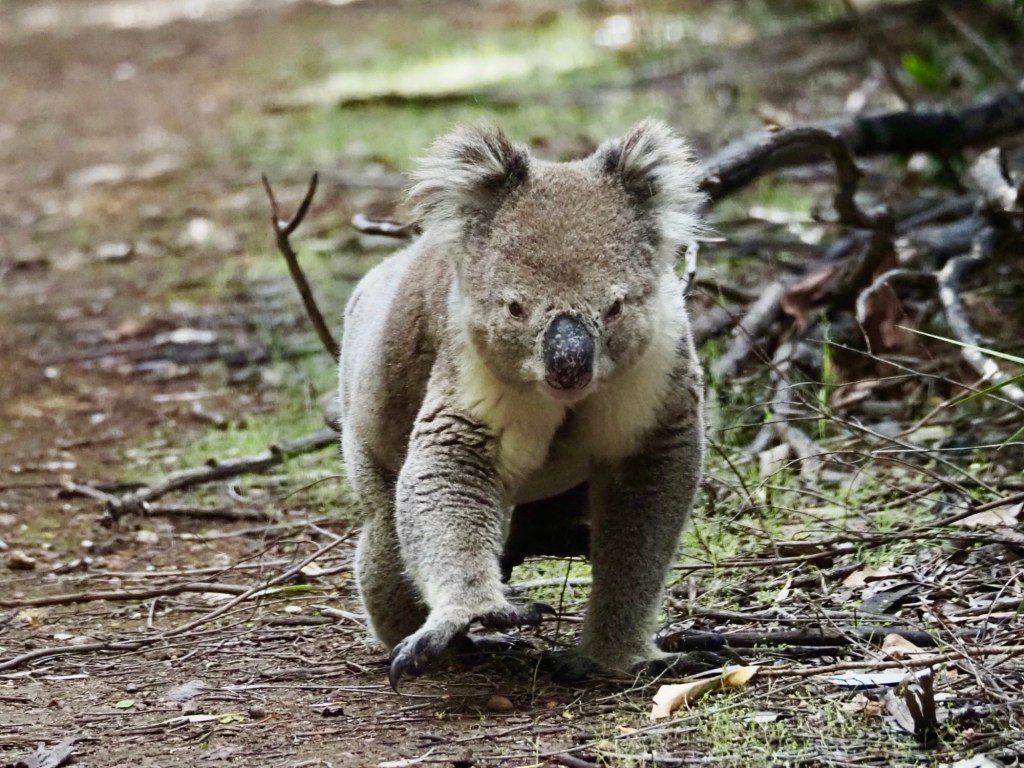
The short walk also seemed to exhaust him, as he would stop very 15 feet or so to rest for a couple of minutes.
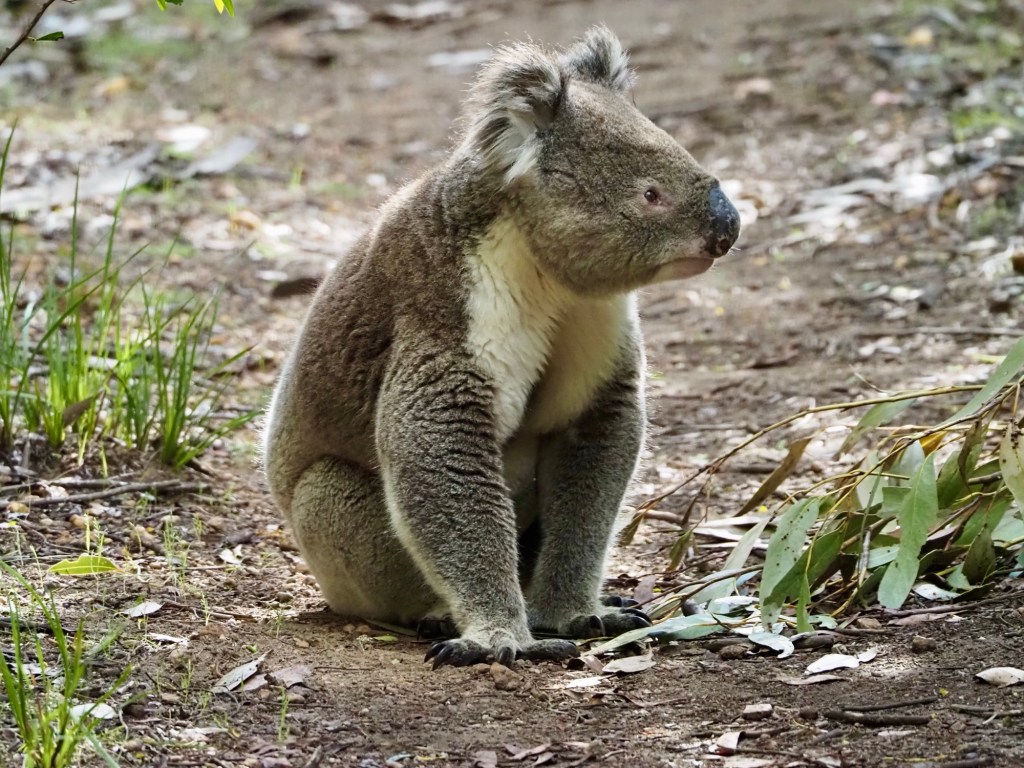
Eventually, he ambled off into the bushes. He briefly thought about climbing a tree, hugging it for a short while. But that also seemed like too much work, so he kept walking on foot.
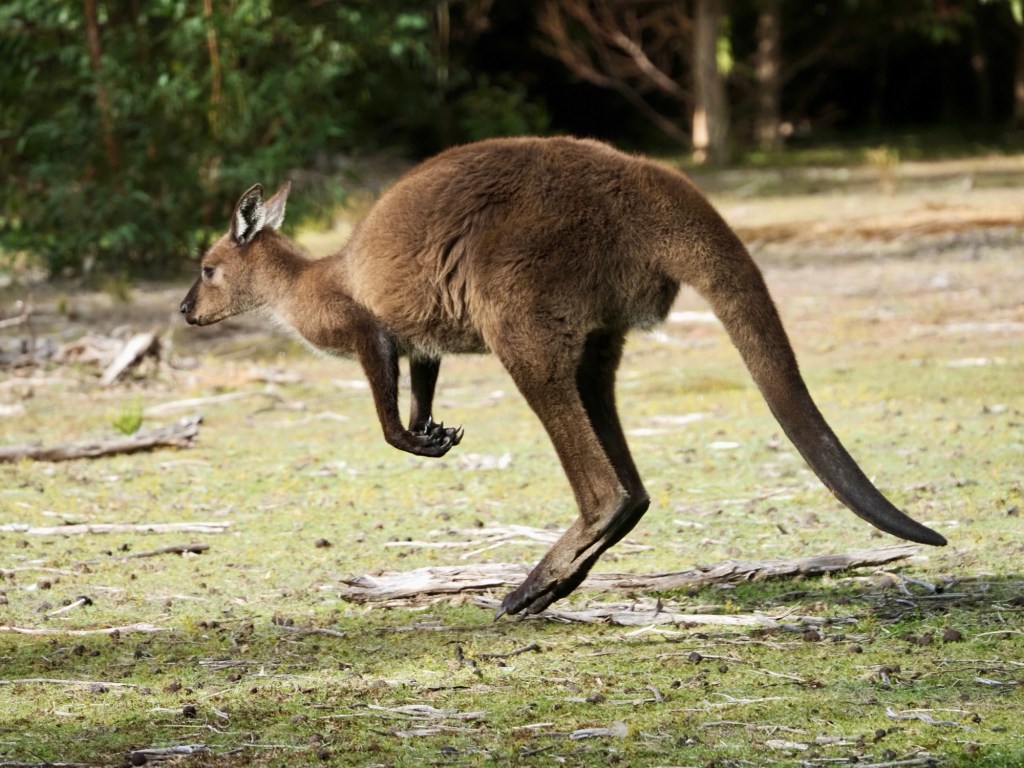
Our last exciting animal encounter for the day was with the kangaroos that give the island its name. We found a group of half a dozen lounging along the trail, eating grass and grooming.
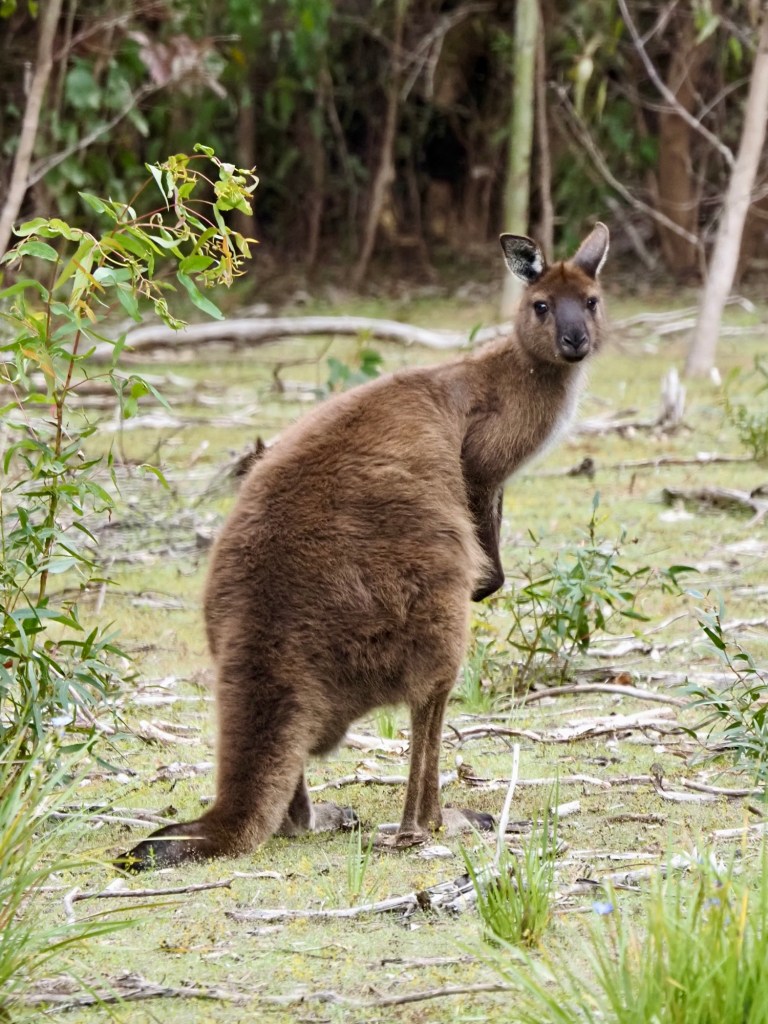
Unlike the wallabies, the kangaroos were very comfortable with us being close.
This is one of the cool things about Kangaroo Island. In other parts of Australia, getting close to kangaroos can be more difficult. The kangaroos quickly run off or become aggressive. On Kangaroo Island, you can see them up close on foot in the wild.
We finished our hike and headed back towards the house. We had some daylight left, so Julie and I took a short walk on the beach.
We’d come to Kangaroo Island hoping to see some of Australia’s iconic animals. This incredible place delivered!
-Will

