We had another good night’s sleep in our campervan. After coffee and breakfast, we headed out to King’s Canyon for a day of hiking.
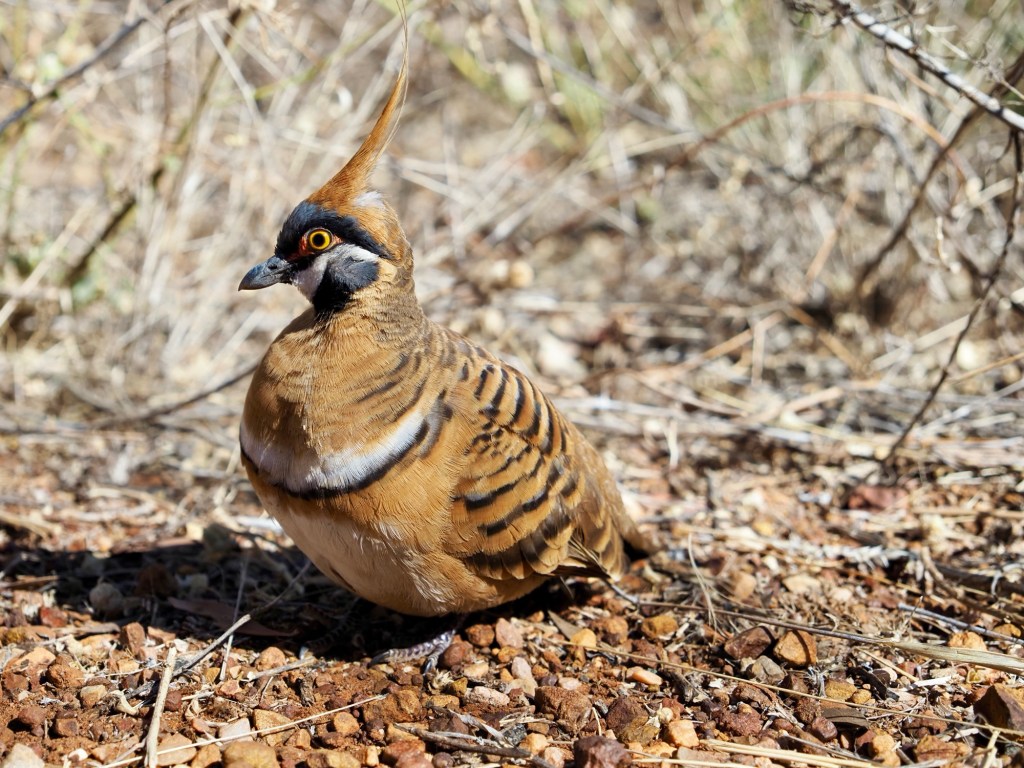
At the trailhead we were greeted by a spinifex pigeon, one of the more punk birds we’ve encountered in Australia.
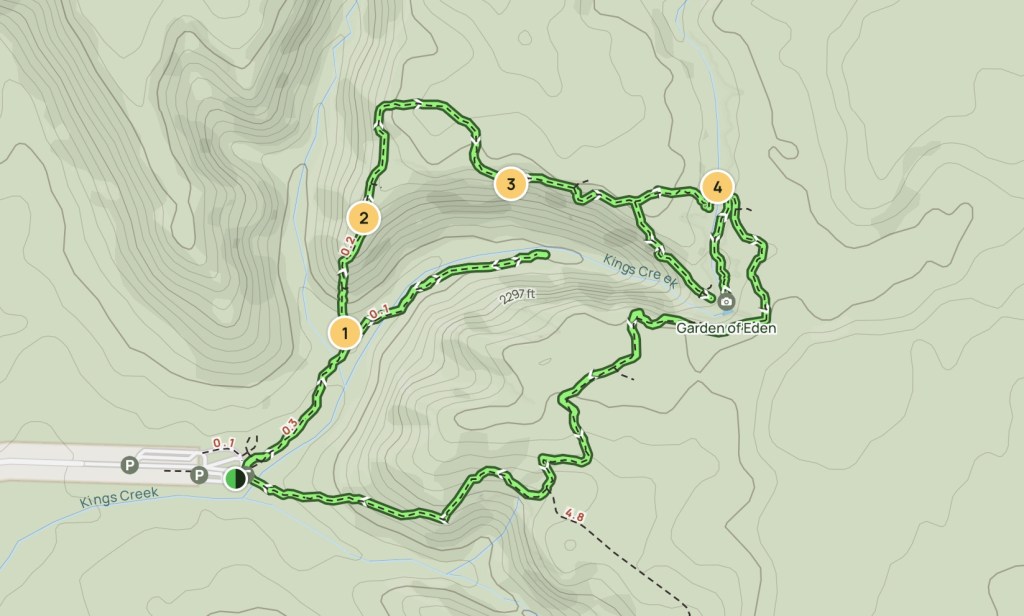
Our hike started with a flat section on the relatively lush canyon floor, where water collects from the hillsides.

The trail then started to climb steeply to the canyon rim.

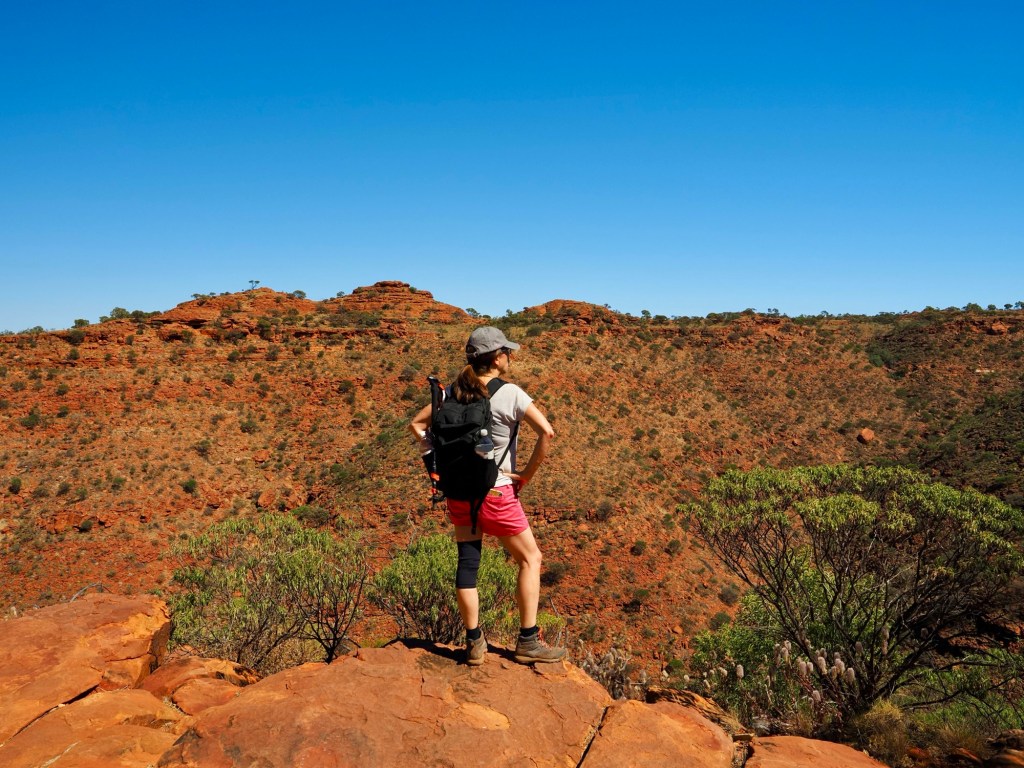
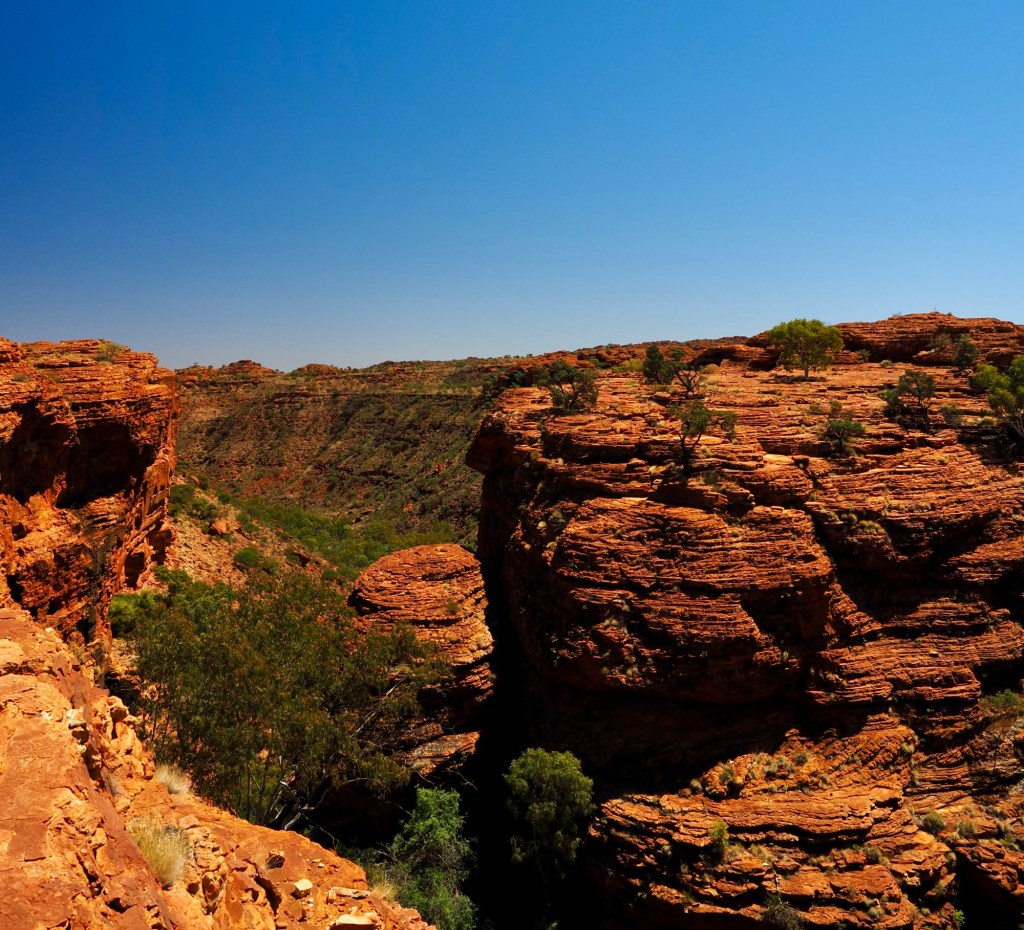
At the top, we enjoyed views looking out toward the red canyon walls stretching into the distance.
The trail then followed the upper rim of the canyon, snaking through surreal rock formations.
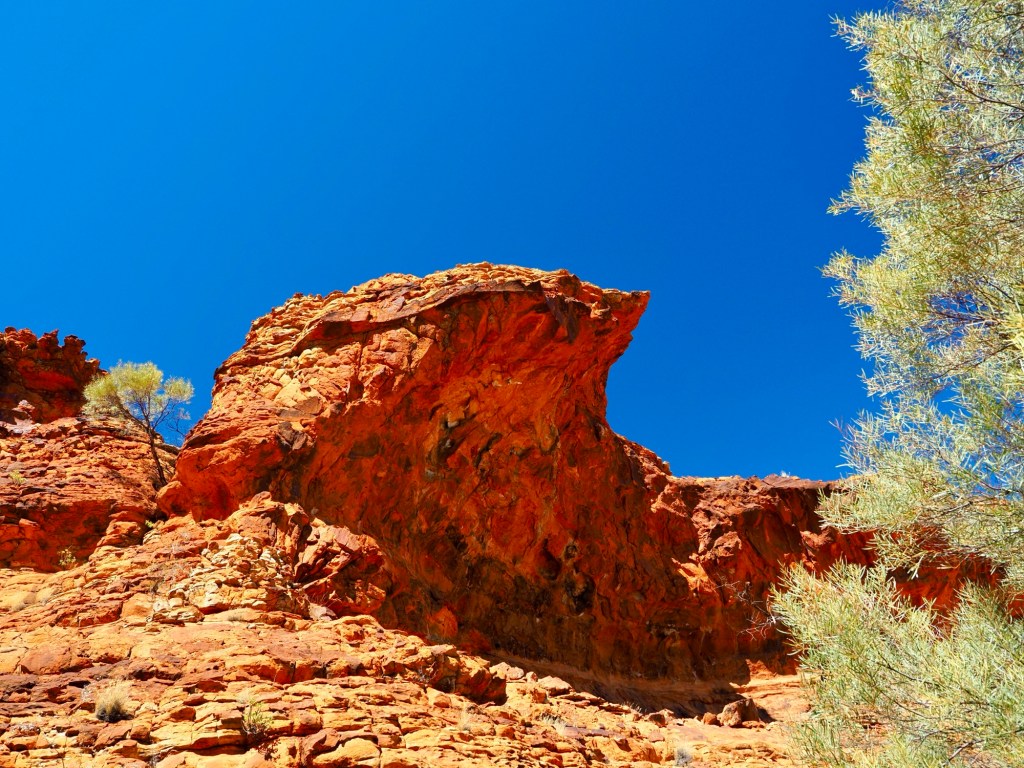
Parts of the trail were only loosely defined, requiring scrambles through and over rocks.
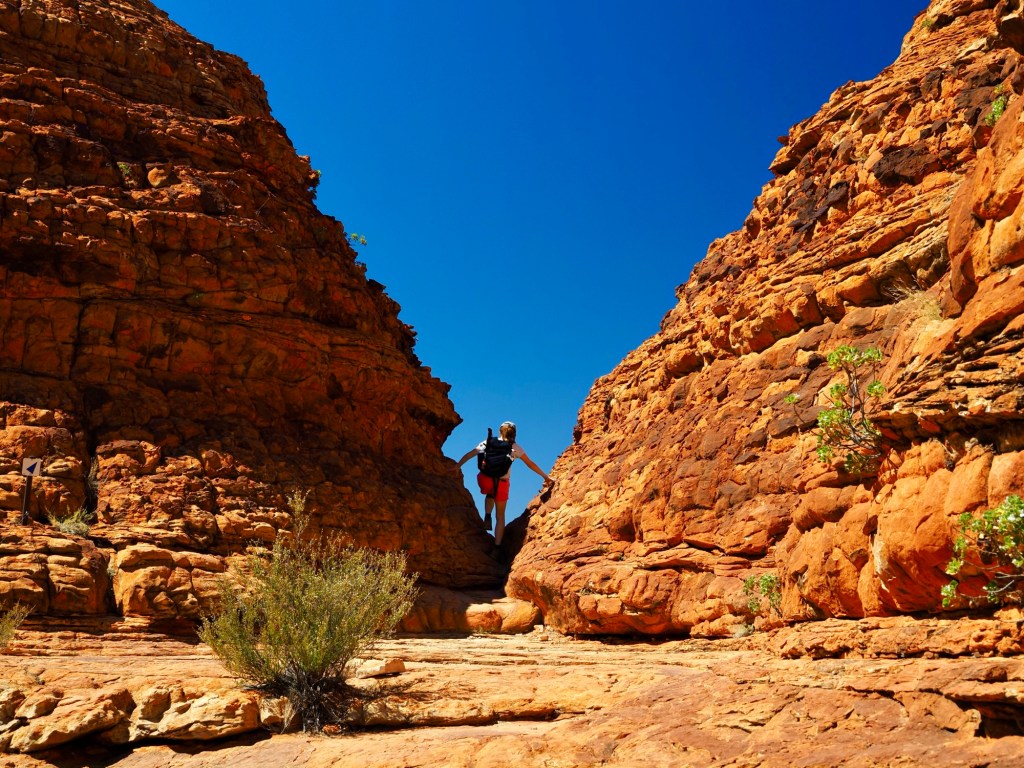
Like much of central Australia, the place felt ancient. And it is. The sandstone started as coastal sand dunes more than 400 million years ago. In the overlapping layers of sandstone, we could see the patterns left by winds that blew more than 100 million years before the dinosaurs.
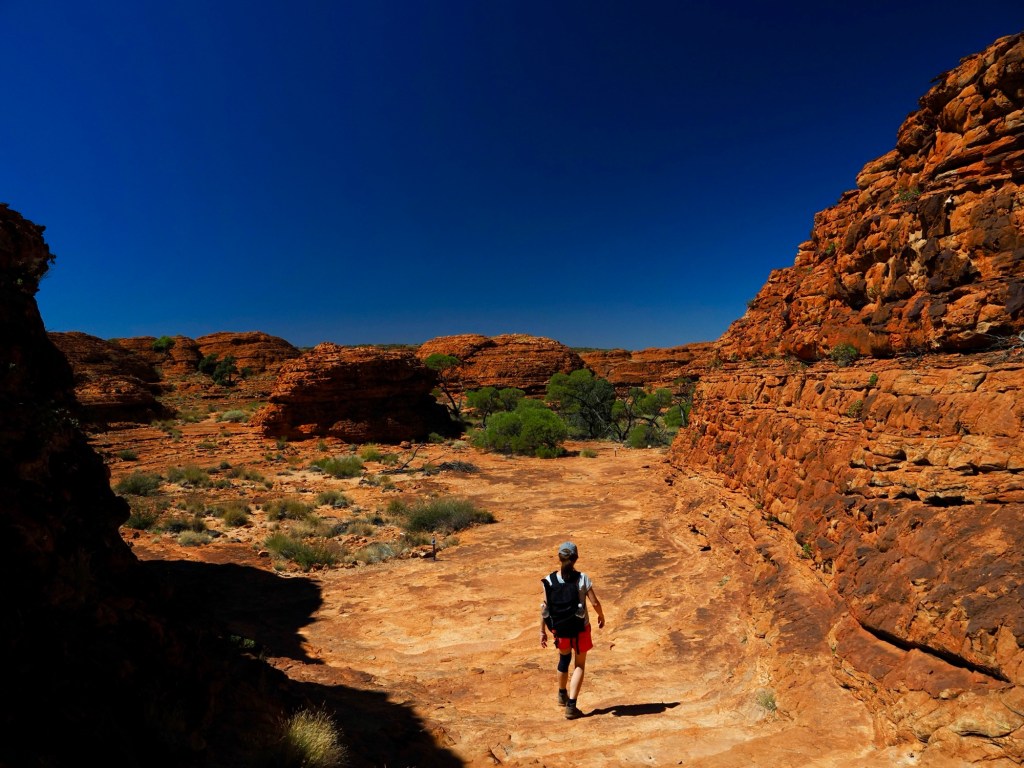
The stony highlands around the canyon are incredibly dry, lacking even soil to hold the moisture. Trees and bushes survive by sending their roots into the rock, where moisture collects after the infrequent rainstorms. We saw lizards skittering about, but sadly no snakes.

The trail then circled back to the canyon rim.
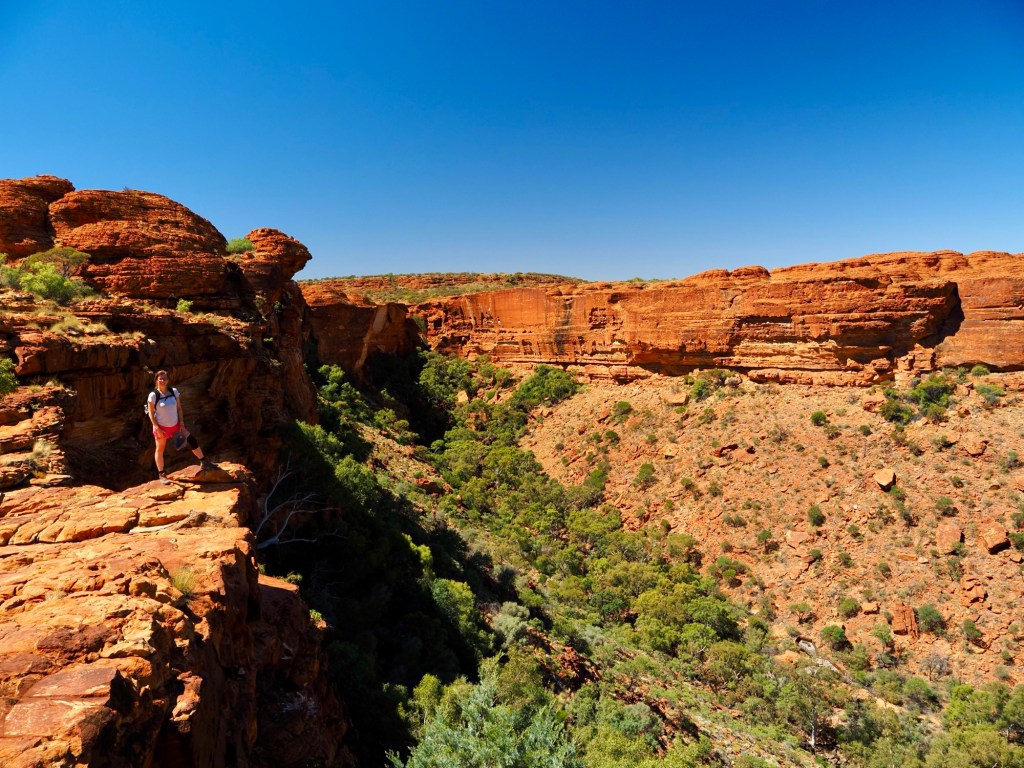
Distances are hard to judge in photos. To give some sense of scale, you can barely make out an observation platform at the edge of the green trees in the bottom right. There are also people near the edge of the flat cliffs in the top-center of the photo, but they are so far away you can’t see them. Yeah. So, big cliffs, and we didn’t fall off of them.
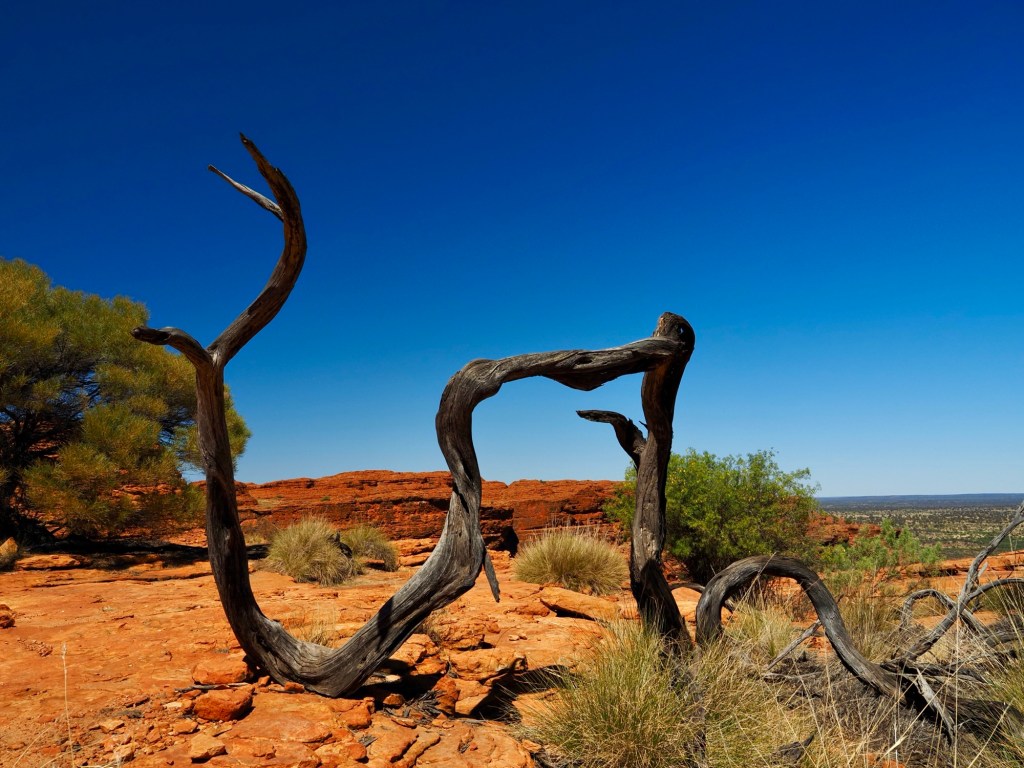
The area around the tops of the cliffs were fascinating — incredibly dry and yet there were trees clinging to the rocks. When the trees died, they dried in bizarre, twisted shapes.
As the trail continued, we saw more signs of the sandstone’s coastal origins, including the rippling patters of shallow water.

We took a short break for lunch under a small tree near the cliffs edge. More on that in a bit. As we ate, we watched birds ride the updrafts and spotted vibrantly colored dragon flies.
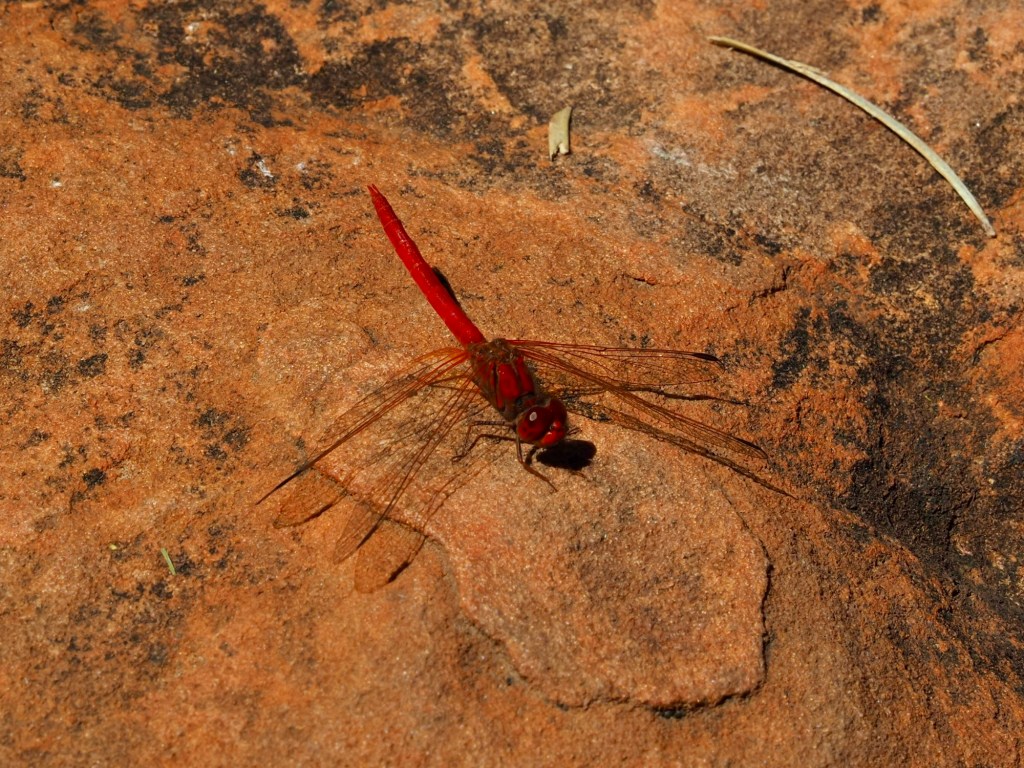
The dragonflies confused us initially, as we tend to associate them with wetter environments. It turned out we weren’t wrong. The trail soon descended to a lush oasis where rockfalls prevented water from draining from this section of the canyon.
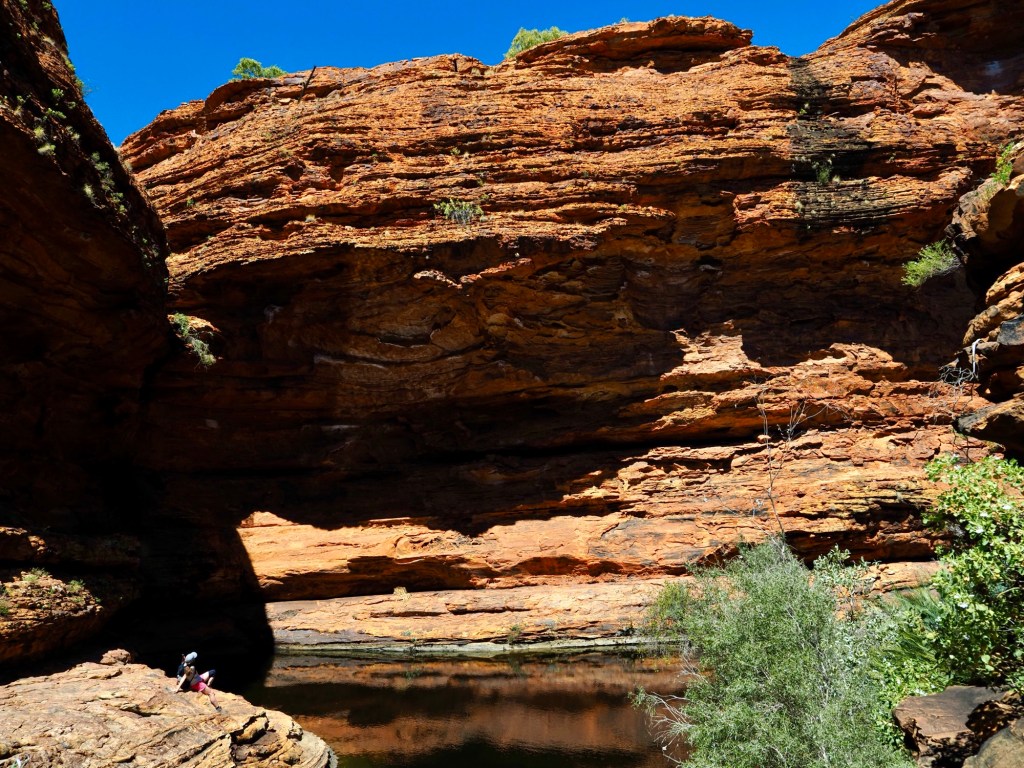
After we climbed back up, we passed our fourth spot for helicopter evacuations.

The heat here during the summer can be brutal, and there’s little shade. Apparently, people get heat stroke from time to time. Not to brag, but we didn’t need any medical evacuations. #winning
We were now on the far side of the canyon from where we’d started, and we could look back to our little shady spot where we had lunch (the tree on the right side of the photo near the top).
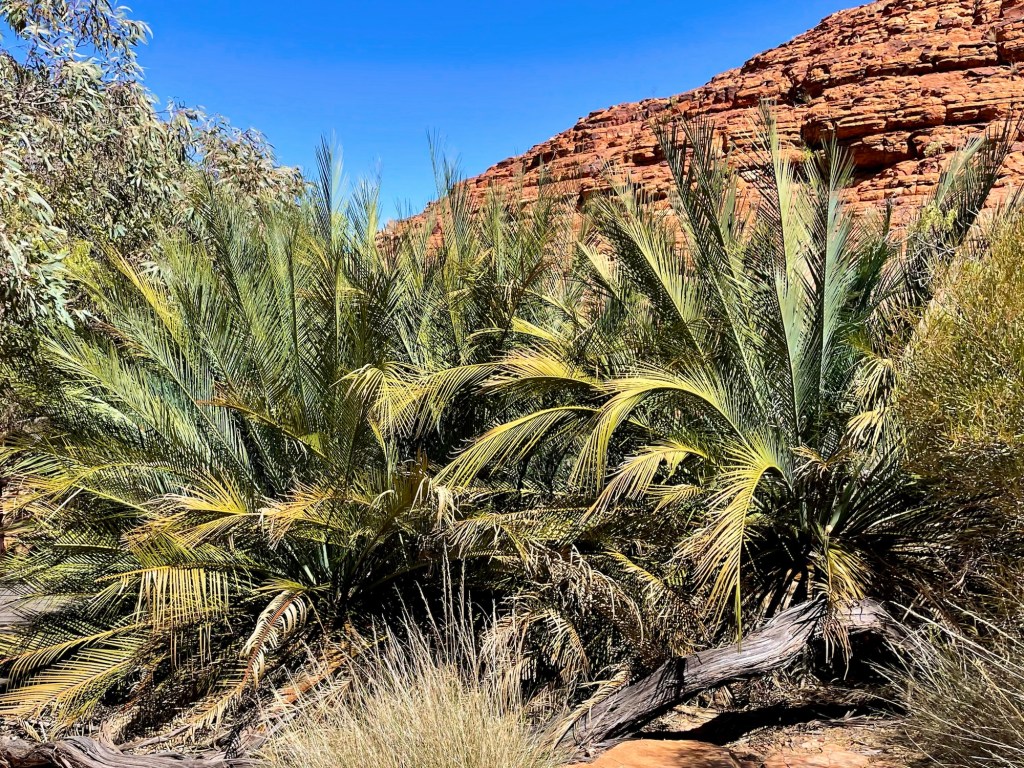
One of the cool things about King’s Canyon is that it has quite a few “relict species.” These ancient plants, like the cycad below, are more than 40 million years old. They date to a time when when Australia was far wetting than it is today. As the climate dried, the plants died out, but they survived in isolated pockets where there’s still more moisture. So, these plants hiding out in King’s Canyon rubbed elbows with dinosaurs.
We finished up our hike and headed back to our campsite for showers and dinner. We ended the day by driving a few minutes away from camp to watch the sunset and the stars come out.
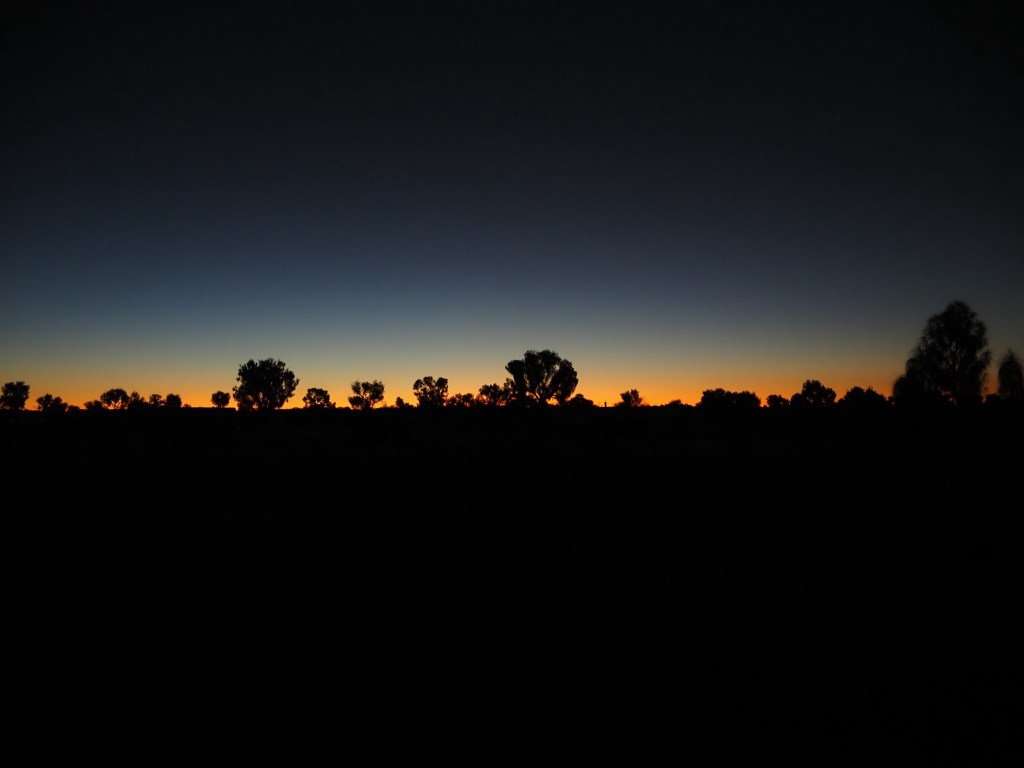
With no light nearby, the stars and the Milky Way didn’t disappoint. King’s Canyon is a special place, and we’re lucky to have spent some time here.
-Will
 The Hubbards' Travel Blog
You two are the only other Americans we know who have been to King’s Canyon. Did you have a clear night for viewing the Milky Way?
LikeLike
Crystal clear! We could see the Milky Way in incredible detail, including the galactic center, the Magellanic Clouds, and the Giant Emu!
LikeLike