We woke to a beautiful day, and decided to go for hike on Godley Head, which was just 30 minutes away.
(I know what you’re thinking, dear reader: “Seriously? Another post about another hike?!” Yes. Another hike. New Zealand is dumbfoundingly beautiful. Plus, this one has some history involved as you’ll soon read. And in any event I expect that for many of you reading a post about yet another hike is still more uplifting than reading the news.)
The trailhead was just 30 minutes away, and the trail would give us wonderful views of the northern side of the Banks Peninsula.

The trail started at a beach called “Taylor’s Mistake.” Evidently, some guy Taylor tried to buy land on the Banks Peninsula and bought land near Godley Head by mistake. He started calling the small beach he purchased “Taylor’s Mistake,” and the name stuck. It’s not a crazy mistake. The two areas do look somewhat similar. If you look carefully at the map above you can see the outlines of two overlapping circles, a larger one slight lower and to the right forming most of the Banks Peninsula, and a smaller one in the upper left. Both circles are the remnants of huge volcanoes, and both have large bays leading to their interior from those collapses: the Akaroa Bay, where we’d spent the previous day, and the Lyttelton Bay where we’d be hiking today.
We left the beach and the trail began to rise steadily, providing beautiful views of the cliffs. By the end of our hike the cliffs would be almost 400 feet tall.
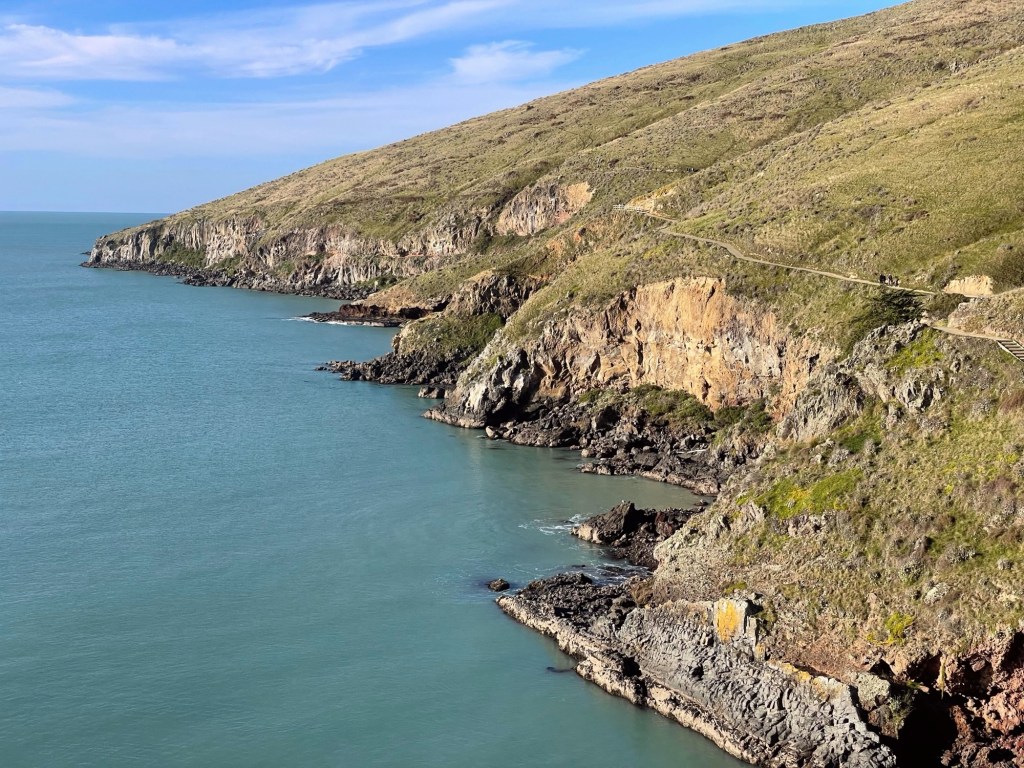
This was one of the more heavily traveled trails we’ve been on in New Zealand. After a few days of rain, the sun was shining brightly, and it looked like the Kiwis of Christchurch were excited to be outside. We certainly were!

After hiking for about 90 minutes we reached our first historical stop on the hike — the concrete footings of a WWII gun battery.
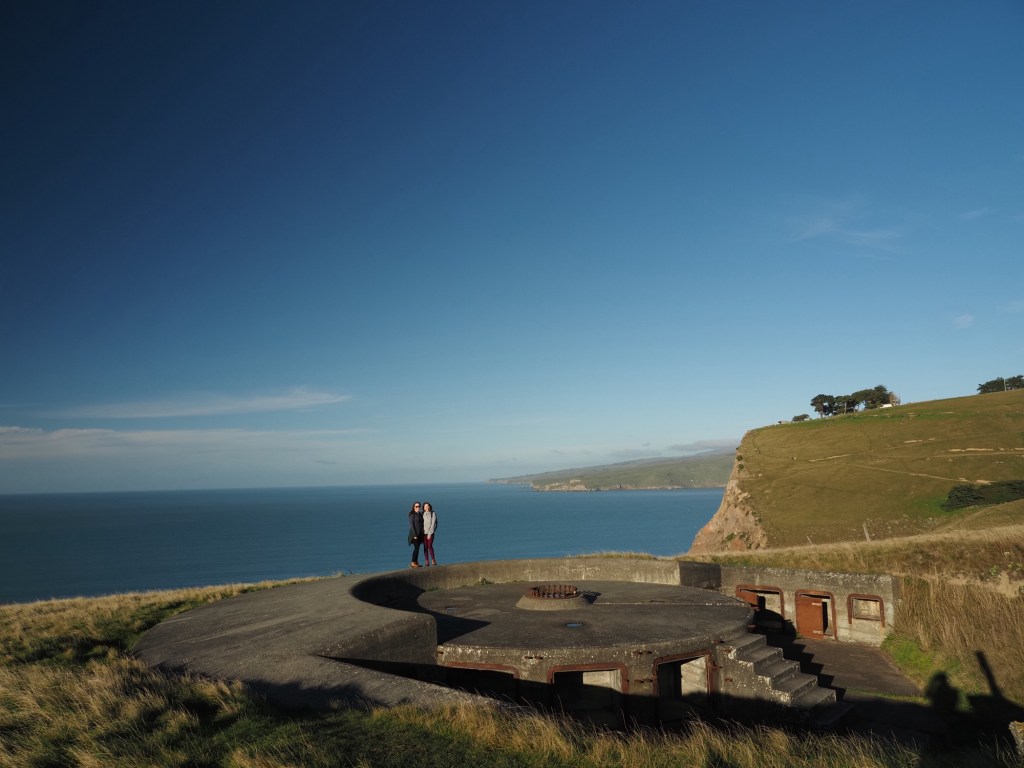
During the war, New Zealand was concerned that Japan might try to invade and consequently bolstered its defenses. Godley Head was heavily fortified to defend the deep-water harbor in Lyttelton Bay. The height helped with both observation and extended the range of the gun batteries. This battery is a bit of an outlier, as the main fortifications were further up, which you can can see in the upper right of the photo above. Team Hubbard pressed on!
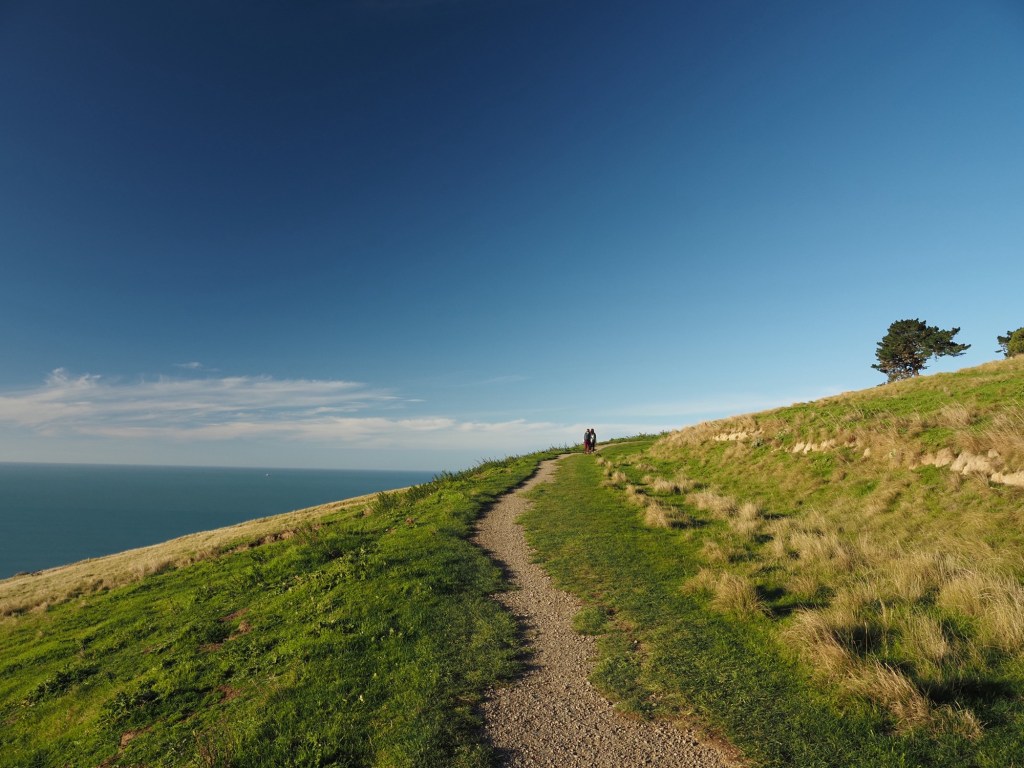
We soon reached the fort, which was more extensive than we’d expected, with multiple gun emplacements, a radar station, and various support structures.
We enjoyed exploring the concrete buildings, tunnels, and rooms, but the hike was not over.

The trail curved around to the south side of Godley Head, giving us wonderful views of the Banks Peninsula.
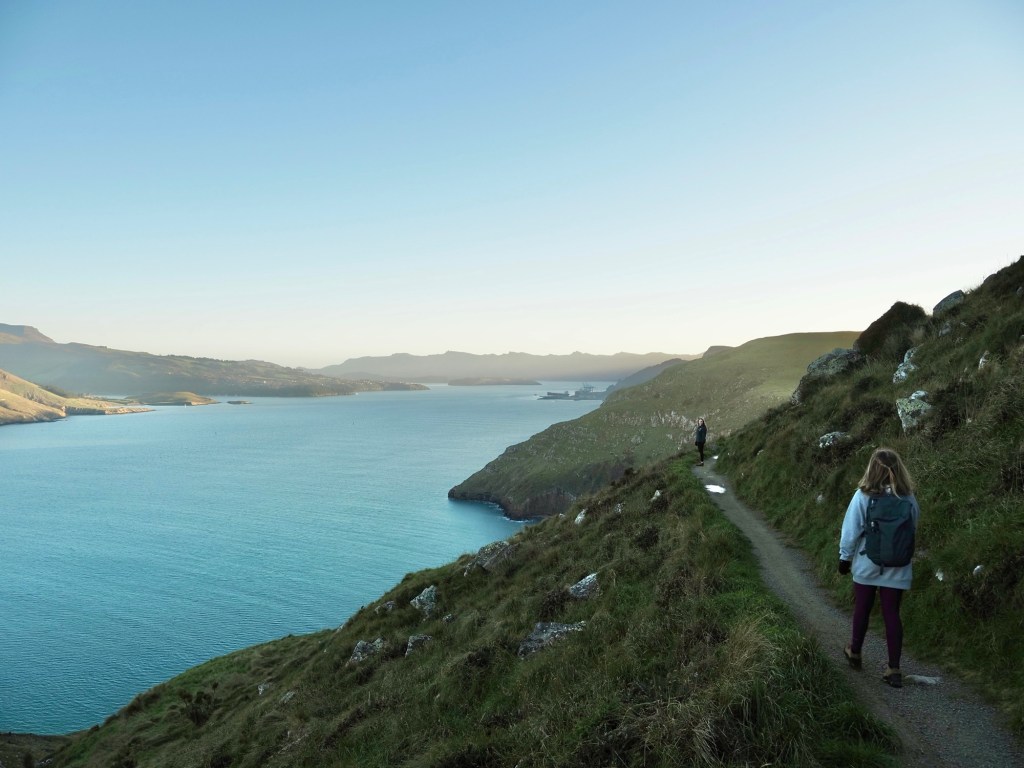
In the distance, we could see Lyttelton Harbour. In the end, neither the harbor nor any part of New Zealand was attacked in WWII. Today, the port remains vital for New Zealand, accounting for about half of all imports and exports to the South Island. However, our trail was not as well developed as the harbor. While extremely well maintained (as apparently all trails in New Zealand are), there remains concerns about rockfalls.

We reached the parking lot near Taylor’s Mistake as the sun was setting.
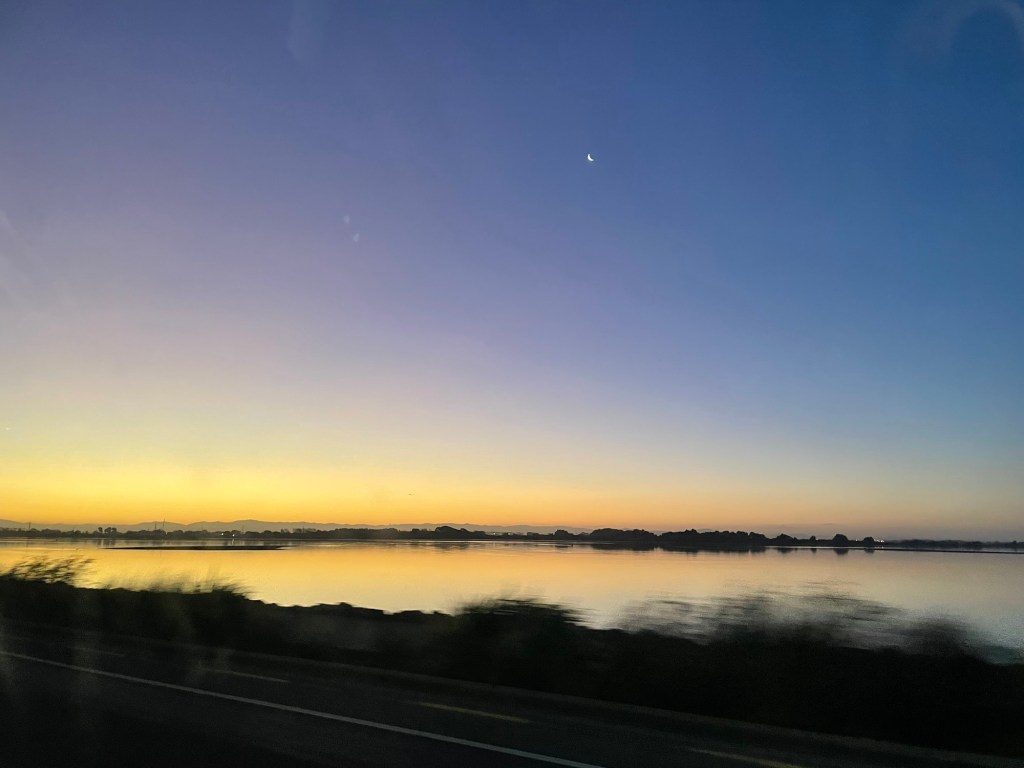
Driving back to Christchurch, Julie and I entertained fantasies of moving to the area. I’ll admit that moving to the remote mountains of New Zealand is pure fantasy. Christchurch, with its combination of urban development, nearby nature, and unmissable charm, seems almost reasonable. After four weeks of traveling in this great country, it’s extremely tempting go full Kiwi.
-Will
 The Hubbards' Travel Blog
You’re hardly the first to fantasize about moving to NZ after visiting there. We had some similar thoughts, but you’ve probably met some Americans who followed up on the fantasy.
By coincidence, the Guardian just published an article on the phenomenon. The theme of the article echoes what previous reports have said: while NZ is a perfect getaway for those primarily interested in a quiet, beautiful, and safe country, it’s very expensive, housing is limited and (by American standards) inferior, and good jobs are hard to find and pay much less than they would in America. Legal academics in NZ, to take one example, are nowhere near as prosperous as their American counterparts. Speaking broadly, NZ is a small, remote, and economically circumscribed nation. The magnificent views and great hikes outweigh the disadvantages for some Americans but not for all.
Interestingly, NZ has a severe net population outflow, primarily because working-age people are leaving for Australia which has better employment prospects and a higher standard of living.
https://www.theguardian.com/world/2025/jun/28/beautiful-isolated-and-expensive-us-expats-on-life-in-new-zealand
LikeLike
One more: https://www.theguardian.com/world/2025/may/09/leaving-new-zealand-record-departure-numbers
LikeLike
As always, loved this vicarious journey. BabyM is a trooper 💕💖💕
LikeLike