Today was another travel day, as we’d be driving from Hokitika to Burkes Pass. We’ve been traveling in our rented car for a few weeks now, and we’ve got the packing and unpacking down to a science. The fully packed back leaves us a with a tiny window of space to see the quicker (but still flightless) Kiwi’s who would like to pass us on the twisty mountain roads.
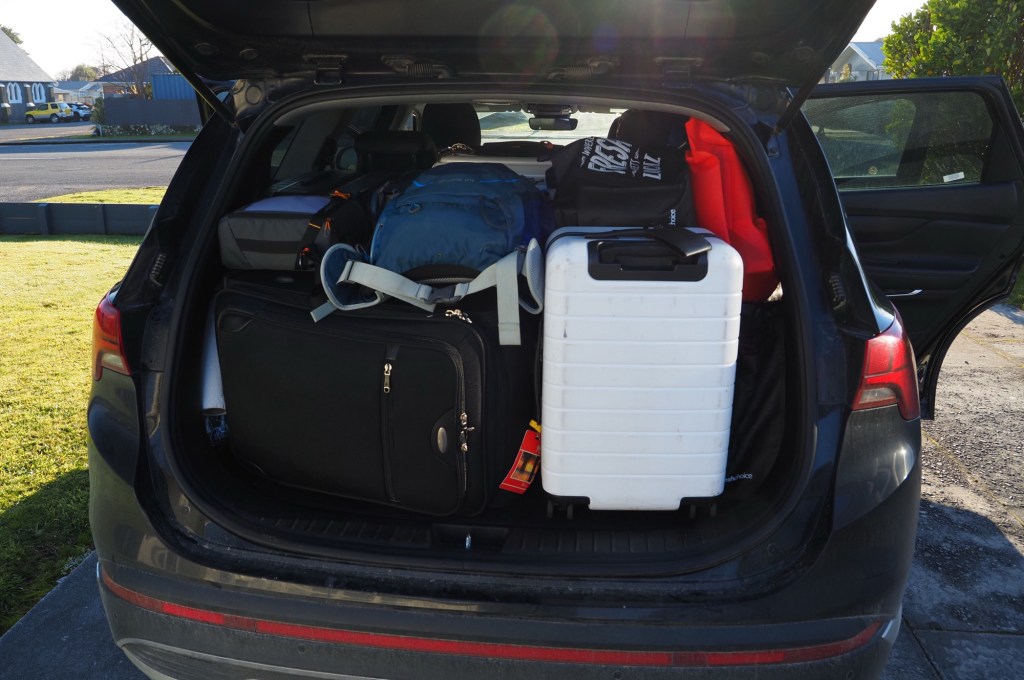
When we’re shifting houses, the girls have basically no room in the back. But they also have no complaints!

All squared away, we were off. Our trip would take us through Arthur’s Pass, another major pass in the New Zealand mountains that at some points in the winter can be closed for snow. It was open today fortunately.

The scenery in the mountains was typical New Zealand: stunning and majestic. Once through the pass we descended through valleys with huge braided rivers, where the water flow varies enormously depending on rainfall and snowmelt.
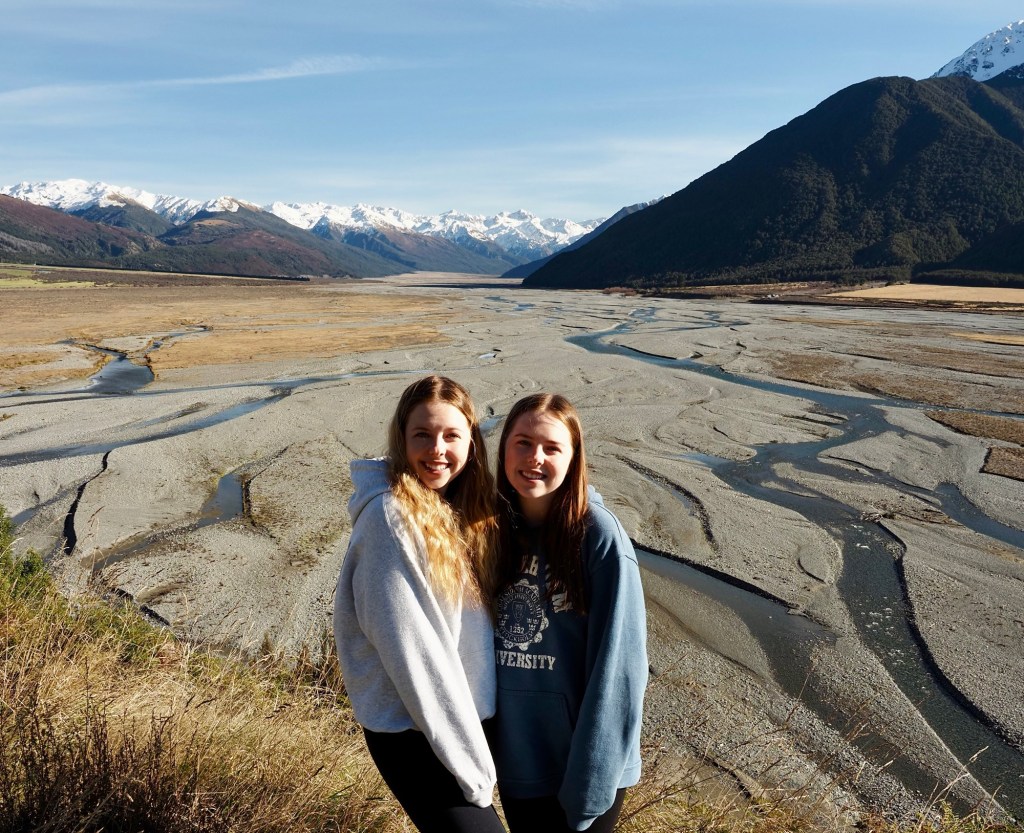
Photos of New Zealand can be a little deceiving, as the two-dimensional form flattens distances. We’re high on a bluff overlooking the river. The river behind the girls is not sand. Those are rocks.
We were looking for a good place to stop for lunch. We’d thought about stopping for a short hike to see a waterfall, but while we drove Lydie found a much better option – a hike through some unusual rock formations in an area called Castle Hill by the Europeans and Kura Towhiti by the Māori. We ate some sandwiches in the car, put on our hiking boots, and set off.
The rocks were amazing. Dear reader, I’m going to warn you up front that we took too many pictures of the rocks, and what’s below is just a small fraction. Team Hubbard really likes rocks (some examples here and here). The rocks started relatively small.
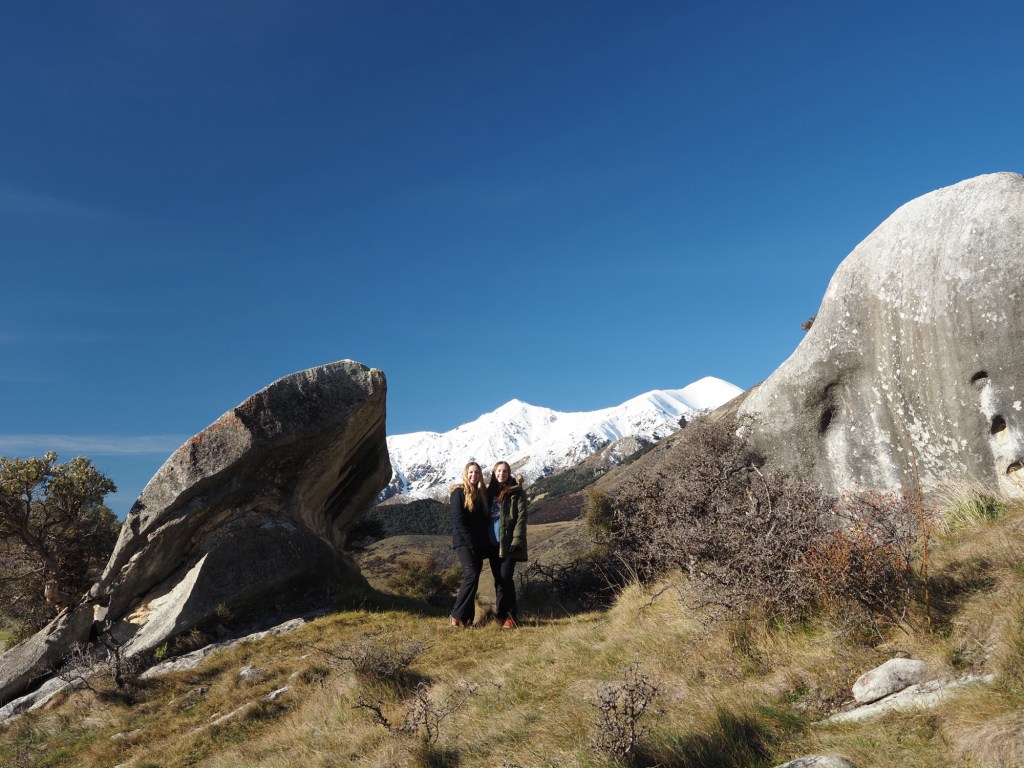
As we progressed further, we found the rock formations seemed to grow out of the the ground. The fluid shapes looked like they could have been on the ocean floor, which isn’t far from the truth. The stones are limestone deposits from 30 million years ago, when this area was under the ocean. Since then, tectonic pressures have pushed this area (and all of New Zealand I suppose) up from the ocean floor.
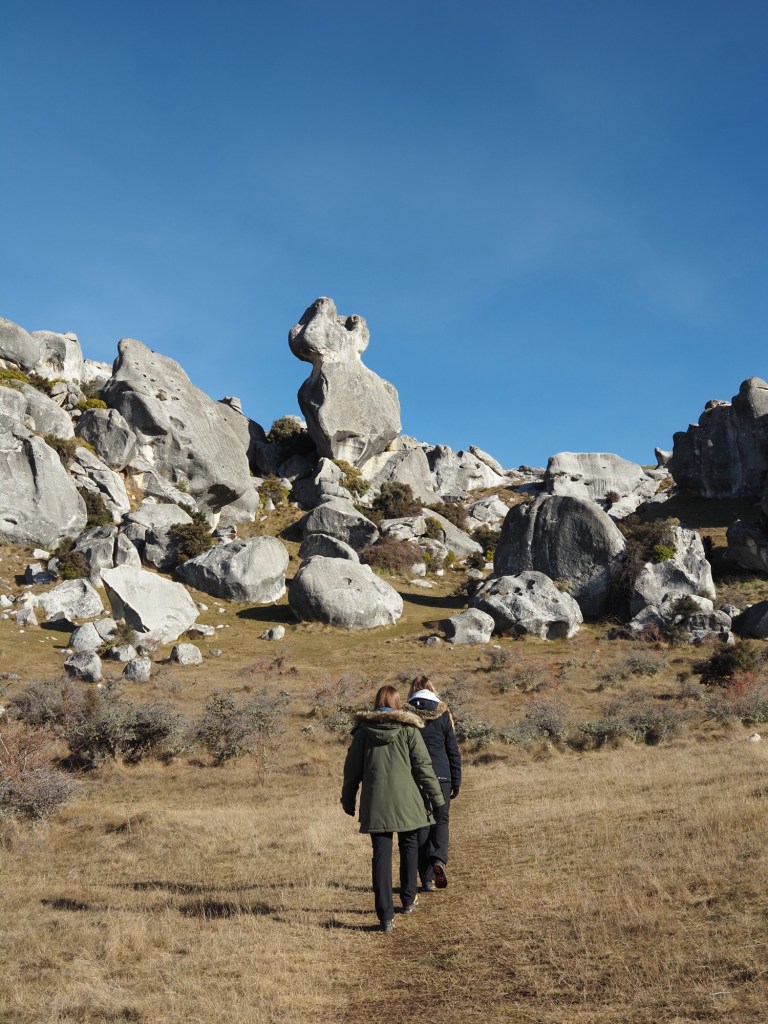
Again, photos make the distances look smaller. The rocks were enormous. The one that looks like somebody bit the ears off a bunny was probably 30 feet tall. We followed the path up through the rocks to the ridge in the background and circled around.
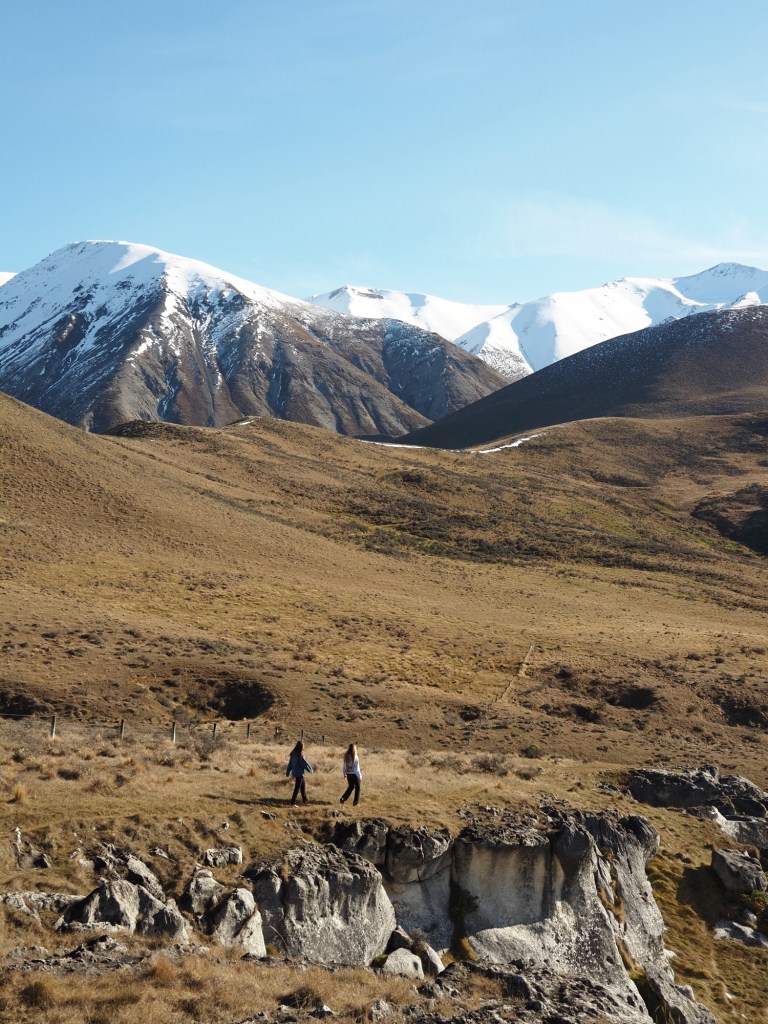
We had great views looking down on the rock formations below us.

Lydie and Cassie have been scrambling on rocks for their entire lives. I don’t know what kind of bad parents encouraged that behavior.
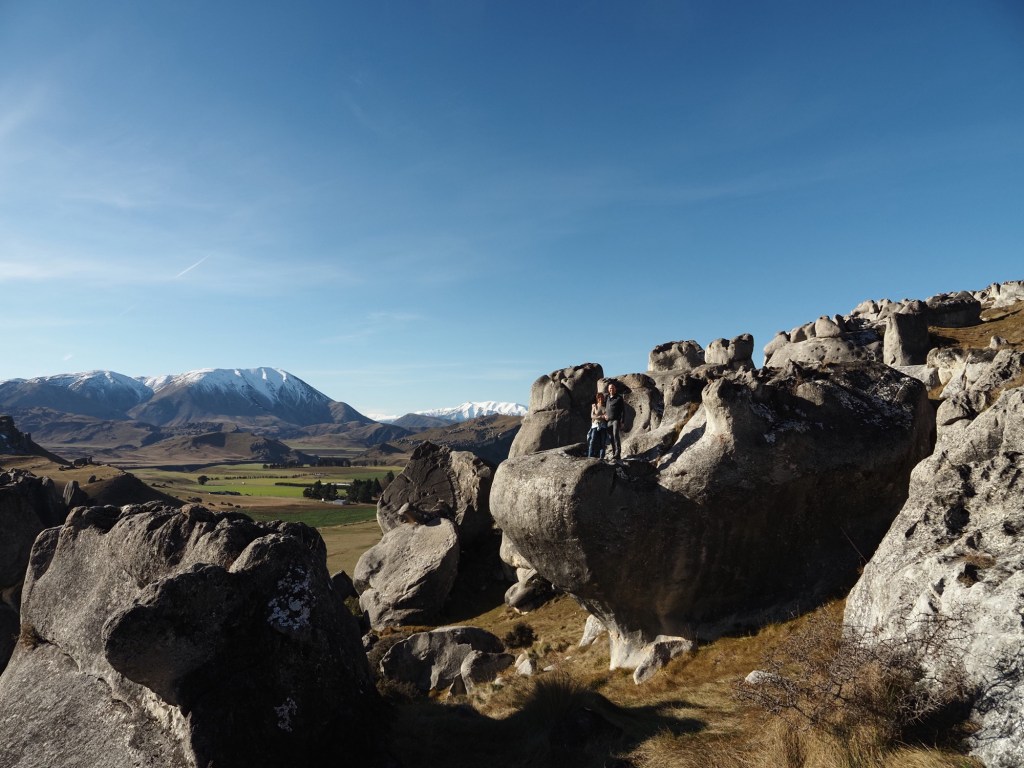
Did I mentions that the rocks were big?
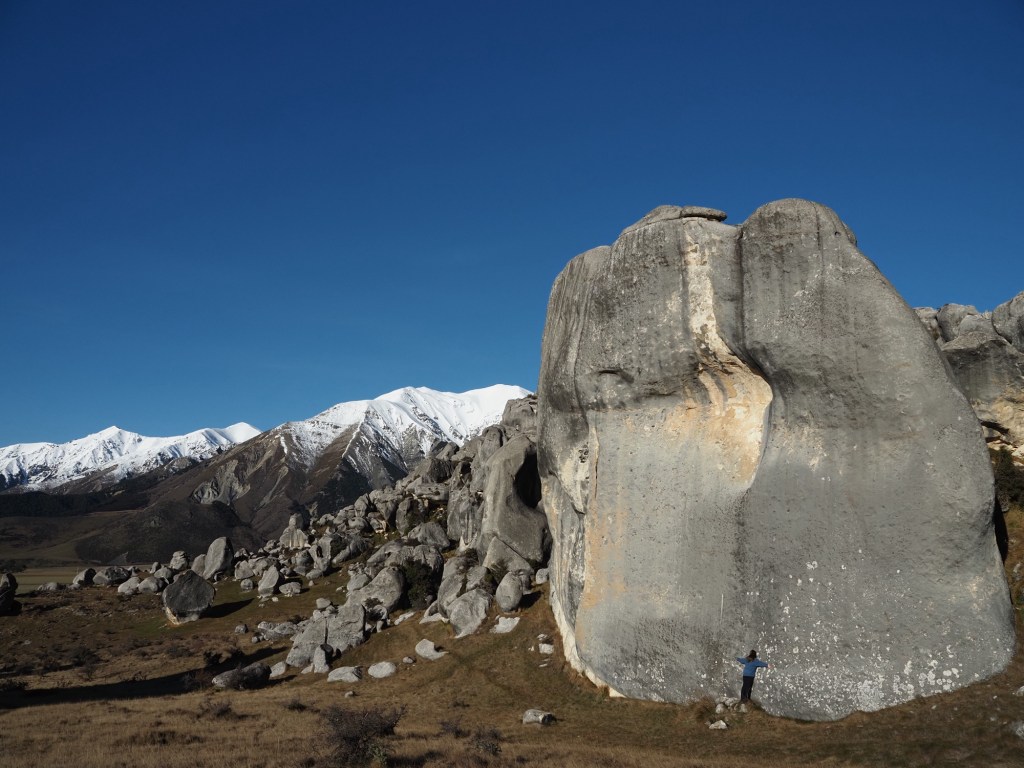
Sadly, too big to take home. It was almost overwhelming. Around every turn we encountered beautifully shaped rocks.
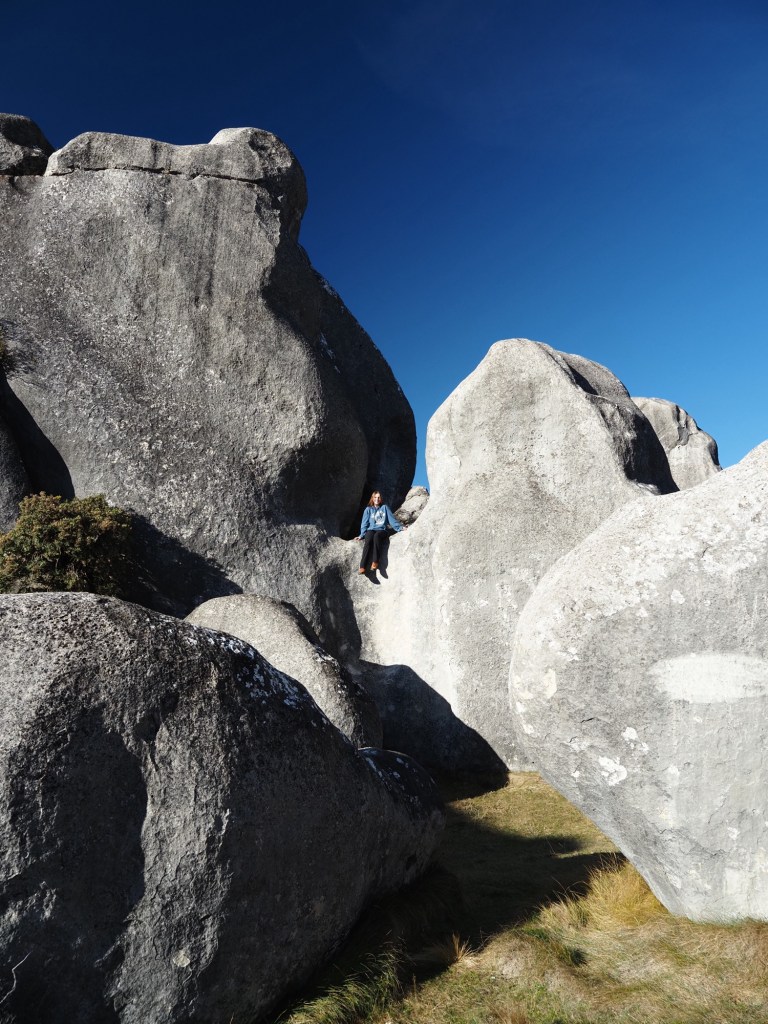
We loved the way that the small paths threaded through the rocks.
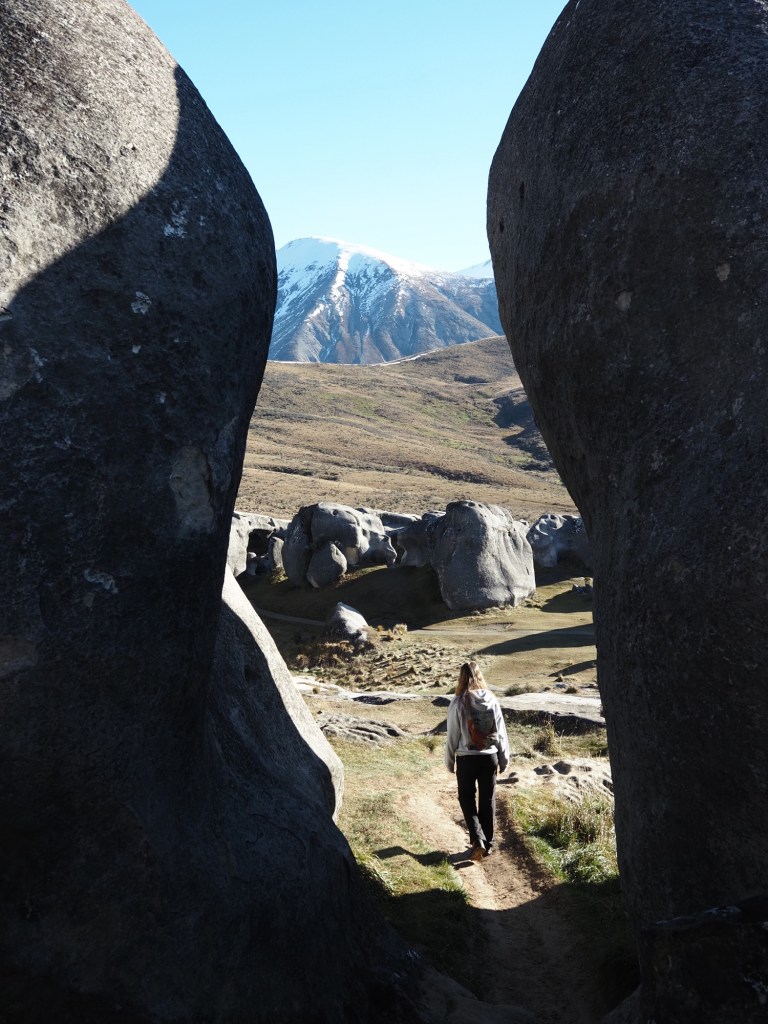
See?! Great rocks.
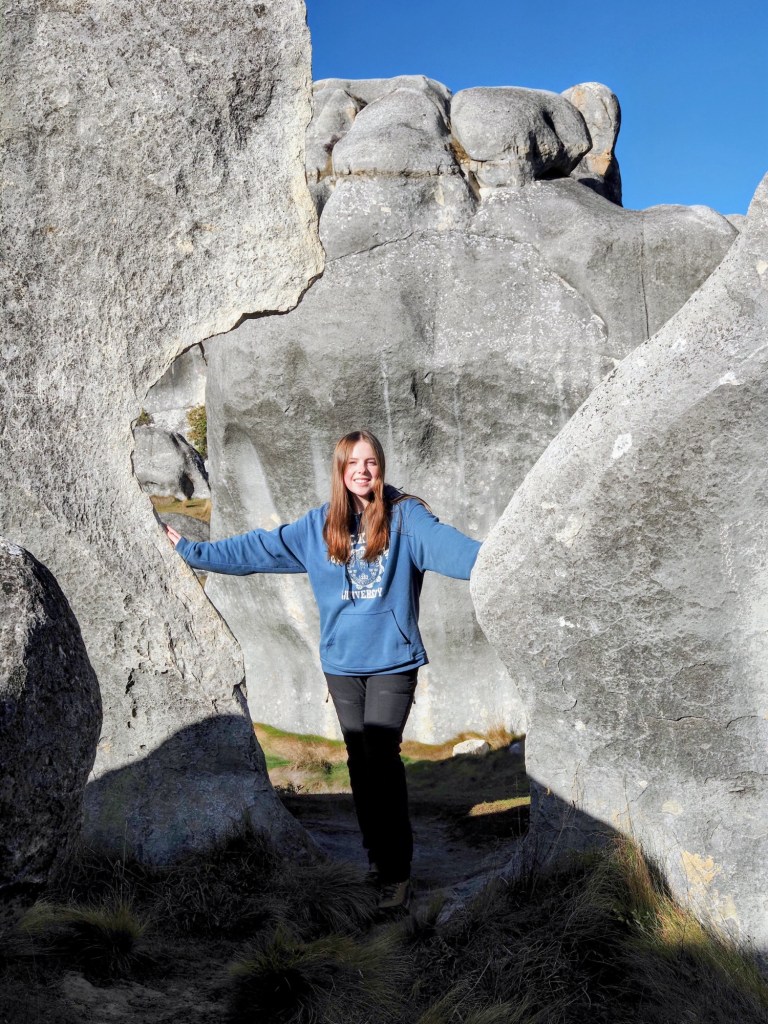
I tried (without success) to shift some around so that I could bring one home.
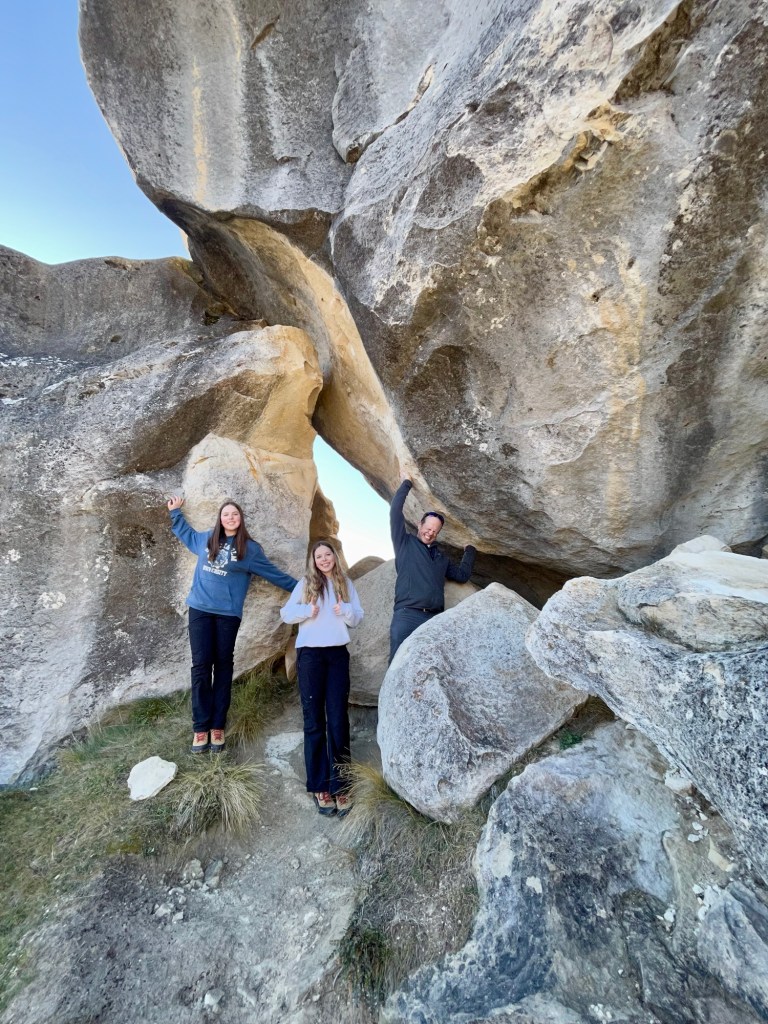
It was a super fun hike, but it was time to be moving on.

We hiked back to the car and headed on to Burkes Pass. We swung by Ashburton on the way to pick up some groceries, and by 6:30 pm we reached our next house. We quickly dropped our stuff and made dinner.
We were on the clock, as we had to head off to our next activity. We got back in the car and drove another 20 minutes to Lake Tekapo, which sits in the midst of the massive Dark Sky Reserve, an area stretching more than 1,600 square miles in which light pollution has been minimized. The Dark Sky Project has taken advantage of this and offers tours to the top of nearby Mount John, where the University of Canterbury has an observatory.
We got to the Dark Sky Project, checked in, and were given lanyards with small red flashlights to provide some illumination while keeping our eyes adjusted to the dark. We were also given some industrial-strength winter jackets. The mountain top was cold, and we were going to be outside for most of the experience. Along with some other folks, we piled into a small bus for the trip up the mountain. After driving for a few minutes, we passed through an automated gate. The road grew steadily steeper, and we could see that the land around us was covered in snow. For the last stretch, the driver turned off the headlights to avoid interfering with the light sensitivity of any of the university researchers on the mountain. We got to the top, and walked the last stretch up a path to reach a terrace.
The stars were phenomenal. There was some high haze, so the view might not have been as crystal clear as our first night in Ōkārito, but we still saw far more stars than we would ever see in our Maryland suburb. The Milky Way was once again on majestic display. Our guide spent about 45 minutes pointing out various features with a green laser that stretched up into the sky. Highlights included:
- The Southern Cross and how to use the two nearby pointer stars to find South
- That one of the pointer stars is Alpha Centauri, the closest star to us (less than 4.5 light years)
- That Alpha Centauri generally cannot be seen from the United States and is actually 3 stars.
- That the Chinese call the Milky Way the Silver River (which frankly makes more sense)
- That Australian Aboriginals see a giant Emu in the dark patches in the Milky Way (and now we do, too, and we love it)
- That Māori consider Scorpio’s tail to be Maui’s hook (yep, Maui from Moana).
For the second half of the tour, we looked more closely at the sky through telescopes.
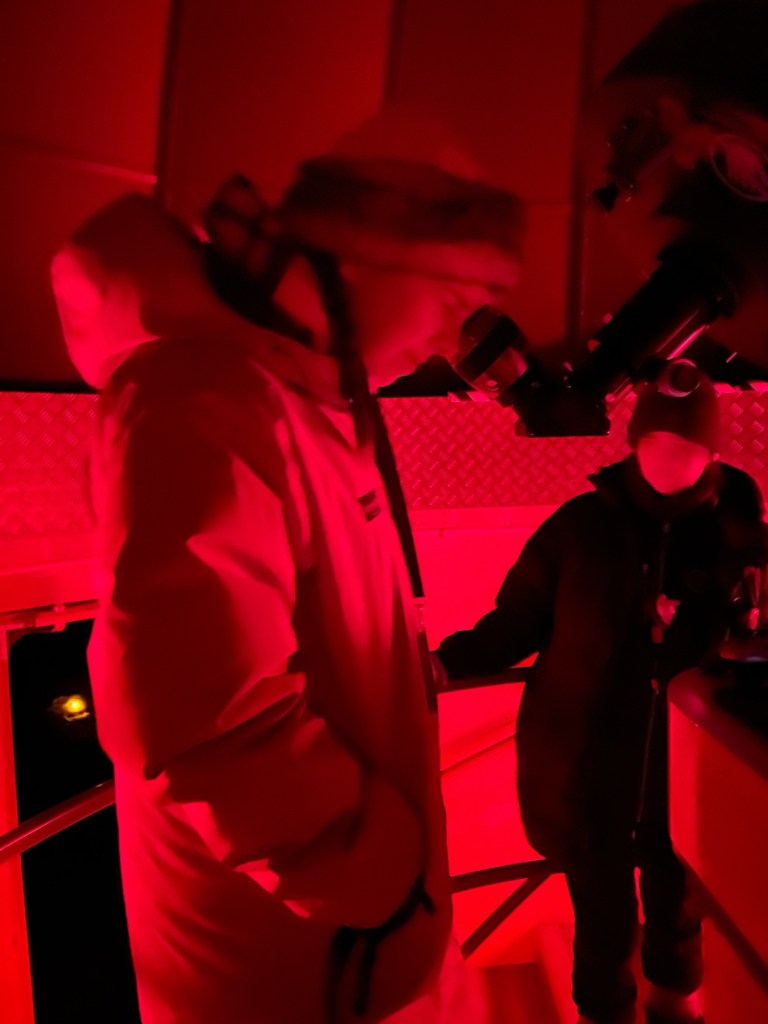
We saw globular clusters and two of the stars that made up Alpha Centauri. (The third star is a dwarf star 20,000 times fainter than the sun.)

We got back to our house late, tired but happy. Another epic day in New Zealand!
-Will
 The Hubbards' Travel Blog
Great photos.
LikeLike