We woke up early on Day 2, in part due to the 1-hour time change and in part due our excitement about being in Panamá. Well, I should say that Julie and I woke up early. Our 18-year-old girls were moving a little slower. So, Julie and I decided to head out to some find some coffee. The day was bright and sunny, and we enjoyed strolling around, soaking up the old-city atmosphere.
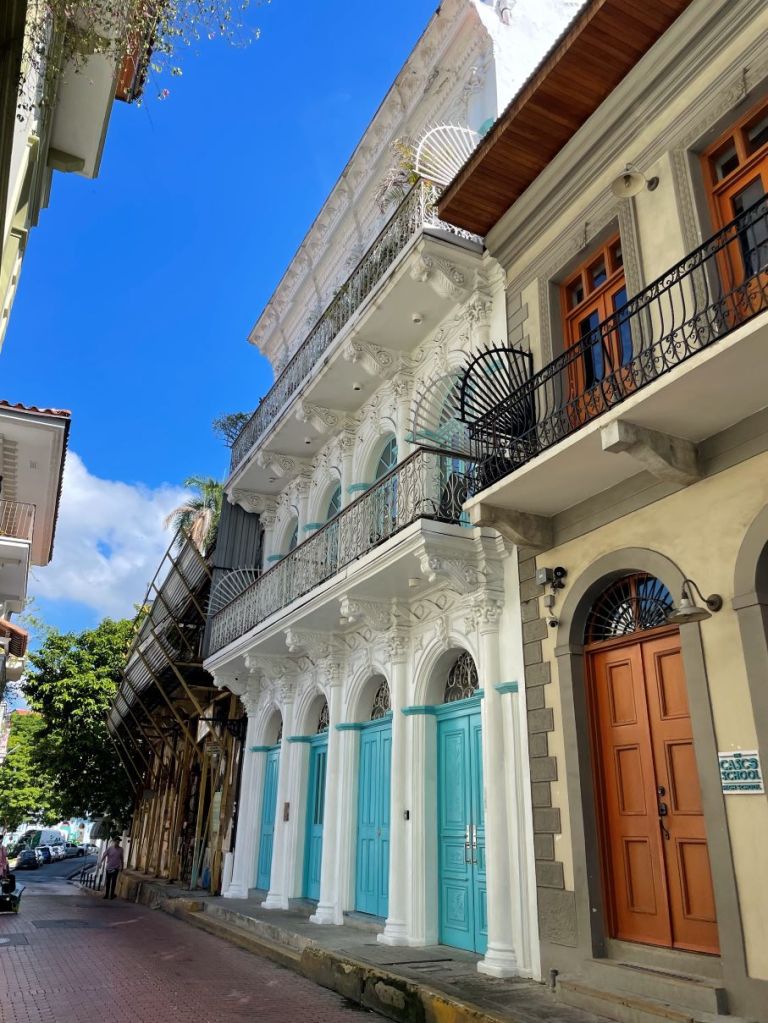
We soon stopped at the Super Gourmet Coffee Shop, which lived up to its super name. At the coffee shop, we texted with girls, and made plans to rendezvous for a lovely breakfast at the Mahalo Cocina y Jardín (highly recommended). From there, we wandered around Casco Antiguo a bit more. As mentioned in the last post, it’s adorable, and with the sun shining this morning, the bright colors of the buildings added further charm.
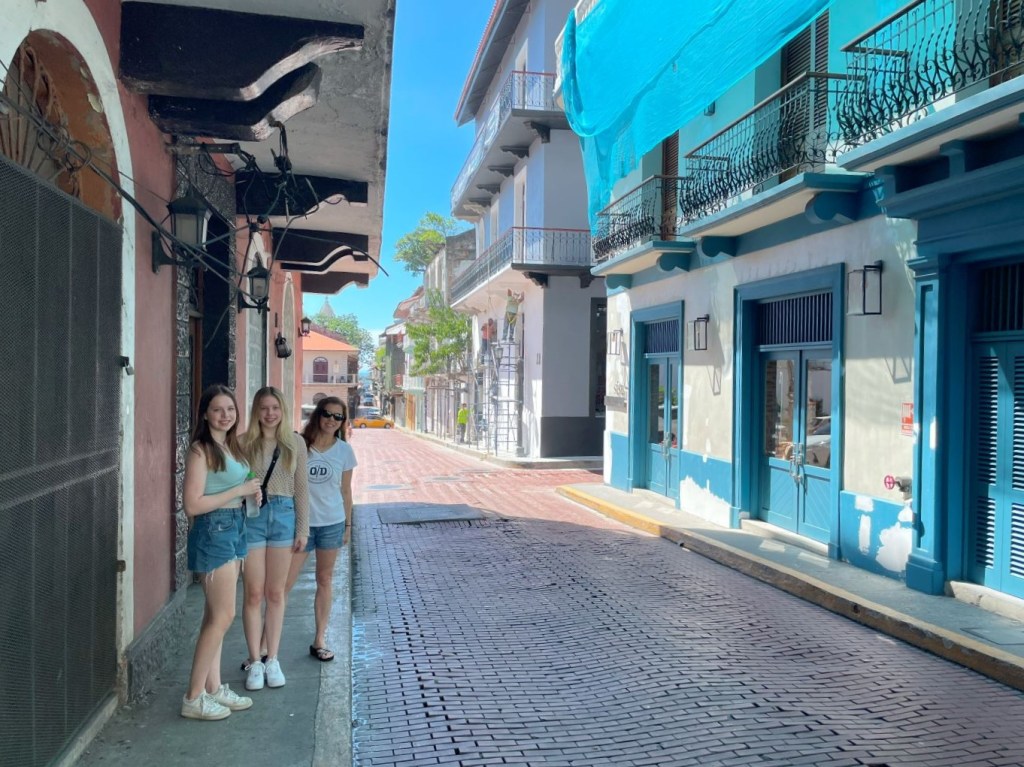
Our haphazard path took us by our hotel, and we could see one of the towers of the cathedral in the distance.
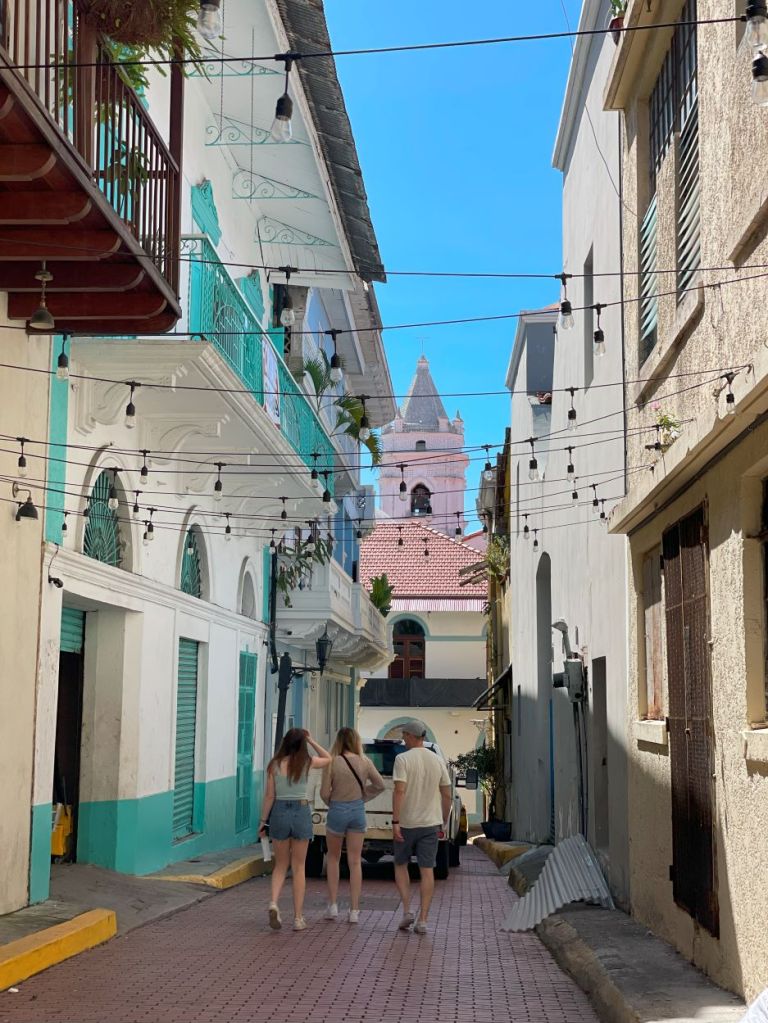
We continued on towards the cathedral, where we could see the mother-of-pearl inlay on the towers sparkling in the sunlight.
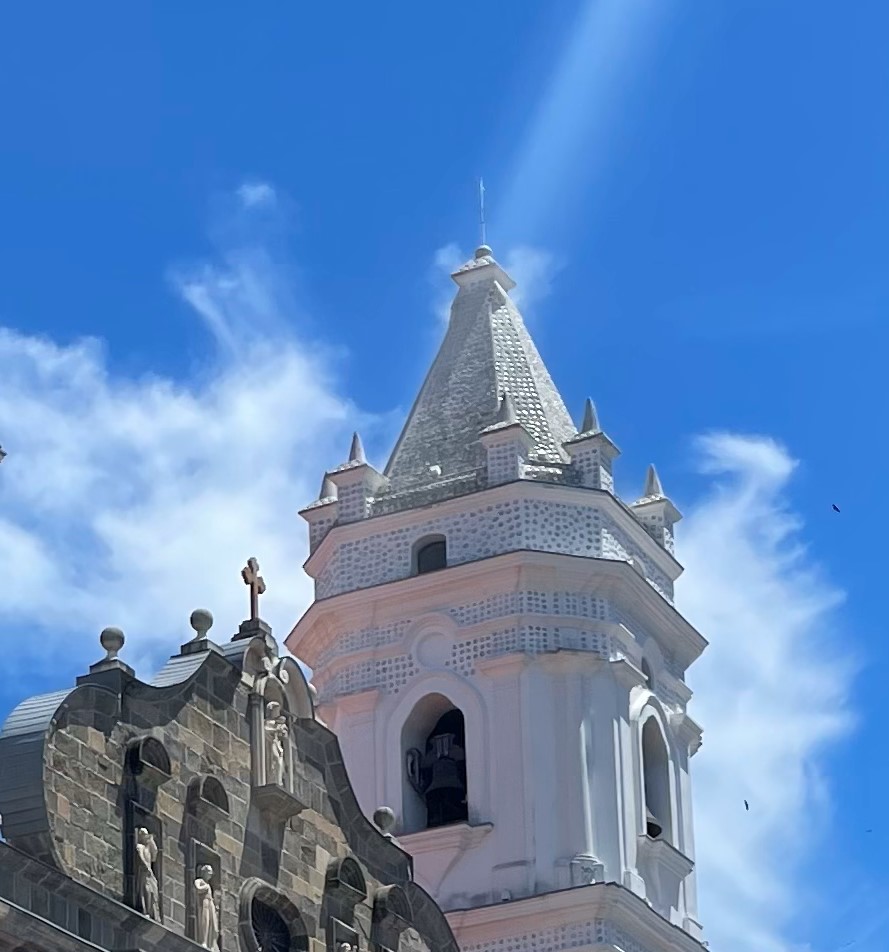
We looped back around Casco Antiguo to pass by La Iglesia Nuestra Señora de La Merced (“The Church of Our Lady of Mercy”).
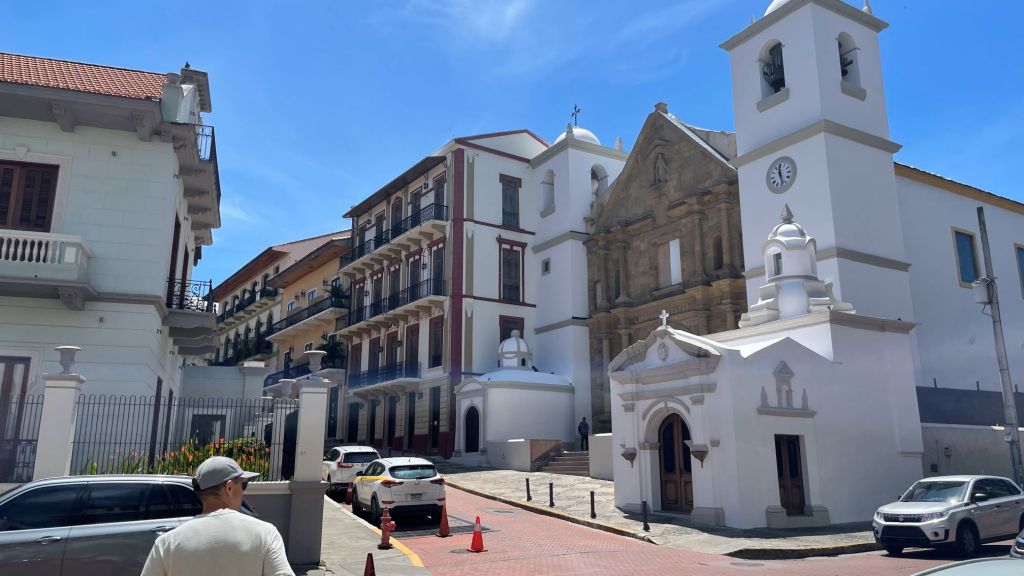
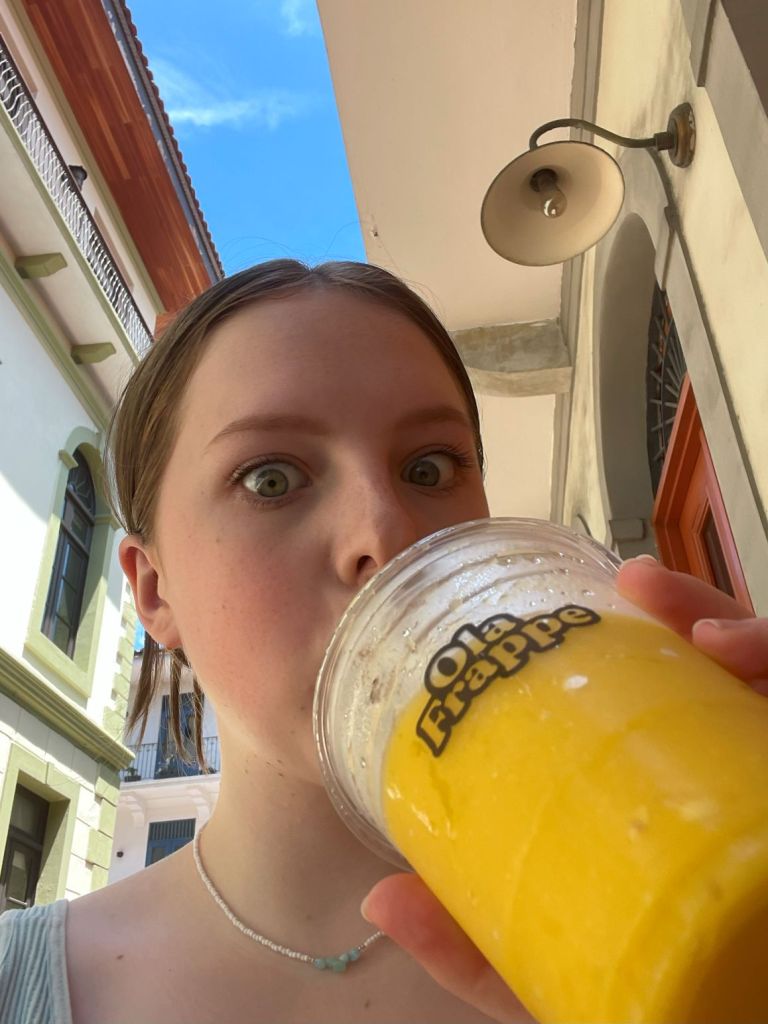
The facade originally was in Panamá Viejo. After that original settlement burned and Panamá relocated to Casco Antiguo, the facade was moved, stone by stone, to this location. As a result, the facade was erected in 1680, just seven years after the founding of Casco Antiguo. By this time, the tropical sun was flexing its muscle, so Team Hubbard stopped for smoothies at Ola Frappe, a nearby coffee shop. While we waited in the air-conditioned shop for our smoothies, we decided to extend our walking tour beyond Casco Antiguo to visit the local fish market. Armed with cold drinks, we set out.
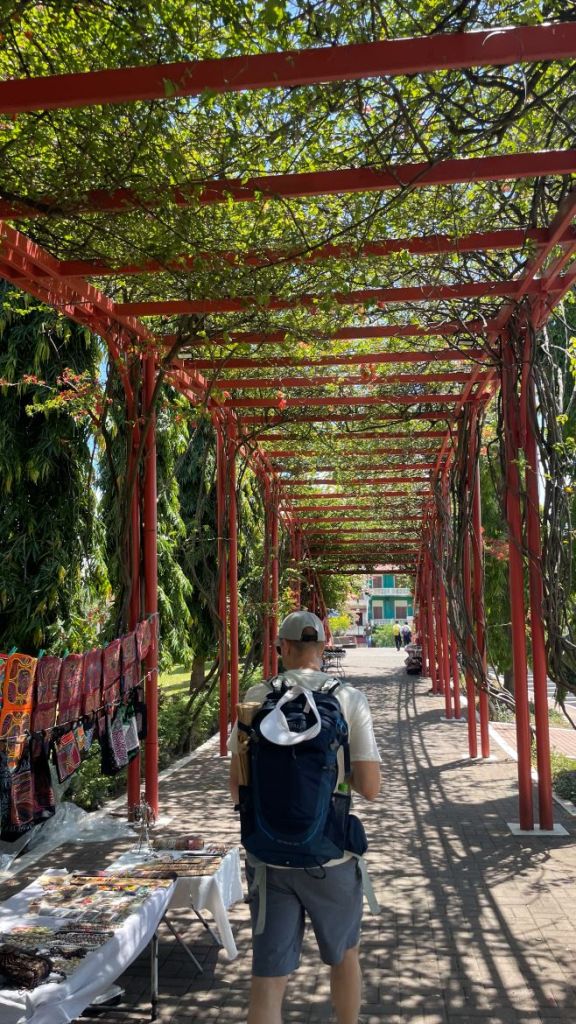
Our walk took us through the Plaza V Centenario, which I think is a square that commemorates the 500th year anniversary of the founding of Panamá. To get out of the sun, we passed through a large arbor where local craftspeople sold their creations.
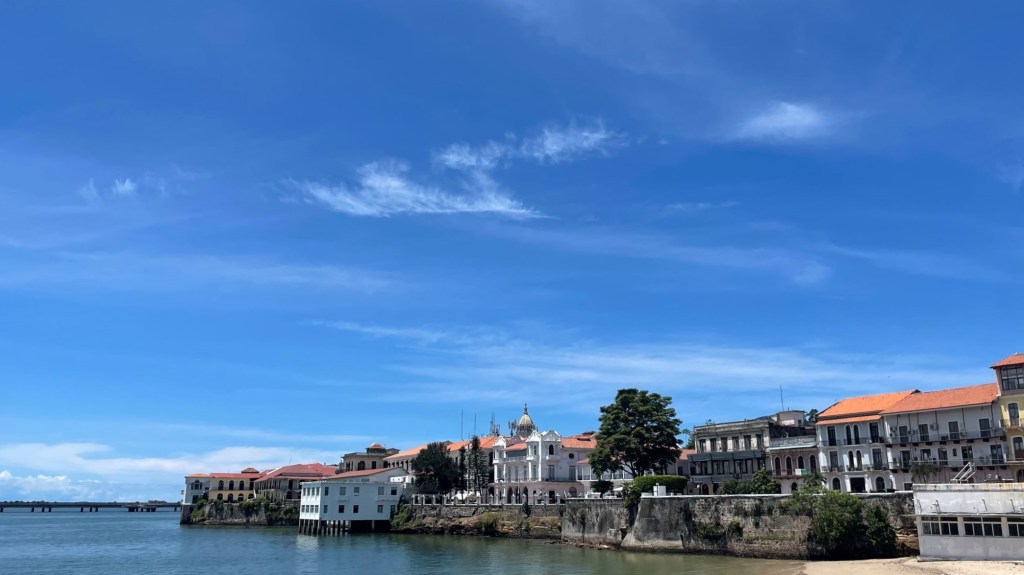
At the other side of the arbor, we reached the water of the Pacific and looked back towards Casco Antiguo.
Turning around, we could see modern Panamá City, a metropolis of almost 2 million people, the soaring buildings a testament to the city’s prowess in banking, commerce, and shipping.
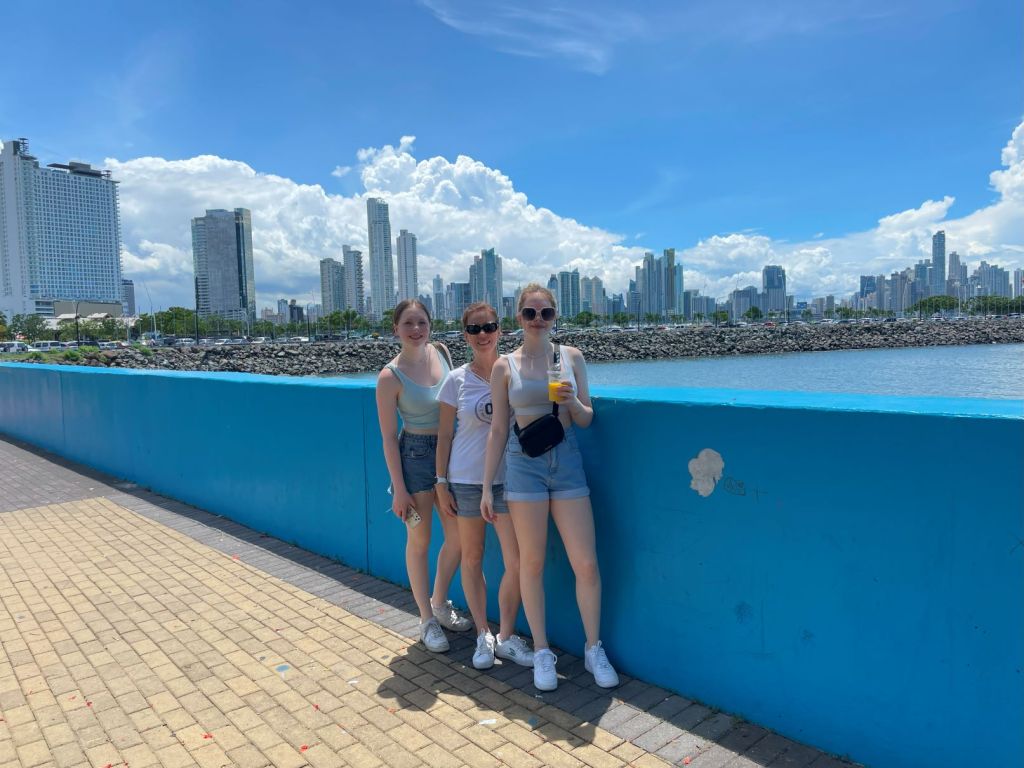
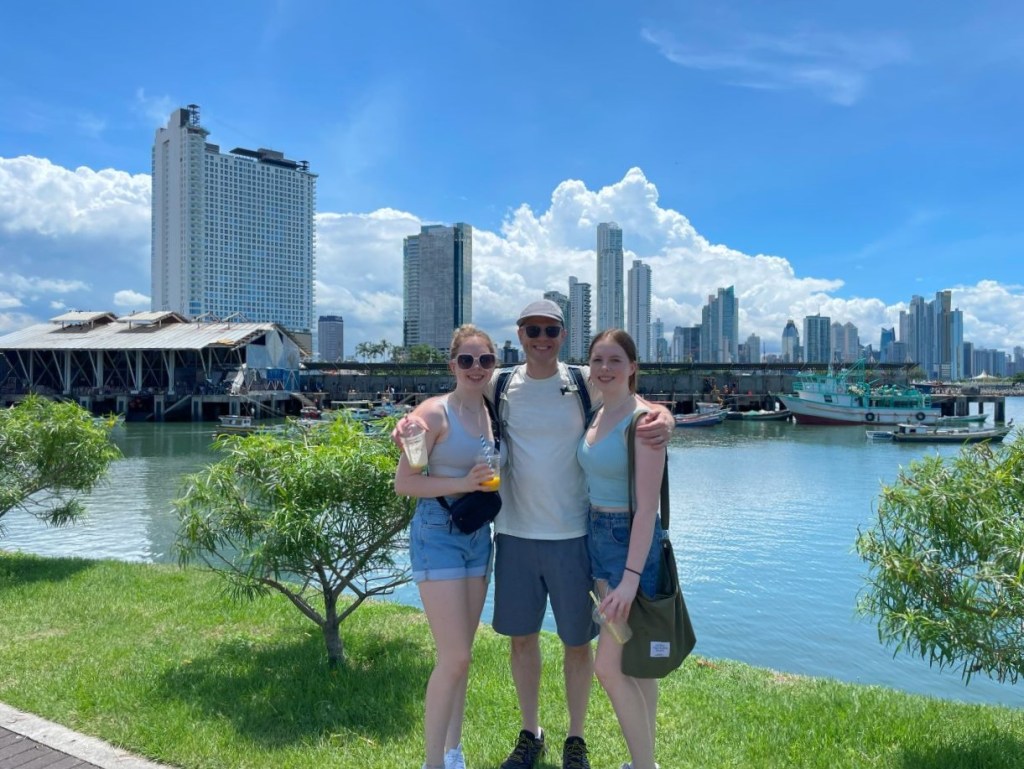
We soon reached the fish market, which was right next to a large dock where boats continually arrived to offload their catch, which felt somewhat out of place given the urban skyline in the background.
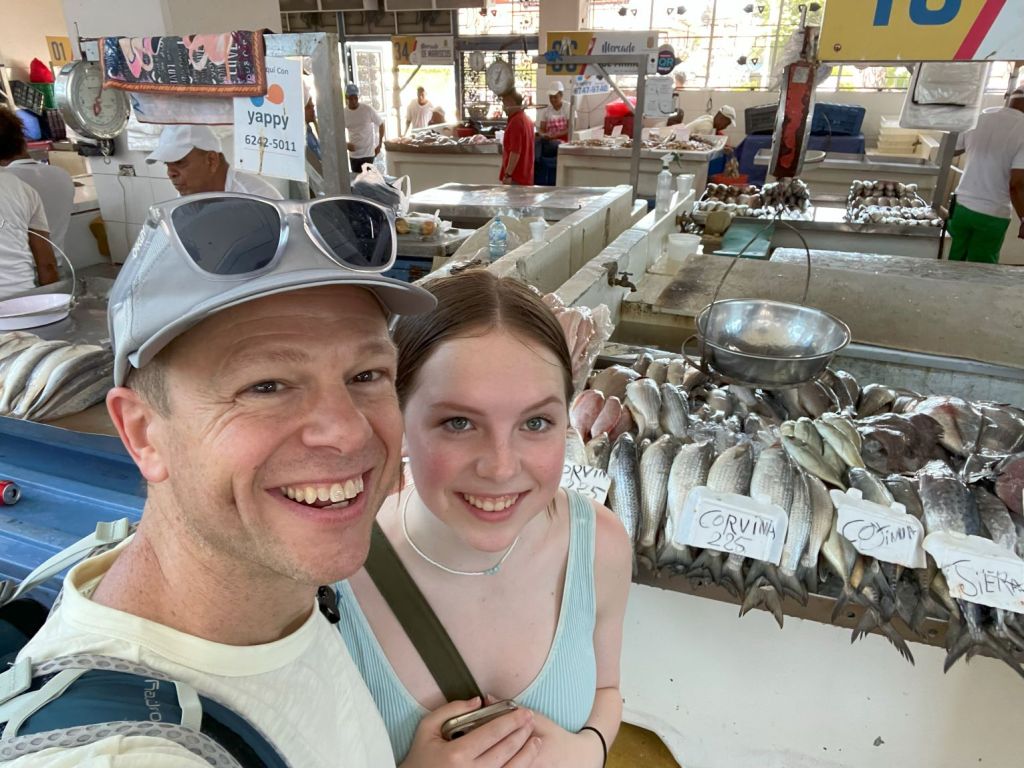
Inside of the fish market itself was exactly what you’d expect – lots of fish and crustaceans on ice waiting to be sold.
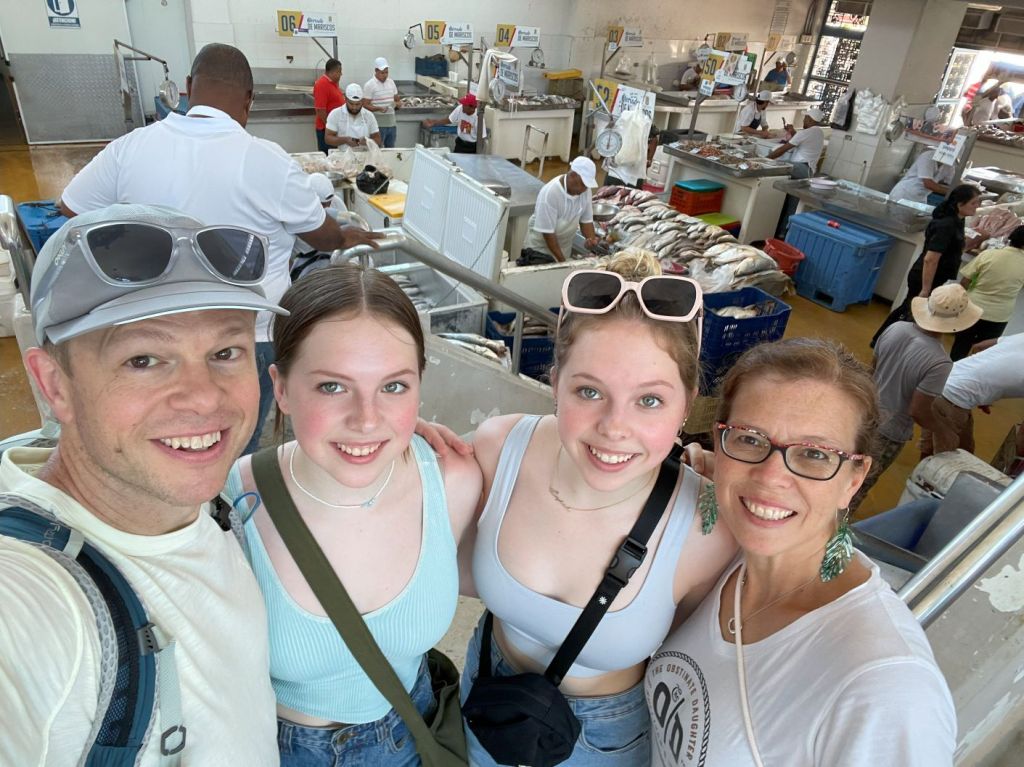
We packed together like sardines for a selfie, but the picture can’t capture the smells and sounds of the market.
It was time to be moving on to our next destination. We trekked back to our hotel and packed up our things. Our next stop was the Budget Car Rental, but rather than take a cab there we decided to take the subway. When we can, we enjoy taking public transportation in different countries. It gives us a chance to see another side of a place. But it was also a 20-minute walk to the subway in the tropical heat. Hubbard Death March. Let’s go!!
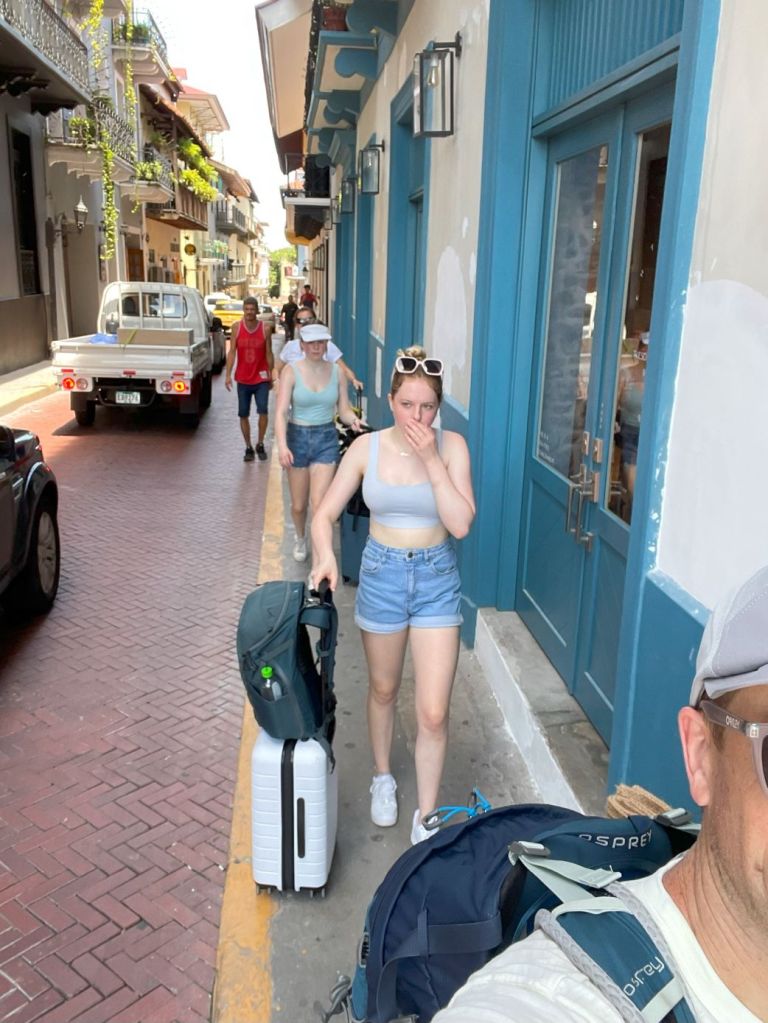
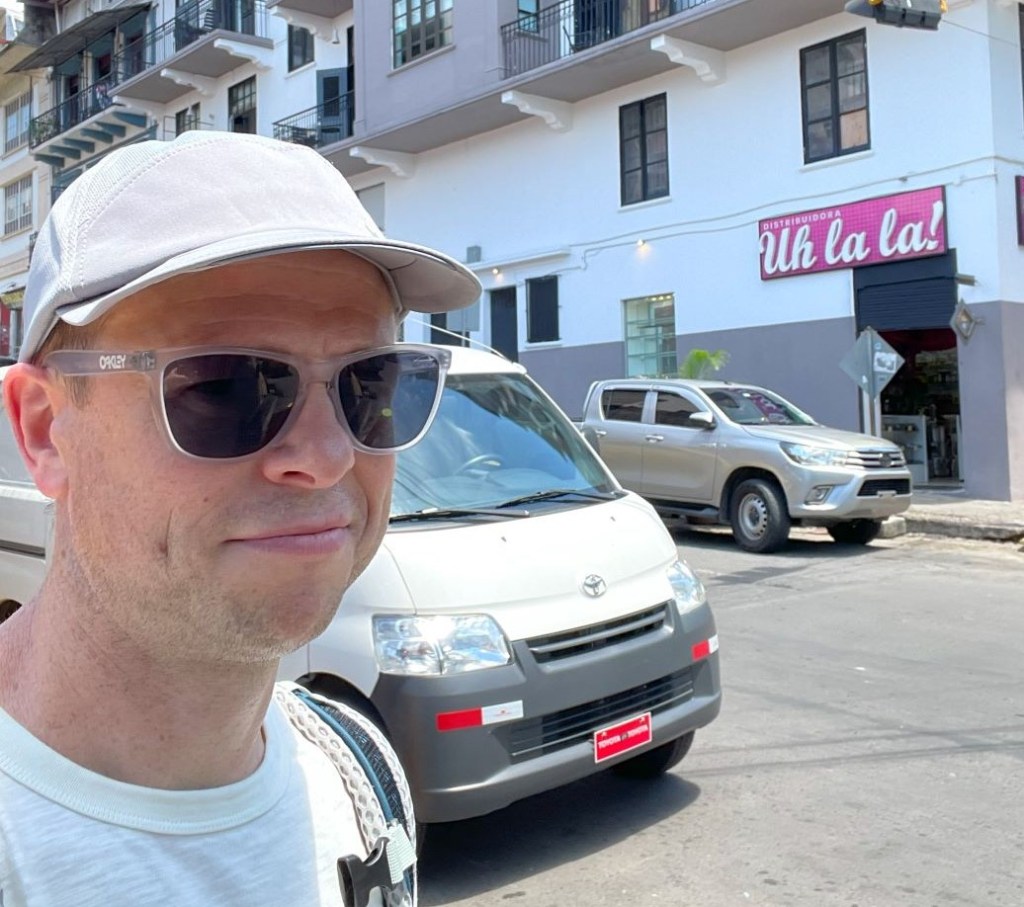
Along the way, we passed through far less touristy areas, which was fascinating. This name of this particular shop makes total sense with a Spanish pronunciation, but my American mind couldn’t help but chuckle.
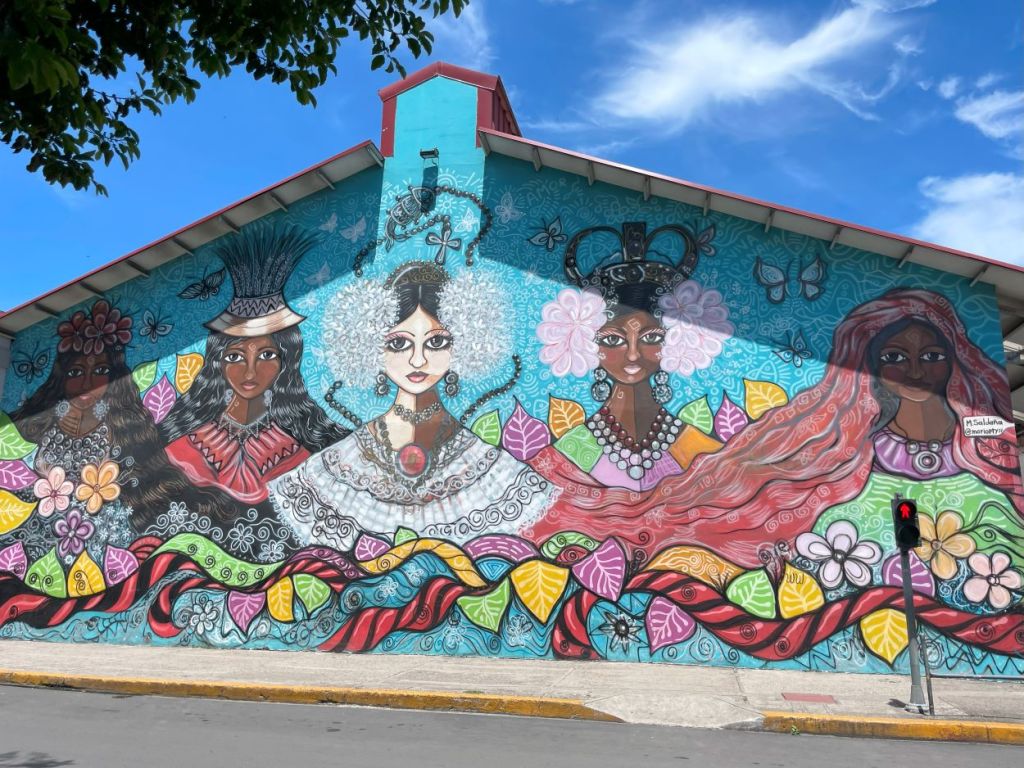
Along the way, we also passed the San Felipe Neri Public Market, where we got a brief respite from the heat. The large mural at the end of the market was also delightful.
We got quite a few funny looks marching down the sidewalk with our luggage in the sun, but we soon reached the relative cool of the subway.
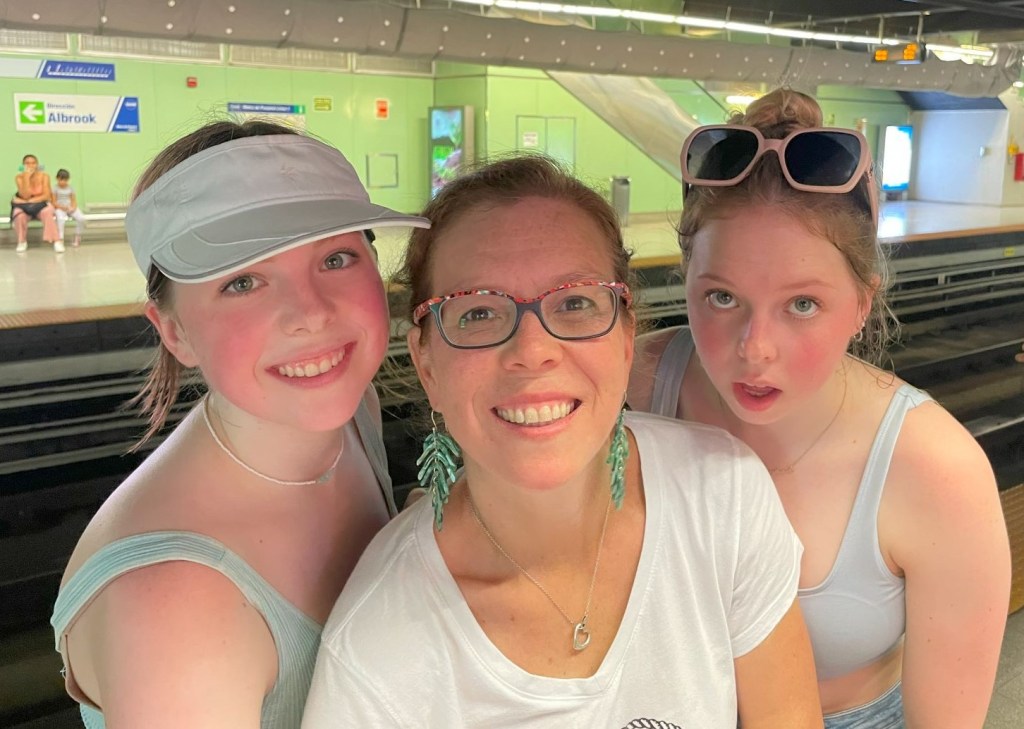
We had a little trouble figuring out how to get passes, which is a nice example of two key points we found travelling in Panamá. First, speaking a little Spanish is key to visiting Panamá outside of the tourist areas. I found this to be a feature not a flaw. In many places we’ve visited, everyone speaks such great English that the foreignness of the place is somehow diminished. Panamá has a robust, complex society that doesn’t need to speak English, making our visit feel more authentic and less staged. Second, we were consistently impressed by the people of Panamá. Even in our brief interactions, we found them to be kind, helpful, and genuine. For example, as we struggled to figure out how to buy subway passes, Julie simply said aloud, “Can anyone help us?” A woman dressed in a medical uniform immediately approached us and helped. (There will be more examples as we go.)
After finishing our brief subway ride, we walked the rest of the way to Budget, where we picked up our car and headed out. Our next stop was the Panamá Canal, but we first needed some lunch. The helpful gentleman at Budget told us that the restaurant at the canal was massively overpriced, and suggested that we stop at El Trapiche, which was popular with locals. (See? Nice, helpful people.) It wasn’t much to look at, as it was on the side of a shopping mall, but he was absolutely right. The food was fantastic. It was also our first exposure to hojaldras, a type of fried dough eaten throughout Panamá. I had a chicken sandwich with hojaldras for bread and it was delicious (don’t tell my cardiologist).
After lunch, we reached the Miraflores Locks, where there is a visitors center for observing the canal. We were excited to see that there was a boat transiting the locks when we arrived.
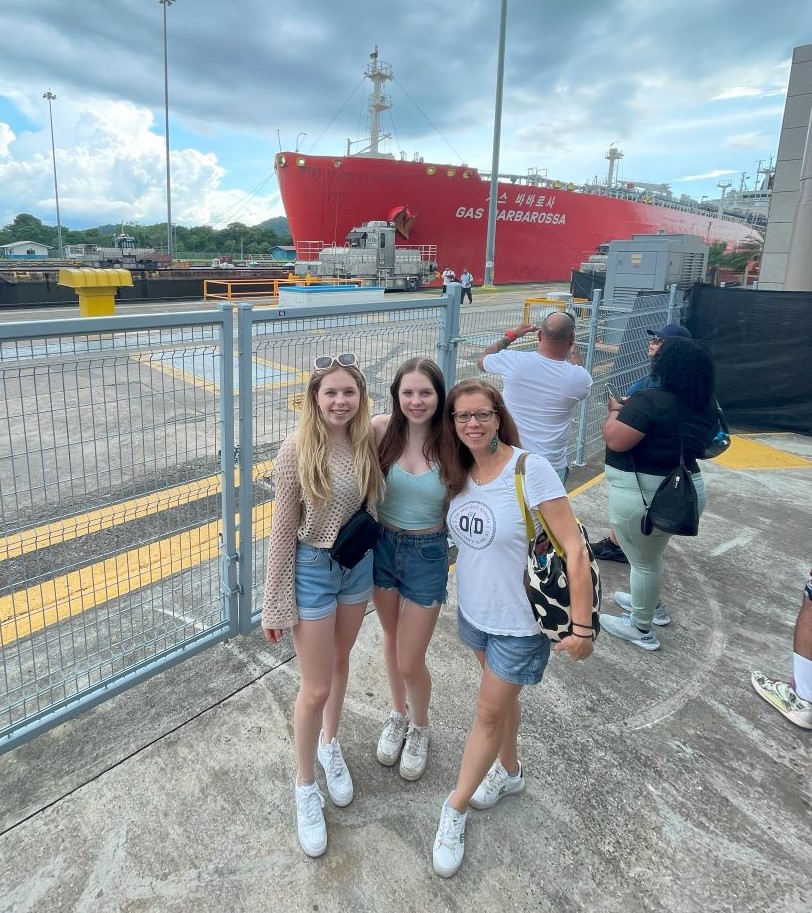
The lock was in the process of emptying water, and once the water levels on both sides of the doors were equal, the doors opened.
We also watched a short video on the canal, which was informative but also more than a little sanitized. The soothing voice of Morgan Freeman would have you believe that the Spanish conquistadors were friendly tourists when they arrived in Panamá. I have my doubts. Still, the canal is an amazing engineering feat and benefit to the vast majority of the world, given the savings in time and emissions it provides. It’s also a steady source of income for Panamá. A recent toll for a large boat passing through was $1.2 million.
A couple of fun facts: First, the canal is not a manmade trough through the entire isthmus. Instead, the center of the canal is Lake Gatun, a massive inland lake, formed by damming the Chagres River. The water level of the lake is above that of both the Pacific Ocean and the Caribbean Sea. Boats pass through a series of locks on each end to rise to the level of the lake, cross the lake, and then step back down on the other side. Second, there are no water pumps used to raise or lower the boats in the locks. All of the force comes from water pressure from Lake Gatun being at higher elevation than the locks. Water flows down into the locks by gravity. In other words, the beating heart of the canal system is the Chagres River, which is the same river that the Spanish used to float gold and silver to the Caribbean more than 450 years ago (as I mentioned in my first post).
After the video, we popped back up to the observation deck to see the canal again with more informed eyes.
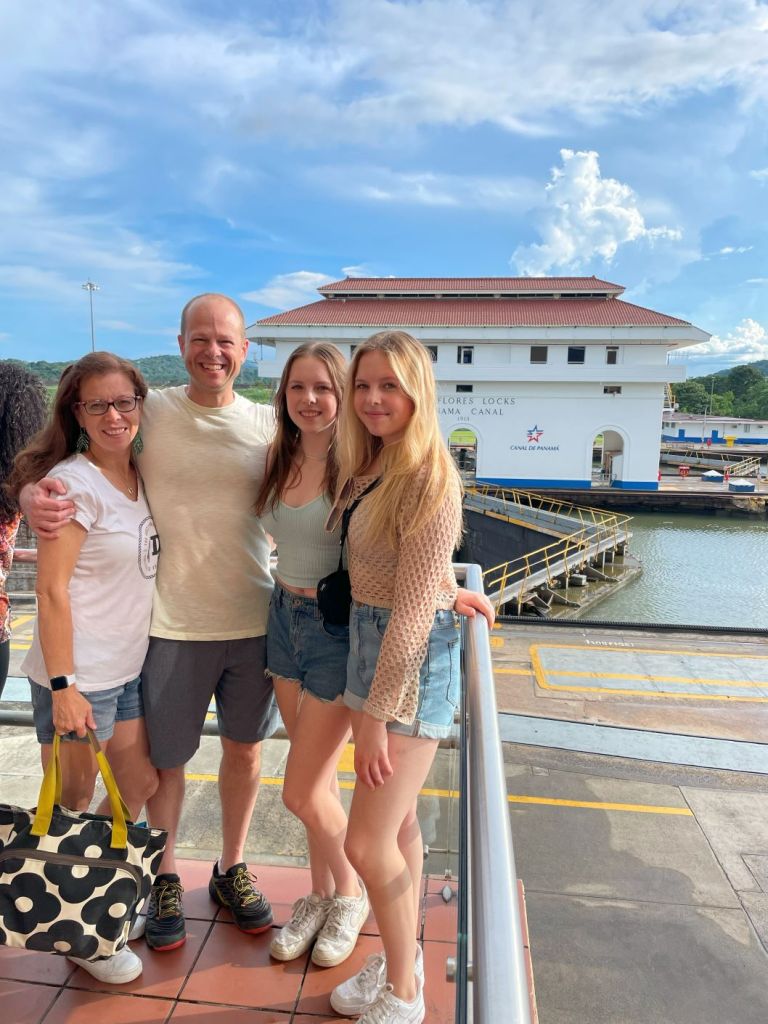
Note the water level difference on either side of the lock doors above. Fully impressed by the canal, we hopped into the car to drive to Anton Valley, often referenced in Panamá simply as “El Valle.” El Valle is in the mountains southwest from Panamá City and is much cooler due to the higher elevation.
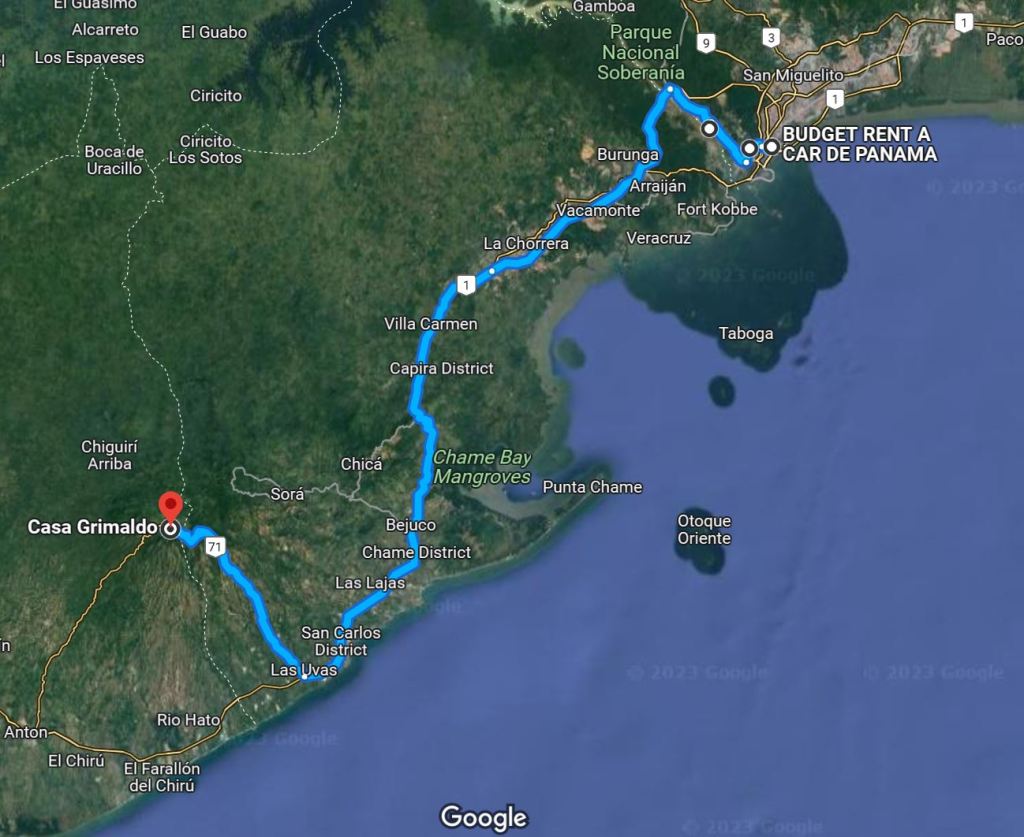
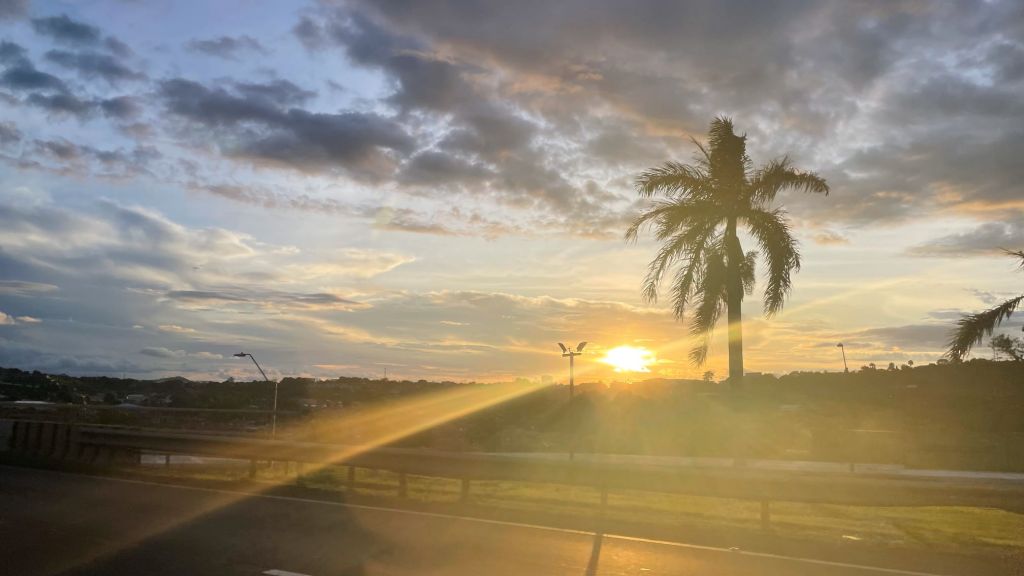
The drive was only supposed to take 2.5 hours, but unfortunately we hit some traffic as we drove. At least we had a pretty sunset.
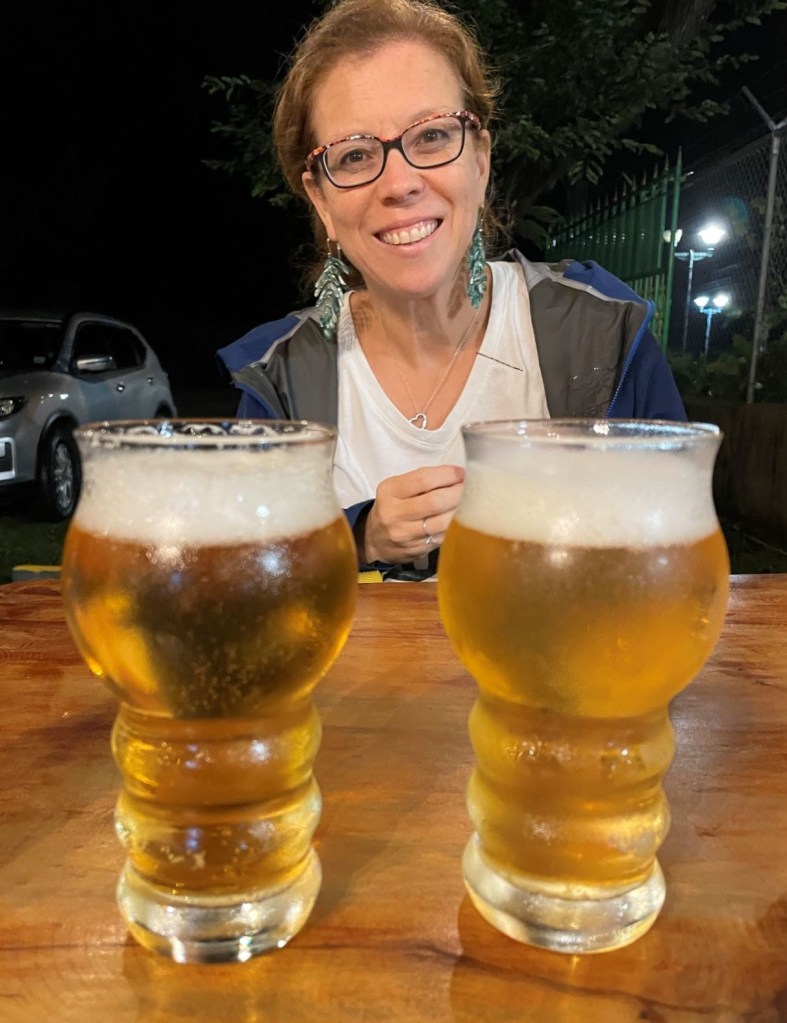
In the dark we climbed the twisty road. It had recently rained in the area, and we strained to distinguish puddles from potholes, deciding in the end to slow down and dodge anything dark on the road. We finally arrived and checked in to the Casa Grimalda, finding ourselves to be the only guests. The high season for travel in Panamá is in December, when the tourists are typically from Panamá and countries in South America. We dropped our luggage and headed out to find food in the small town, eventually eating outside at a tiny restaurant called Pa’Ya. Julie and I each enjoyed what would become our favorite Panamanian beer, Balboa, which was named for the Spanish conquistador Vasco Núñez de Balboa (who in 1513 was the first European to reach the Pacific Ocean by crossing the New World — which he did by crossing the isthmus of Panamá).
Went to bed filled with anticipation for hiking and exploring El Valle the next morning.
-Will

