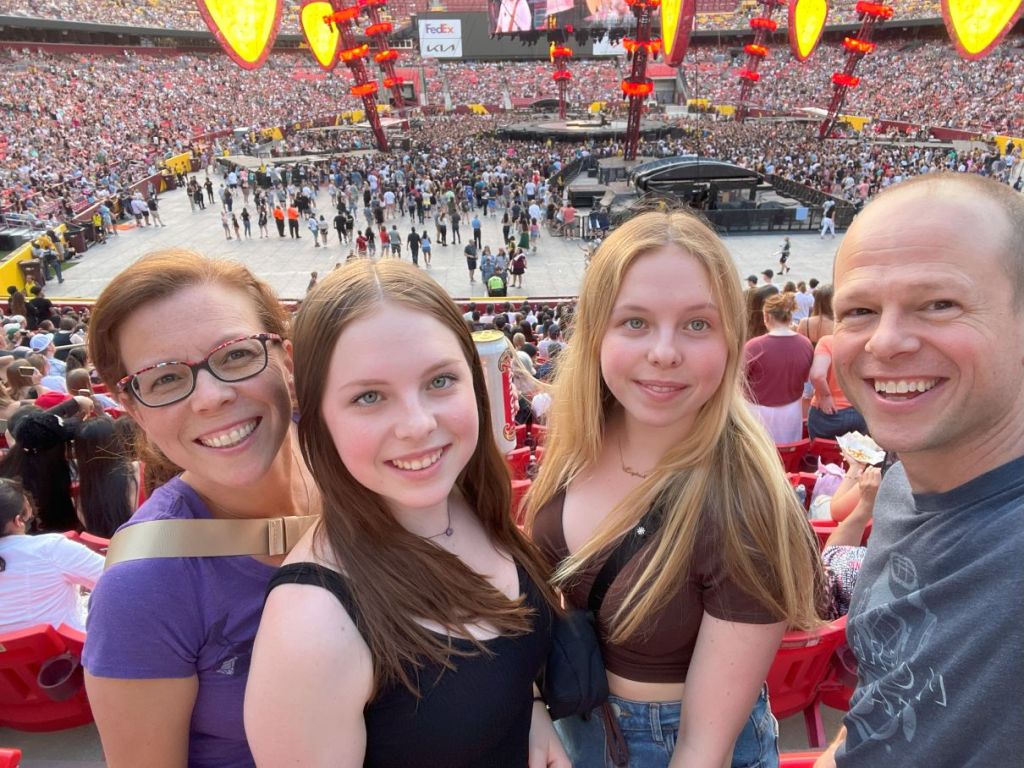
Technically, our trip to Panamá started on 6.25.23, but it’s barely worth mentioning. Since we were flying out of Dulles (which is about 90 minutes from our house) and our flight left at 10 am, we decided to make our lives a little easier by staying at a boring hotel near the airport. We also needed extra time to pack on 6.25.23, as we spent much of the previous day at a concert by a famous Panamanian singer, Eduardo Sheeran. (Sure, it’s not all that connected to Panamá, but I’d like to remember that we went when I re-read this years from now.)
We woke early on 6.26.23 to catch the 6:00 am shuttle and headed to the airport. One of the great advantages of visiting Panamá is the ease of getting there. We flew on Copa, which was a new airline for us, and we have nothing but good things to say about it. The plane was comfortable and new. Plus, the flight left right on time and took only 4.5 hours.
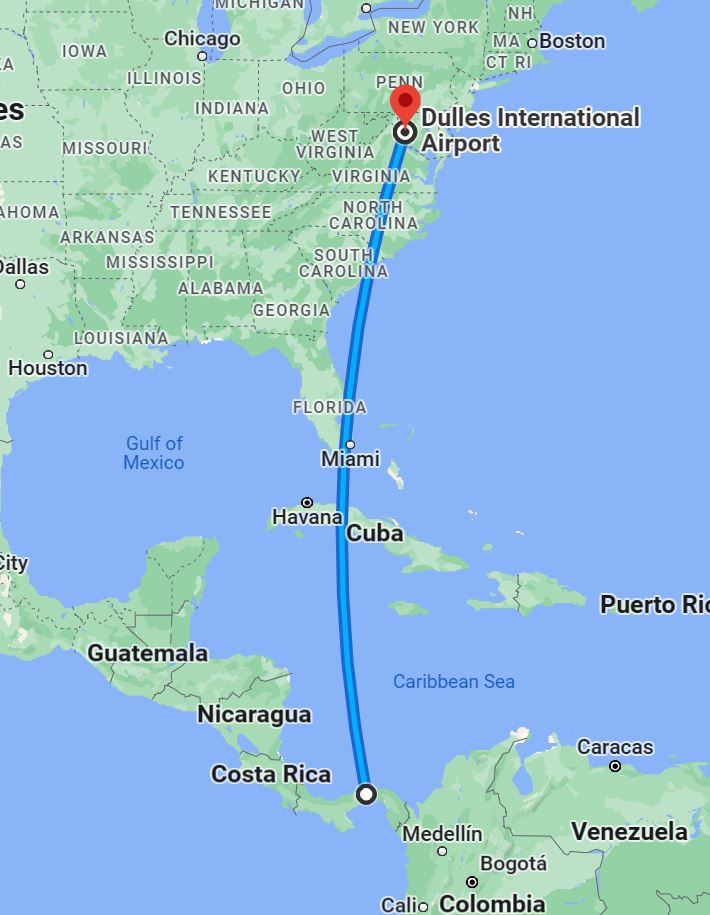
Since Panamá is almost due south from Maryland, there is only a 1-hour time change, so that we didn’t have to deal with any jet lag. (The only reason for the time change is that Panamá does not have daylight savings time. Since it’s so close to the equator the amount of daylight does not fluctuate very much throughout the year.) We arrived to Tocumen airport’s brand-new terminal at 2 pm local time, excited to see what Panamá had to offer.
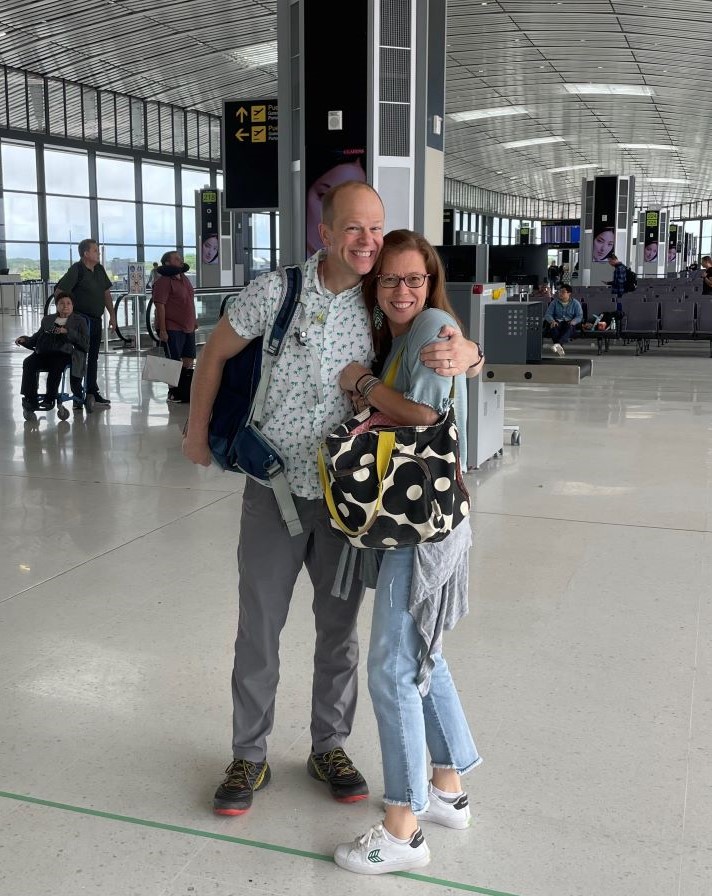
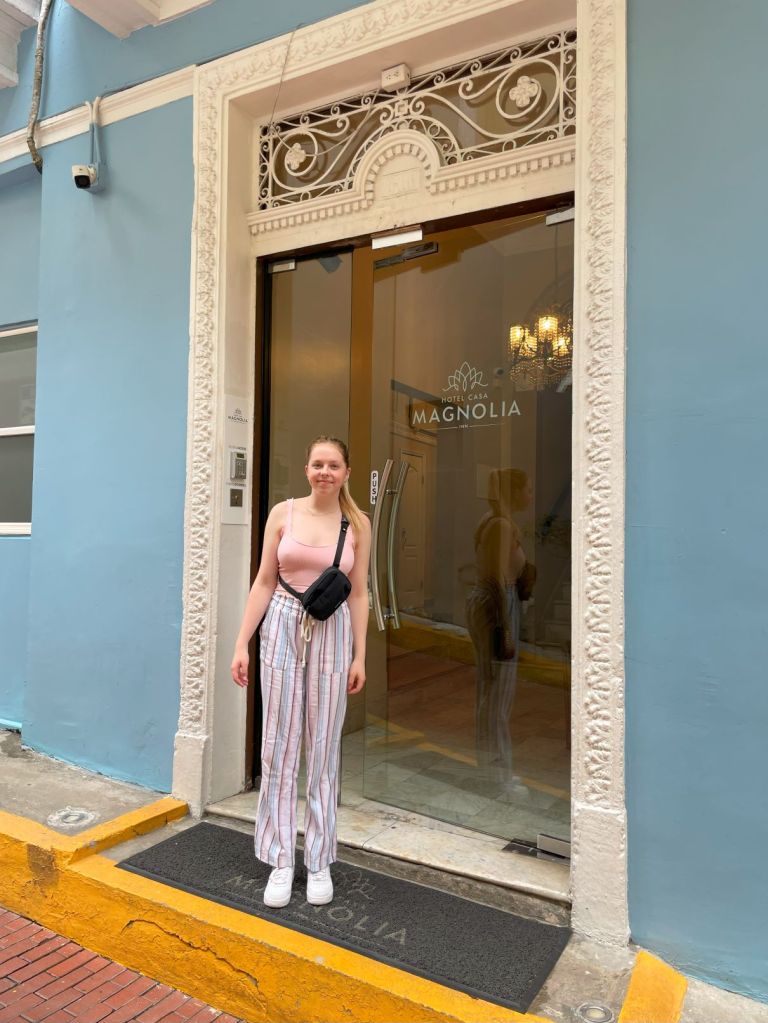
From the start we were impressed by Panamá’s investment in itself. We grabbed our luggage, hopped in a cab, and by 3pm were checked into our hotel – the Magnolia Inn, which is in the heart of one of the oldest parts of the city.
We ate a little on the plane, but everyone was hungry. So, we went around the corner to La Rana Dorada (the Golden Frog) for a quick bite to eat and a beer to celebrate our arrival. While we waited for our food, we played cards, which is always a fun part of traveling for us as a family.
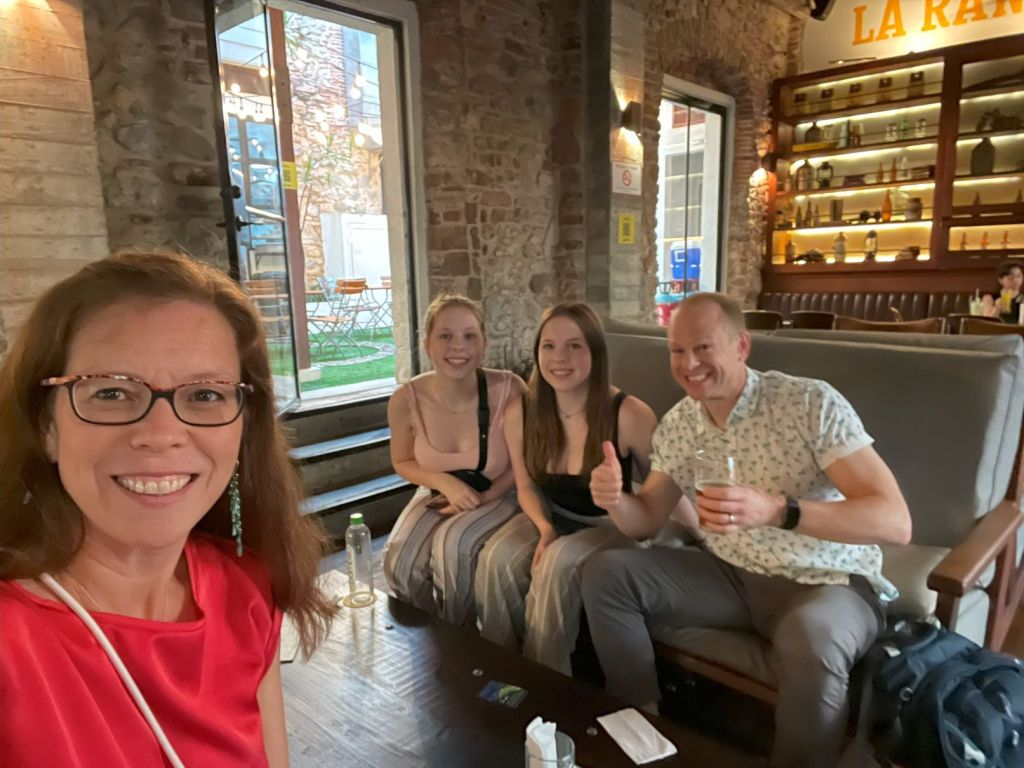
La Rana Dorada brews their own beer, which was delicious (and strongly recommended). Recharged, we set out to explore historic Casco Antiguo.
To appreciate this and other parts of our trip, some historical background is helpful. Casco Antiguo is not the oldest part of the city. That title goes to Panamá Viejo, which was founded in 1519 by Spanish conquistador Pedro Arias Dávila. As an aside, Dávila was a bit of a character. Prior to founding Panamá, he collapsed from illness and appeared to have died. At his funeral, a servant heard movement inside his casket, and when it was opened, Dávila was very much alive. Dávila then took his casket with him as he traveled, including on his transatlantic expeditions.
Back to Panamá — Spain established the city as a key hub in its efforts to extract gold and silver from South America, particularly from the Incan Empire in Peru. Spanish conquistadors would take the precious metals by ship over the pacific to Panamá, where the metals would be trekked overland to the Chagres River, where smaller boats would float the metals to the Caribbean. There, larger ships would take the gold and silver to Europe. For better or worse, those valuables brought pirates. When England warred with Spain, the pirates turned into privateers, which were basically pirates who worked for the English.
One of the most famous privateers was Captain Henry Morgan — the same Captain Morgan of rum fame. Captain Morgan was a remarkably successful privateer and knew that Spain was incredibly successful in extracting gold and silver from South America. In 1671, Morgan landed 1,400 men on the Caribbean coast, marched them through the jungle, and attacked Panamá City. At the time, this was a bold move, as the city had a population of around 10,000. But Spain’s militia couldn’t defend the city. Morgan attacked, killed, and plundered, and the city soon burned to the ground.
Spain re-founded the city in 1673, but moved about five miles further down the coast to a rocky peninsula that would provide better defense against attack by pirates or privateers. The new city was further protected by a series of defensive walls. This newer but still very old city is Casco Antiguo. After falling into a state of disrepair for many years, the area became a UNESCO World Heritage site in 2003, and today the biggest threat to this historic area is probably gentrification. In truth, it is simply adorable. Our plan for the rest of the day was to wander around the old town. Early in our meandering, we found pieces of the ancient defensive wall that protected the city.
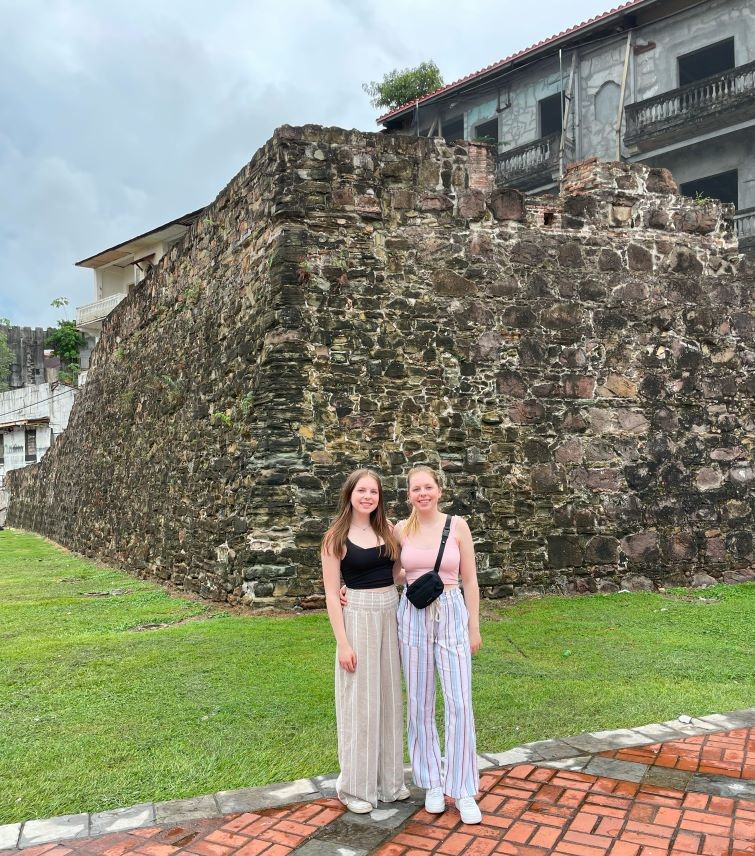
It was hot and humid in Panamá, and you might be wondering why we are wearing long pants. Our guidebook said that people in Panamá tend to wear longer pants and skirts in the city, and we were trying not to be brash tourists. From what we saw, the guidebook was right. (But as you’ll see we also broke down later in the trip when we got hot. I mean, who are we kidding? Nobody is going to think we’re not tourists.) Our walk next took us by the Iglesia de San José, which dates to the 1670s.

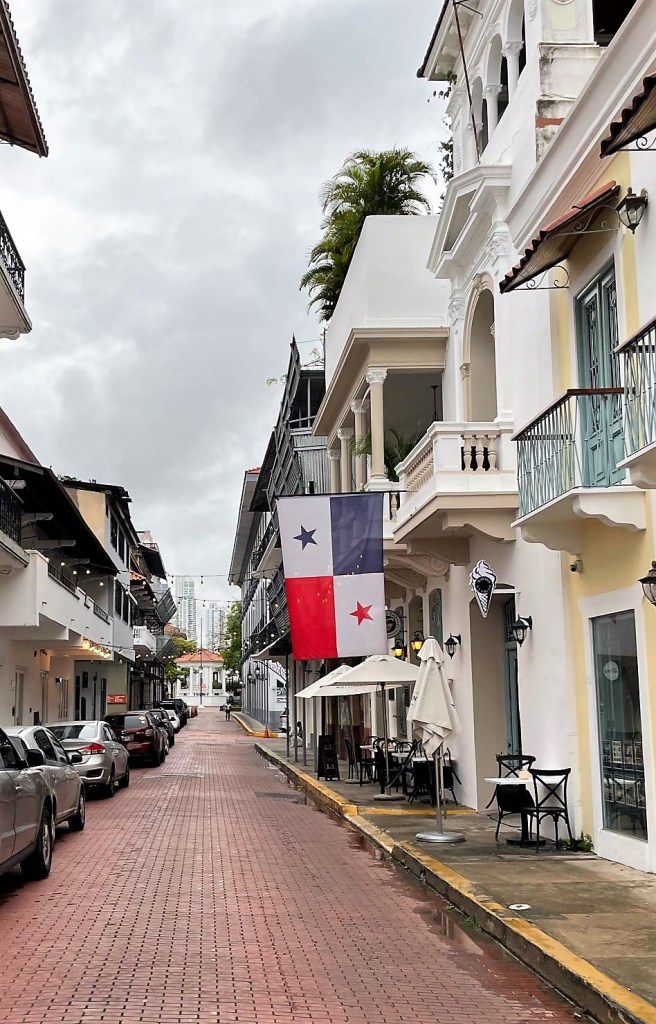
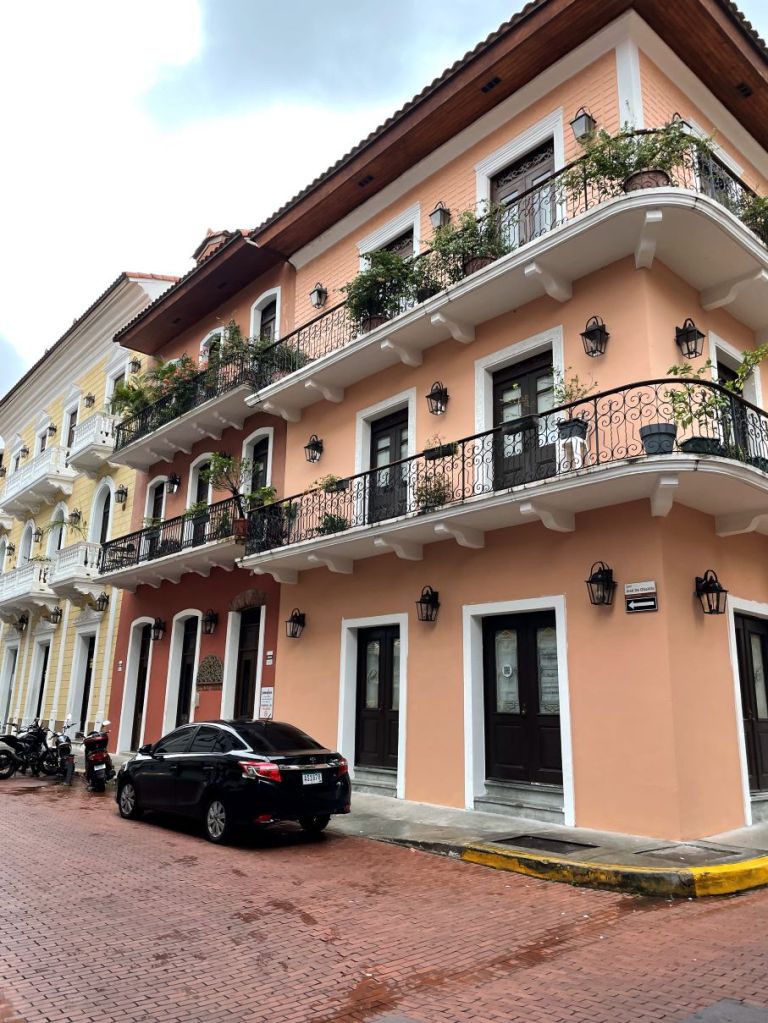
We strolled down narrow streets lined by charming old houses, often with shops or restaurants in the bottom floors.
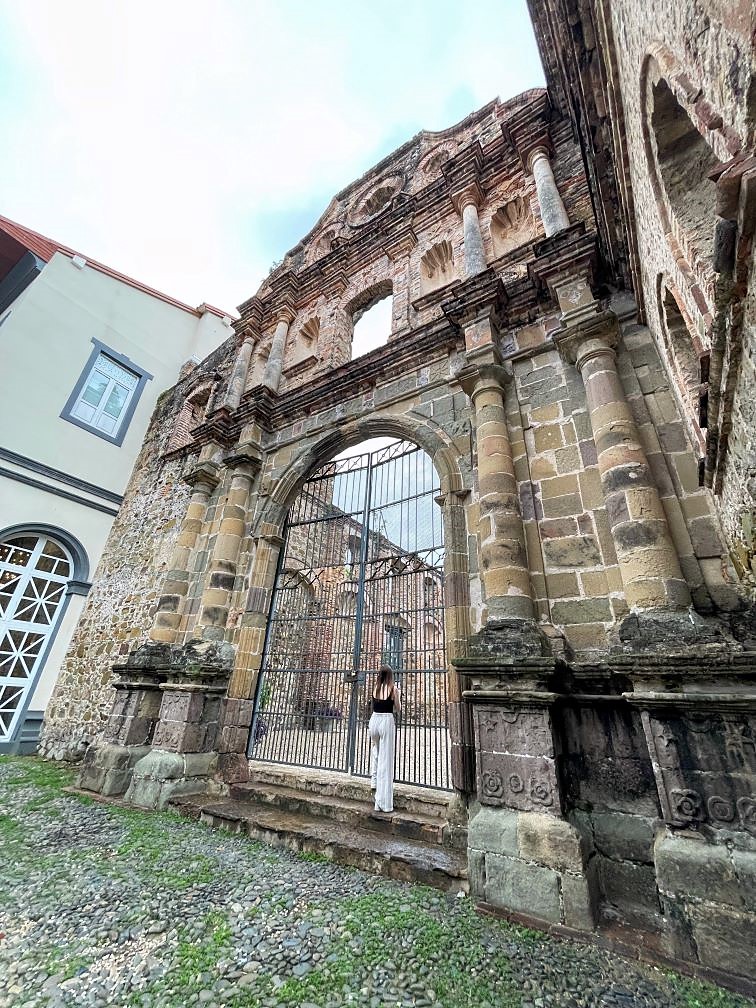
We soon reached the Iglesia de la Compañía de Jesús, the remains of a church from 1741. Damaged by fire and earthquakes, only the walls are still standing. Many of the walls include shell-shaped recesses, a reference to the costal setting of Casco Antiguo.
Did I mention the charming streets? They are literally everywhere in Casco Antiguo.
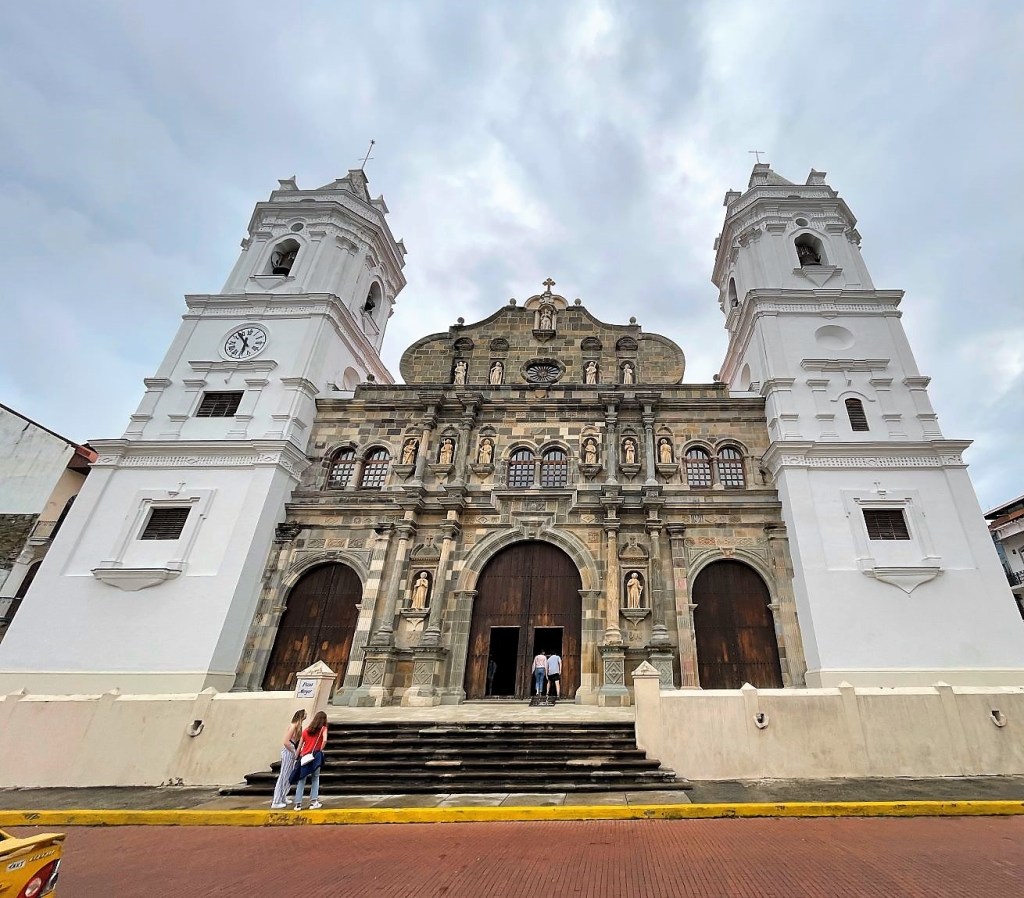
We then walked by the impressive, but somewhat younger Catedral Basílica Santa María. Construction on the cathedral began in 1688 but did not conclude until 1796, 108 years later. The plastered towers are topped with mother of pearl, a nod to Panamá’s deep connection with the sea.
Our next historic stop was the Convento de Santo Domingo, the ruins of a convent built in 1678. Evidently, living on the edge of a tropical jungle made Europeans want to pray.
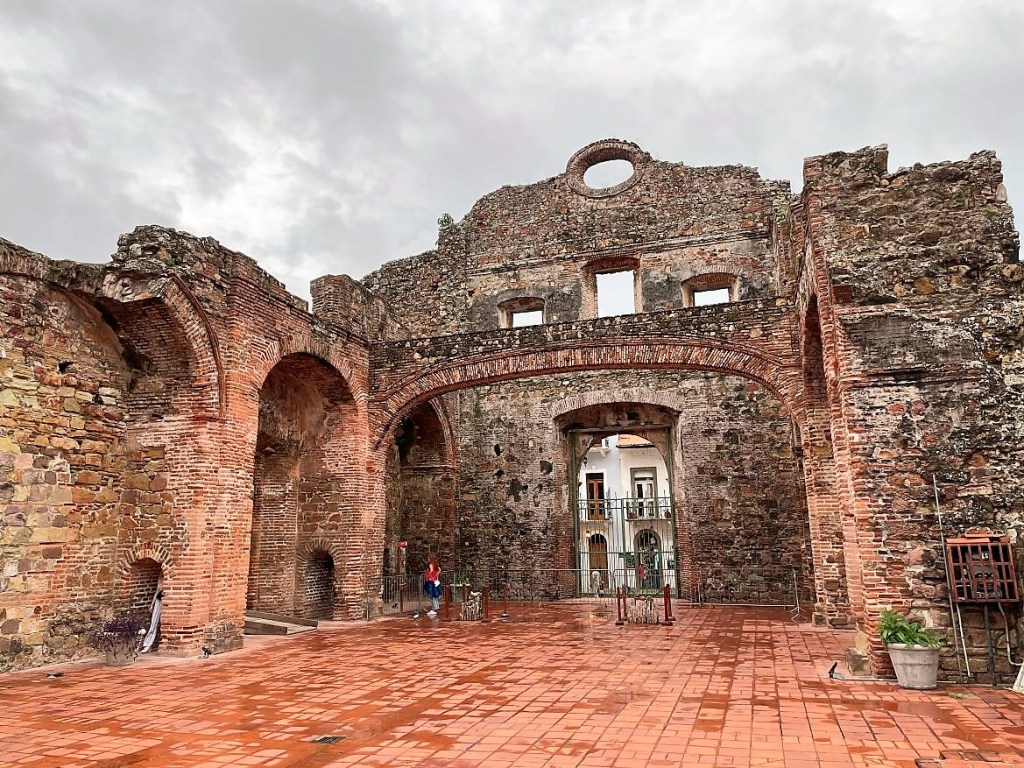
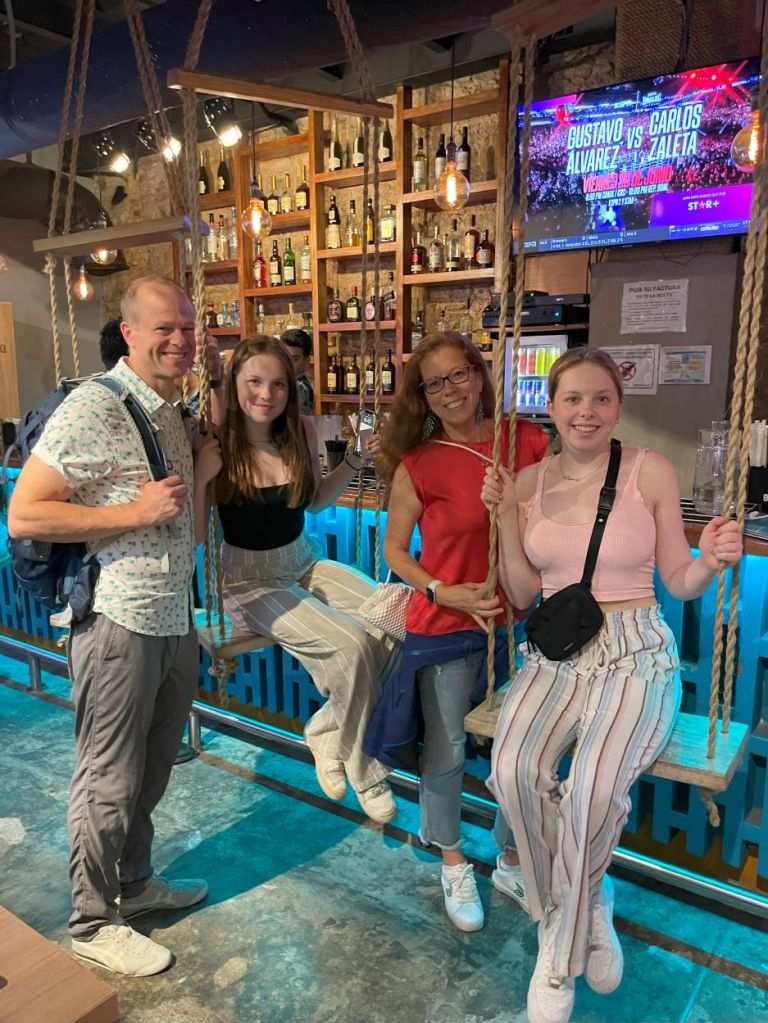
The flat arch at the top of the picture apparently helped with the acoustics for the choir. You can also see some puddles from recent rainstorms. Summer is the rainy season in Panamá, but the showers are relatively infrequent. (We didn’t have to use our rain coats a single time on the trip.) Team Hubbard was starting to get hungry, so we walked around looking at menus. We eventually decided to eat at Vista Corona, in part because of the cool seats at the bar. #suckers
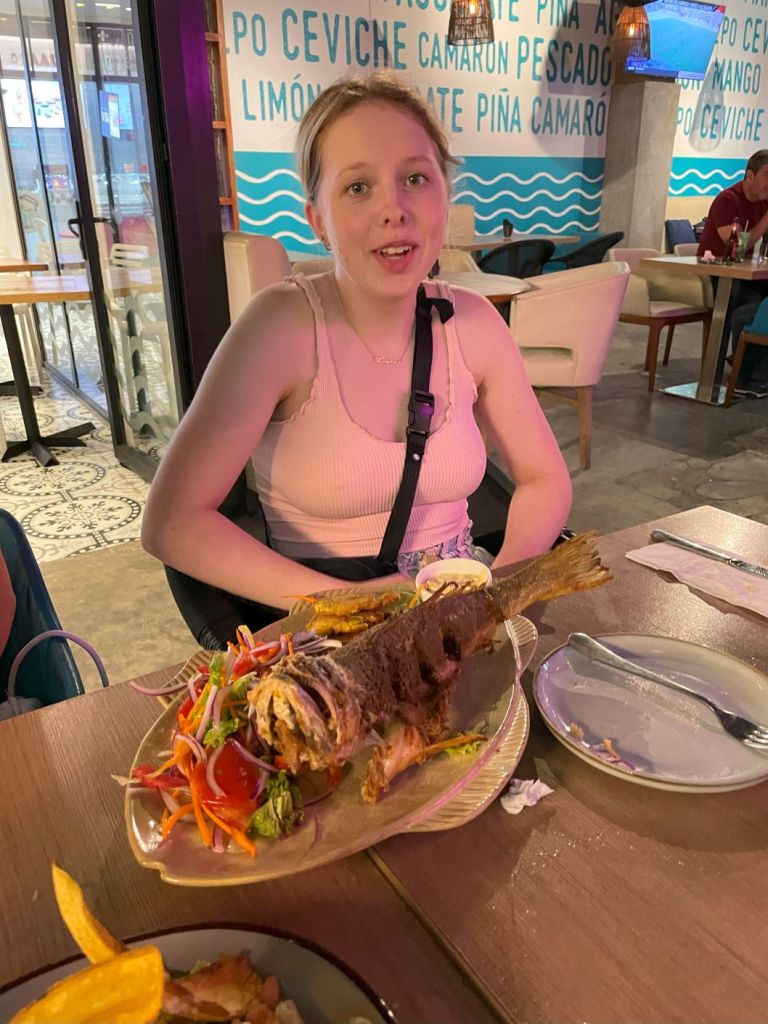
Most of Team Hubbard was hungry, but not Lydie. She said she just wanted something small. Maybe a little fried fish. We might have ordered a little too much food for her.
After dinner, we headed back to the hotel. Everyone was tired from the early start and the late night at the concert. But Julie and I rallied enough to go back to La Rana Dorada to watch the first half of the game between Panamá and Costa Rica.
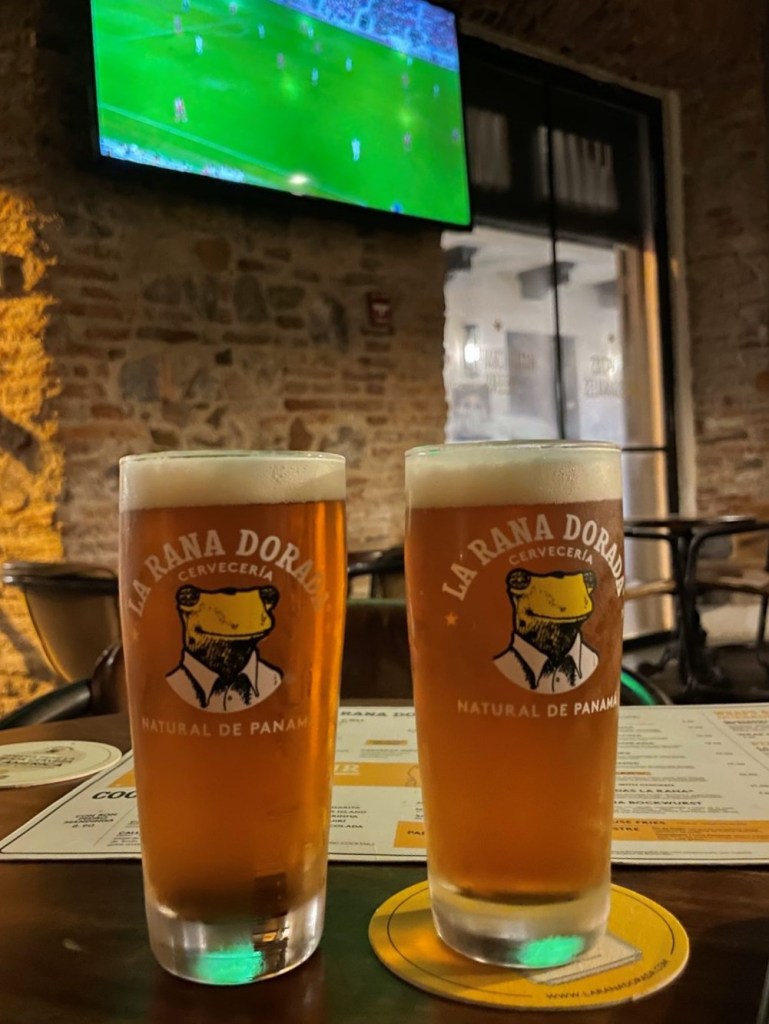
Panamá ultimately won 2-1. And in a different way, we went to bed feeling like winners, too. One day in, and we already felt like Panamá was surpassing our expectations.
-Will
 The Hubbards' Travel Blog
2 thoughts on “Day 1 (6.26.23): Arrival and Casco Antiguo”