Today was our last full day in Canada. We didn’t know it when we set out in the morning, but it was going to be a jam-packed day.
Our first stop of the day was the Green Gables Heritage Place, a museum homage to the classic children’s story Anne of Green Gables. Both Julie and Teresa were big fans of the books when they were younger, and a visit to this museum/farm had long been at the top of our list for the trip. The Heritage Place weaves together three themes: the famous story, the life of author Lucy Maud Montgomery, and the cultural history of PEI. Indeed, it’s hard to separate these threads, as the story draws heavily from Montgomery’s own childhood in PEI in the late 1800s. As a result, the museum includes many historical markers, like horse-drawn buggies (this will come up again shortly).

The centerpiece of the, um, center is a recreation of Green Gables, the fictional farm in the novels where Anne was raised. While the farm was not real, great pains had been taken to make it historically accurate, and we enjoyed walking through the late-Nineteenth-Century farmhouse. Afterwards, we met Anne!
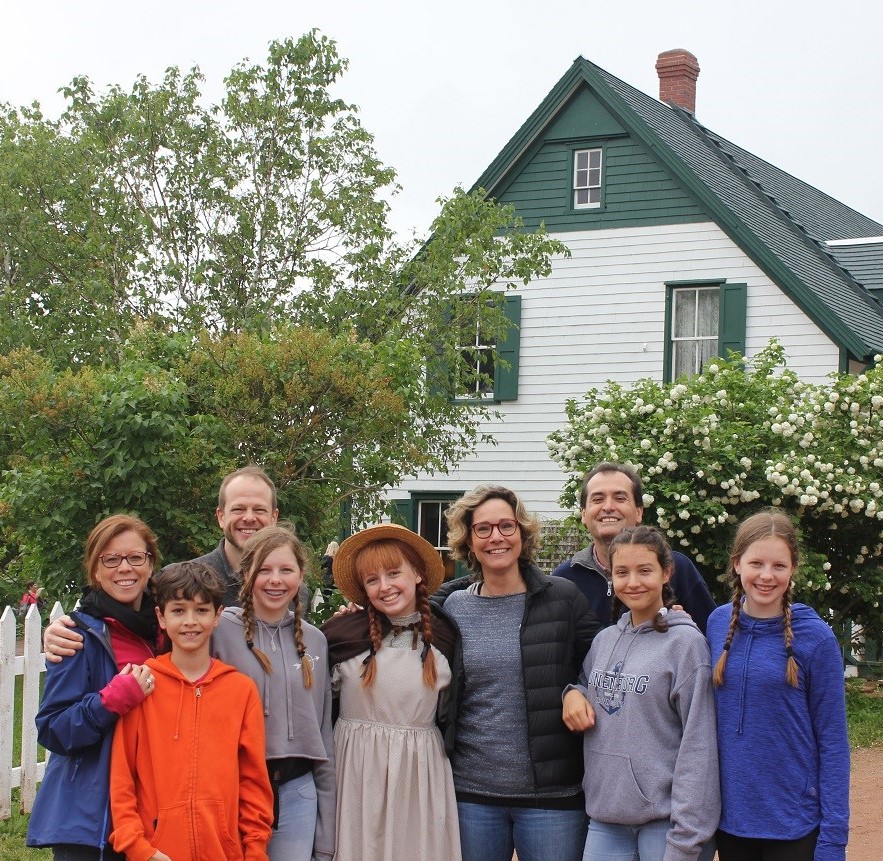
Note the profusion of pigtails on all the girls under 40. (Personally, I think Julie would make a great Anne of Green Gables.) We also enjoyed walking around the farm buildings and listening to live music played by local musicians.
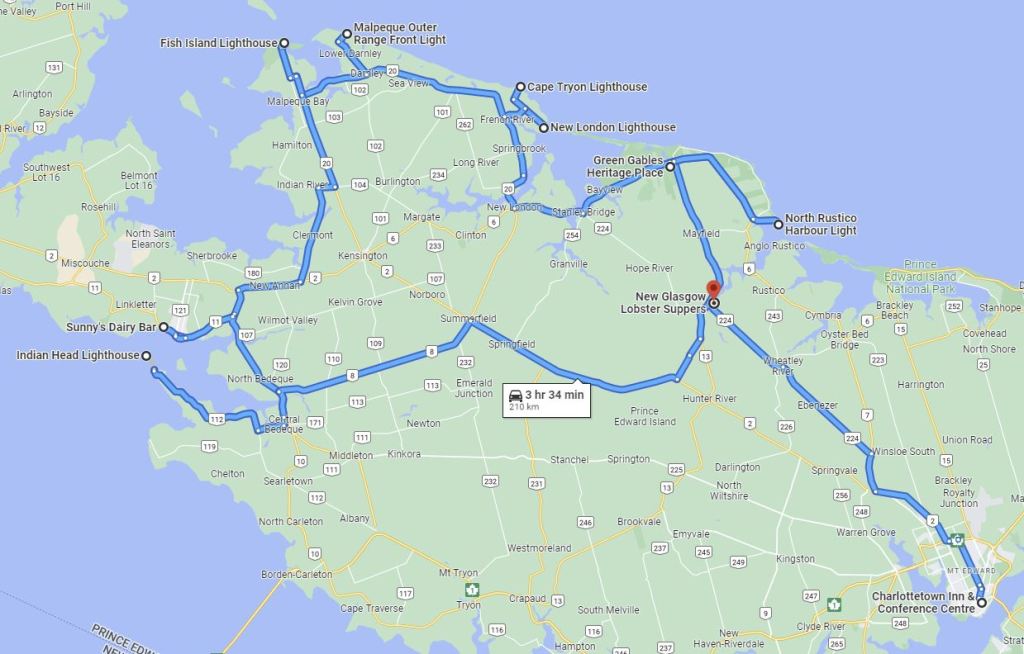
After touring the center for a couple of hours we decided to split up for the rest of the day. Team Spain was going to go back to Charlottetown to continue their Green Gables education. There is a musical that Teresa was particularly excited to see. Team Hubbard decided to spend the day hunting for more lighthouses. In fact, our first lighthouse was less than fifteen minutes away, where we found the North Rustico Lighthouse.
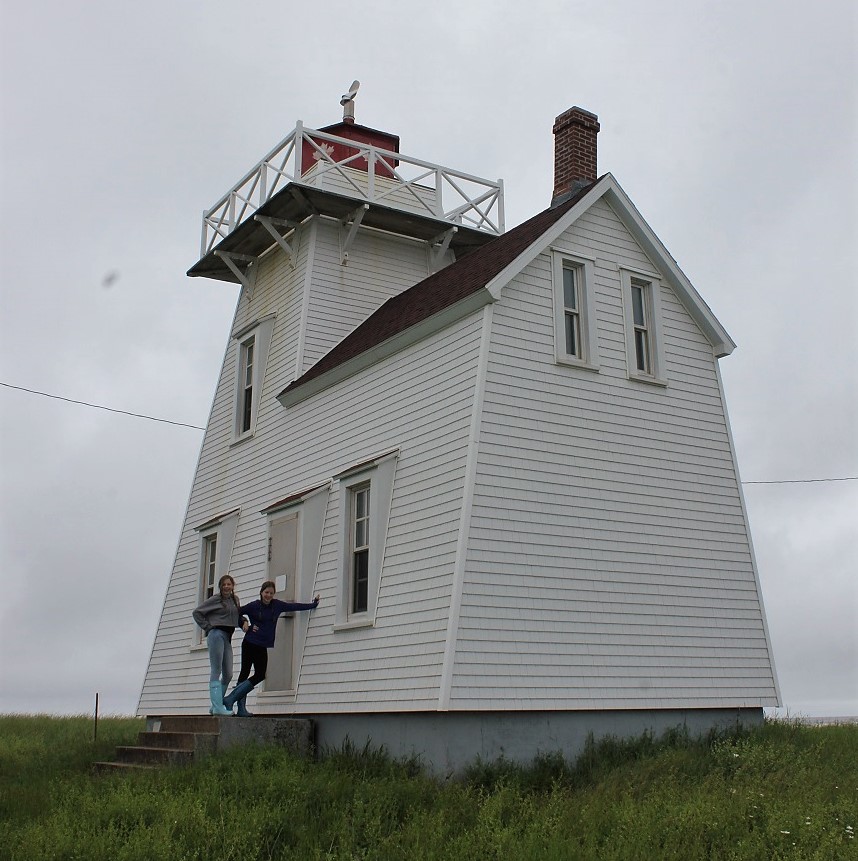
This was a relatively quick stop for us. We couldn’t go inside, and there wasn’t much of interest near the lighthouse. Nevertheless, the lighthouse was intriguing given that it was built in 1876, just two years after Montgomery was born. Montgomery grew up near to the museum we visited, which means that she grew up near this lighthouse. Remember that picture of Guille with the horse cart? I found this historical picture of the North Rustico Lighthouse online:
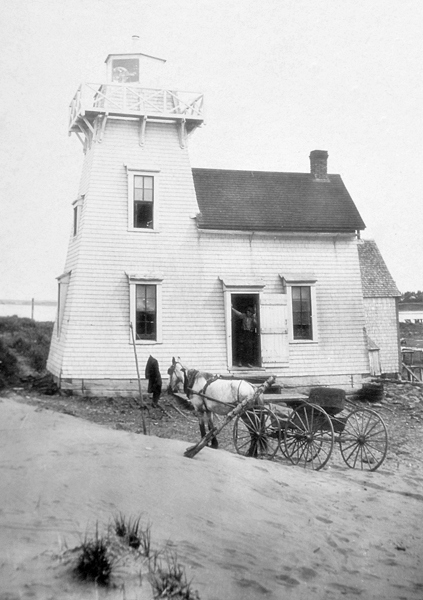
Maybe Montgomery visited this same lighthouse as a girl. Impressively, despite its age, the lighthouse is still in operation, rendering the cottage attached to the tower for staffing somewhat unnecessary today.
We soon set off in search of our next lighthouse. Along the way we saw a beautiful stand of purple flowers and had to stop for a closer look.
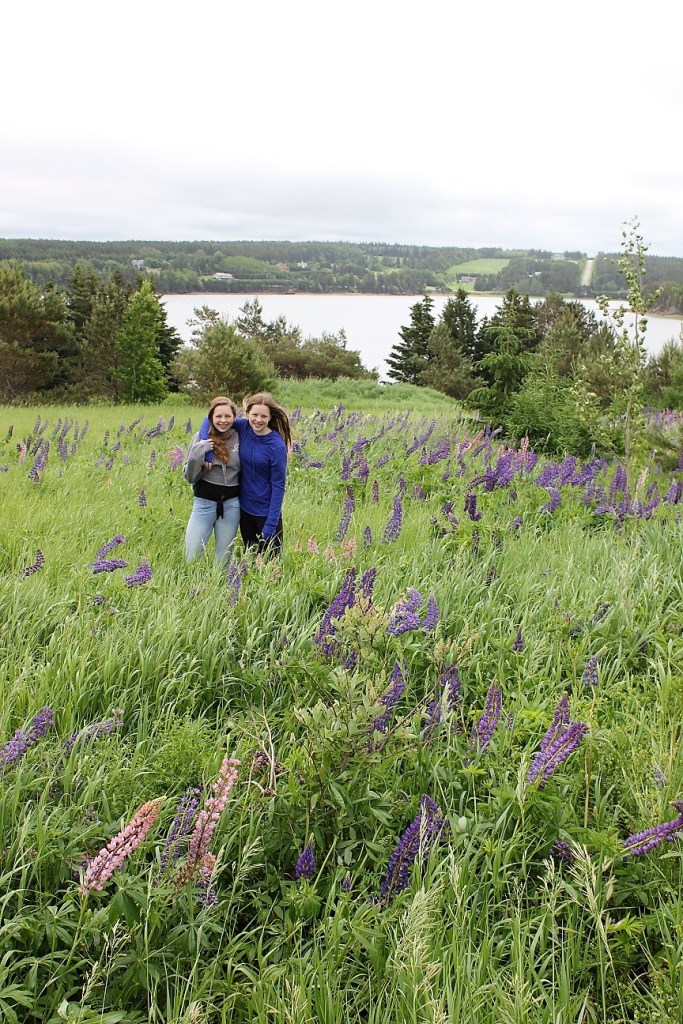
They reminded us of some of the flowers that we saw in Norway, and it turns out that’s not a coincidence. The flowers we saw in Norway in fact were North American lupins. Apparently, lupins were introduced to Norway as ornamental plants. They are pretty after all.
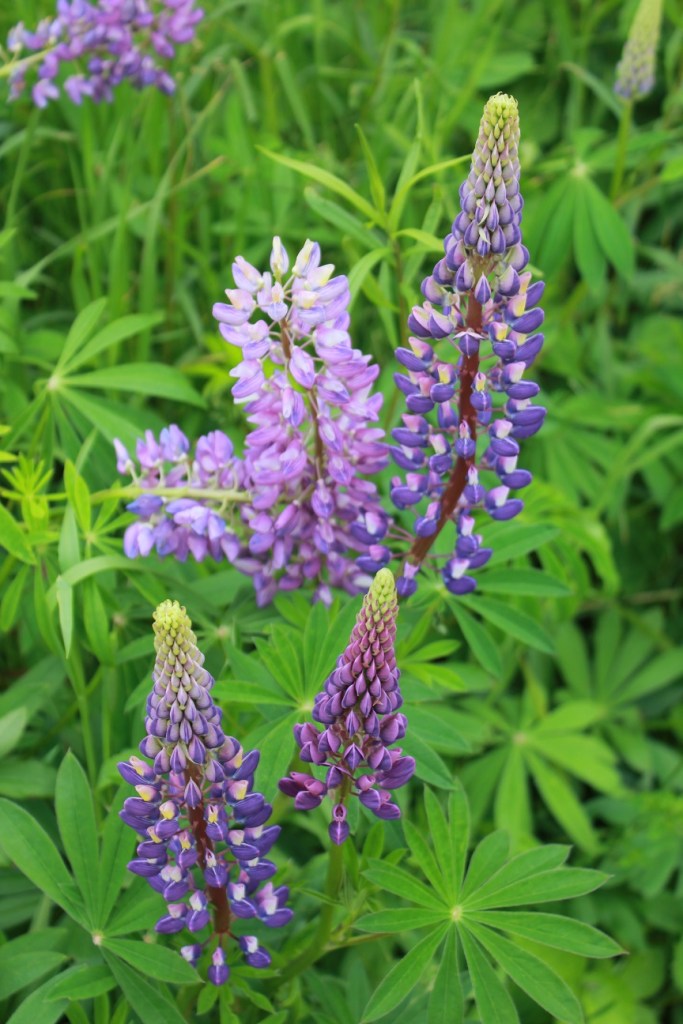
Pretty but pushy! Given the similar climates, the lupins have taken off in Norway, so much so that they are considered an invasive species. We were unaware of their bad reputation when we were in Norway or we wouldn’t have complemented them so much. Bad flowers. Shoo!
Our next stop was the New London Lighthouse, which was another one that Montgomery might have visited, as it was also built in 1876. Getting to this one required a delightful little hike.
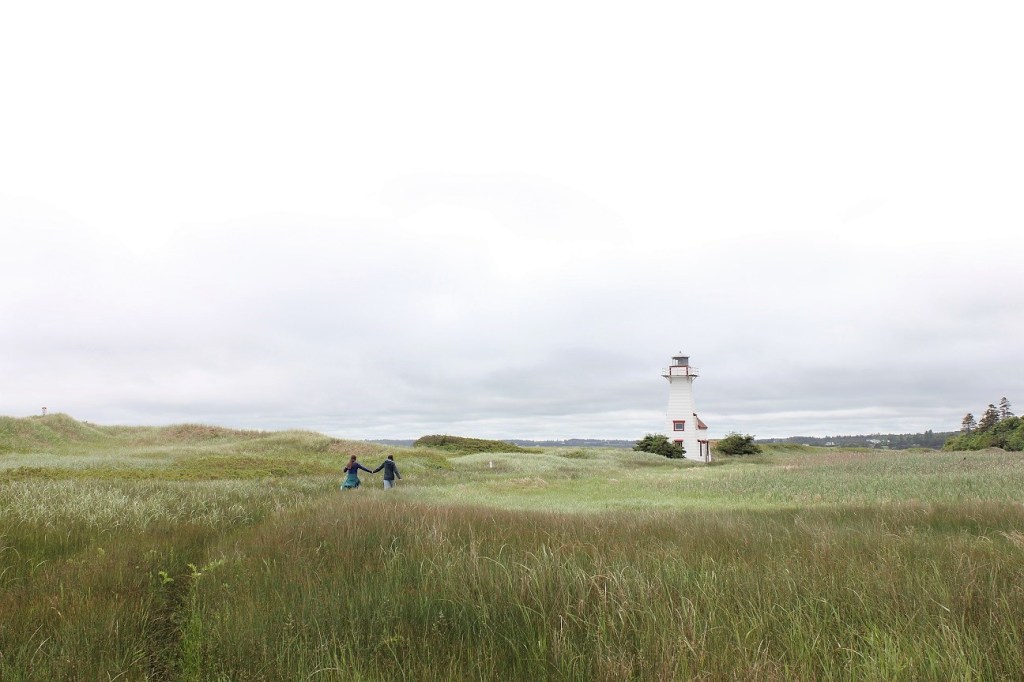
The light house is 43 feet tall and, like the last one, has an attached cottage for the lighthouse keeper. The light still operates today, helping boats to navigate the entrance to nearby New London Bay, though the light is now electric and automatic. Another path led from the lighthouse to a small beach alongside the inlet into the bay.
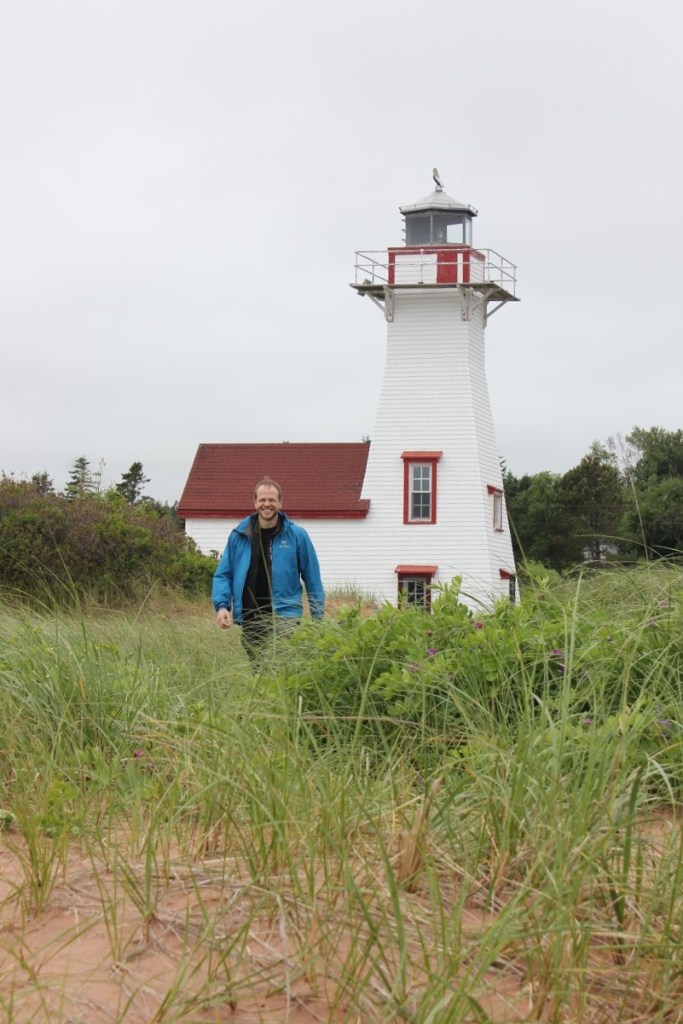
After spending a few minutes on the beach, we hopped back in the car in search of our third lighthouse for the day, the Cape Tryon Lighthouse. This was another one that required a short walk, this time down a narrow country lane that cut between two fields. The puddled, potholed road was not fit for a minivan.
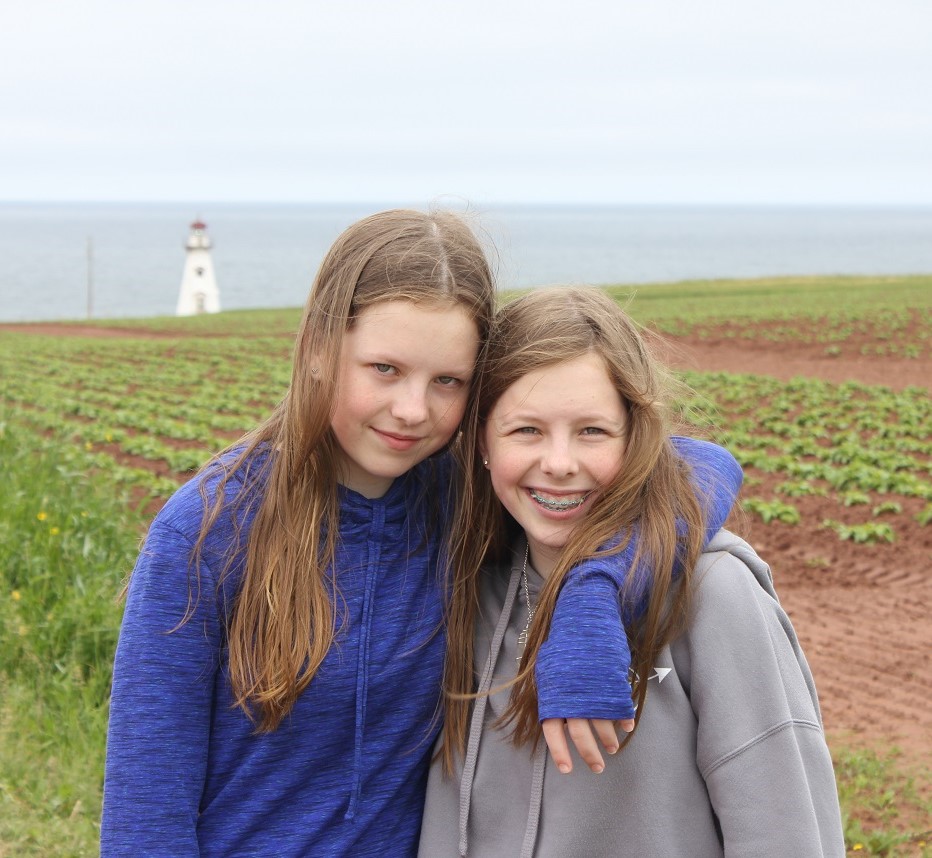
Built in 1962, this lighthouse does not have the historical pedigree of the first two we visited.
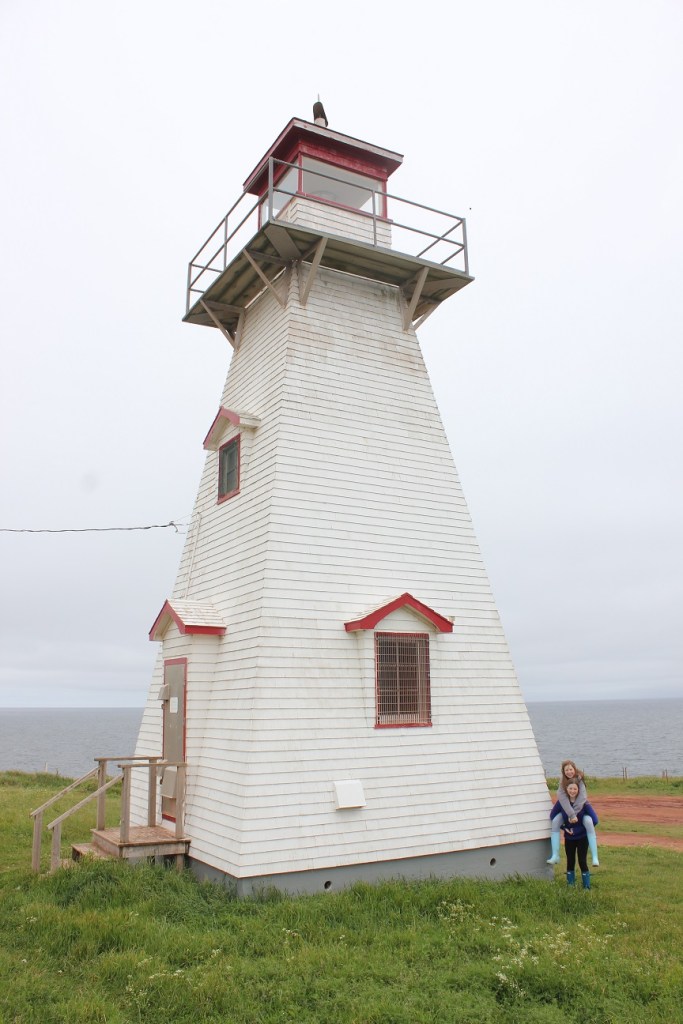
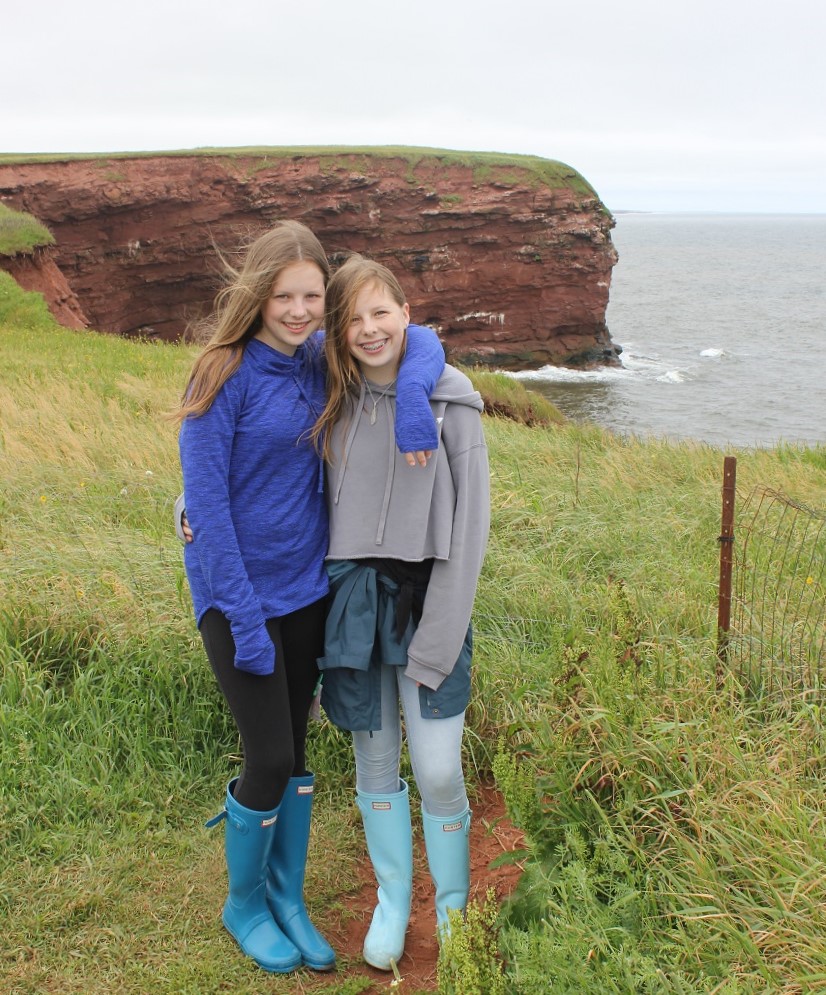
But what it lacks in historical significance, the Cape Tryon Lighthouse makes up for with its setting. Perched on top of cliffs that are more than 100 feet tall, the views from the lighthouse were beautiful.
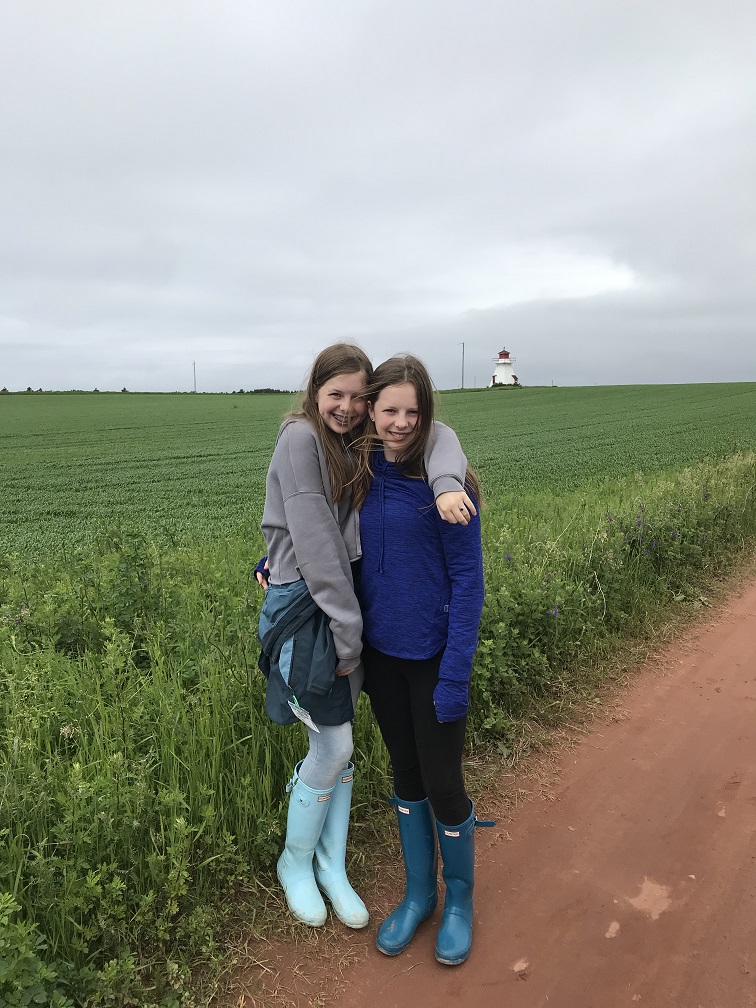
Our fourth lighthouse was the Malpeque Outer Range Rear Lighthouse. Unfortunately, this lighthouse is on private land, so we couldn’t get very close. Still counts!
Onward! Our route to the next lighthouse took us through the town of Princetown, where we drove by a lovely church.
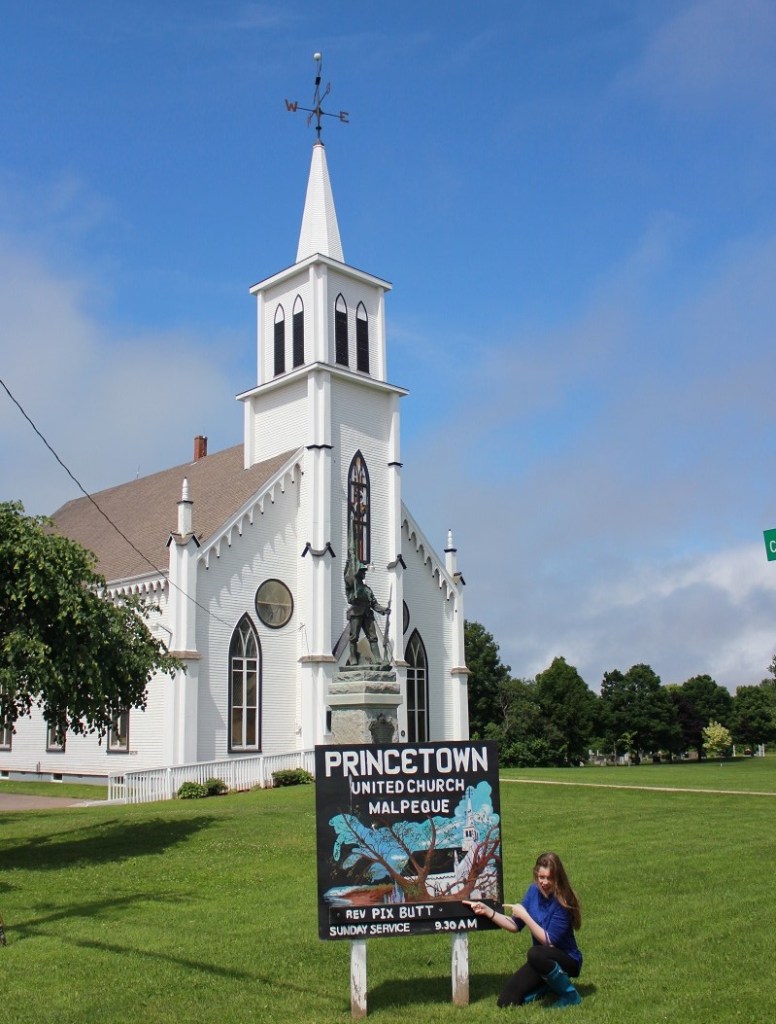
Sadly, we couldn’t stay. I’d love to hear what the Reverend Pix Butt has to say in his sermons. (I *might* be a bad parent.) We continued our drive north from the church and eventually found our way to the Fish Island Light House.
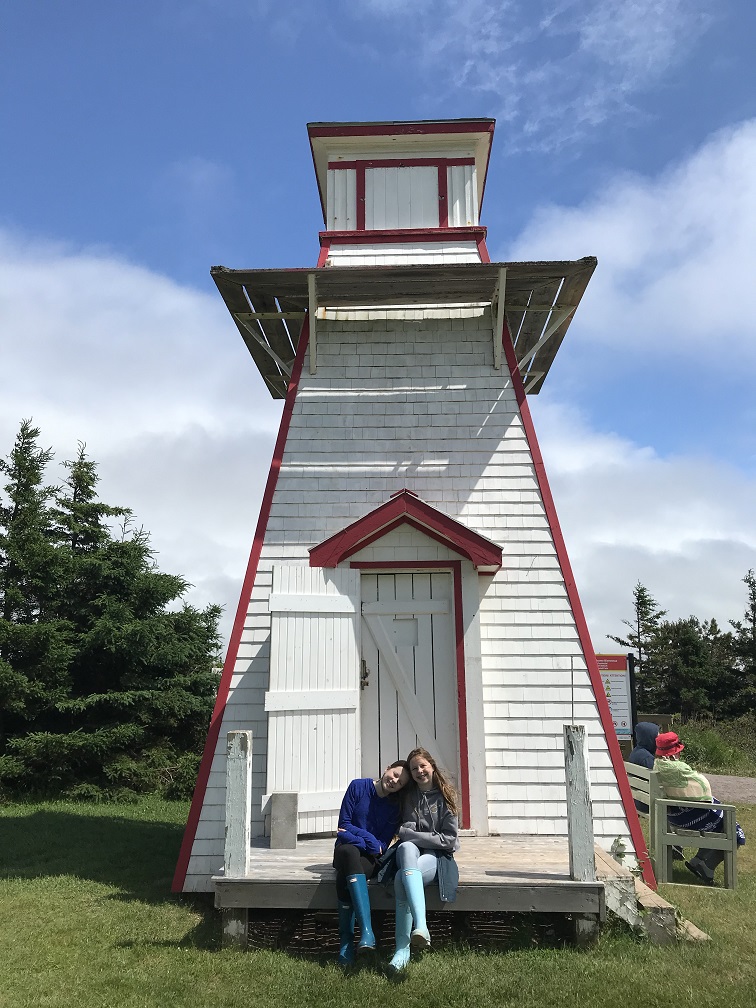
This lighthouse is mostly decoration. Parts of it were once in service in another location, but the lighthouse has never served a navigation function in its current form. Still counts! Five!
Our crack squad of lighthouse commandos was starting to get low on energy, so we headed south to the town of Summerside, where we replenished our blood sugar at Sunny’s Dairy Bar.
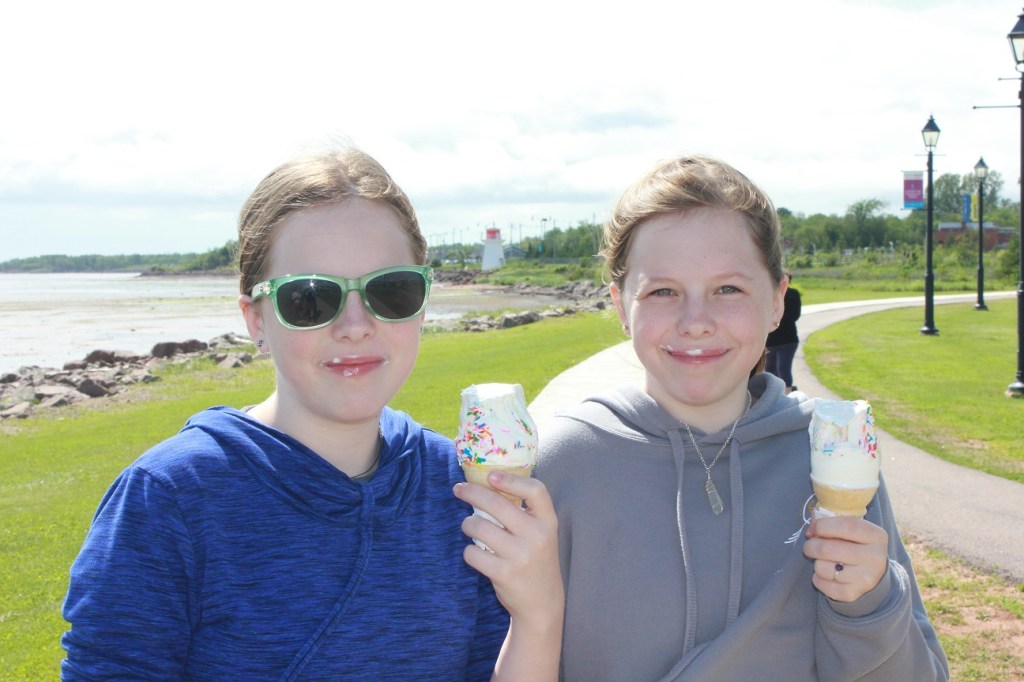
And what’s that I spy between the girls in the distance? Is that a lighthouse? Yep. The Summerside Outer Range Lighthouse. We didn’t get any closer, but still think this was close enough. Six!
Canada is a country with a rich and diverse cultural history, and consequently some of the signs in Canada are in two languages. As we strolled along the Summerside Baywalk Boardwalk, we saw some of those bilingual signs we’d been hearing about.
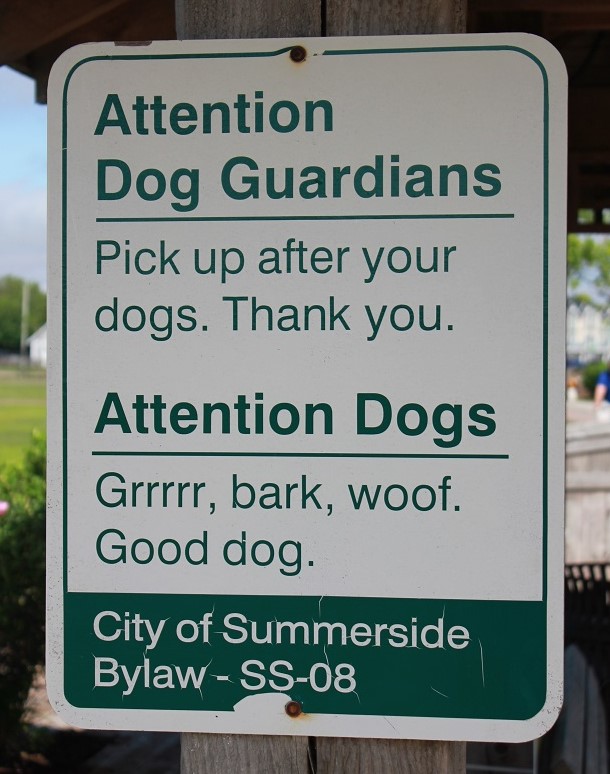
As the girls continued to enjoy their ice cream, we spotted yet another lighthouse in the distance.
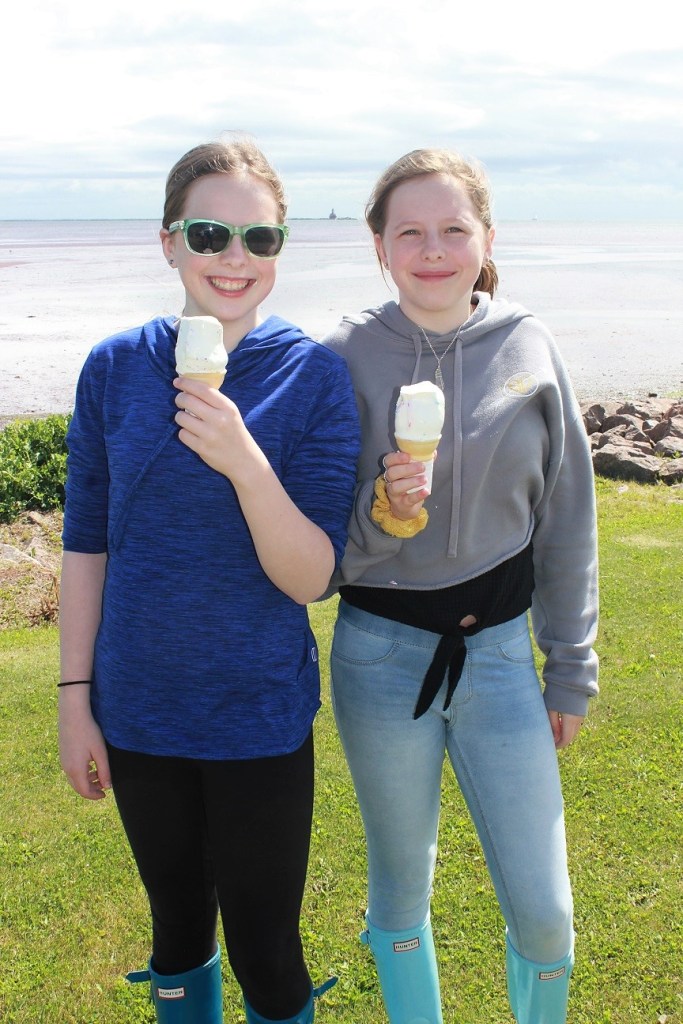
We wondered if we could get there? It looked like it was out in the middle of the water, but there seemed to be a long rock jetty connecting the lighthouse to the mainland. Maybe we could scramble down it. We set off. Along the way we found another lighthouse — the Summerside Rear Range Lighthouse.
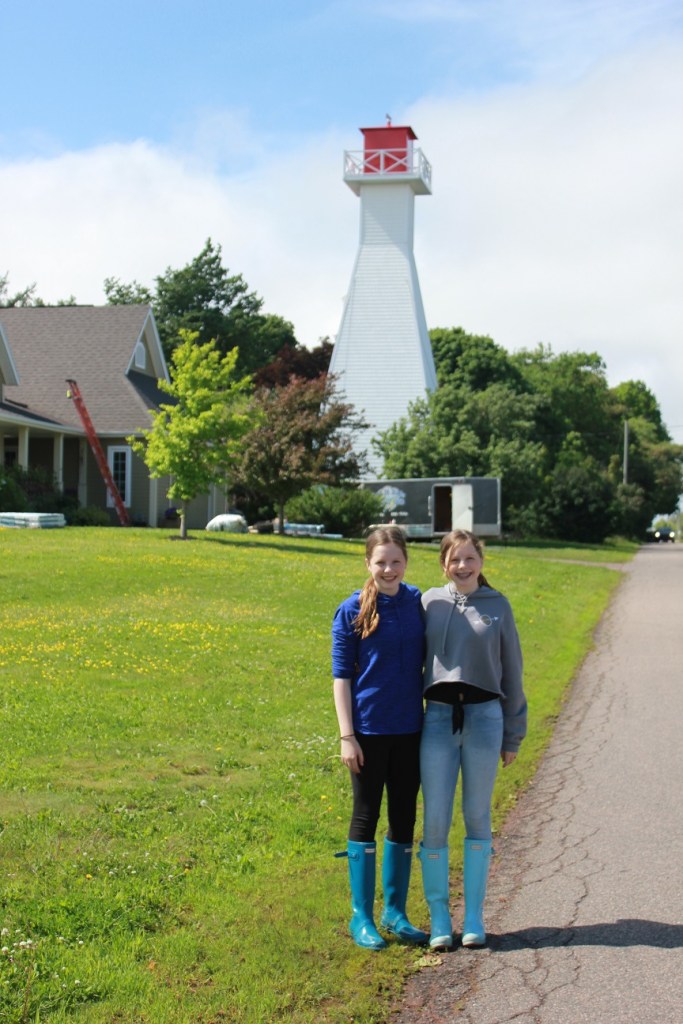
The lighthouse was built in 1895 and originally was an open-frame structure. In 1904, the frame was enclosed, and in 1916 the neck was stretched to add a little height. Seven!
We pressed on, hoping to get to the lighthouse we had seen across the harbor. The road became decidedly rougher and some (Julie) in our party began expressing doubts.
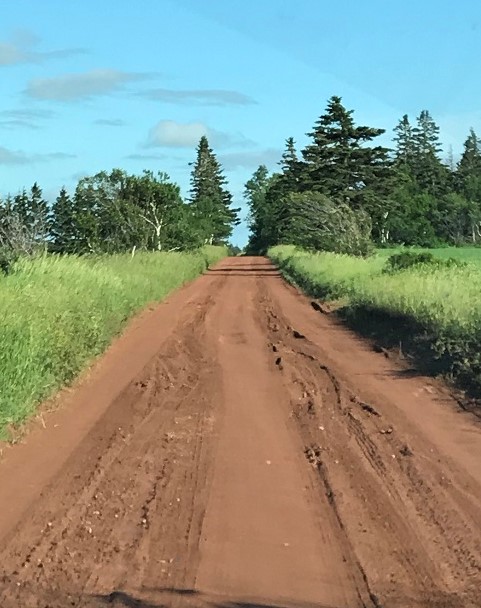
Fortunately, the rough road didn’t last long, and the minivan was up to the task. We soon reached a low bluff near the jetty.
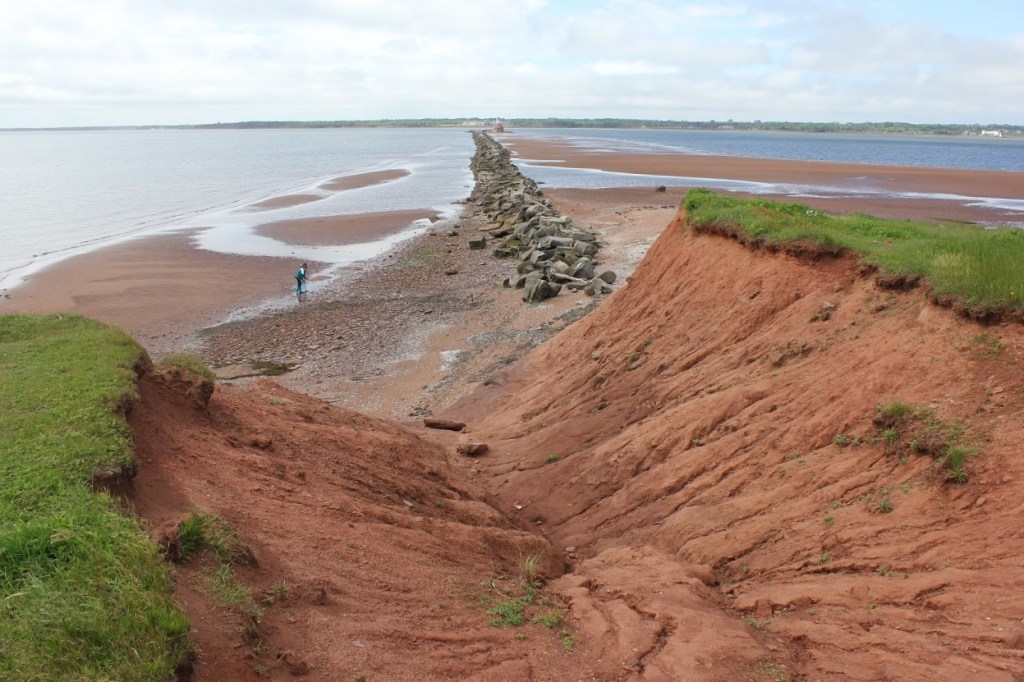
We also got really lucky on the tides, which were low and heading out. We set off down the inland side of the jetty, where the water looked lower.
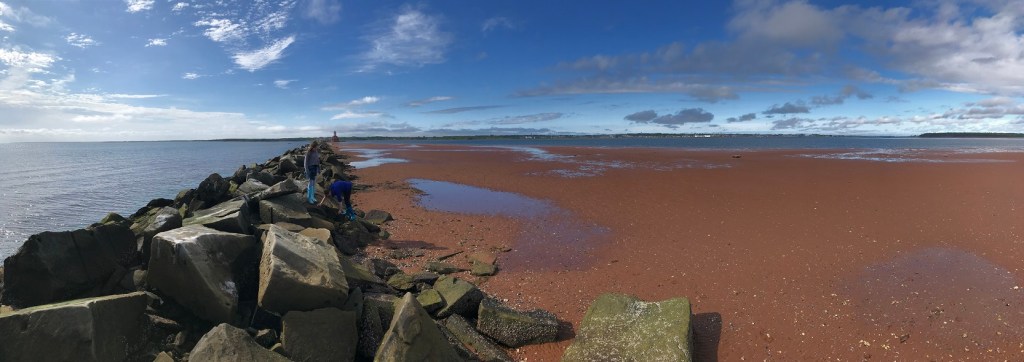
Along the way we had fun exploring little tidal pools.
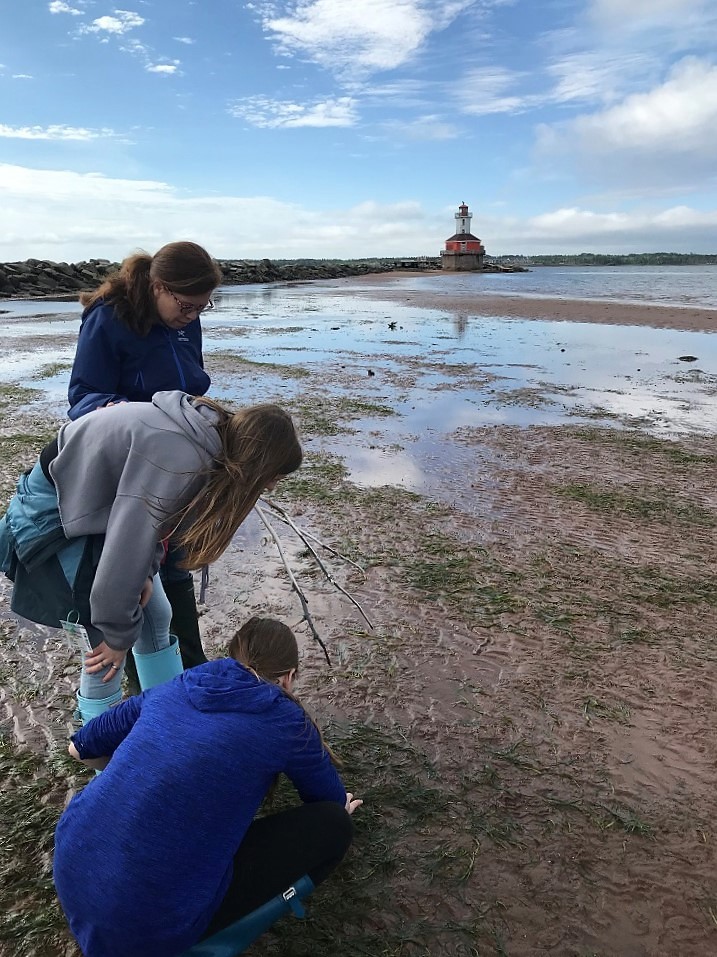
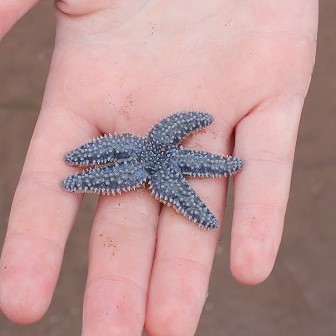
We saw all kinds of little critters, including purple starfishes, snails, anemones, and hermit crabs.
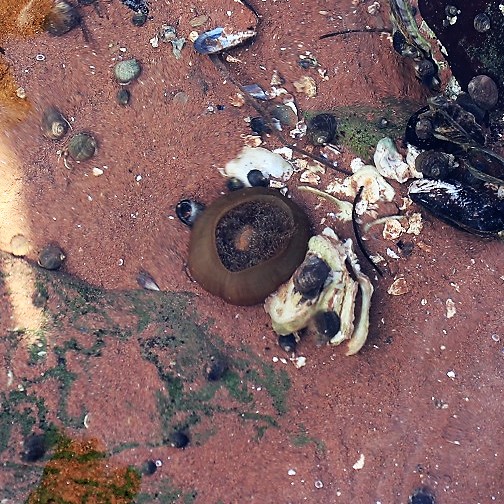


We also found a polychaete worm — probably a sandworm given where we found it.
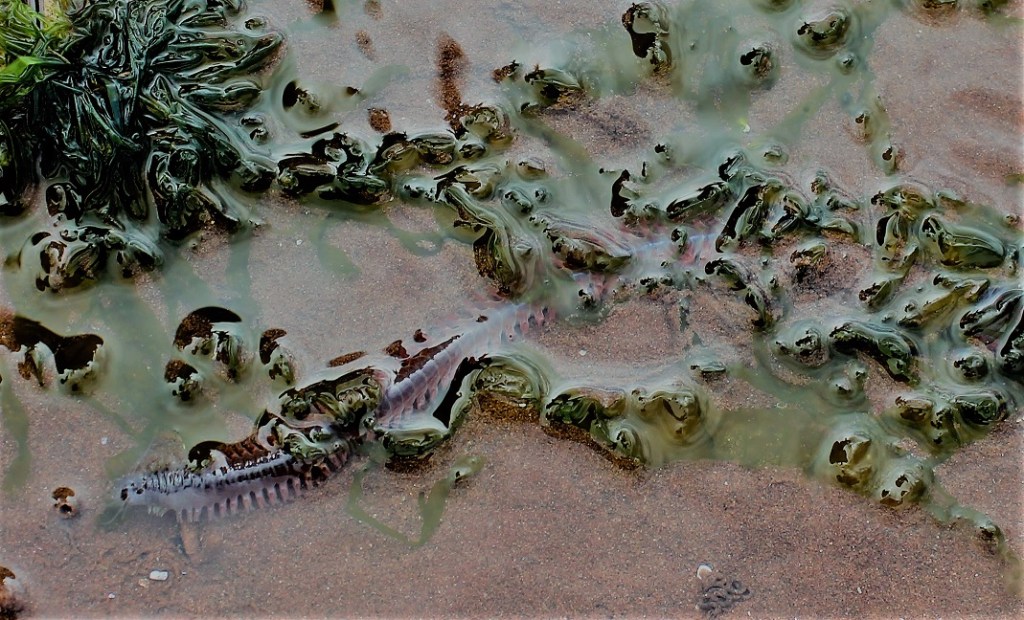
If there weren’t so much water, the sandworms would probably be bigger. Despite their small size, Julie was not a big fan of the worm. Fortunately, the girls were there to support her.
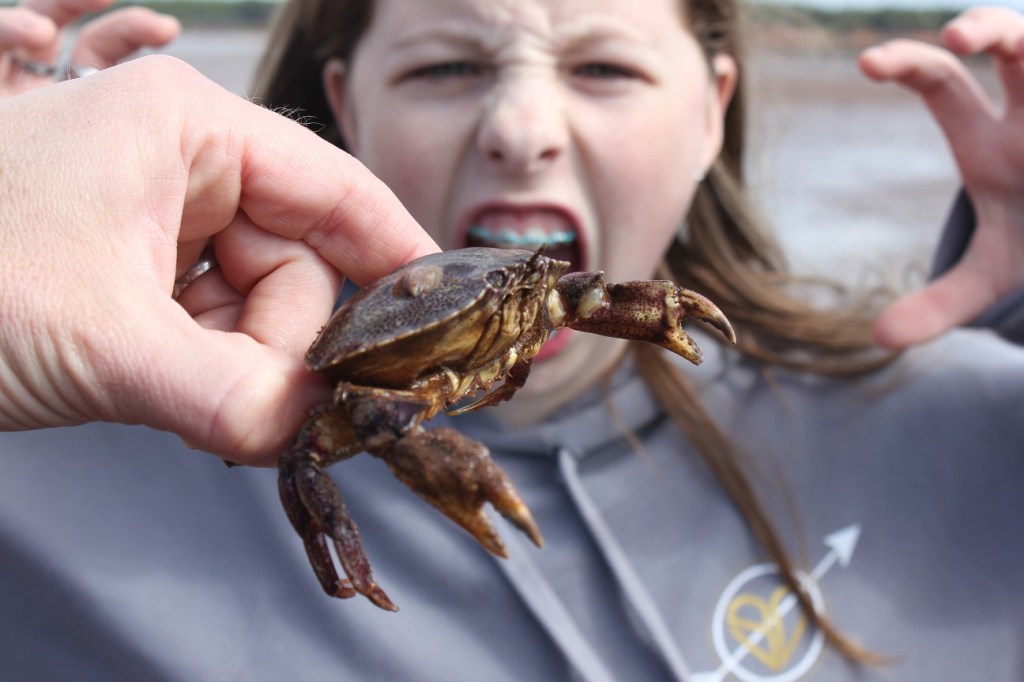
We also found a crab. Cassie learned that, to hunt the crab, you must first become the crab.
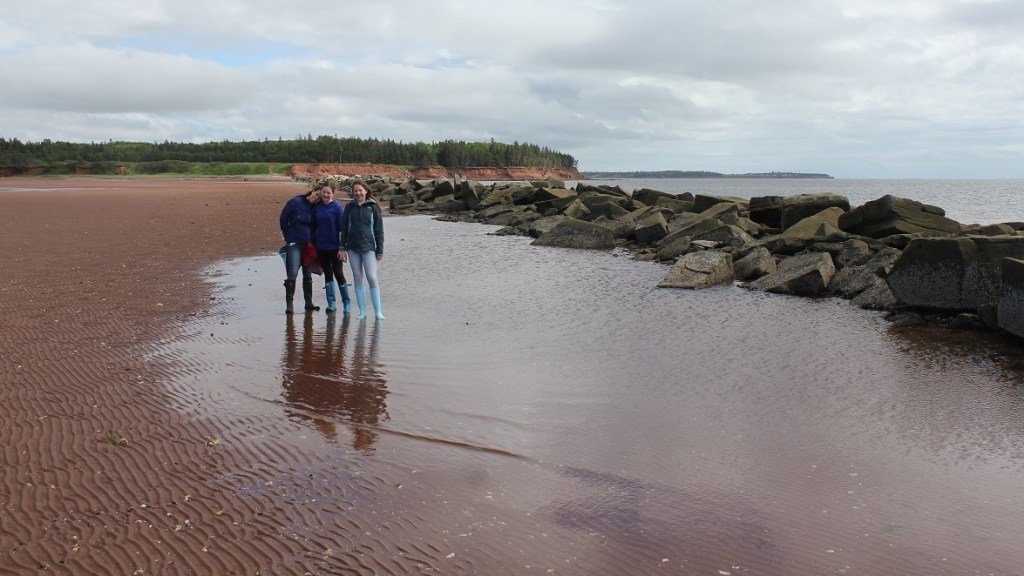
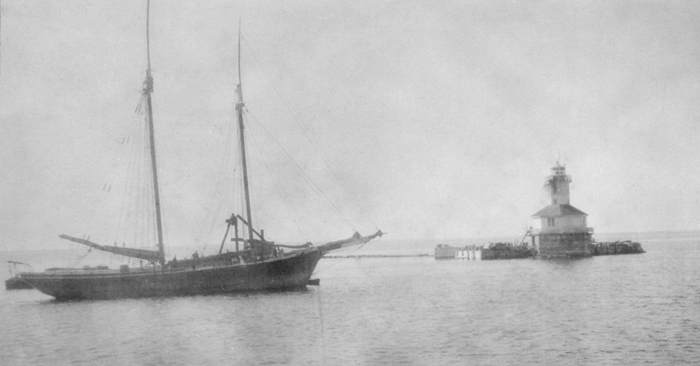
Before long, we made it to the Indian Head Lighthouse. On the left side below you can just make out the distant town of Summerside, where we had been eating ice cream an hour before.
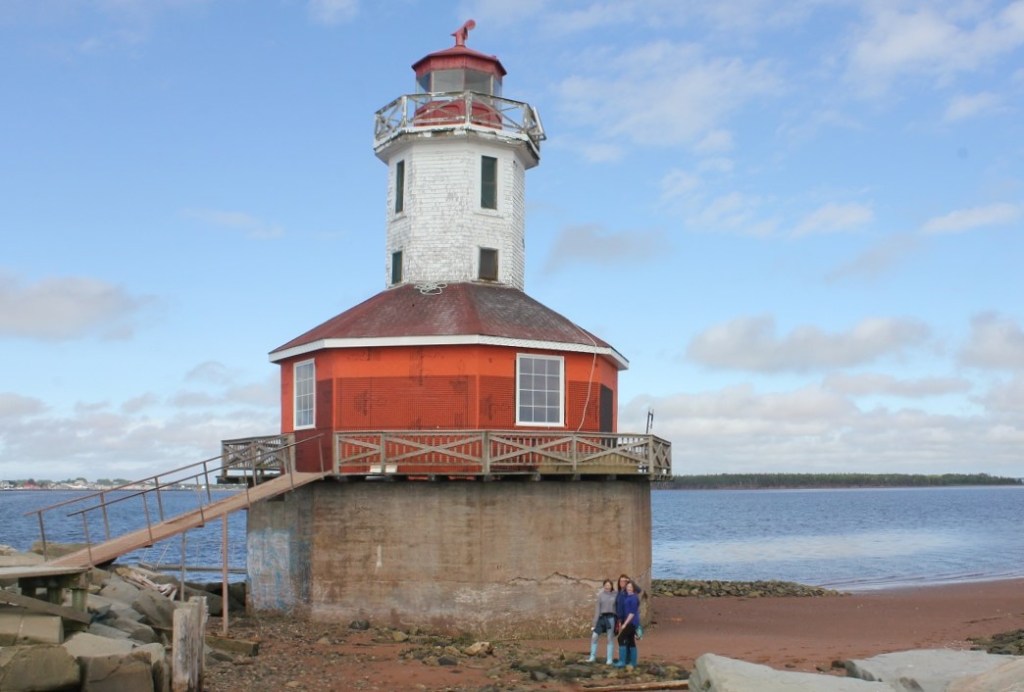
The lighthouse is another old one, as it was built in 1881. Once again, the internet provideth (but unfortunately does not provideth a date for this photo).
We scrambled around on the rocks for a bit and enjoyed the setting. We then headed back towards shore, this time walking on the seaward side. The tide had continued to go out, and the sun was shining brightly. It was time for the boots to come off! #corporatesponsorship
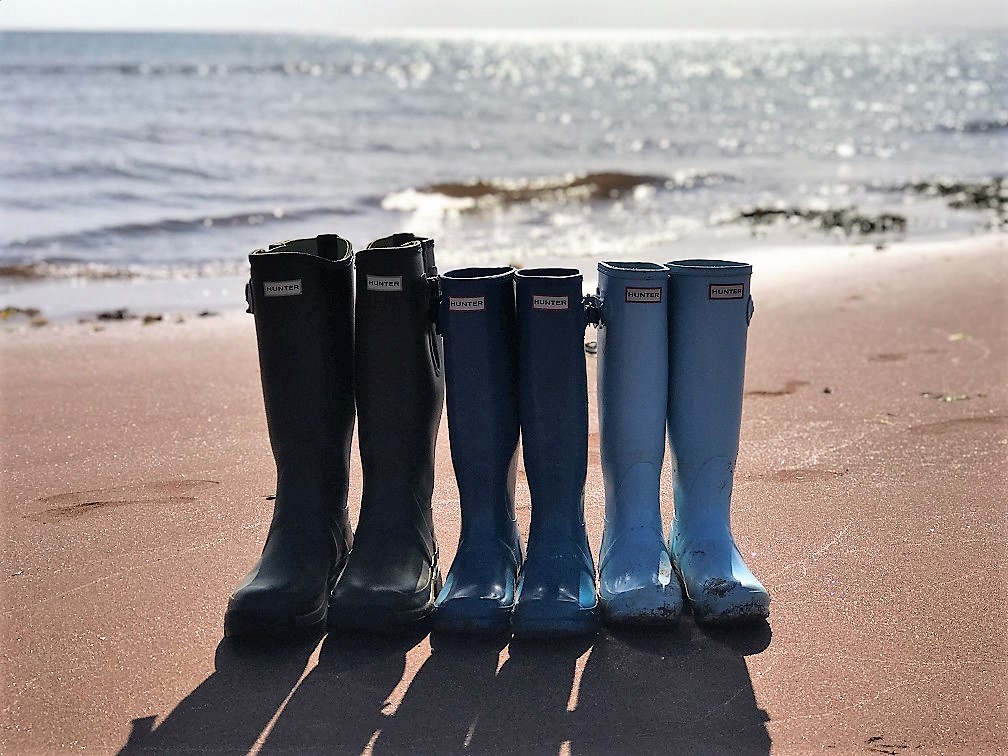
The water was warmer here on the “sunny side” of PEI, but it was still cold.
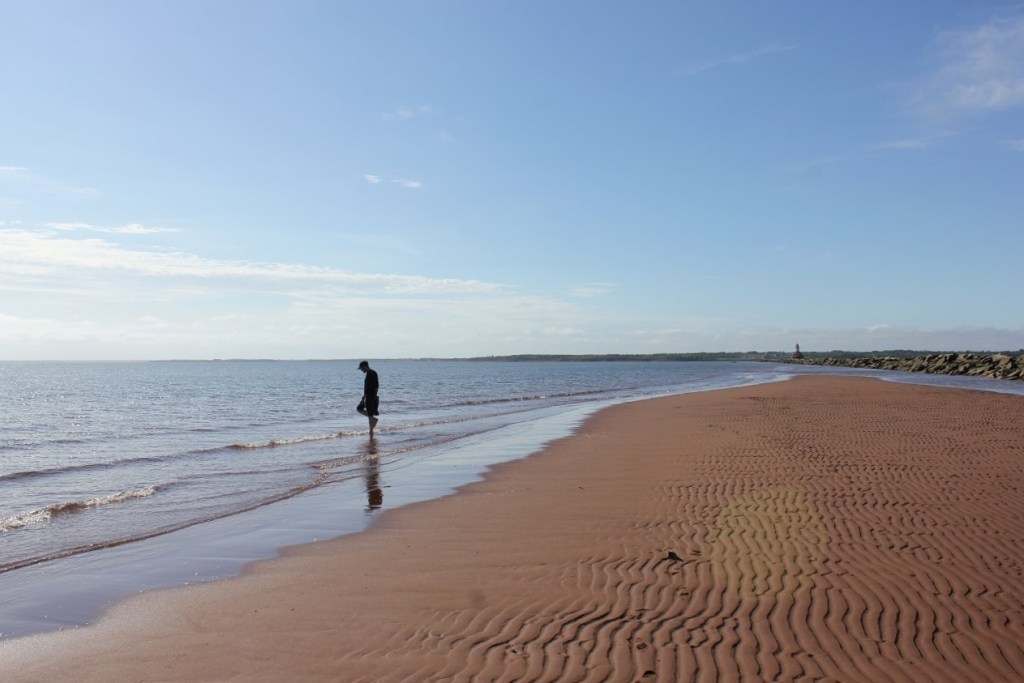
The water was also very shallow. I’m no sailor, but those same shallows were probably part of the reason for the lighthouse. Otherwise, ships would run aground. But kids do not run aground. Instead, they took advantage of the shallows and did their best to walk back to Nova Scotia.
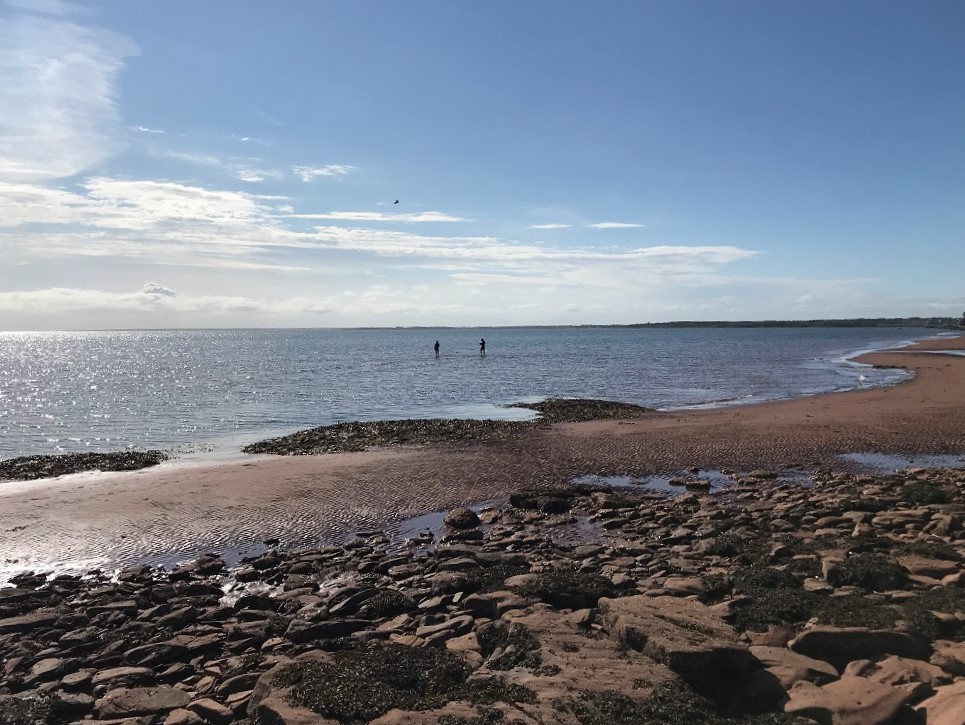
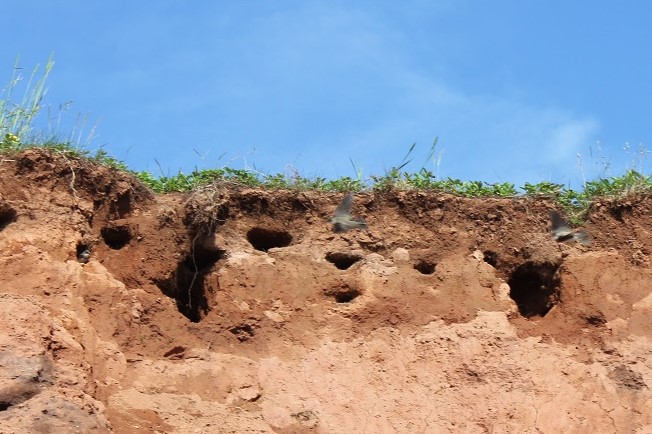
After a little frolicking, we started putting our boots back on. We noticed more holes in the bank made by swallows, and this time we saw birds flitting in and out.
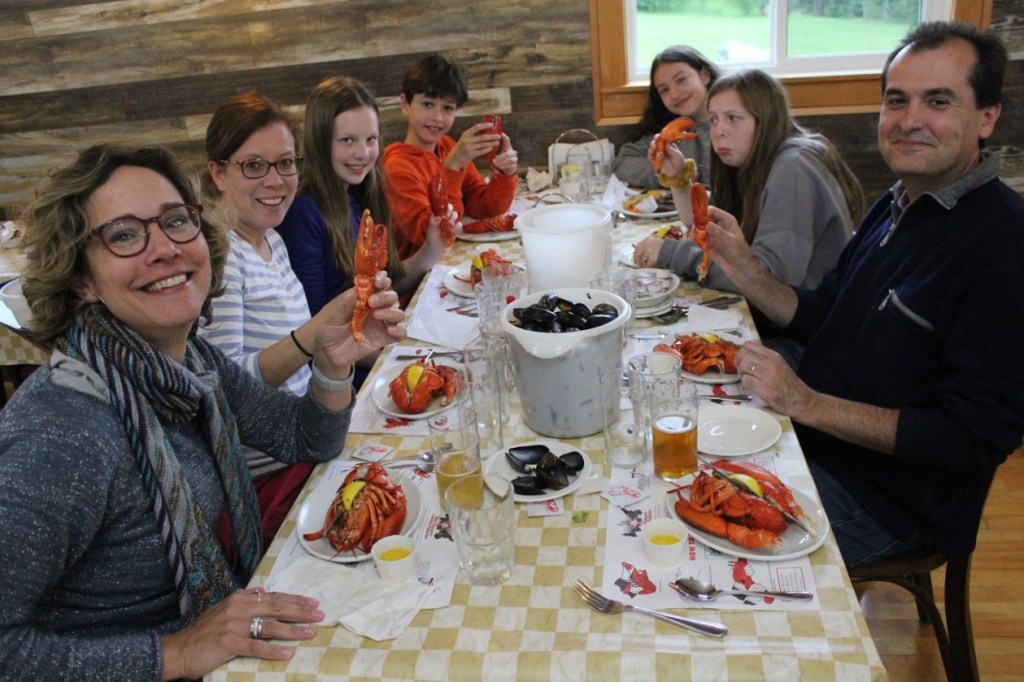
Back in the van, we headed to New Glasgow for a big lobster dinner. This place has been serving up muscles and lobster since 1958. These folks know what they are doing! The vibe is an indoor picnic — simple fare, big tables, and lots of happy folks.
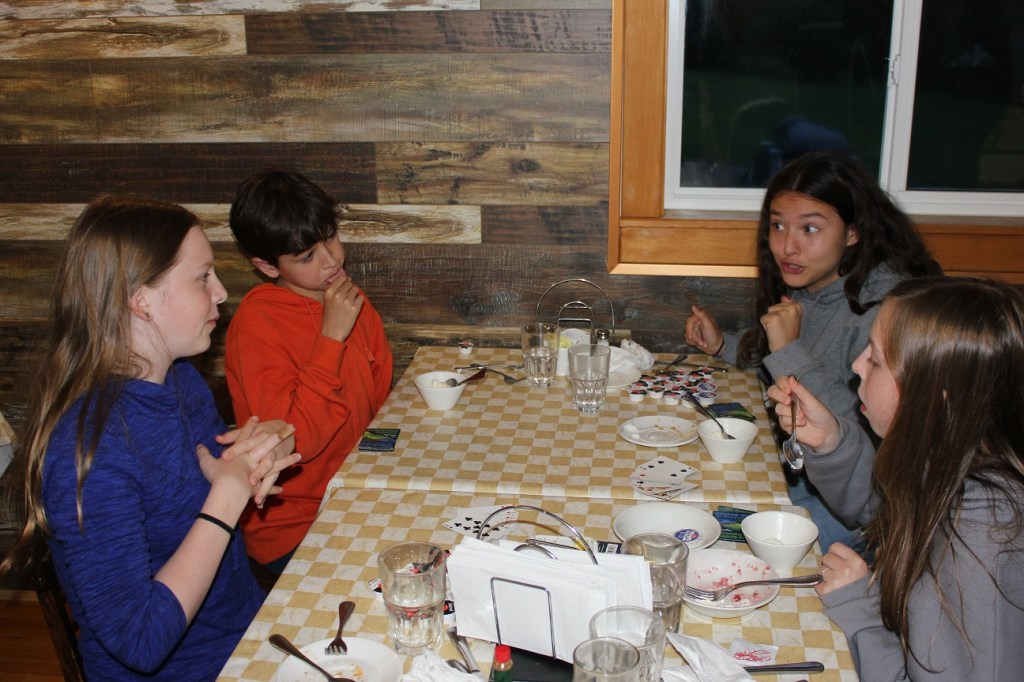
After dinner, the kids played cards yet again. I loved seeing them enjoy each other’s company rather than staring at their phones. Parenting win!
Finally, we headed back to Charlottetown for the postponed fireworks in celebration of Canada Day, which commemorates the founding of Canada. They did not disappoint.
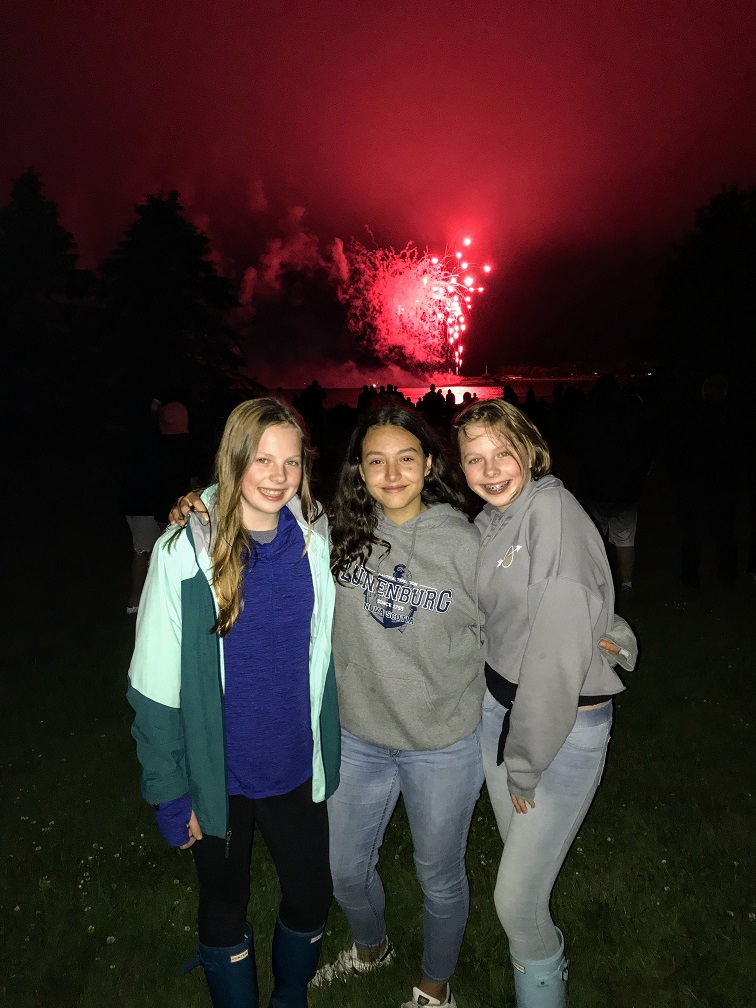
It was our last night in Canada, and we literally ended with a bang.
-Will
 The Hubbards' Travel Blog
What a beautiful story, what a fantastic trip! And what an amazing memory, yours specially. I am amazed and grateful for your commitment to put all the Hubbards adventures in writing, and since we are part of them…our family is included in this amazing blog. Thanks so so much. I am a super enthusiastic fan.
PS: I was not able to recover my wordpress password so I have been franticly trying to comment for so long…finally I found the time to do it and hopefully this comment will *finally* see the light today….I am quite nervous….
LikeLiked by 1 person
Love the Anne pigtails! Great lighthouse journey. Intrepid travelrrs!
LikeLiked by 1 person