Today was another early start. Instead of renting a 4WD vehicle we decided to book a 4WD day tour. We thought it might be nice to have a local guide with us in the outback wilds of Kakadu. Fortunately, a huge flock of white cockatoos were more than happy to wake us up early. (Note: Cackatoos are easy on the eyes but not so much the ears.). The tour would take the full day, as it covered quite a bit of Kakadu.
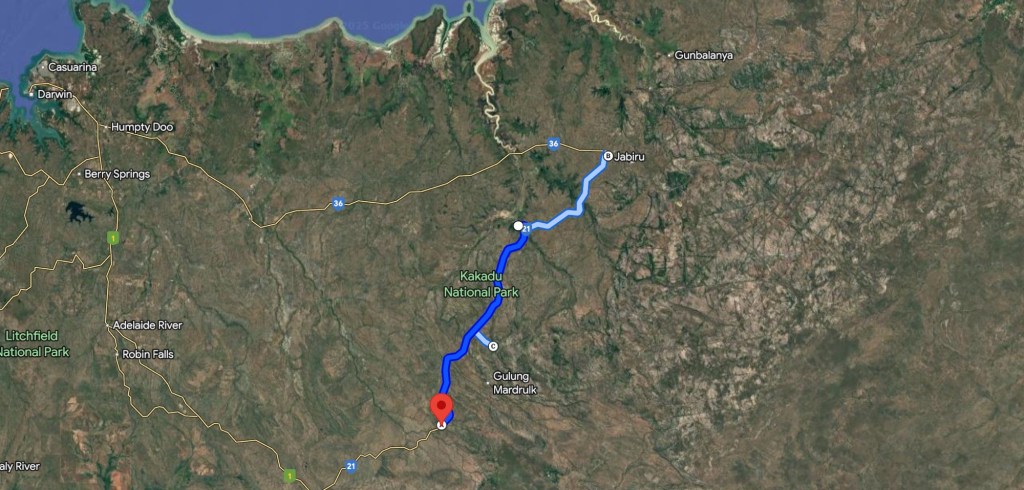
The tour left from a lodge about 30 minutes south of us, and along the way we spied some wallabies (smaller cuter cousins of kangaroos) who were out and about enjoying the relatively early morning.
We soon reached the tour, where we met our guide, Glenn, a small, wiry Australian with a passionate love for the land and peoples of Kakadu. With Glenn at the wheel, we drove further south for about an hour, passing more wallabies along the way, as well as some wild horses and cows.
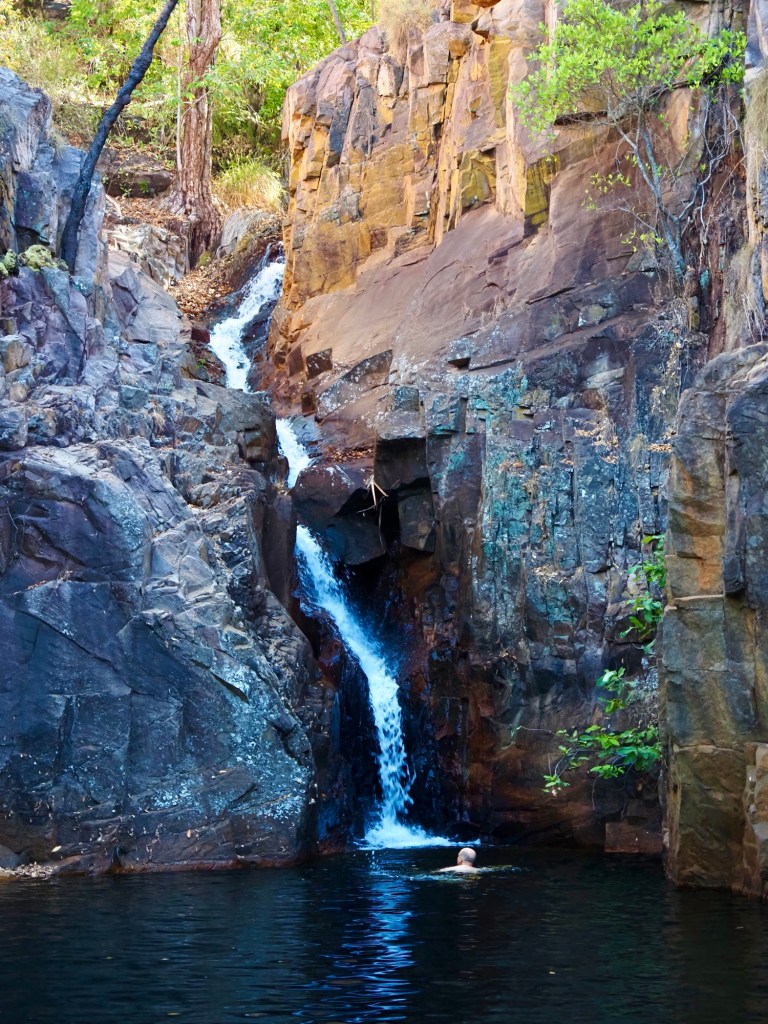
We then turned off the paved road onto a rough dirt track headed back into the bush. Glenn informed us that we were headed to a small swimming hole. We parked and after a short walk reached an adorable little pool surrounded by small, rocky cliffs. Glenn assured us that it was safe to swim here, as the Salties (dangerous) don’t come this far inland particularly “in the dry,” and the Freshies (*allegedly* not dangerous) probably don’t come here and are nothing to worry about in any case. To prove his point, Glenn stripped down to his itsy-bitsy teeny-weeny black speedo and hopped in the water. Despite his endorsement, Julie declined, but I couldn’t resist. It was time for this pale American to immerse himself in the Outback.
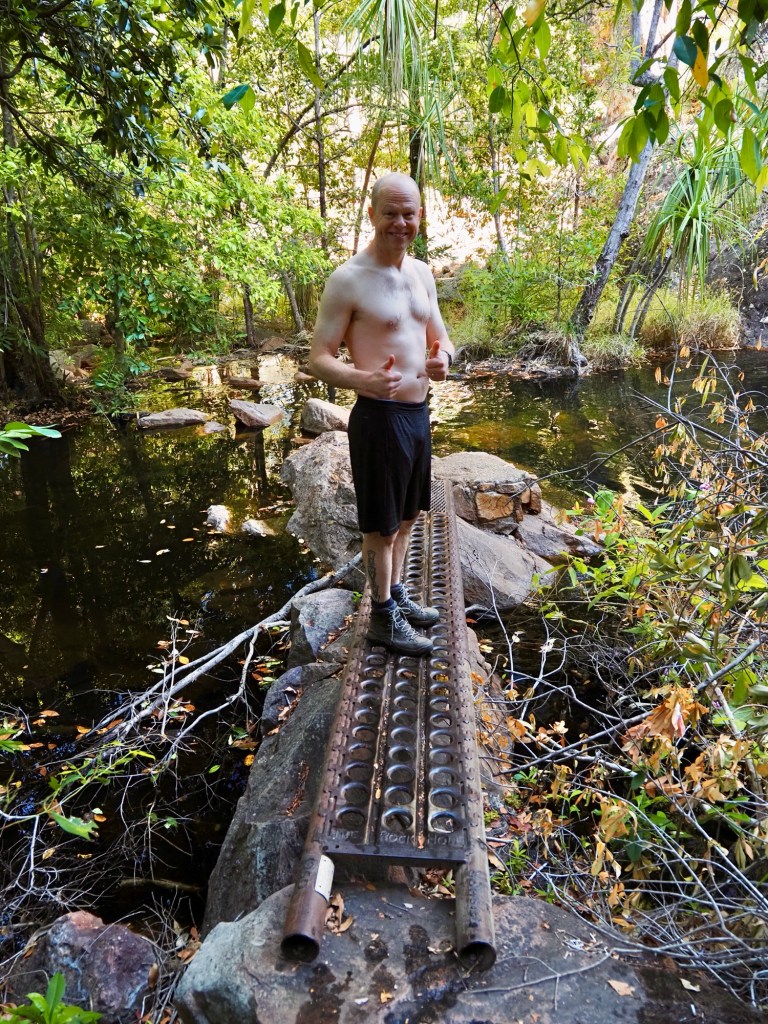
(The short metal walkway to reach the swimming hole was interesting. It appeared to be made from pierced steel planking, which the allies used in WWII to build runways on sandy South Pacific islands. The walkway was put here in the late 1950s by local miners who used the swimming hole.)
And the swim was magnificent! Brisk water in an incredible setting.
After our short swim, we headed back to the truck, passing by a sign warning swimmers that there might be crocodiles in the area. Guess who didn’t get bitten by a croc? This guy!
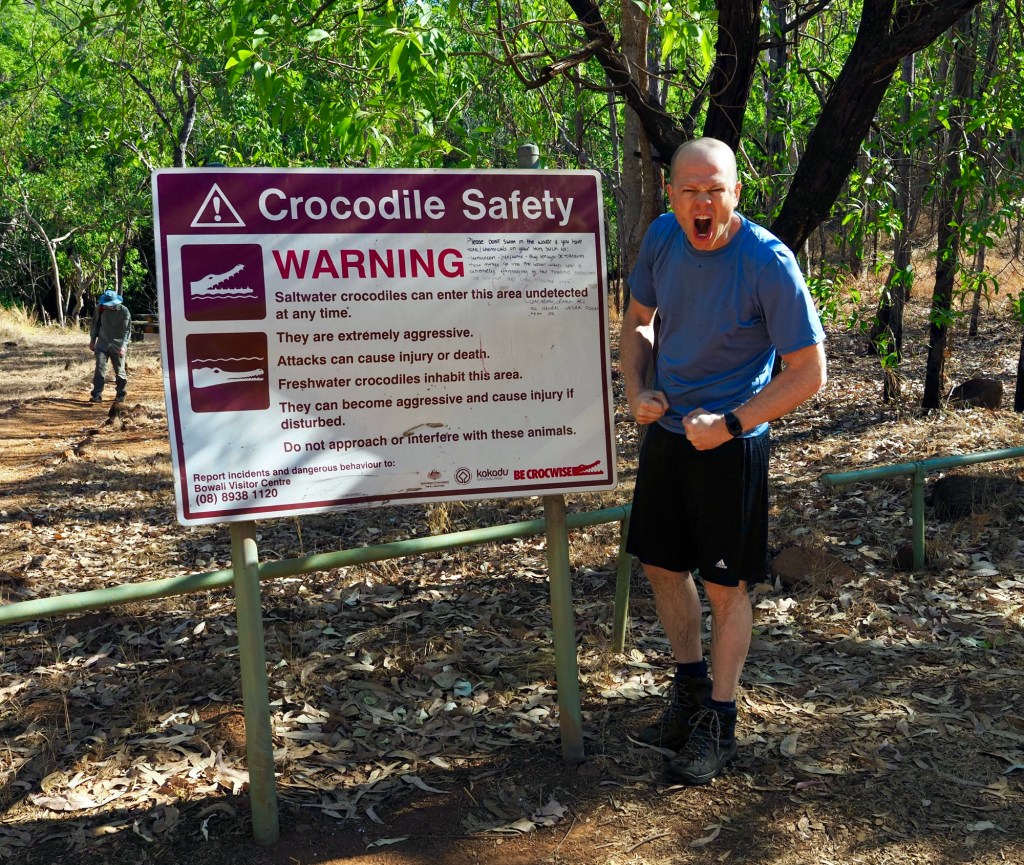
It might look like I was taking some unnecessary risks swimming in croc country, but this really wasn’t dangerous. (Seriously, mom.) The dry season in Kakadu runs May to October, which means that the waterways have shrunk. Crocs are a concern in the wet season, when they use the rising, extensive waterways to move from one place to another. The most dangerous time is when there’s been flooding, as Salties could be anywhere. But this area has been without rain for months, so that the crocs had collected near the rivers and coast. In that time, people had been swimming here from time to time without incident. Plus, I’m sure I’d taste gross. Full of microplastics. Ew.
After the swim, we climbed back in the truck. As we rode, Glenn told us about the aboriginal people, including their fire management tactics and their use of calendar plants, that is, plants that indicate the times to hunt certain animals or set fires in certain areas. We soon reached our next stop, a shady spot along a dirt road where we had some tea and scones. While we snacked, we checked out some of the massive termite mounds in the area.
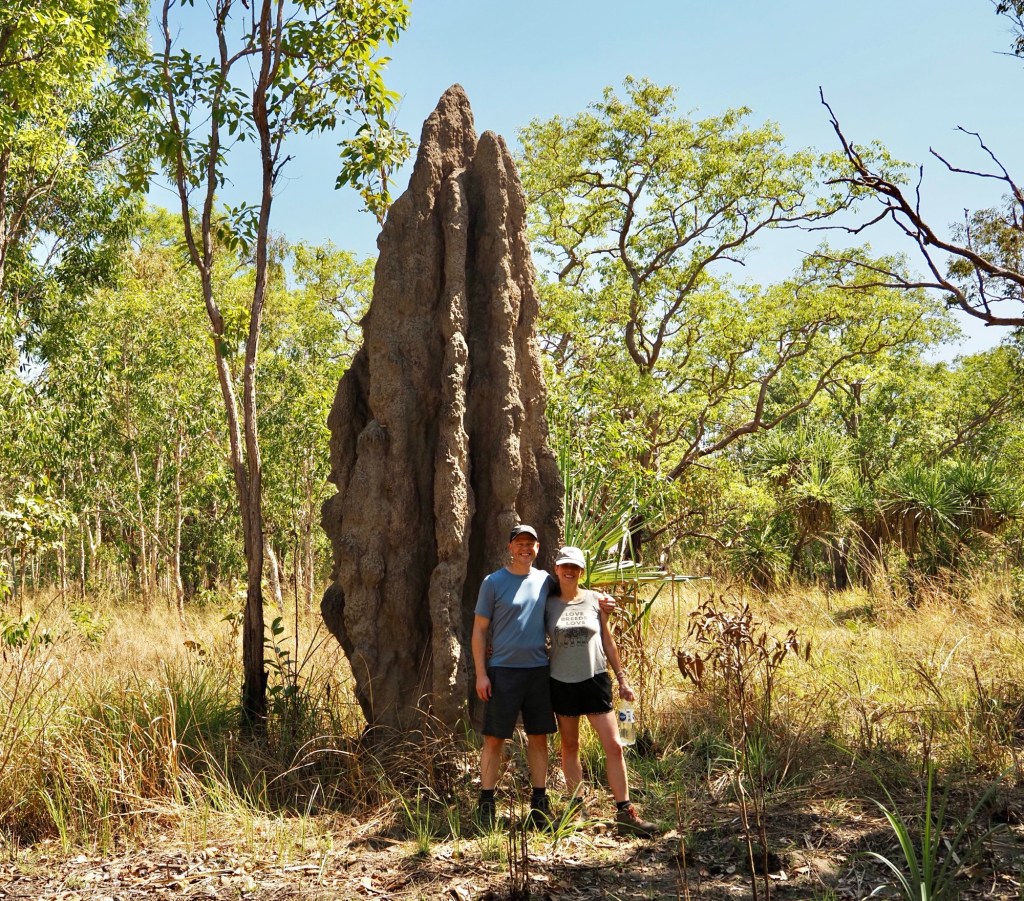
From here, we drove a bit further down the dirt road, parked, and headed off on a path towards the Barramundi Gorge, following a crystal clear stream.
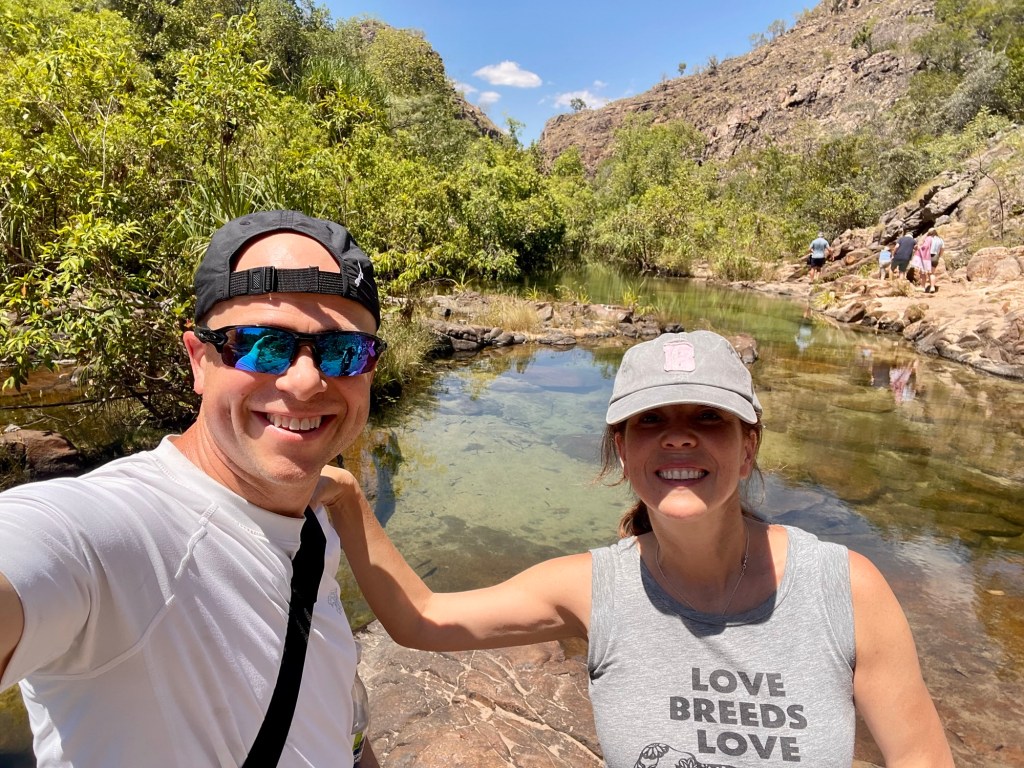
Once there, I used my now finely honed croc-detecting skills to assess the situation. (I saw there were already people in the water including some morsel-sized children. No screams = safe enough to swim). Julie decided to wade to her knees, while I jumped in the water and started swimming for the waterfall at the far end of the gorge.
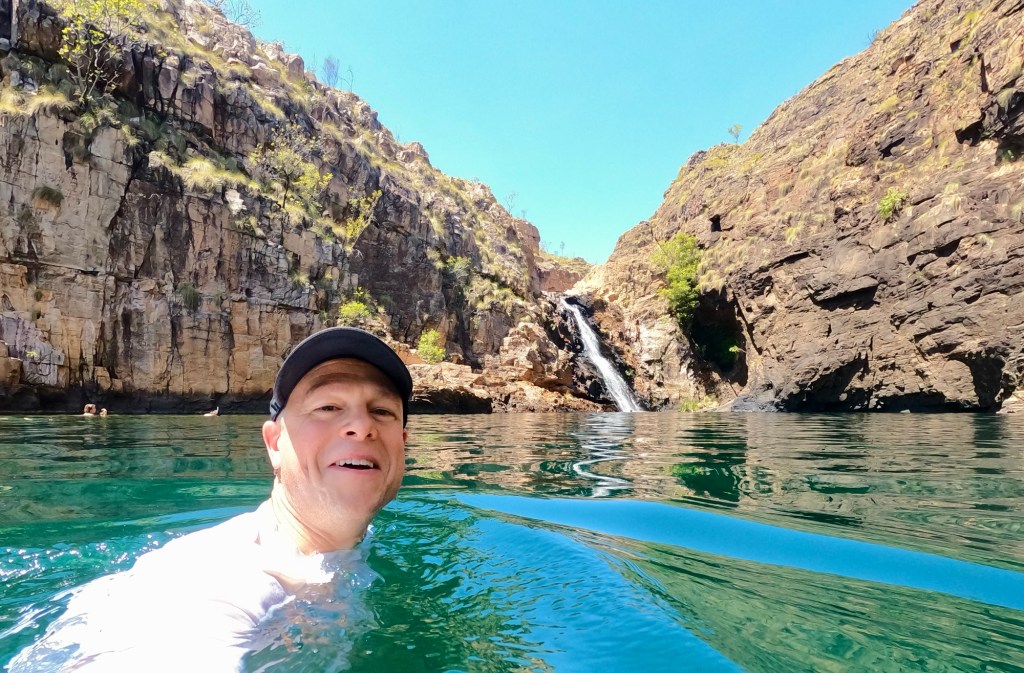
It was a nice little swim to the waterfall, where I took a little shower (and filmed it like a low-budget naturalist).
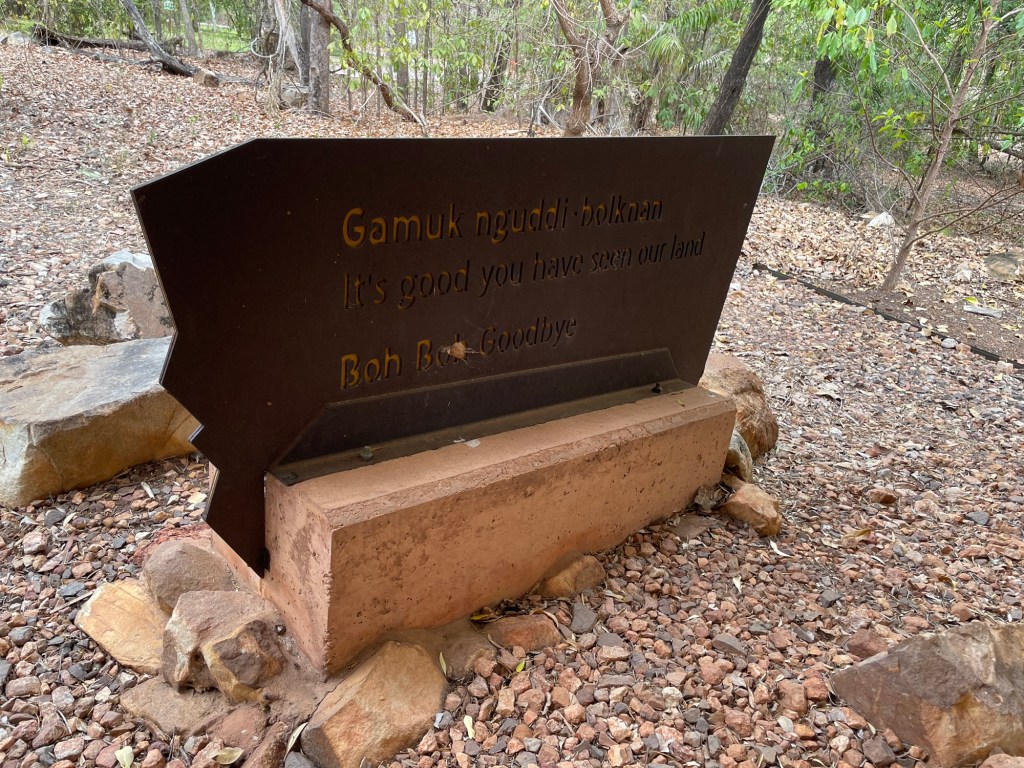
After the swim in the gorge, we drove to a nearby lodge for a late lunch and a very tasty beer. From here, Julie and I checked out the Warradjan Cultural Center, which told us more about the local aboriginal people. Photography was prohibited in the center, so we don’t have any pics, but we were allowed to take one of the sign as we left. It said, “Boh boh,” which was translated as “Goodbye.” Glenn had described this word differently on our tour, likening it to “see you later,” as the finality of “goodbye” didn’t sit well with the aborigines.
By late afternoon, we returned to our ridiculous croc-shaped hotel, and we were so tired that we ate a meal of leftover snacks and beer.
The next morning, we packed up to leave Kakadu. As we left the park, we spotted a good-sized monitor lizard, known locally as a sand goanna.
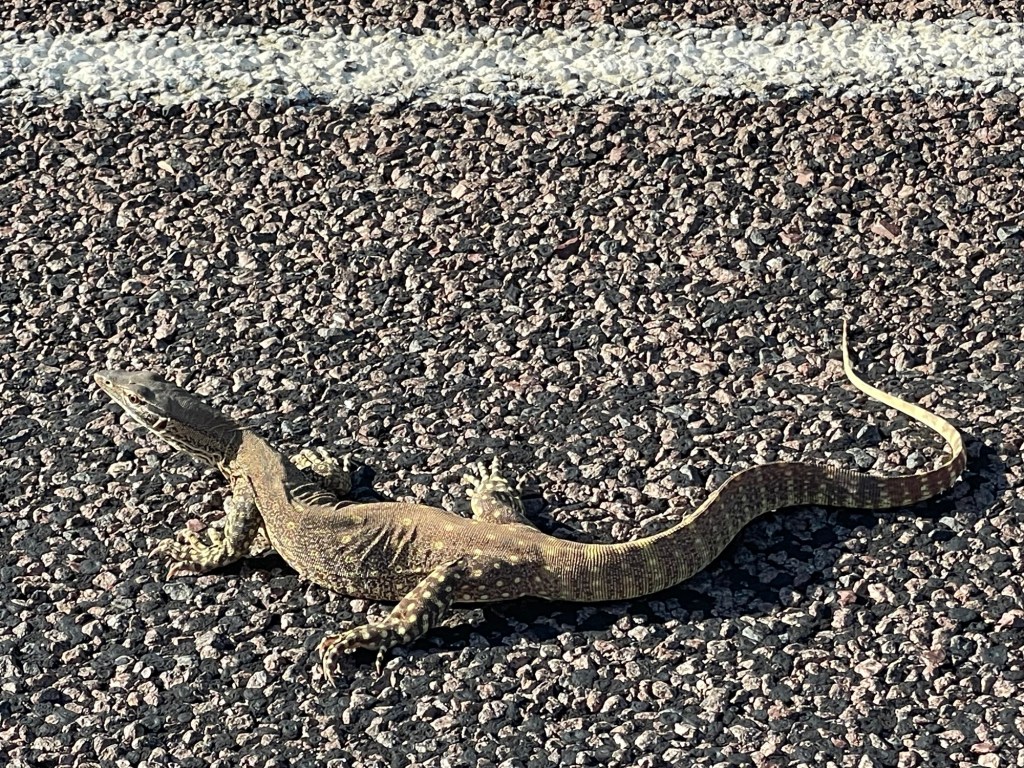
We gently shooed him off the road before heading on to Darwin, where we were catching a plane to Cairns in the state of Queensland.
We’ve had an amazing 8 nights in the Northern Territory. We’re already talking about how much we’d love to come back, as it feels like we’ve just scratched the surface of the natural beauty and cultural depth here. Maybe the thousands of stars we’ve seen in the desert skies will align, and we’ll somehow make it back someday. We hope so. So, for now we won’t say “goodbye” just yet. Instead, we’ll say “boh boh” and hope for the best.
-Will
 The Hubbards' Travel Blog