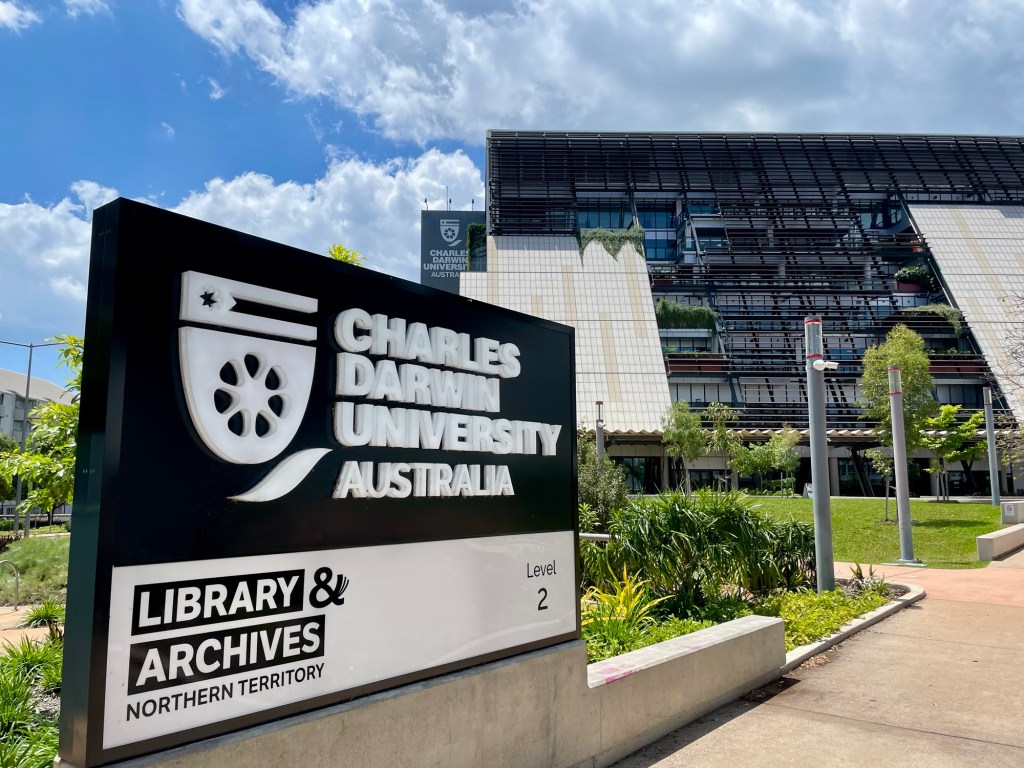
We’ve spent the past couple of days in the small city of Darwin, which is the capital of the Northern Territory. Our time in Darwin was relatively low key, as Julie and I both had work to do. I gave a talk on my research at the Charles Darwin University.
Shortly after lunch, we hopped in our rental car to drive to the Kakadu National Park, a massive wilderness area bigger than Yellowstone, the Grand Canyon, and the Everglades combined.
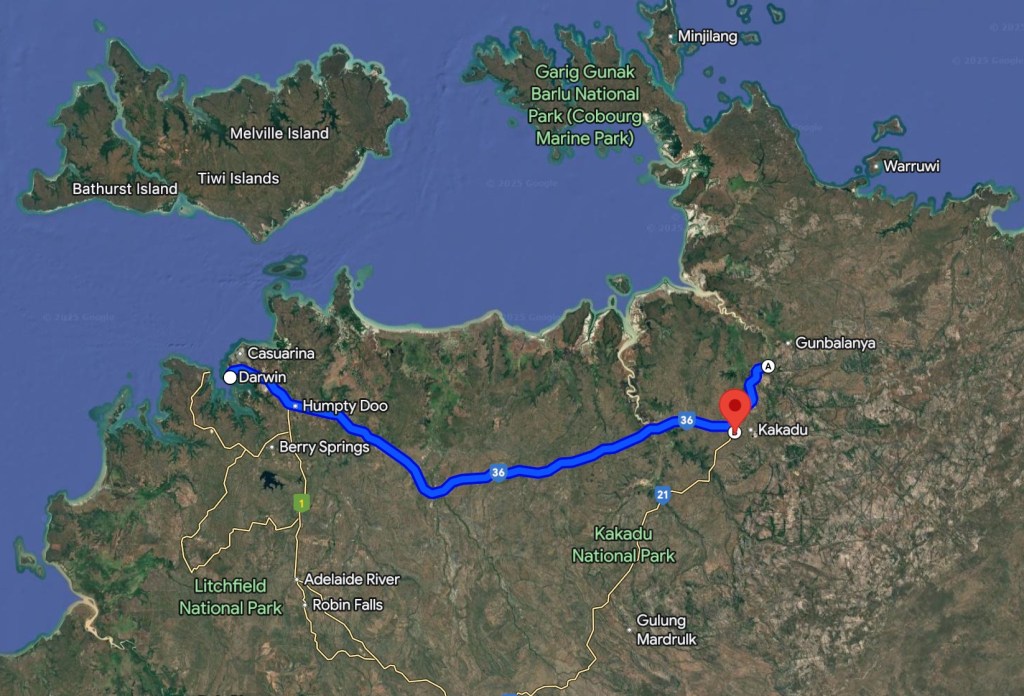
After a couple of hours, we entered the park. For the next hour, we drove through dry woodlands, passing by small forest fires. Or in some cases, through fairly large forest fires.
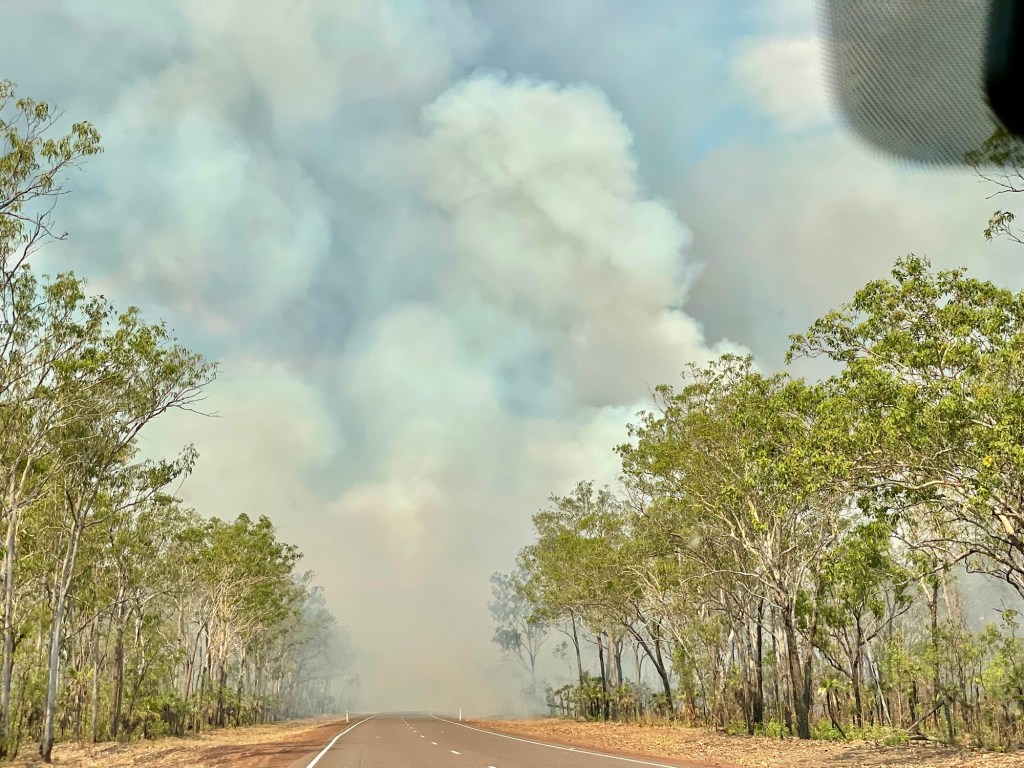
We later learned it’s not as bad as it looks. For millennia, the local people have set small brush fires to burn away much of the vegetation from time to time. The result is that there isn’t enough fuel for wildfires to burn out of control.
Our first destination was Cahill’s Crossing, where the road crosses a low-head dam. A few inches of water flow over the road, but most of the water is trapped, creating a small pool that is thick with saltwater crocodiles.
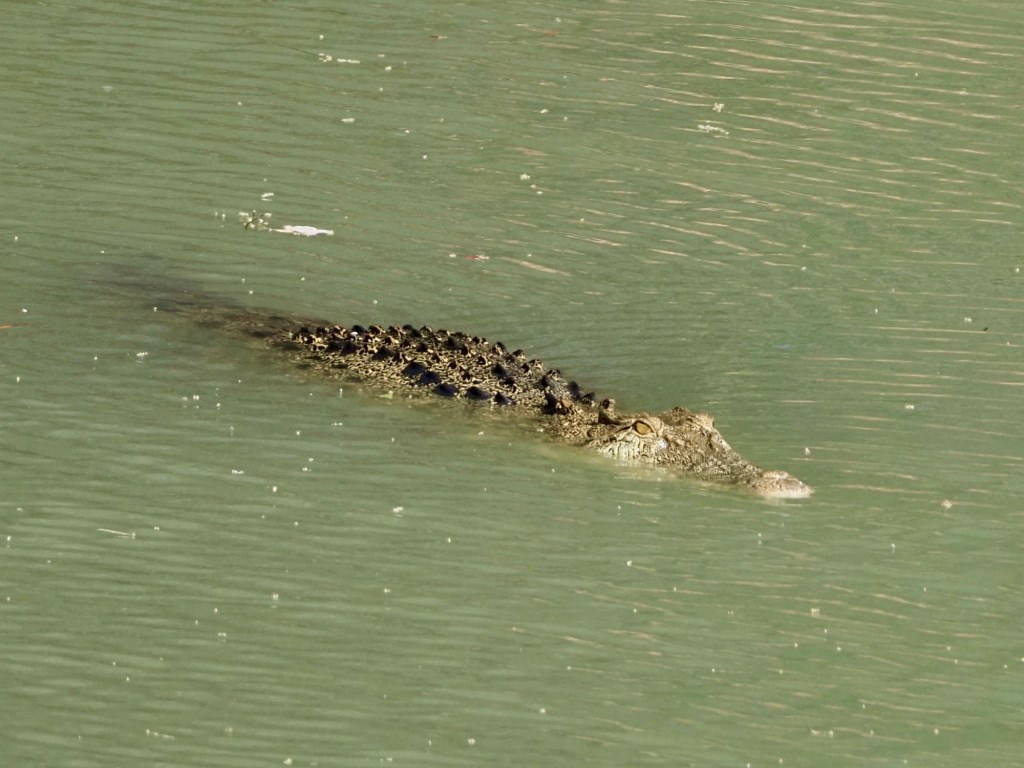
We decided against driving across croc-infested waters in our tiny rental car. The 10,000 crocs in the park is just one of the reasons that the area is a UNESCO World Heritage Site. (Kakadu is one of two UNESCO sites in the Northern Territory — the other is Uluru-Kata Tjuta.)
Another major reason for Kakadu’s UNESCO designation is its substantial cultural significance to the local aboriginal people – the Bininj in the northern part of the park and the Mungguy in the southern part. These two peoples have been in the area for tens of thousands of years, and in that time have decorated many of the rock overhangs in the area with paintings. From Cahill’s Crossing, we drove to nearby Ubirr to see some of them. The oldest paintings here are more than 40,000 years old, though most of the paintings date to about 2,000 year ago. Yeah. Only 2,000 years.

Many of the paintings are heavily layered, including a jumble of overlapping creations.
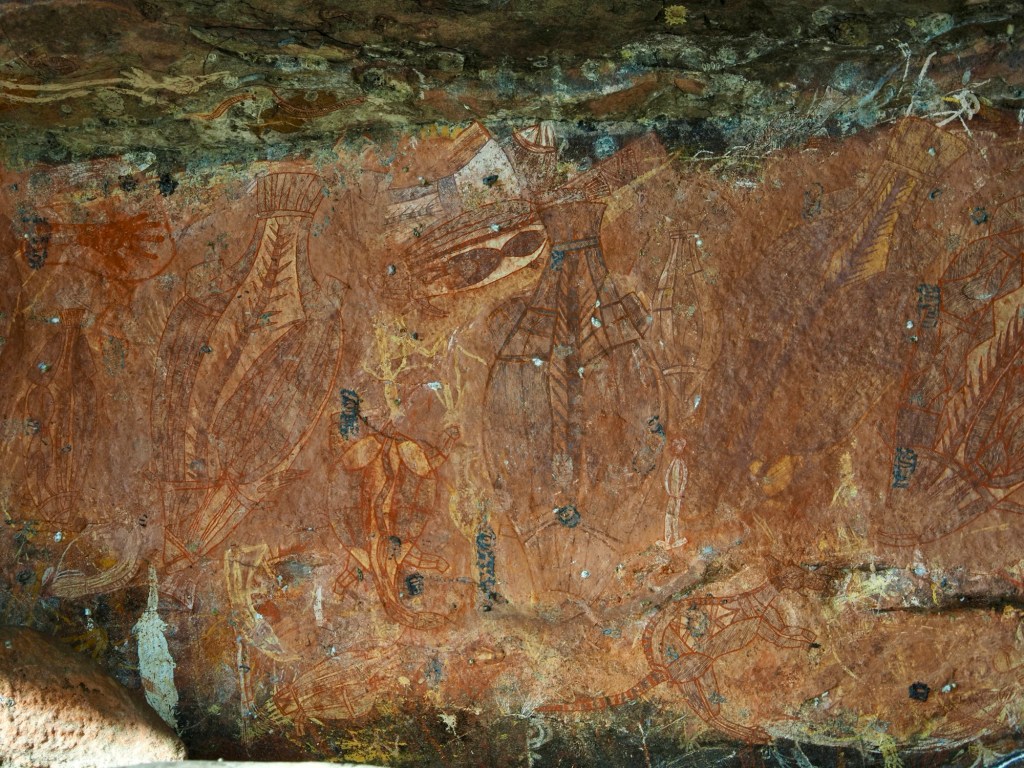
Quite a few of the paintings focused on key sources of food for the local people. This photo shows a variety of fish, as well as a wallaby on the bottom right. In the center right there is a white figure that may depict early contacts with Europeans. There’s also a handprint from a long-departed artist on the upper left.
One painting appears to show a Tasmanian tiger, which died out in the area about 2,000 years ago.
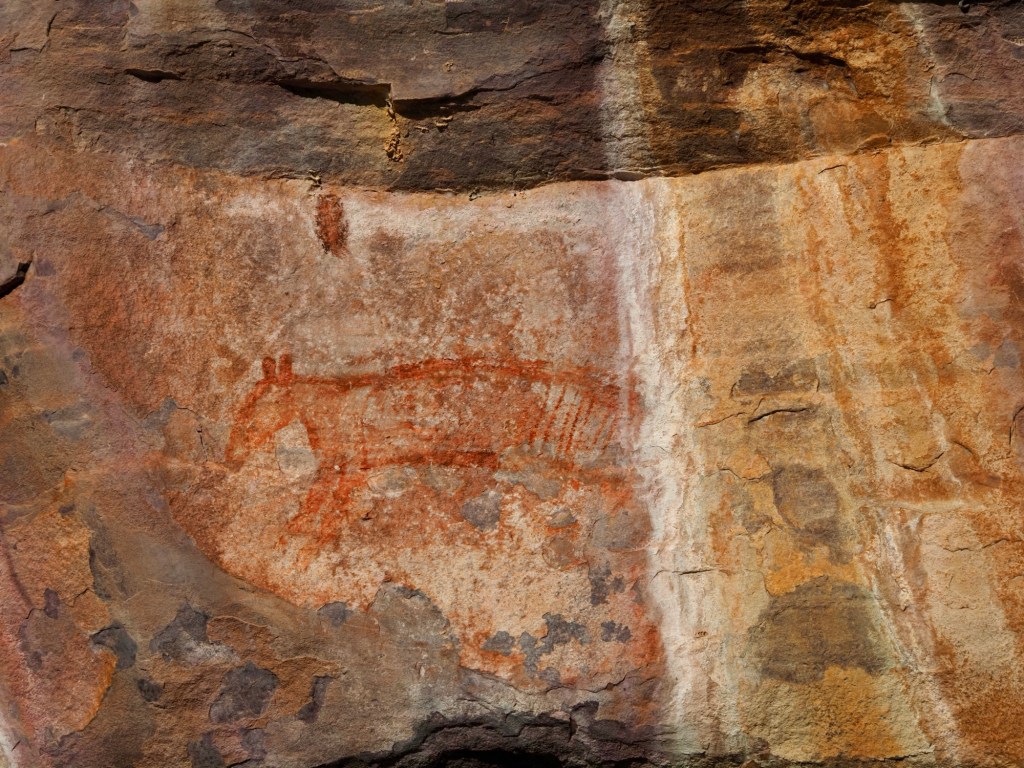
While many of the paintings focused on tasty animals, some showed stylized hunters.
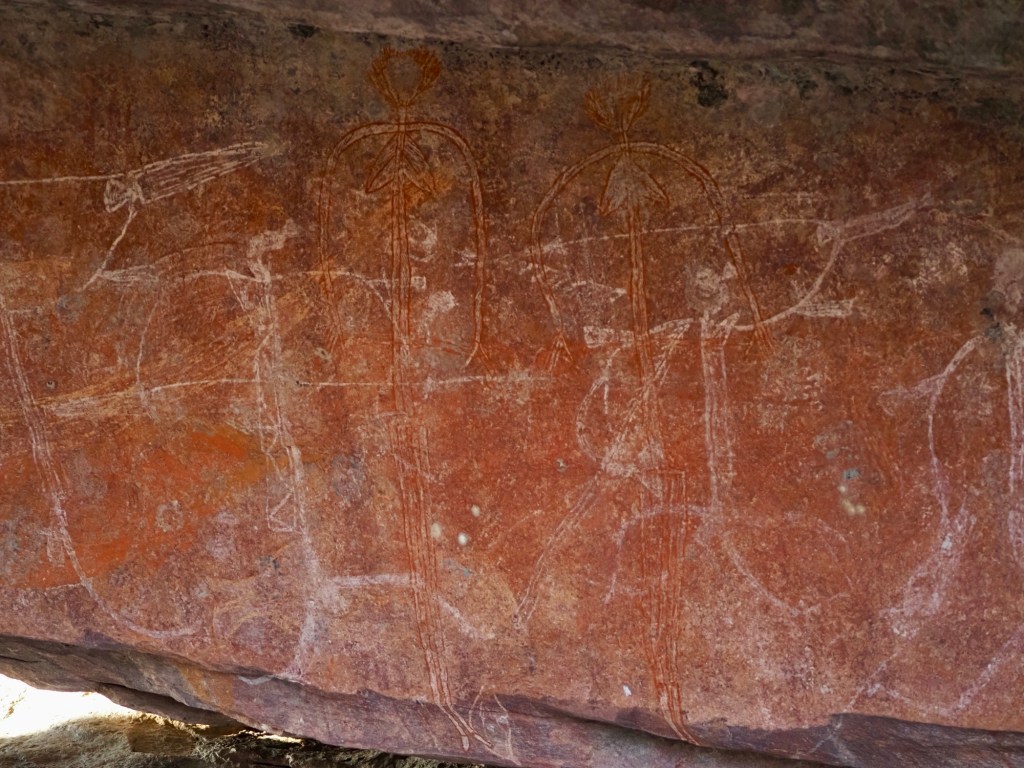
One painting depicts a portion of the Bininj creation story, which involves a rainbow serpent.
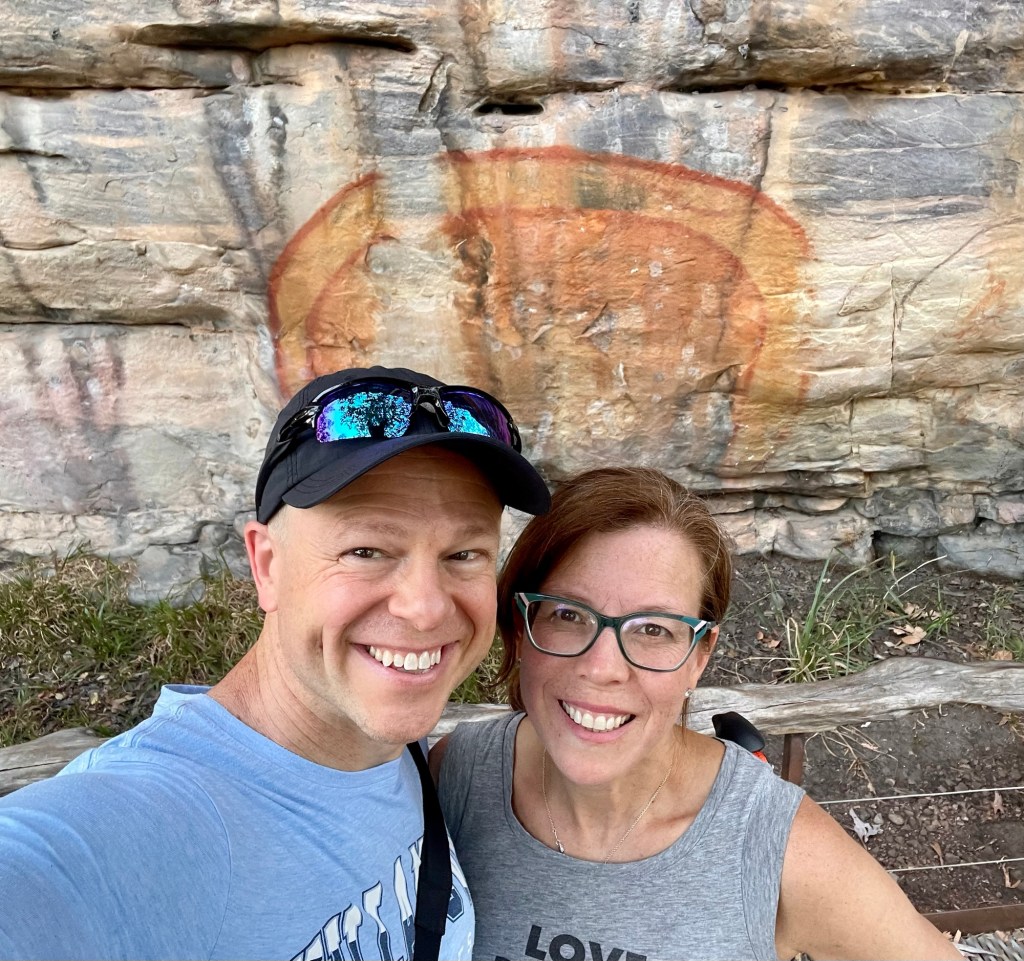
We’re not 100% sure exactly how this image relates to a serpent. I think maybe it’s an image of a rainbow using the limit ochre palate.
We capped off our time at Ubirr with a climb to the top of the rock galleries to watch the sun set over the grasslands.
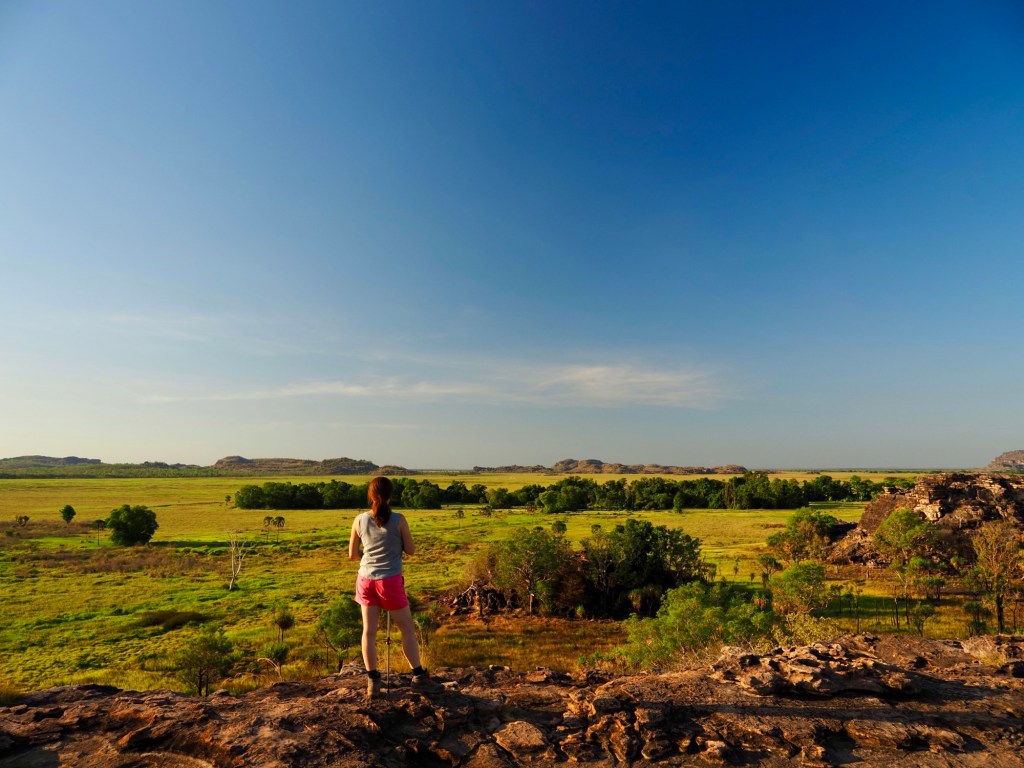
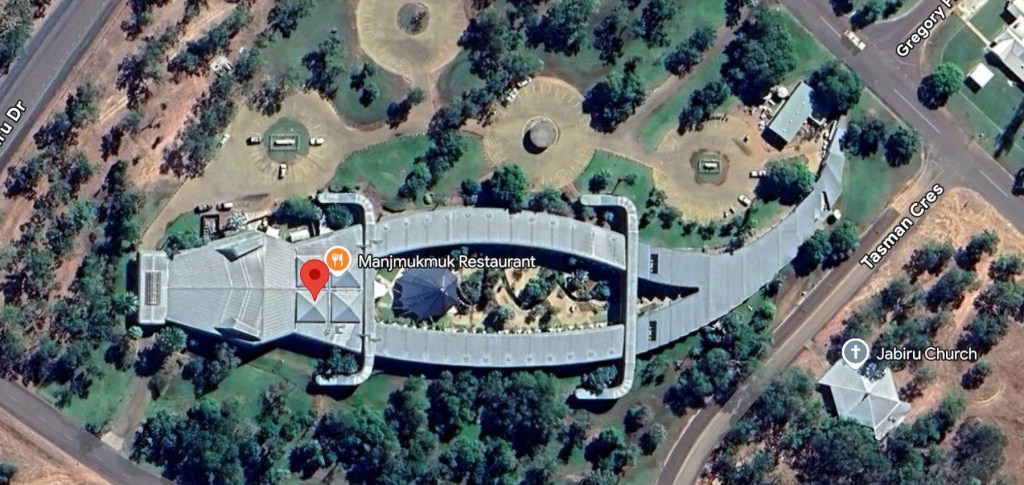
Some of the opening scenes of Crocodile Dundee were shot up here. Speaking of crocs, we drove from Ubirr to nearby Jabiru, where we stayed in a somewhat-hokey-but-super-well-located hotel that was shaped like a crocodile.
Along the way, we saw another dingo, weaving his way through the brush. Our trip to Kakadu was off to a great start!
-Will
 The Hubbards' Travel Blog