This morning started with a miracle. The Uluru Cultural Center texted us that Julie’s boots had been turned in! With high spirits, we made coffee with the trusty little pot we’d picked up in Wellington, NZ.
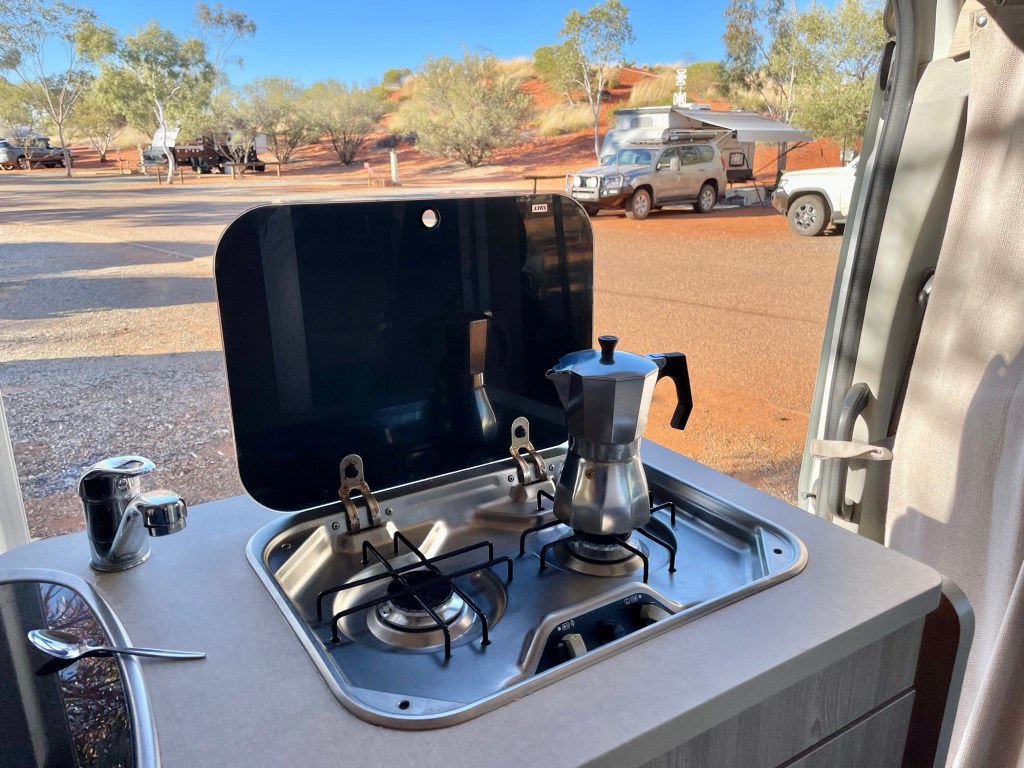
We also figured out how to add water to our main tank and how to empty our gray water (sink and shower but not toilet). Excitement!
We then drove back to the Uluru Cultural Center to pick up Julie’s boots, before heading another 45 minutes to Kata Tjuta, which is a bit like a collection of mini-Ulurus.
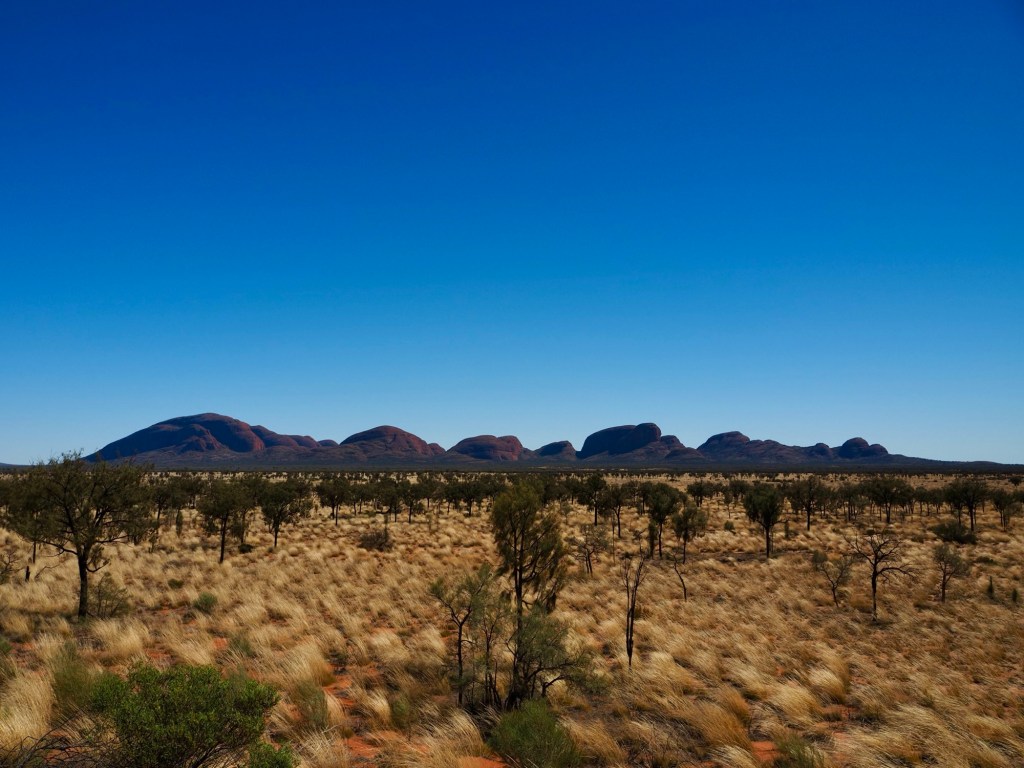
Our plan was to do two hikes here (hooray boots!), starting with the longer Valley of the Winds loop, before doing the shorter Walpa Gorge Walk, which skirts along the south side of Mount Olga (lower part of map below).
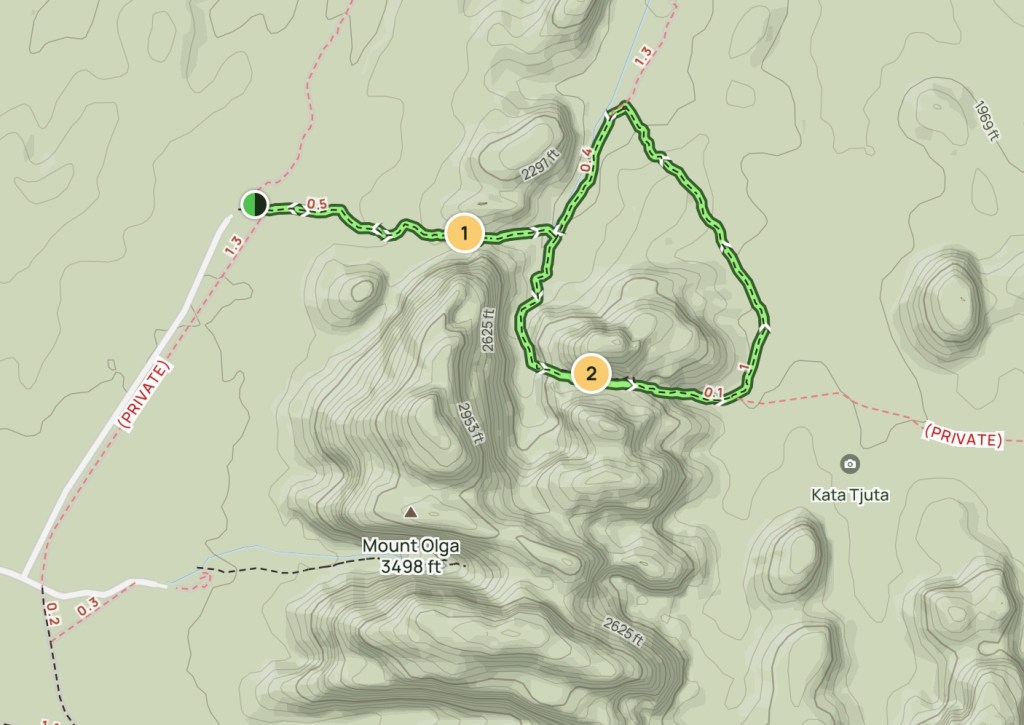
Around 11 am, we parked our van and set off, a later (and hotter) start than we’d hoped, but taking the time to get the boots was well worth it!
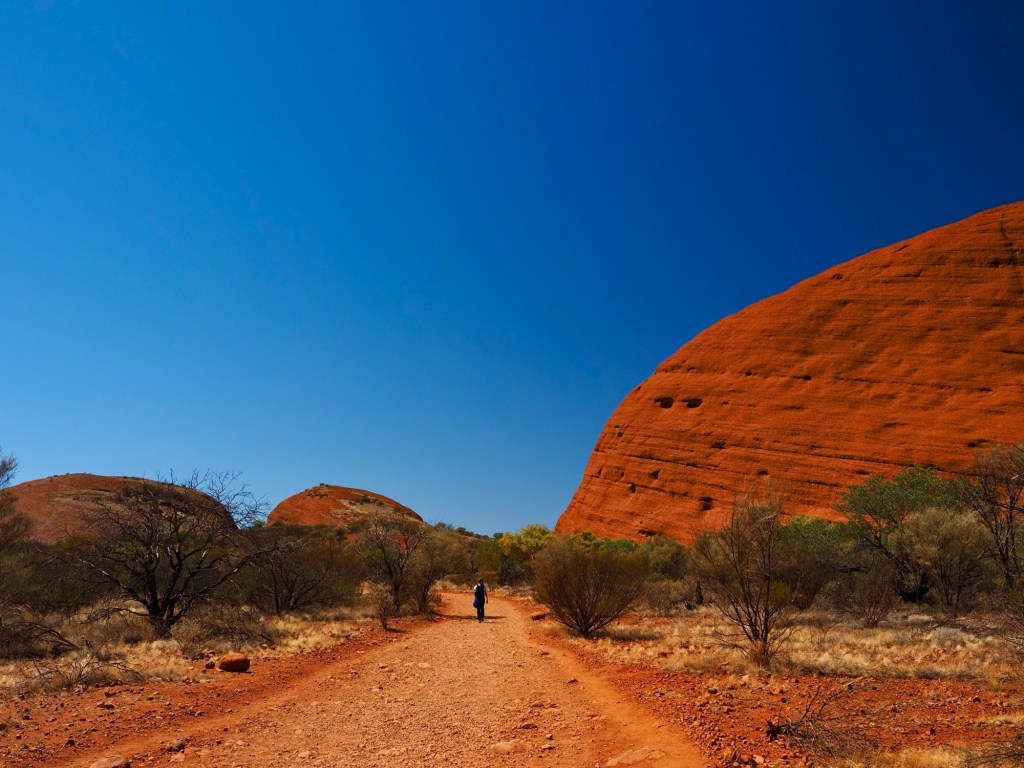
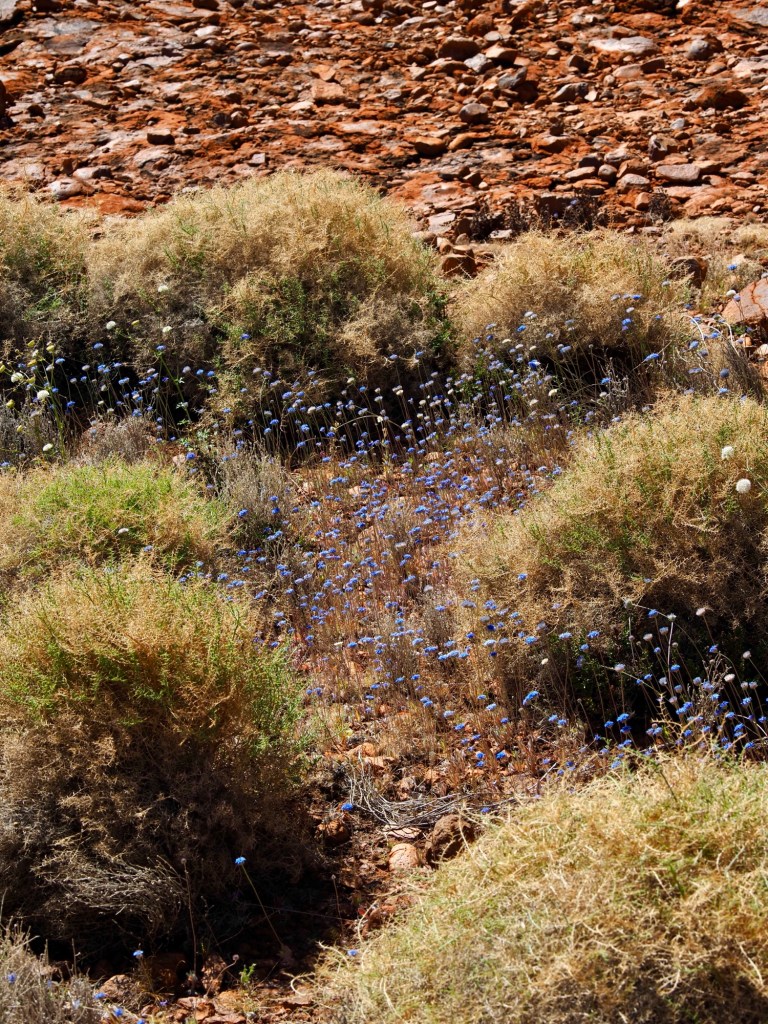
Once again, we were delighted to see wildflowers lining the path.
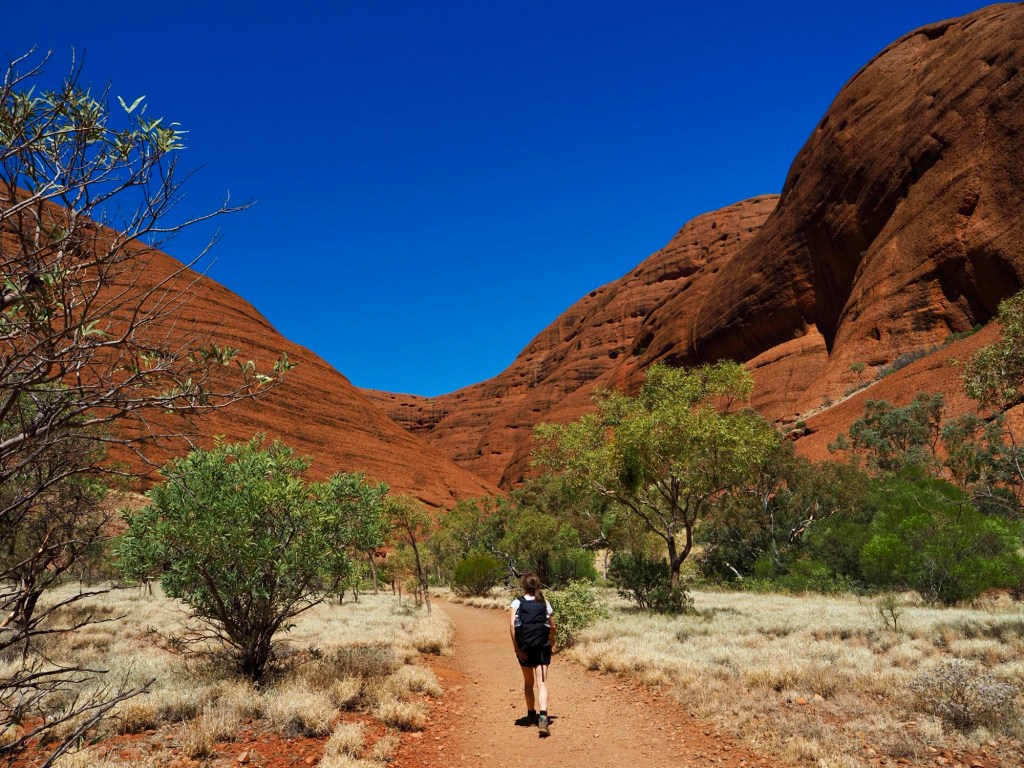
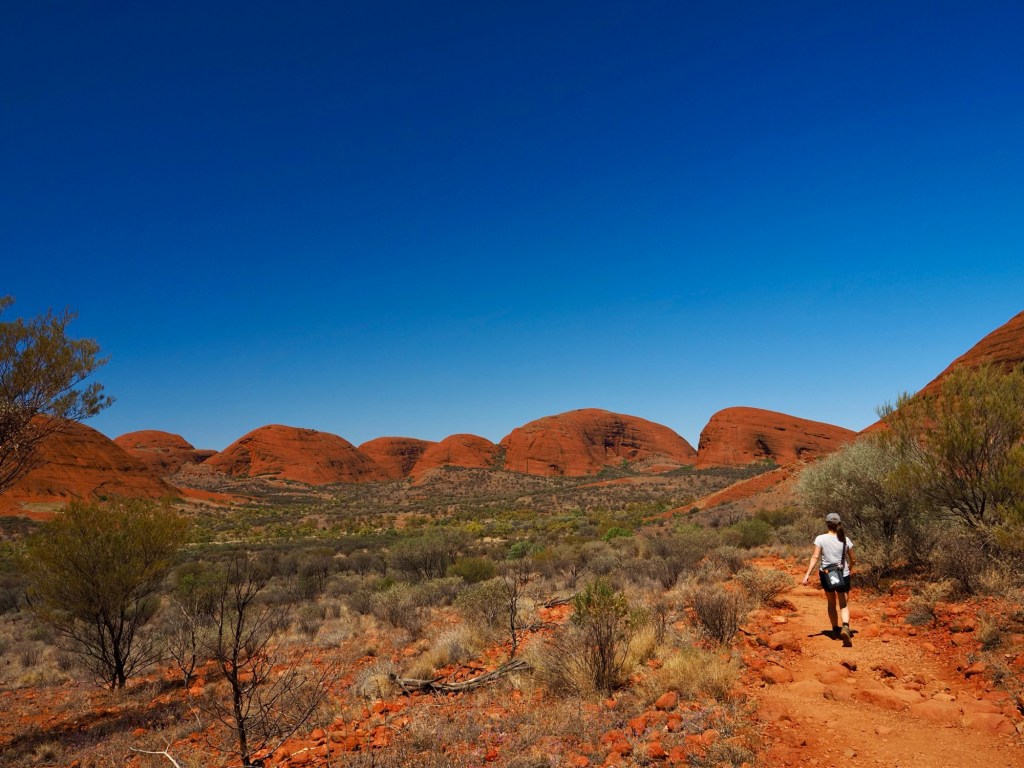
The trail crossed a mostly dry river before turning south into the stone hills that define Kata Tjuta.
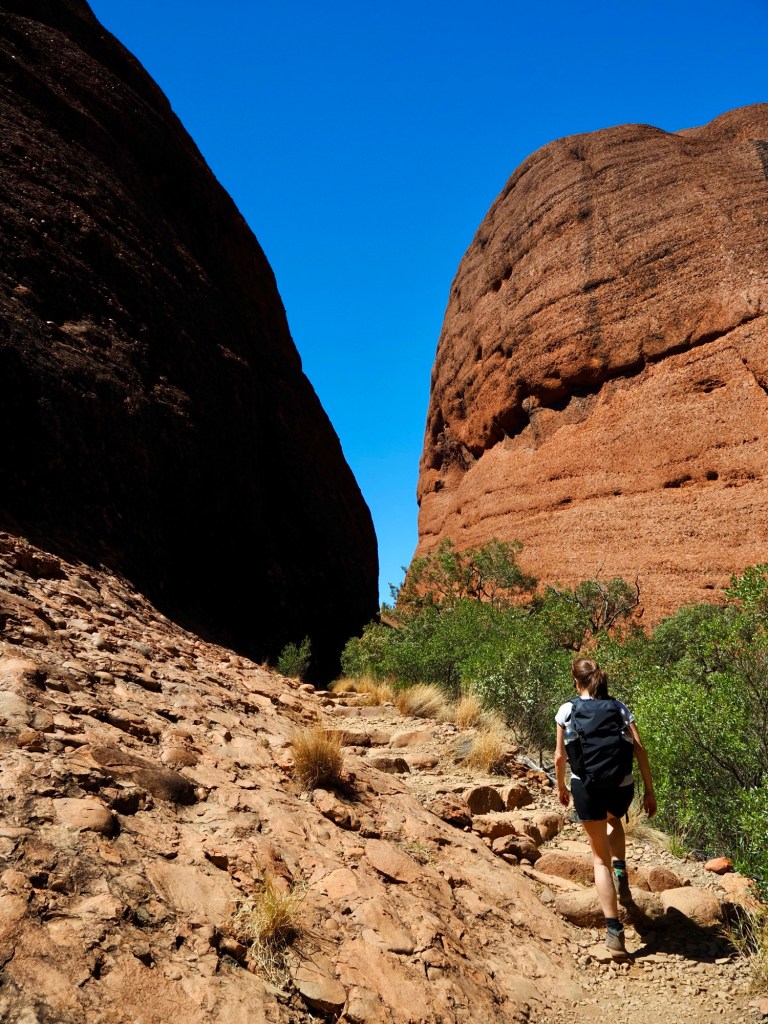
The trail soon became steeper before reaching a large solid rock hill, where we found an older French couple (maybe high 60s? Low 70s?) who were apparently stuck. They had managed to go up the hill but reached a section that was too steep to continue. They were also worried they’d fall going back down. We helped the couple get to a safer part of the path before continuing on our way. The trail snaked through narrow stone valleys that surely give the Valley of the Winds its name.
The sun was strong, and the temperature was rising. But the narrow stone valleys were cool, with the high cliffs casting shade and tight space channeling the wind.
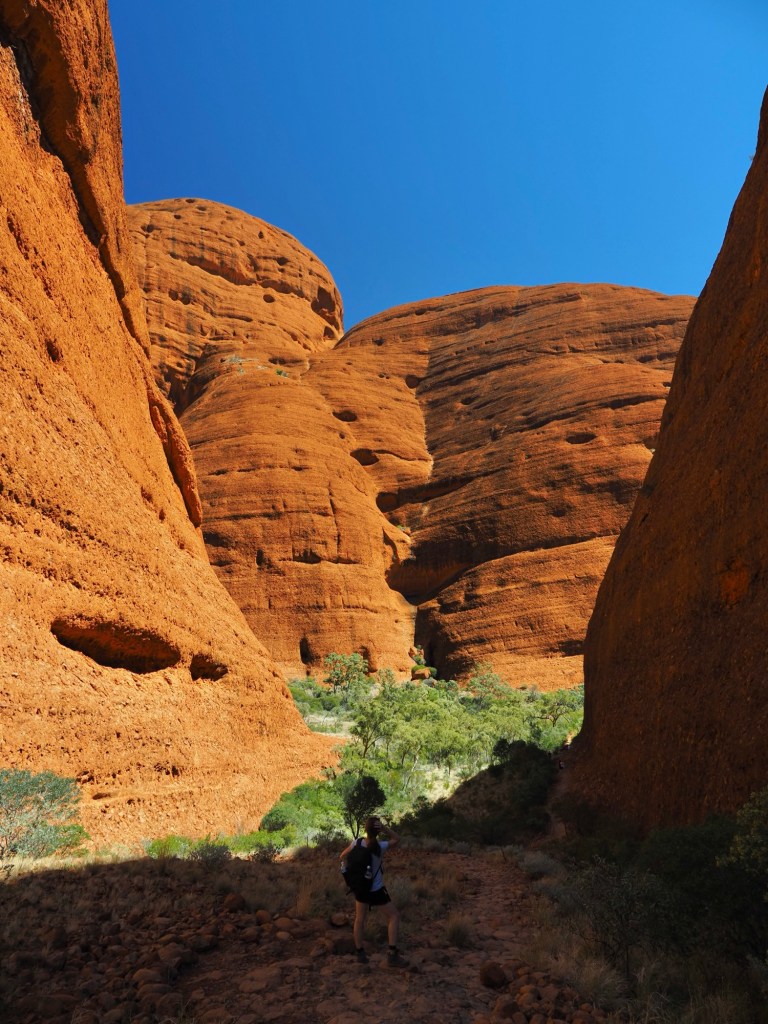
We hiked on through the narrow passes, and the trail opened up, allowing us to see more stone hills in the distance.
We returned to the van and drove to our second hike. Once we reached that trailhead, we made lunch and another cup of coffee. It’s pretty convenient to travel with your kitchen! Fed and caffeinated, we set off. This trail would also wind down a narrow stone valleys, but this one had no no outlet at the end.
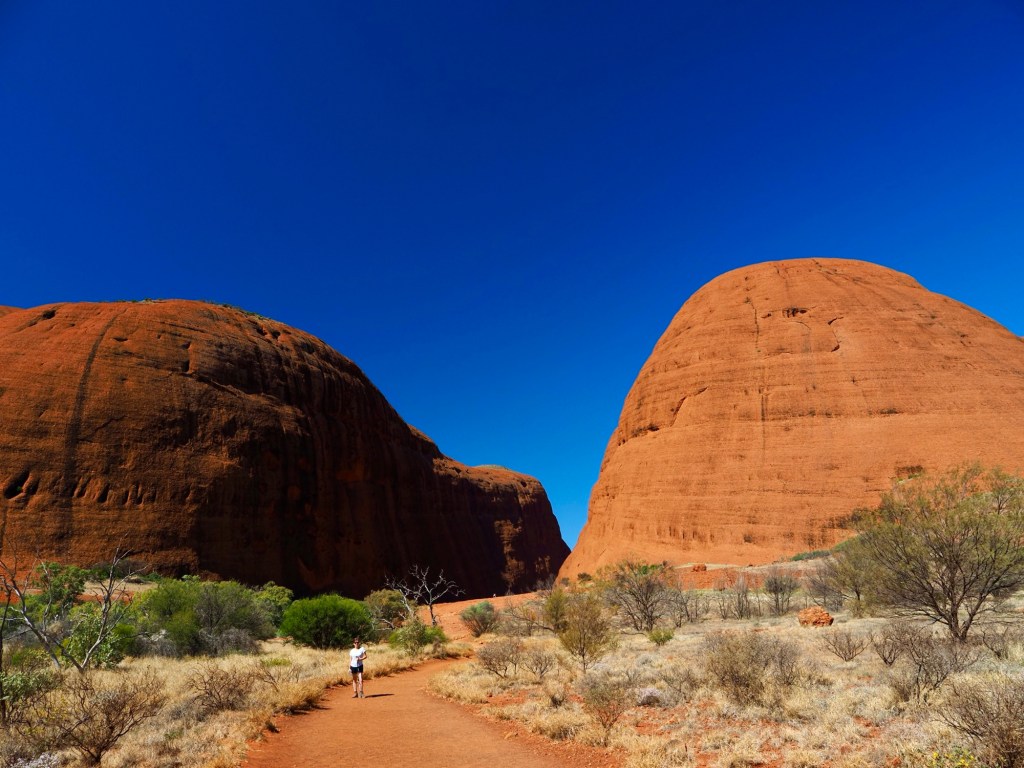
The red hills rose around us as we followed the trail in between them.

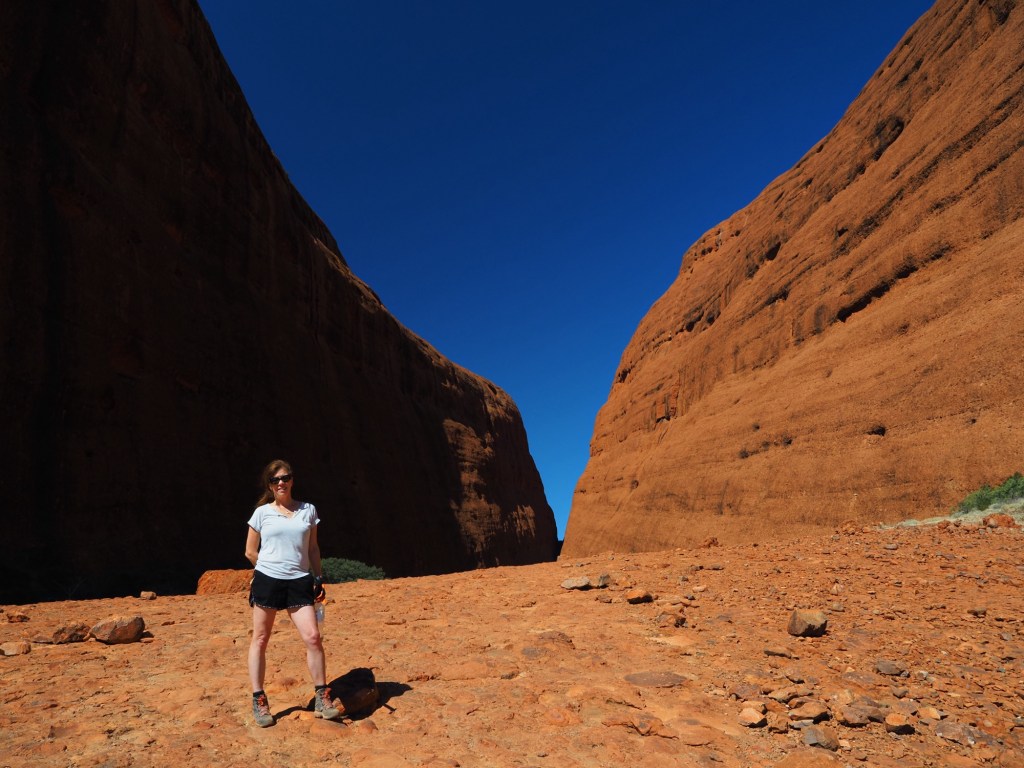
As we hiked, the trail became almost entirely stone, and the walls grew closer.
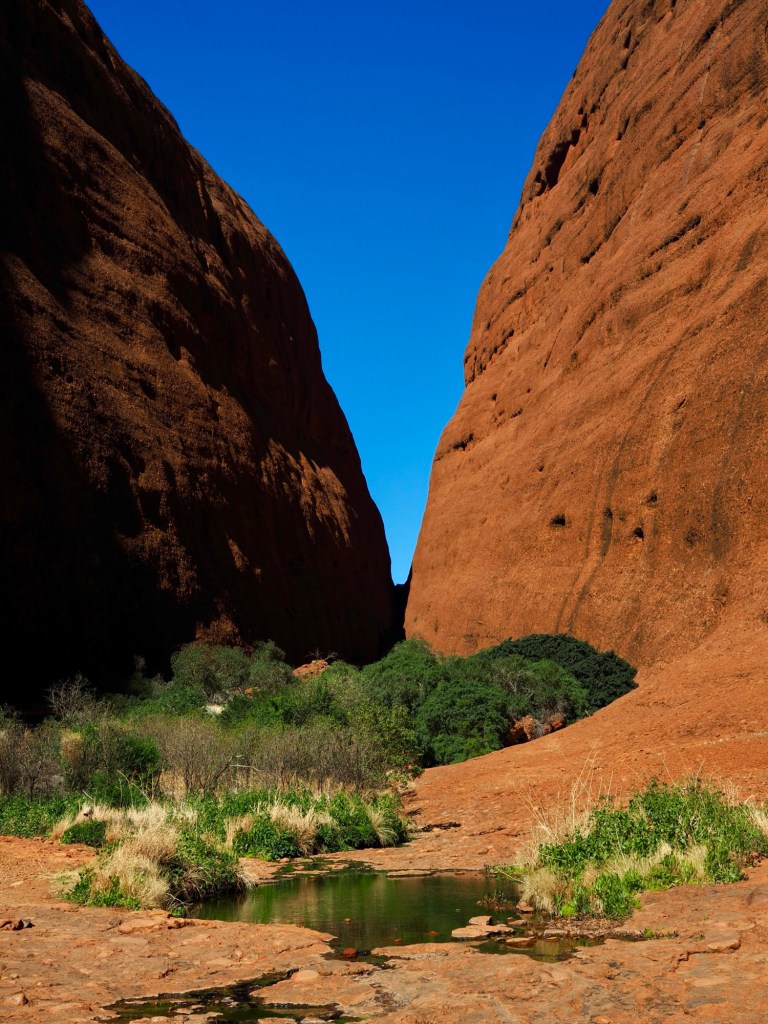
The closed end of the valley contains a small oasis. Water that cannot penetrate the surrounding rock collects to support a small collection of plants.
We quickly returned to the campervan, as our next campground was about 3.5 hours away.
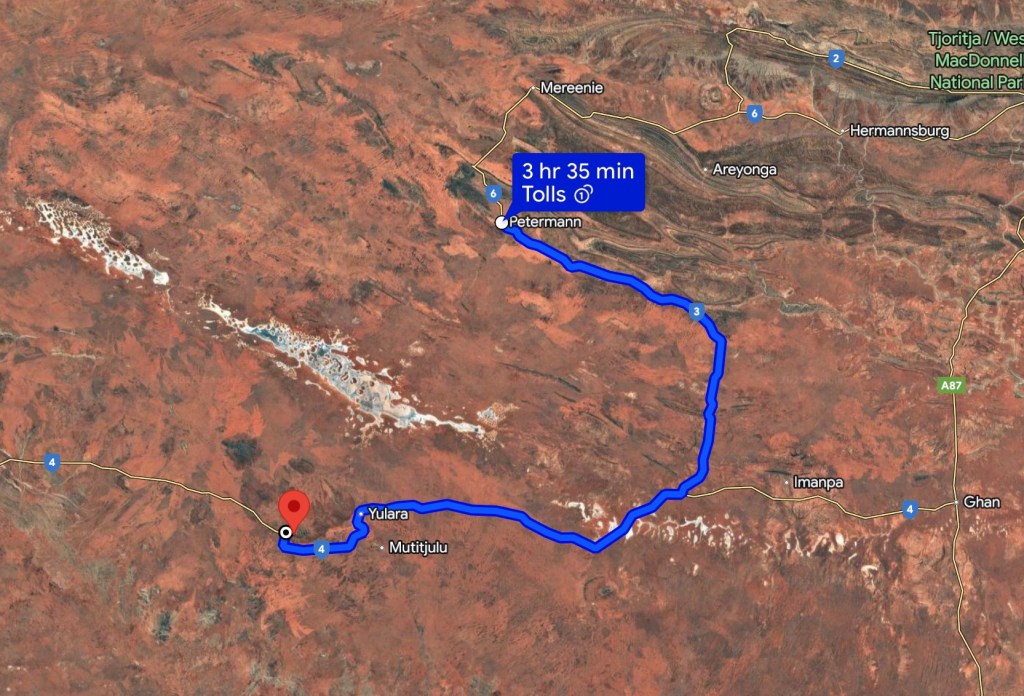
Once again, we were driving at dusk, worried about wild animals and wandering livestock. As the sun was setting we encountered a dingo lying in the grass on the side of the road.
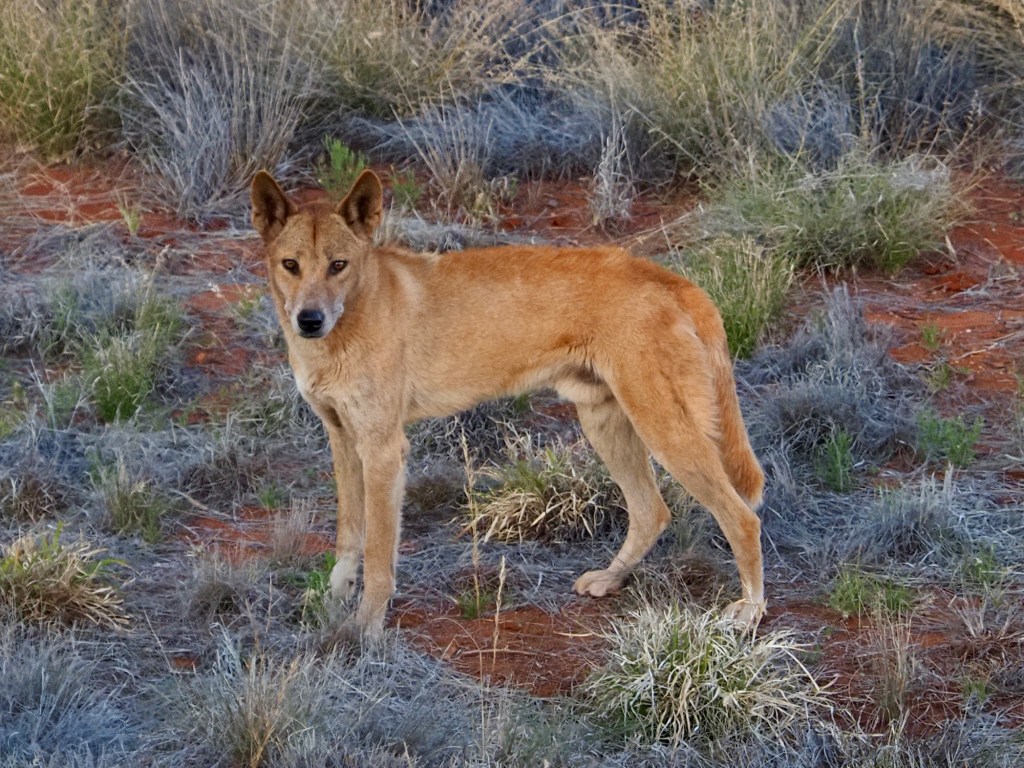
Dingos get a bad wrap. I’ve heard them described as feral dogs, suggesting that they are somehow a corrupted version of something familiar. The reality is that they came to Australia more than 3,500 years ago, thousands of years before Europeans. While there is some disagreement as to whether dingos are a separate species of canine, they are not simply good dogs gone wild. Even if they came with migrating humans (which is not clear since humans came to Australia more than 50,000 years ago), dingos have become something different. They successfully survive in harsh climates throughout Australia, which is something worthy of respect in my mind. And don’t get me started on dingos and babies. That tragically happened once in the 80s. More people die each year from vending machines and champagne corks.
In fact, the dingo was the least dangerous to us as we drove. We once again had to navigate herds of cows on the road at night. And a herd of wild horses. Fortunately, we reached our campsite with no problems, where we hooked up to power, settled in, and went to sleep. Another amazing day in the wilds of the outback.
-Will
 The Hubbards' Travel Blog