We started the morning by flying from Melbourne to Alice Springs, deep in the Northern Territory. Once we landed, we picked up a campervan, a new mode of travel for us and one we’ve been dying to try.
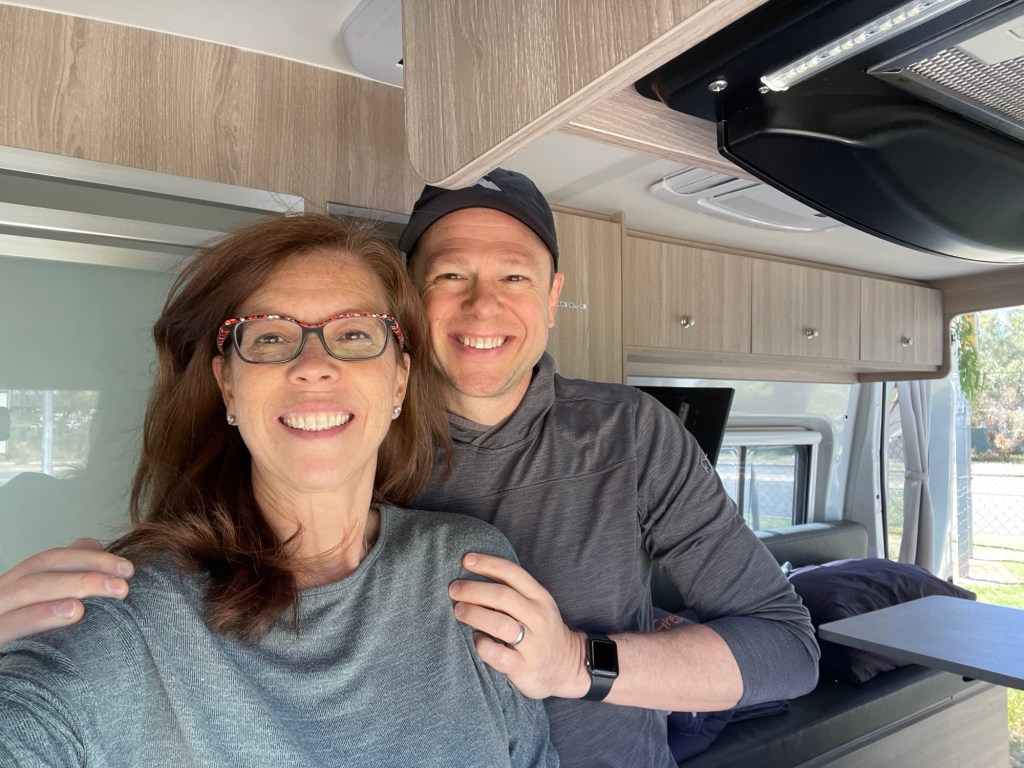
For the next five days (and for the first time for each of us), we’d be traveling in a fried out kombi in the Land Down Under (#80sLyricsYouDidntKnow). We had a 4.5 hour drive ahead of us to reach our first campsite, so as quick as we could, we stocked up on groceries, though we passed on the butchered kangaroo we saw in one store. By late afternoon, we hit the road, headed south into the desert.
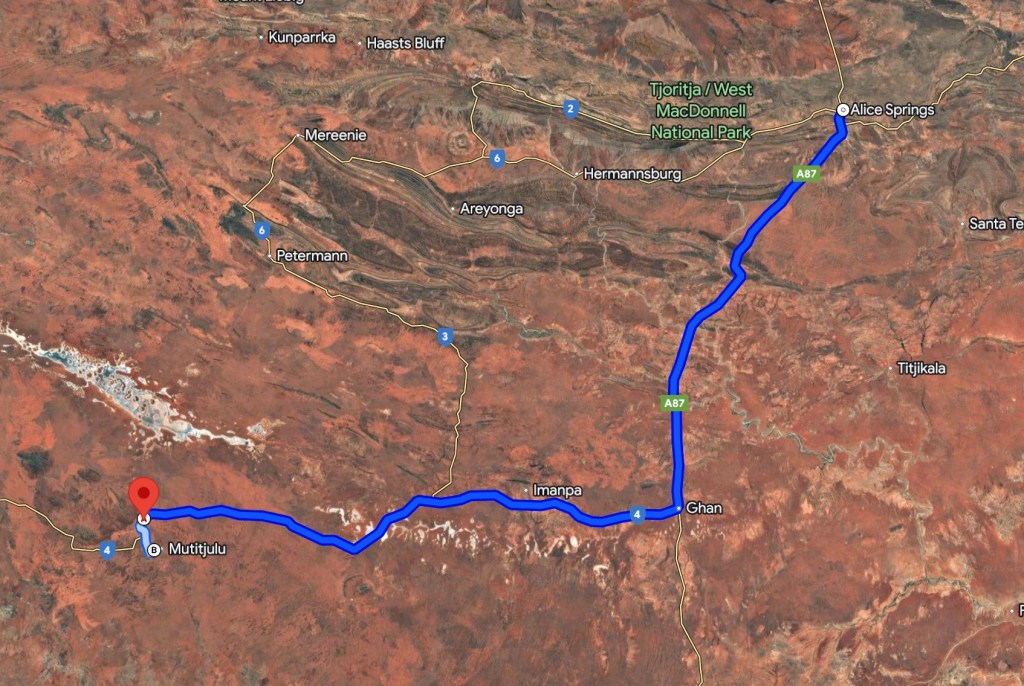
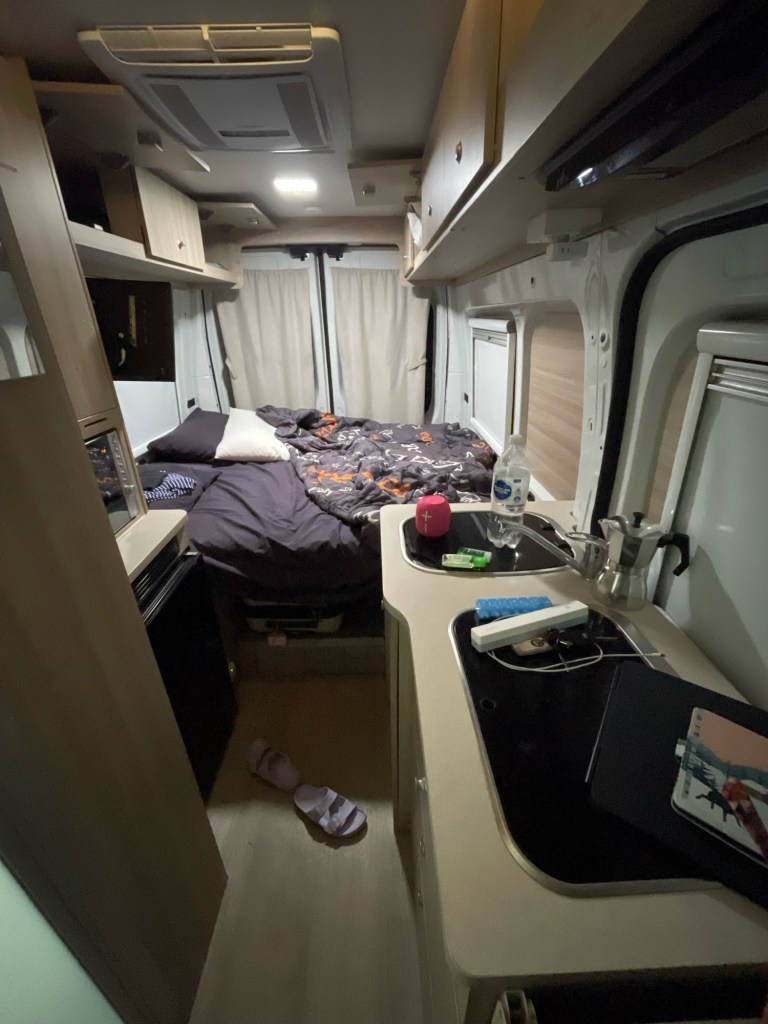
After a couple of hours, we turned west towards the setting sun, on a small two-lane road with no cell service. Signs along the way warned us to watch out for roaming livestock and kangaroos, and the occasional roadkill heightened our vigilance and concern. We spotted our first kangaroos hopping off the road. As it grew darker, we had a few close calls with cattle roaming on the road, but our van (which we’d dubbed “Camper Diem”) handled the sudden stops just fine. Around 9 pm, we rolled into the Ayer’s Rock Campground in Yulara. We found our campsite, ate some cheese sandwiches, and went to bed.
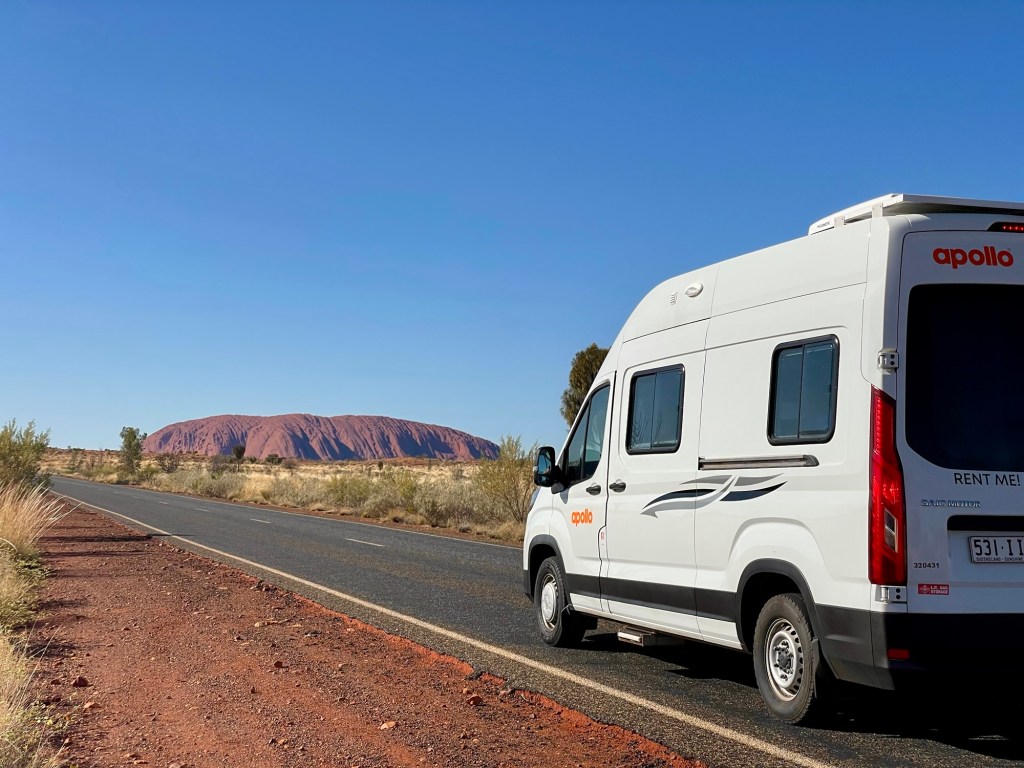
The next morning, we headed off to the massive monolith of Uluru. We spotted it almost as soon as we left Yulara, as it rises more than 1,000 feet above the red desert.
The site is has long been controversial. For many years, it was referred to as “Ayer’s Rock,” but the local Aboriginal tribe – the Anangu people – call it “Uluru.” The place is sacred to the Anangu, something we immediately and viscerally understood. The place is magical – a characterization that I stand by though it may sound overblown. The trouble is that people respond to this magnetism in different ways. The Anangu revere it and do not climb the rock. Other people see a big rock and want to climb it – a sentiment that I frankly understand. Indeed, this blog is riddled with pictures of us climbing rocks. Until 2019, tourists could climb the rock with the help of a chainlink rail. Today, however, you cannot climb the rock.
As a result, our plan for the day was to hike around the base of Uluru, a 6-mile hike.
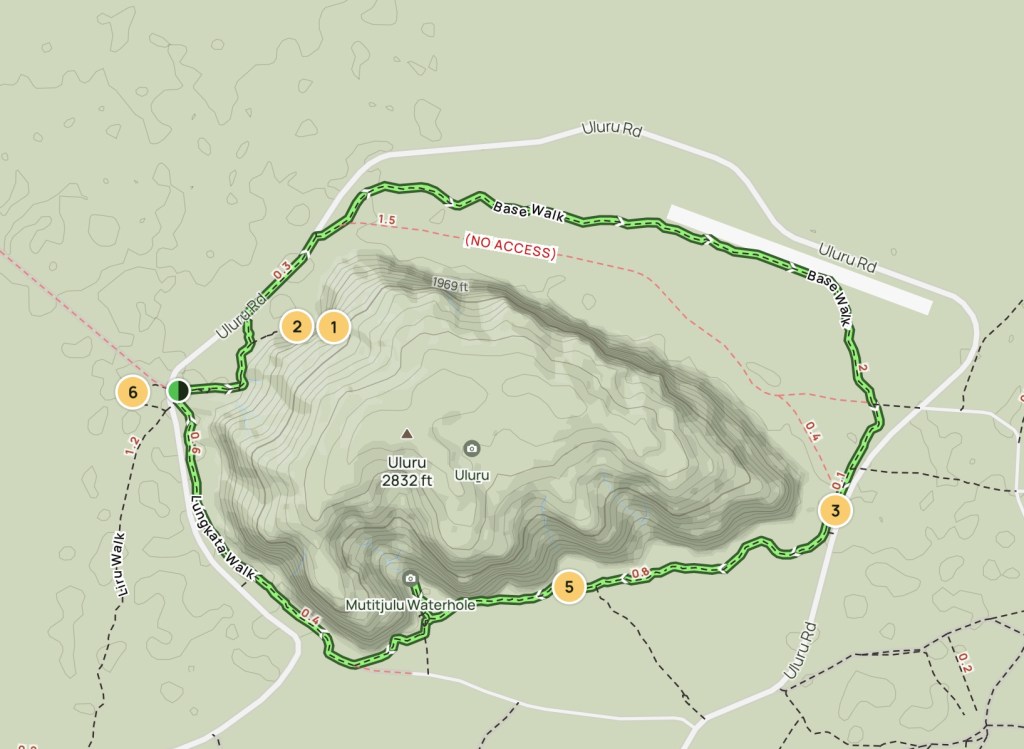
We parked the car and set off.
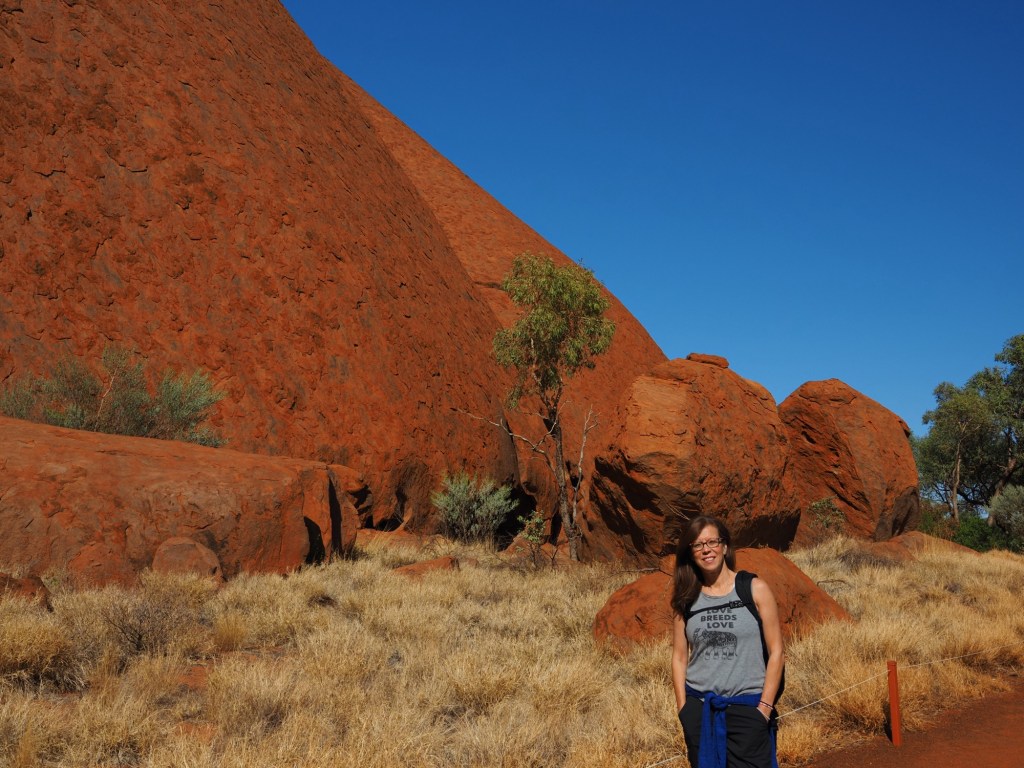
Uluru is made from a type of sandstone, and the area is likewise surrounded by dusty sand. The red color of both comes from a high content of oxidized iron. Basically, the area has slowly rusted over millions of years. We soon reached a spur trail into Kantju Gorge, a deep crevice in the side of the huge rock where water collects and is available year round.
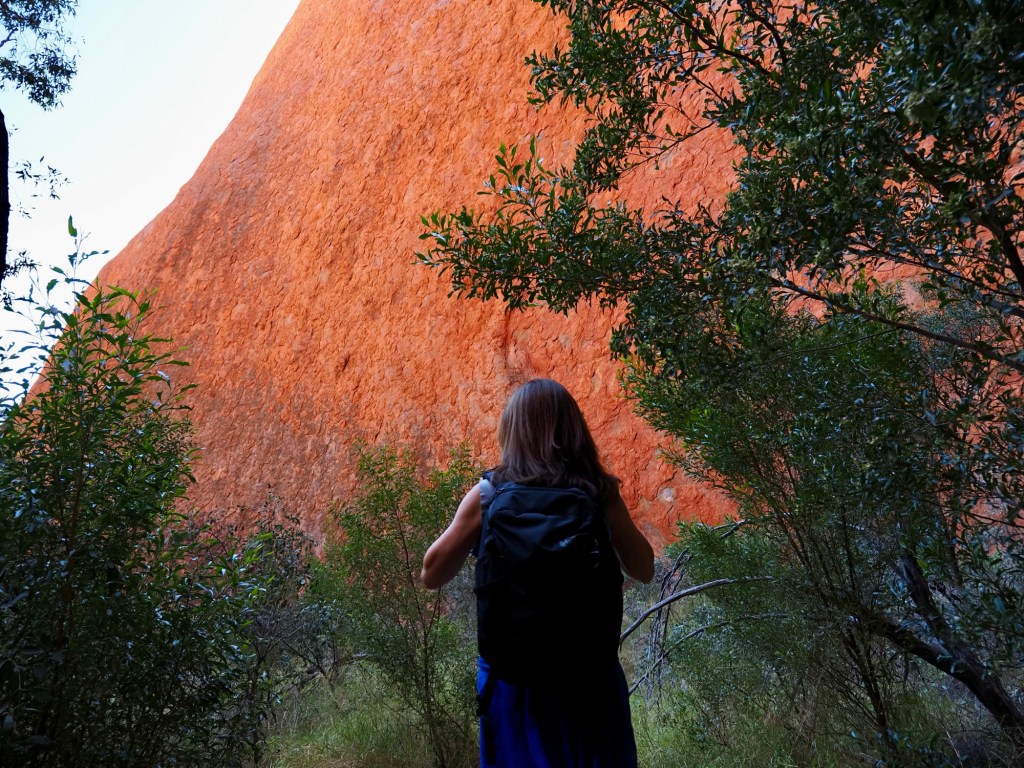
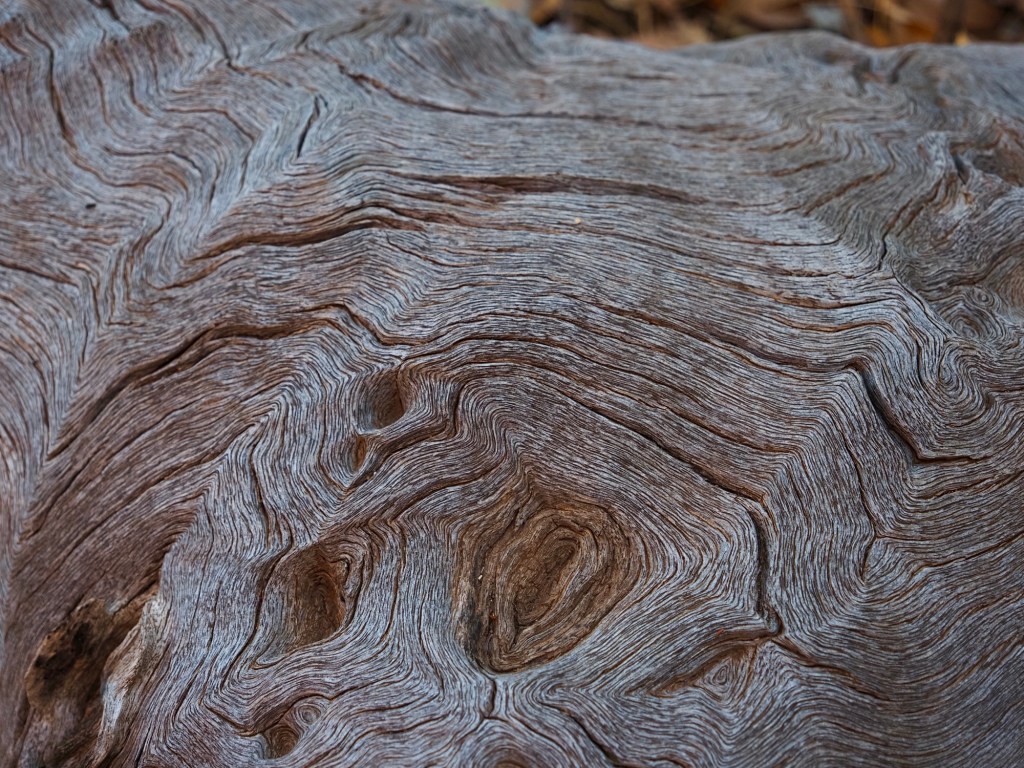
More water means more trees, and even the dead ones were gnarled beauties.
This area is fairly close to the car park, so there were more tourists. Many of them wore ridiculous open-toed vanity sandals, and I was glad to see that the local park officials also found this a little frustrating.
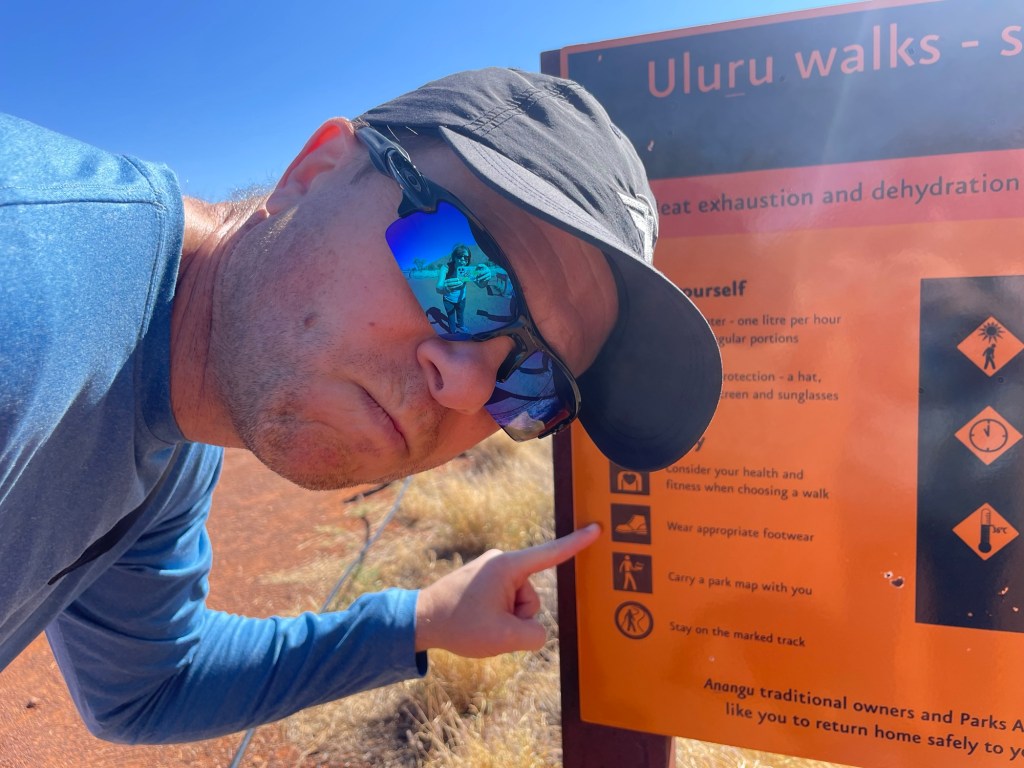
We didn’t know it at the time, but this was foreshadowing some later trouble. After the gorge, the trail headed further into the desert and we saw far fewer people.
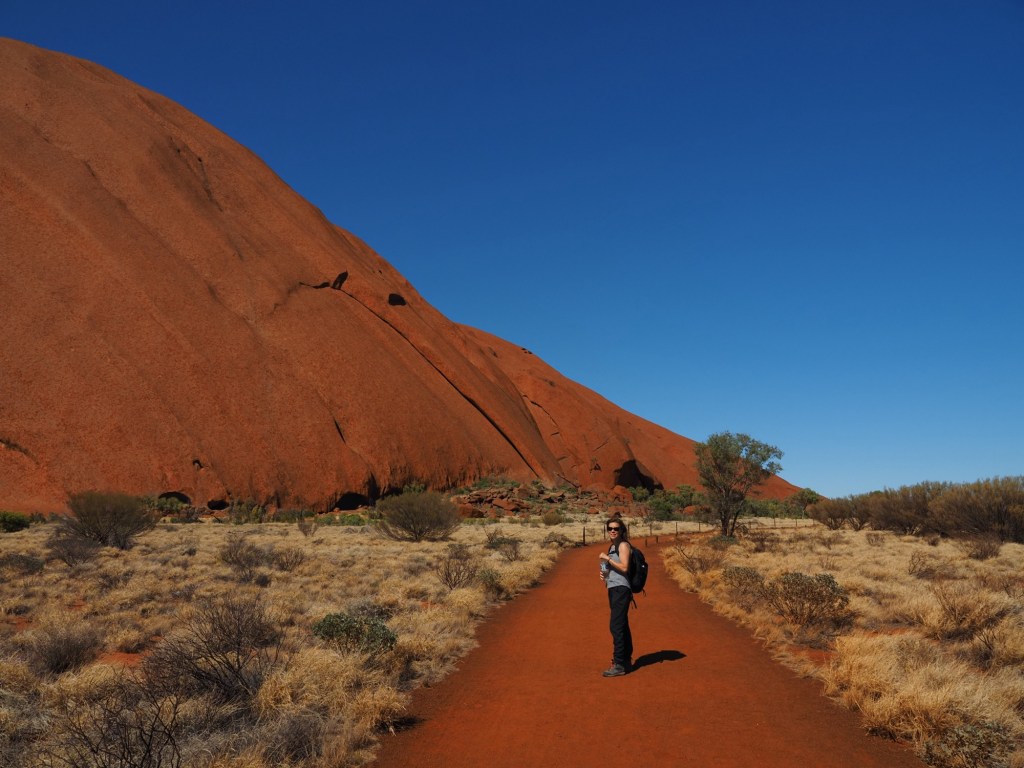
The trail curved around to the north face of Uluru, but signs asked us not to take pictures, as those parts of Uluru were of particularly spiritual significance to the Anagu. By the time we could take pictures again, we saw jagged shapes that had eroded into the cliff sides. To our highly trained eyes, the two rough patches on the left side of the photo below looked like cross-sections of Darth Vader and a giant mitochondrion.
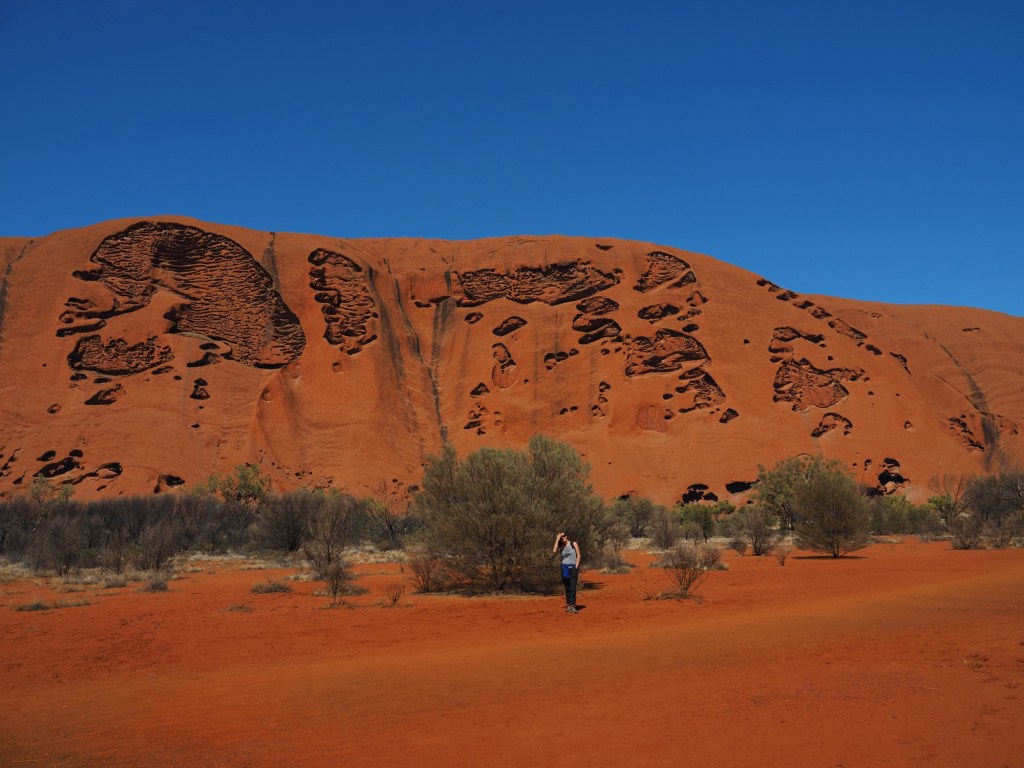
In sharp contrast to the massive cliffs, the surrounding desert is flat, flat, flat.
While the area was incredibly dry, we suspected that there had been some rain not too long ago, as wildflowers dotted the landscape.
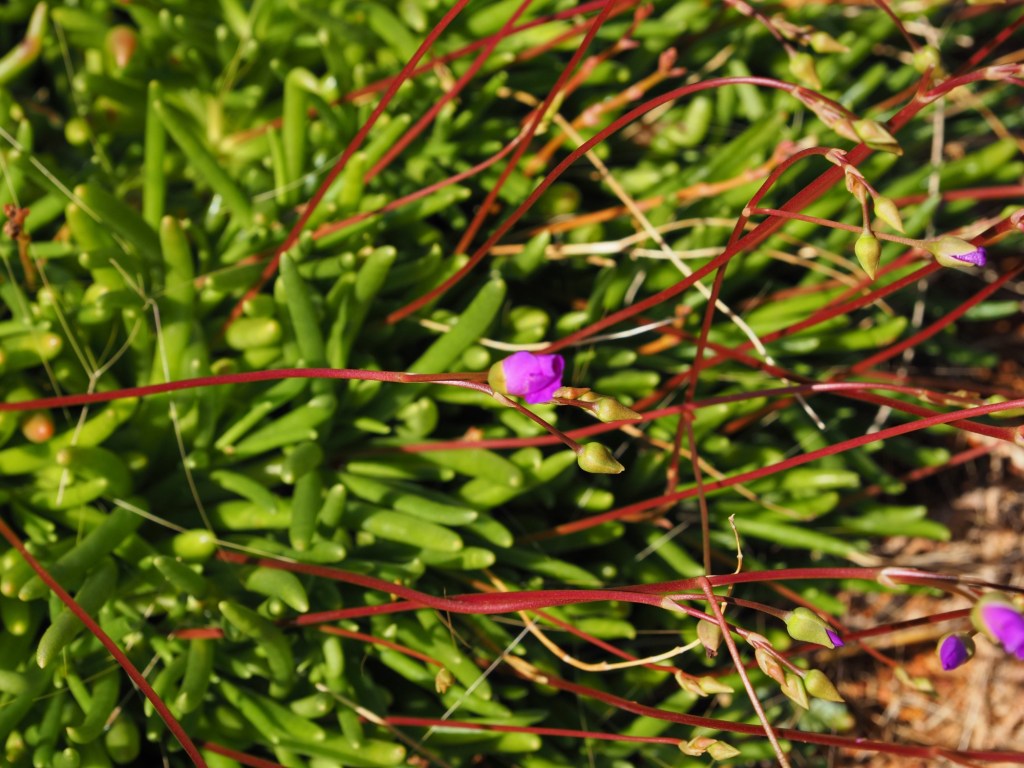
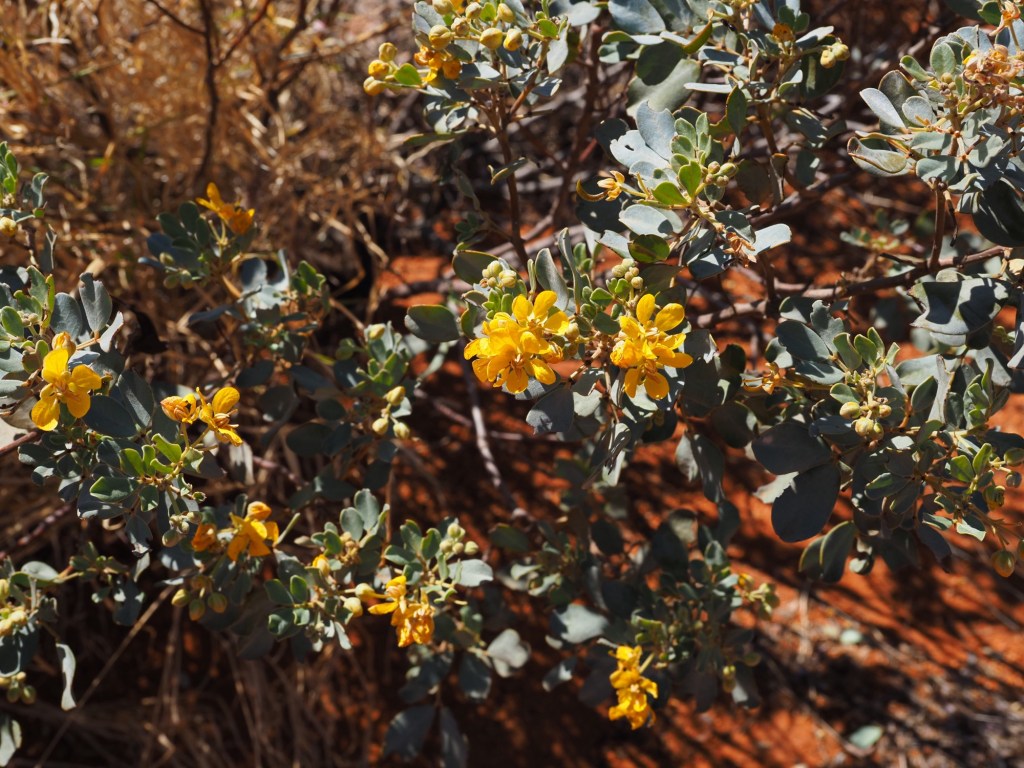
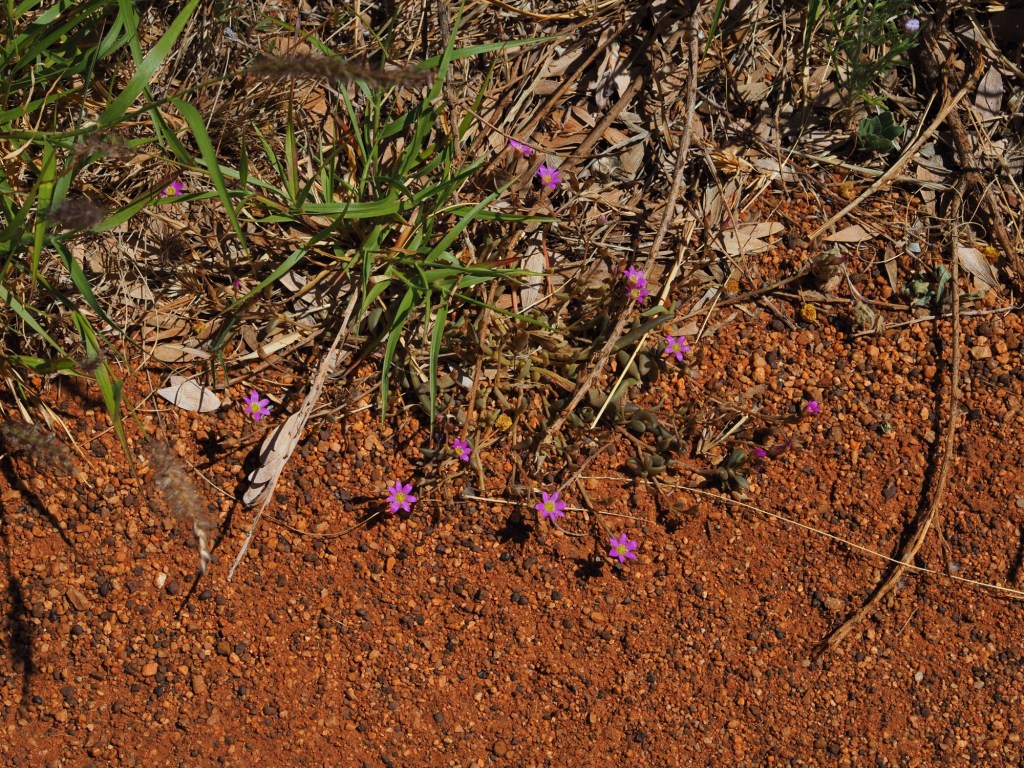
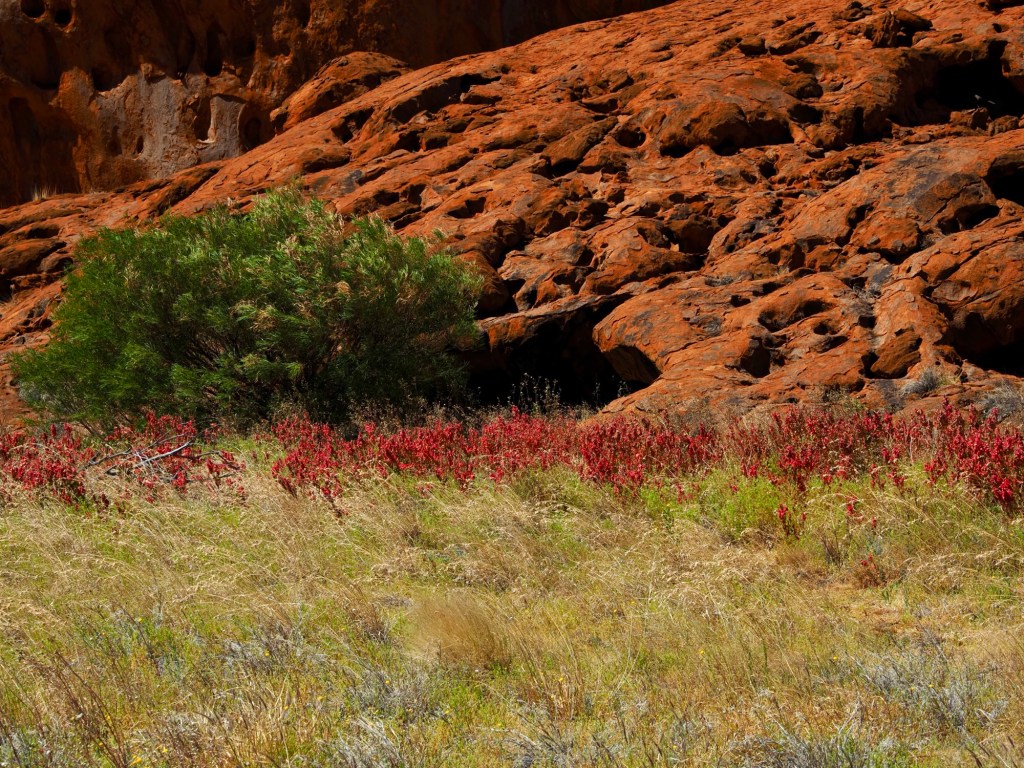
By the time we reached the midpoint of our hike, the sun was high, and we were hot.

On this side, the path traced the edge of the rock. The wind whipped down the cliff face, providing some welcomed cooling.
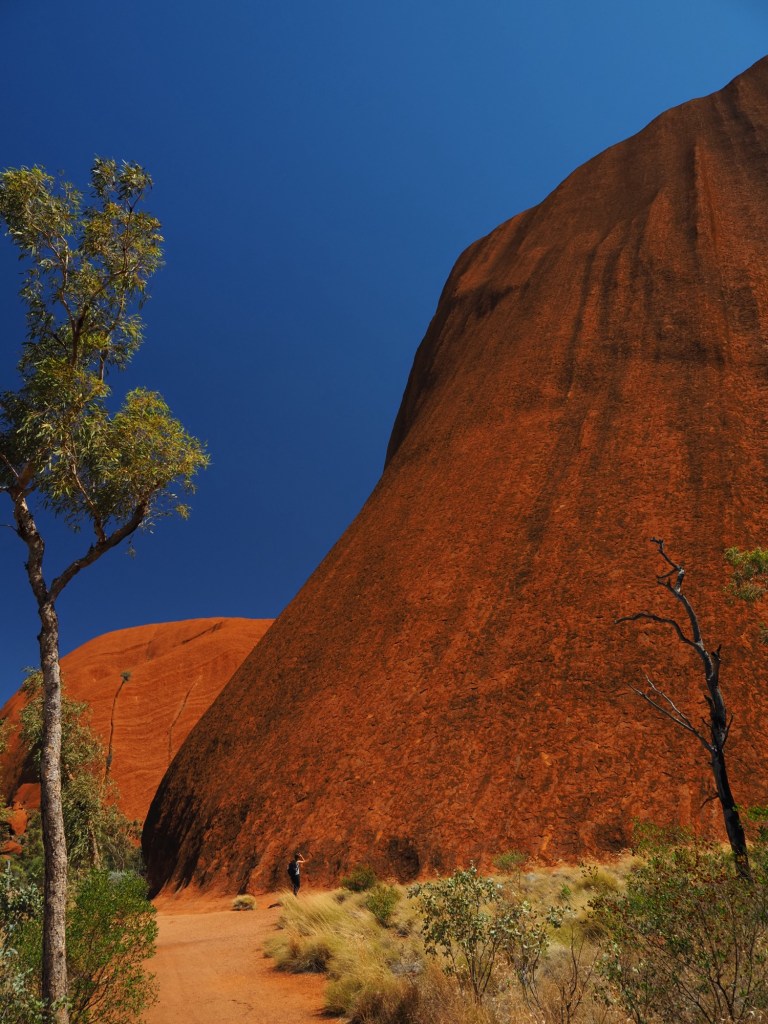
We soon reached another small oasis formed against the side of Uluru.
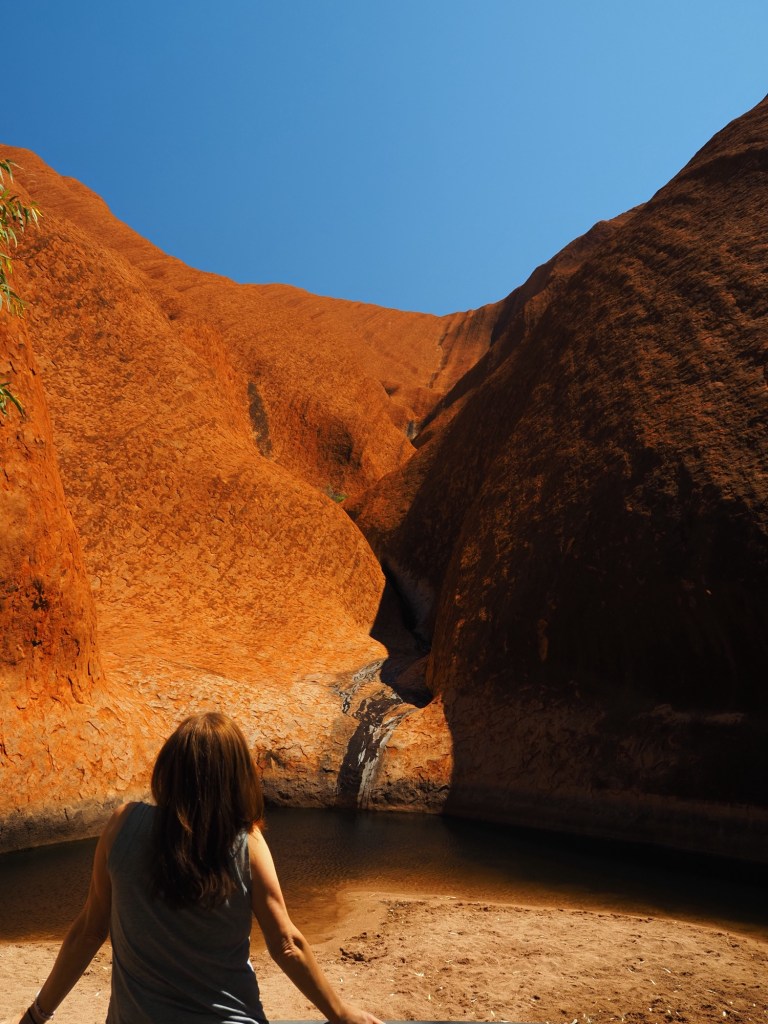
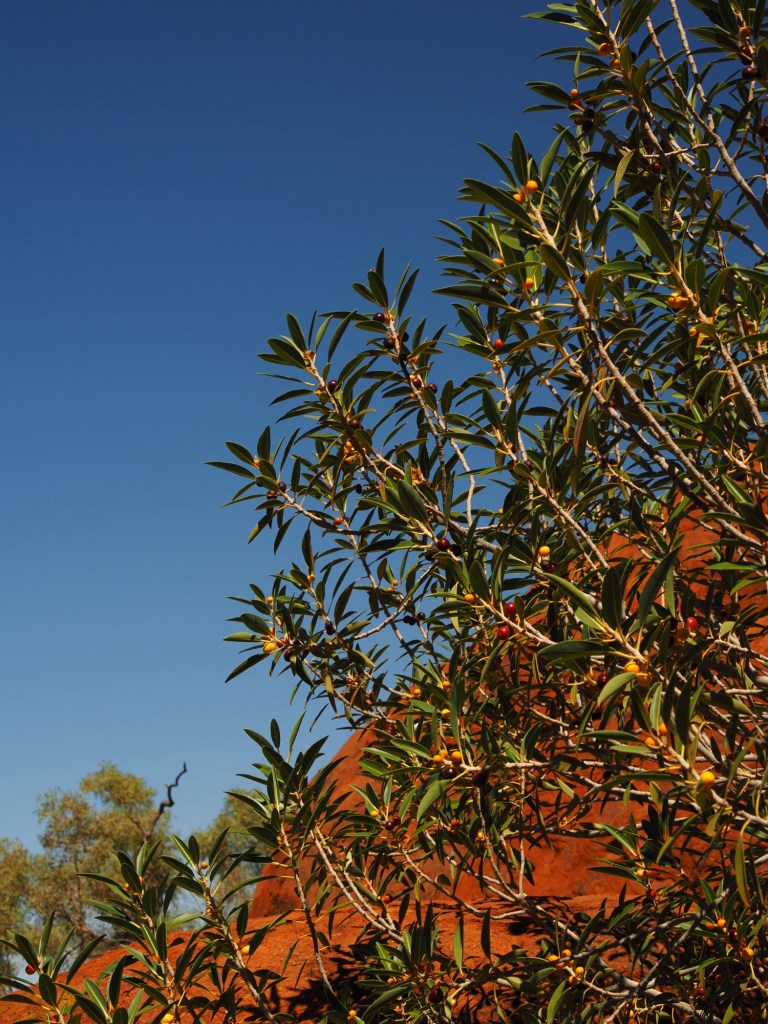
Nearby placards explained that this was an important place for Anangu men to hunt animals like emu that came to drink. Boys would hide nearby to watch and learn hunting techniques. Some of the plants in the area were also edible. Indeed, so many native plants and animals in the outback are edible that the Australians have a term for this found food — “bush tucker.”
Tired and a bit hungry, we finished our loop of Uluru. We decided to move our campervan to one of the carparks further away, so that we could make lunch and relax for a bit while admiring the view. Done with our exercise, we took off our boots to change into more comfortable shoes. Julie put hers on the retractable step on the side of our van. And unfortunately forgot about them. We drove off, and by the time we realized what had happened — about 4 miles down the road — the boots were gone.
This was a bit of a problem, as much of our trip for the next few months involves hiking. Consequently, we spent the next few hours searching for Julie’s boots. We started by scouring the car park where we’d ended our hike. No luck. Then we drove the stretch road from the lot to where we’d realized our mistake. Nope. We stopped park rangers to see if they’d seen the boots. Zilch. We went to the nearby Cultural Center to see if they’d been turned in. Nothing. We went back to the parking lot, put my boots on the step, and started driving to see where Julie’s boots might have fallen off. Of course, my boots staunchly refused to fall, suggesting that Julie’s boots could have fallen anywhere. We had little choice left but to start walking the 4 miles of road where the boots might have disappeared. We poked through the bushes along the roadside but still found nothing. (For better or worse, we also didn’t find any of Australia’s famous venomous snakes.).
Around 5 pm, we decided we’d looked enough. It was time to move on. We headed to a nearby sunset viewing area, opened a bottle of wine, and toasted the boots. Perhaps the power of Uluru had claimed them, and we wished them well on their disembodied walkabout in the enchanting desert.
We certainly weren’t going to waste this incredible opportunity to watch the low light reflect off the red sandstone. As the sun dipped lower and lower, Uluru looked like it was illuminated from within. It was one of the top sunsets we’ve ever seen.
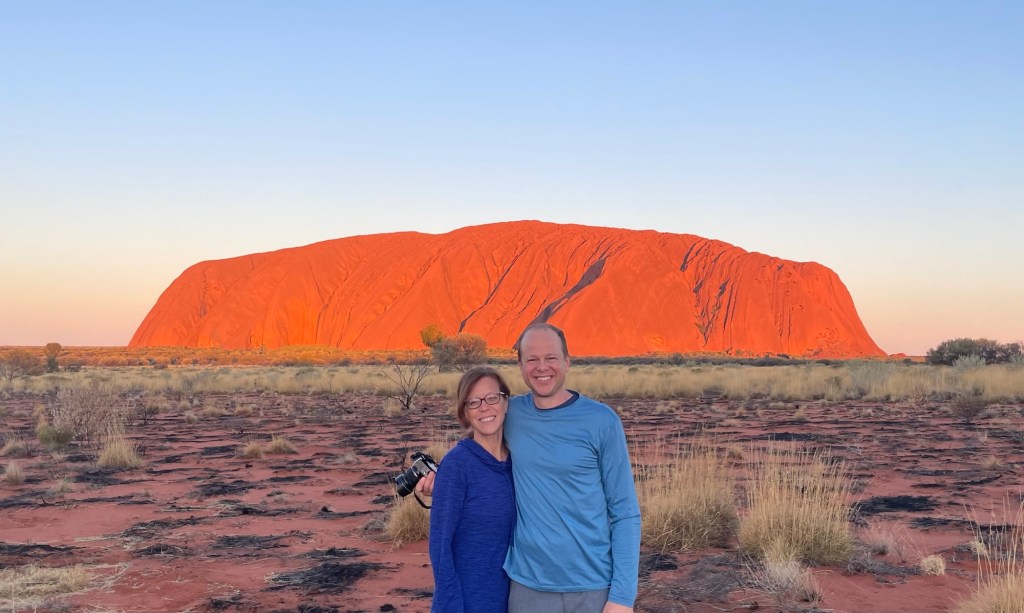
It was a moving sight, and not just for us. We spotted a young couple nearby taking turns photographing each other in the dying light. I offered to take a picture of them together. As I started taking pictures, the guy dropped to one knee and proposed. She said “yes,” and the tourists looking on all clapped. As I said, it’s a magical place. Best wishes, Heidi and Steven!
-Will
 The Hubbards' Travel Blog