We started a little slow on Day 49, as we’d had a full night at Hobbiton the day before. By mid afternoon, we were headed off for a tour and dinner at a place called Te Puia, where we hoped to learn a little more about Māori culture. To be honest, we weren’t exactly sure what the tour would entail.
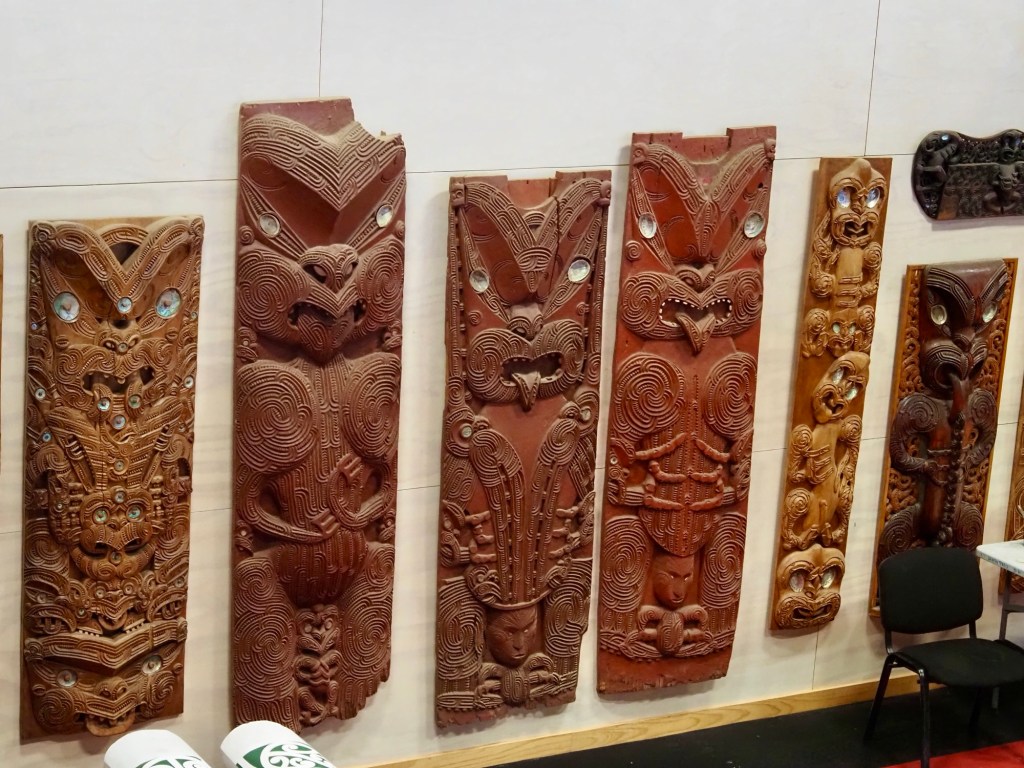
We started with a lightning fast walk through the New Zealand Māori Arts and Crafts Institute, which is a school founded in 1963 through an act of the NZ parliament to preserve, teach, and promote Māori crafts. There are three tracks at the school, one for stone and bone carving, one for wood carving, and one for weaving. The programs train craftspeople for two to four years, and the work was no doubt impressive.
The next aspect of the tour was focused more on natural beauty. We passed through a somewhat artificial kiwi enclosure, but we nonetheless enjoyed it. After traveling for seven weeks, we finally saw a kiwi, albeit not one in the wild. We were also heartened by the care of these birds at Te Puia. Photography was strictly prohibited. The facility is also committed to increasing kiwi numbers. They have a breeding program, and the one bird we saw poking around was a recently born chick. Not that the bird looked like a baby. It still looked like a good-sized fluffy football.
The next part of the tour took us through the volcanic pools at the facility. We’d been seeing plumes of steam while driving around the area, and it turns out that many of those had been from Te Puia. We also had been smelling the sulfur from this area, which had been less intriguing.
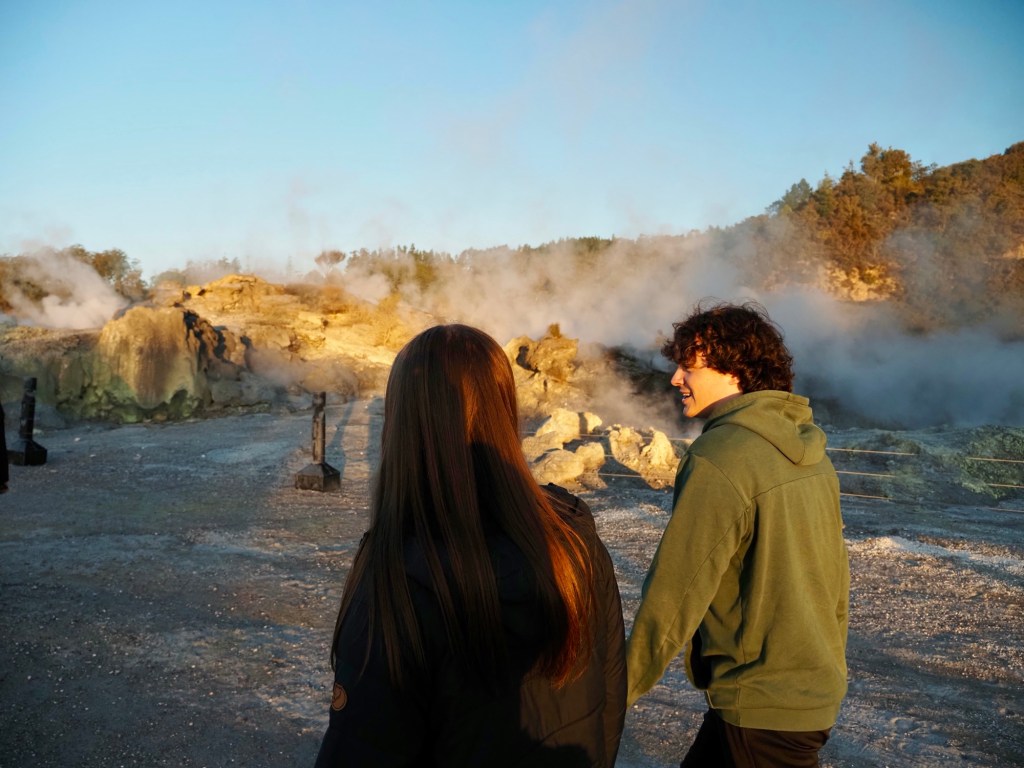
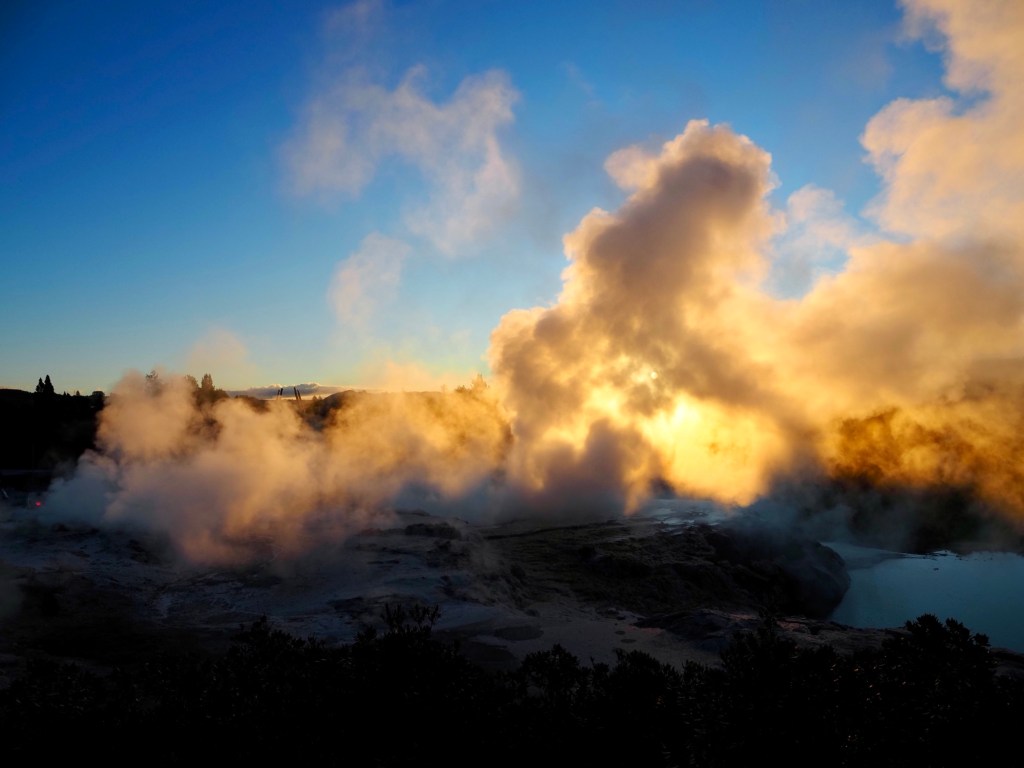
We soon reached the Pōhutu Geyser. It’s the largest geyser in the southern hemisphere, but apparently that’s not a very competitive field. The spray from the geyser only went a few meters in the air.
Though a bit on the small side, the geyser was pretty, spewing out steam while the sun went down.
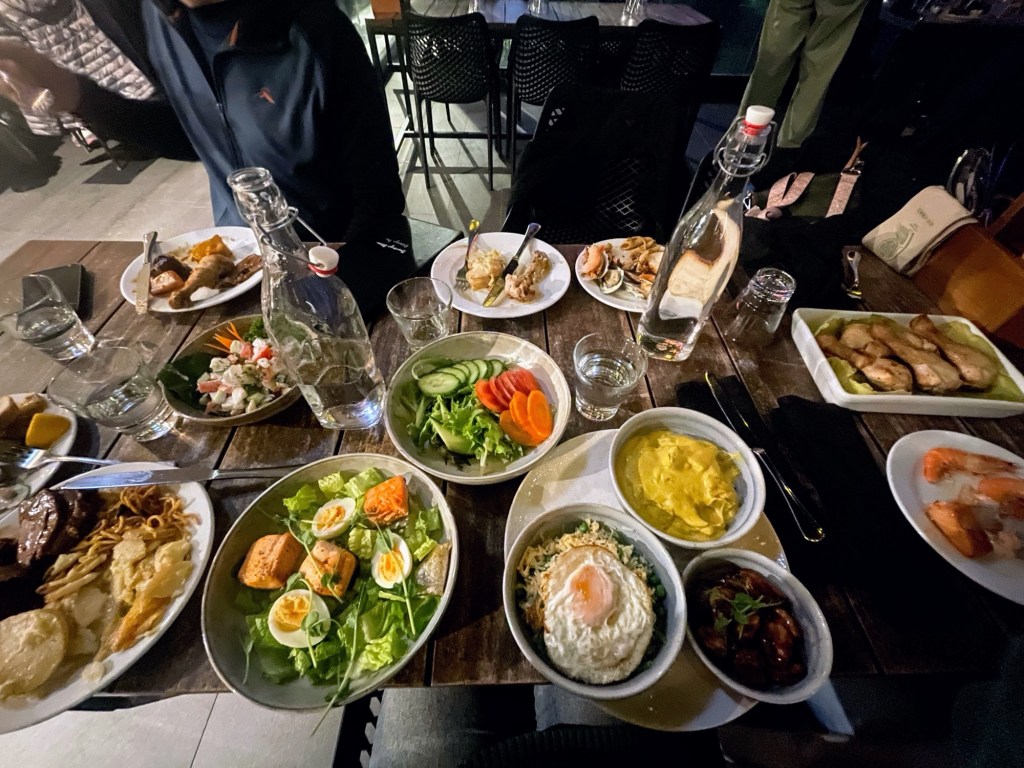
From here, we went to dinner in a large pavilion. The quality and range of the buffet dinner was impressive, with many of the dishes being cooked in a traditional Māori fashion using hot stones, what they call “hangi.”
From here we went to the nearby meeting grounds (marae), where we watched an elaborate greeting ritual. A key element of the display was an evaluation of our intentions — whether they were friendly or hostile. Our guide stressed that, while this was a performance, the Māori involved took it seriously. This was not a time for joking or laughing. Our guide emphasized that there would be a time for celebration, but this was not it.
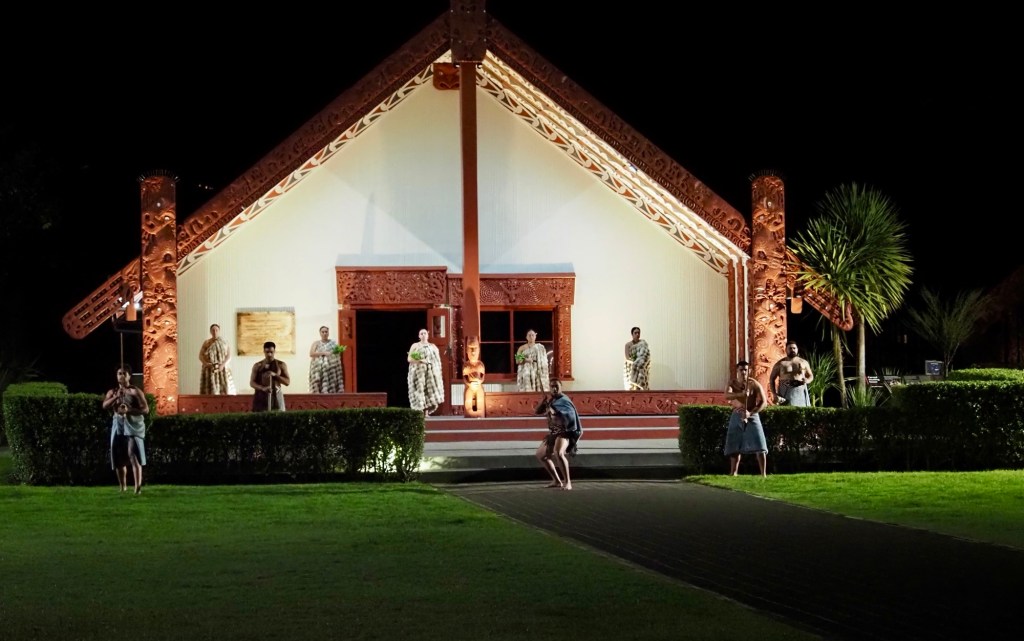
We were soon judged to be friendly and went inside, where we watched performances of traditional dances.
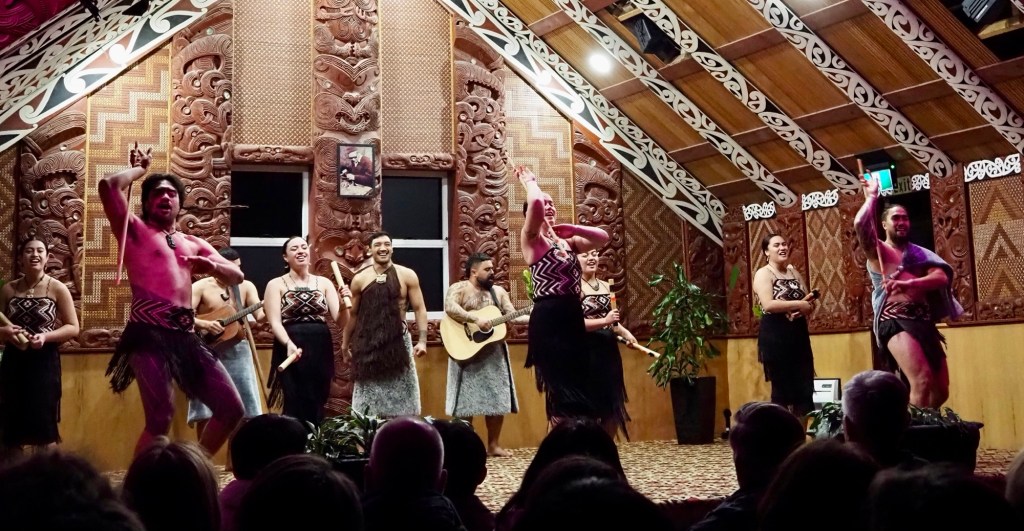
The consensus in our crew was that the lead male performer was *very* handsome. The songs were all in Maori of course, with interesting usage of percussive instruments.
And of course there was an amazing, intimidating haka.
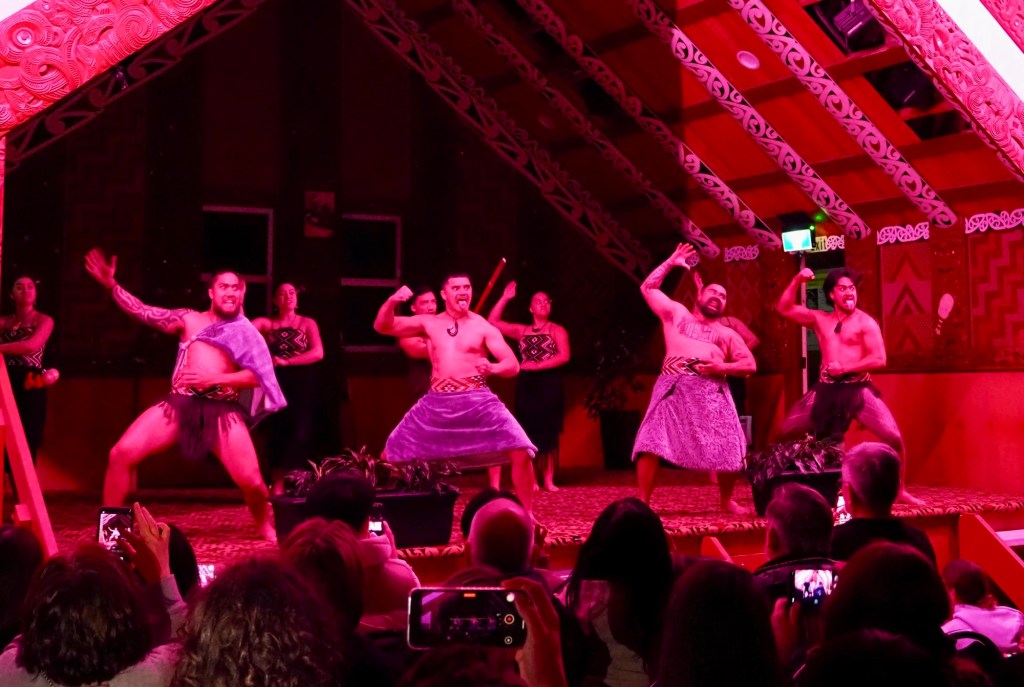
Despite the cool weather and skimpy outfits, the men ended this athletic display sweating.
The night ended back at the geyser with hot chocolate, neon lights, and the sweet, sweet smell of sulphur.
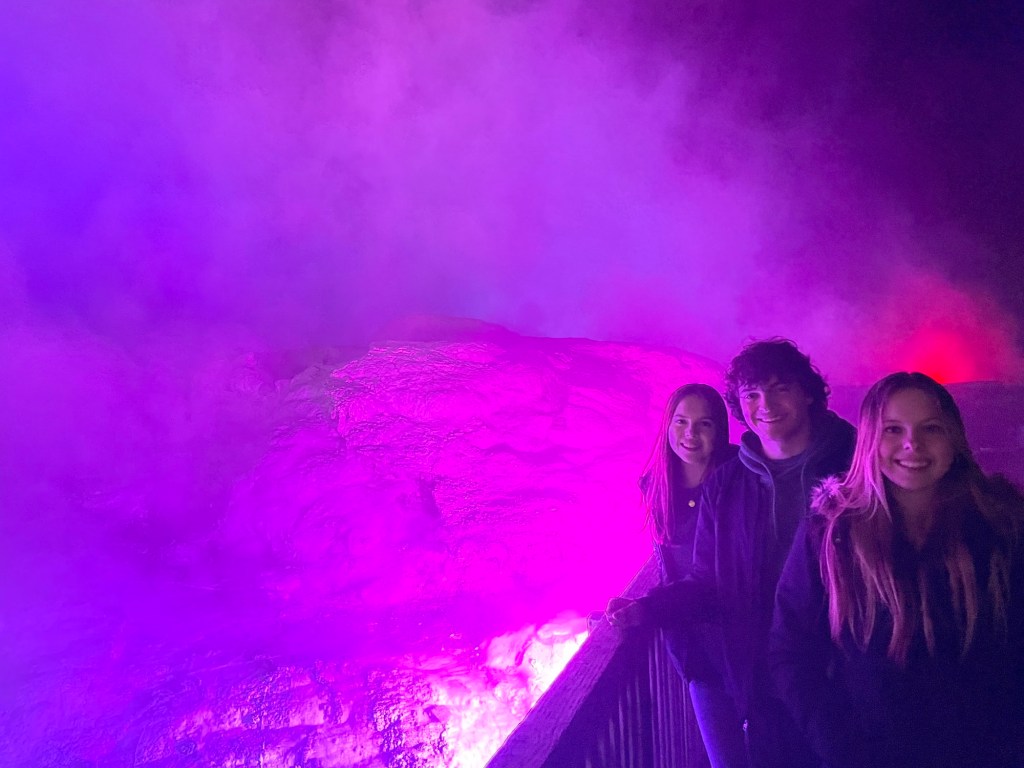
If I’m being honest, there was a flavor of artificiality to the entire night. The natural geyser had outlandish neon lights. The kiwi birds were in a false-night man-made enclosure. The buffet dinner had Asian noodles and fried rice. Even the Māori cultural experience was a contrived performance for a tourist audience.
But I’m not sure there is a realistic different path. All of the Māori guides, hosts, and performers told us that they are striving to keep their culture alive and that they appreciated the opportunity to share it with us. My guess is that simply letting nature take its course would put some parts of Māori culture on the same path to endangerment as the kiwi birds we saw. I think they can be forgiven a little artificiality if it means keeping all of that alive. The passion expressed by the Māori we met was certainly real enough.
-Will
 The Hubbards' Travel Blog