Day 46 started with a bit of work for me. Our new friend from the last post, Peter Churchman, is a justice on the New Zealand High Court. Peter invited me to speak to judges from the High Court, the Court of Appeals, and the Supreme Court about the research I’ve been doing regarding automated vehicles. On July 17, I gave my talk at the court, which is just across from the “Beehive,” which is the nickname for New Zealand’s parliament building.

I had a wonderful time, and the feedback and comments from the judges was great.
After the talk, I met up with Lydie, Cassie, and Connor at Te Papa, the premier museum in Wellington. We started with an exhibit on New Zealand’s natural history and present. We were all impressed by skeletons of the huge moa, flightless birds that the Māori hunted to extinction.
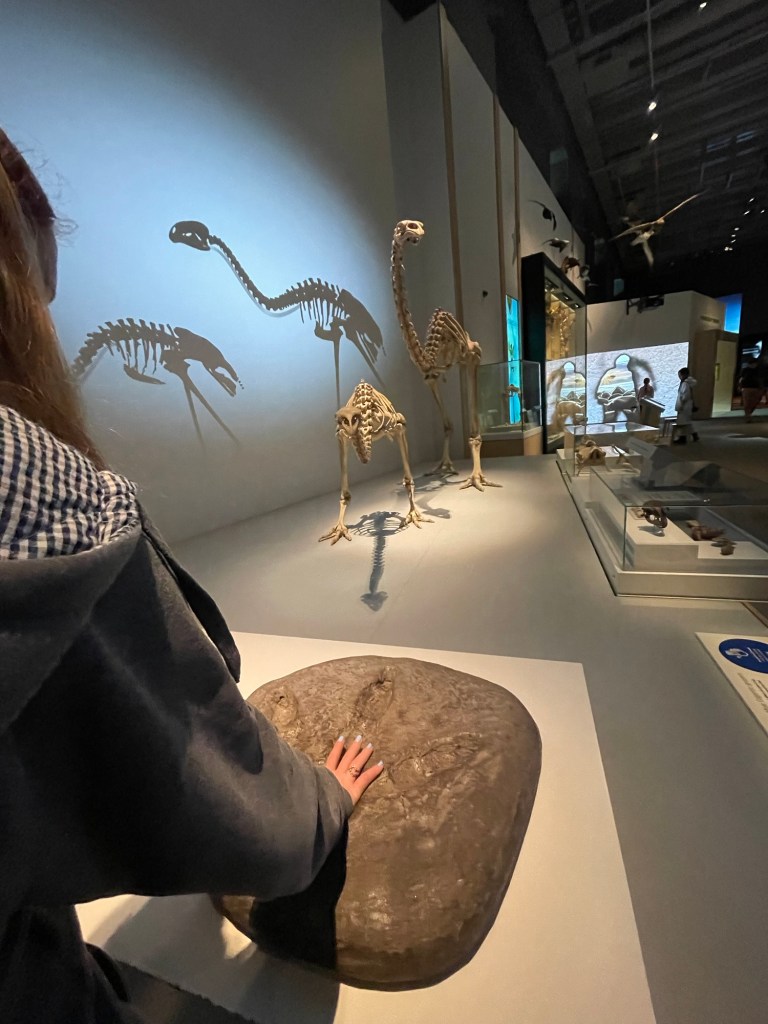
The moa could reach 12 feet tall and weigh more than 500 pounds. Evidently, they were good eatin’, too. But the Māori weren’t the only thing hunting the moa. The huge Haast Eagle also preyed on them. The Haast Eagle was the the largest eagle ever to have existed. They could reach almost 40 pounds and preyed on the moa and human children. We saw one moa skeleton with puncture wounds on its rump from a Haast Eagle scream down from the sky to attack with its talons.
We also saw a preserved giant squid, the largest of its kind ever caught. This one was almost 15 feet long and weighed more than 1,000 pounds. Its tentacles have tooth-like hooks on them, not just suckers.
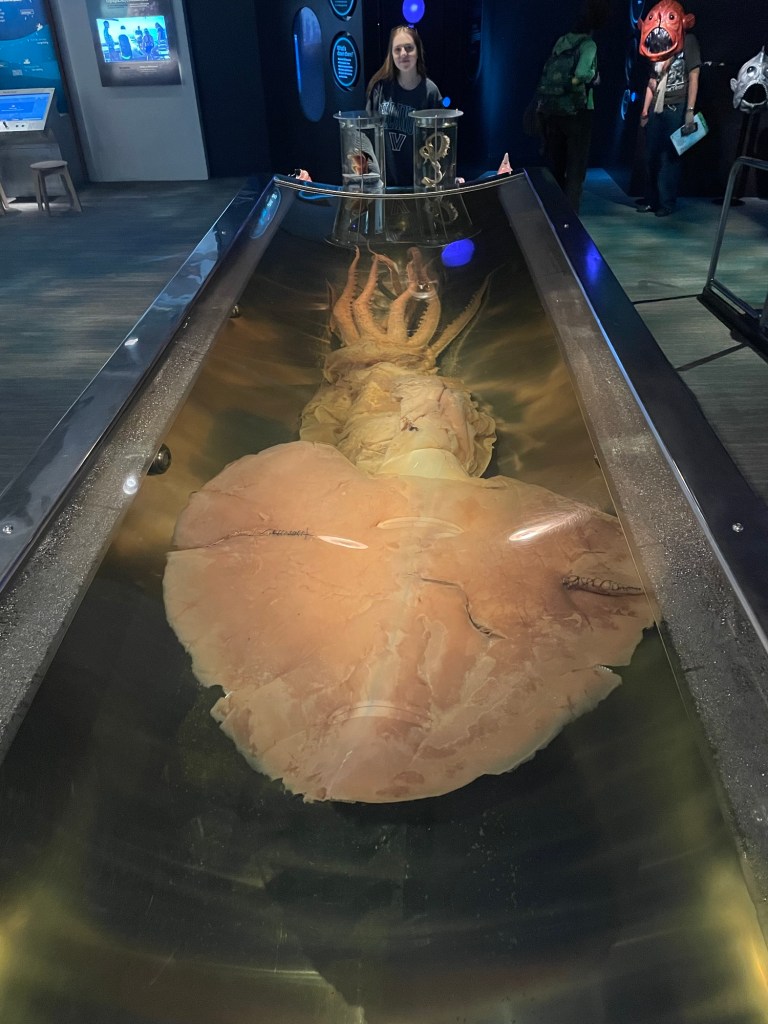
Cassie was particularly interested, as she may be doing some research in the fall regarding the material science properties of squid beaks.
From here, we went to the museum’s exhibit on the Māori, starting with the museum’s working whare or meeting house.
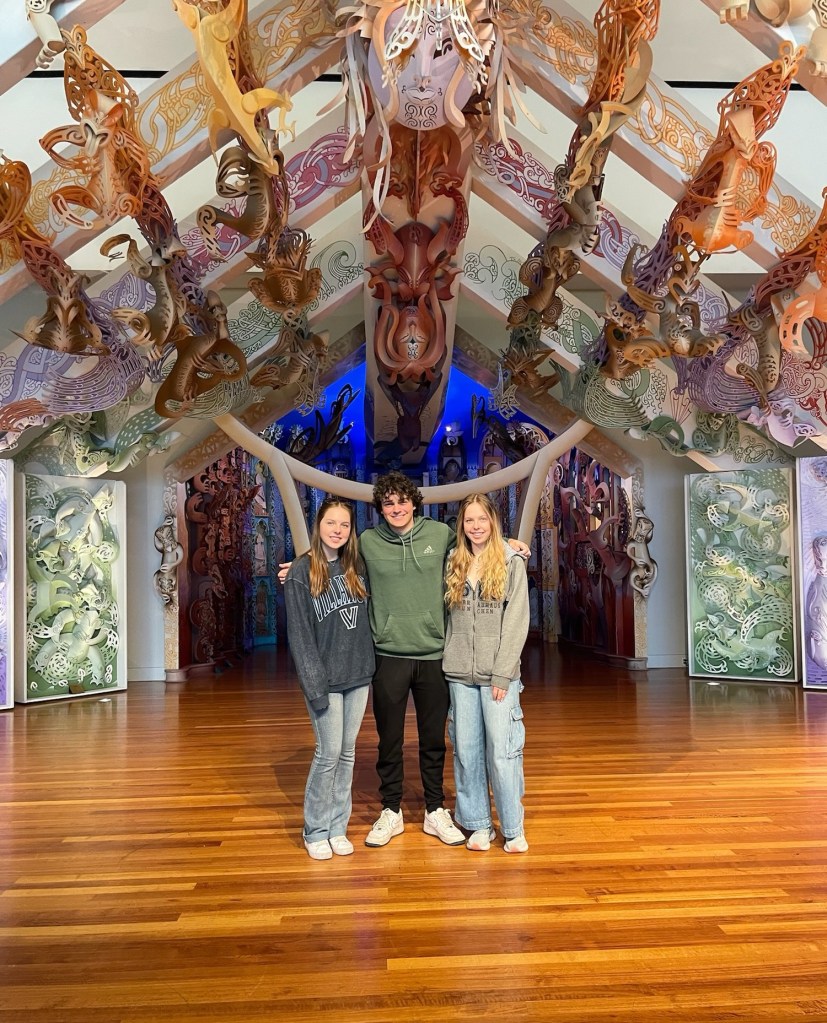
Part of the exhibit was also devoted to Māori sailing and navigation, and we enjoyed seeing the small boats that the Polynesians would use to cross vast distances. The final part of the exhibit was a somewhat upsetting presentation on the Treaty of Waitangi, the pivotal agreement between the British Crown and the Māori people. The treaty dates to 1840, but problem was that the treaty was written in English and then translated to Māori. The vast majority you the Māori leaders didn’t speak English and therefore relied on the Māori translation. But the translation didn’t match the English version in key respects, particularly regarding the sovereignty of the Māori. The failure for the two peoples to reach a meeting of the minds has led to friction over the years. The lawyer in me couldn’t help but think that lack of clarity in a document is generally construed against the drafter, in this case, the British.
Last, we visited the museums exhibit on a more recent part of New Zealand’s history, the Battle of Gallipoli. We’d heard about it the day before, as Wētā was heavily involved in creating the exhibit. It was a powerful experience. Gallipoli was a horrific campaign lasting more than 8 months. More than 3,400 New Zealanders died, and more than 4,000 were wounded. The centerpieces of the exhibit is a series of dramatic diorama’s with humans more than doubled in size.

Through exquisite detail and sculptural mastery, the oversized figures conveyed oversized trauma. Indeed, for this reason, the groundbreaking exhibit is called “The Scale of Our War.” It was a powerful experience, and our already high regarding for Wētā has risen even further.
On July 18, we packed up and left Wellington, headed north for Rotorua.
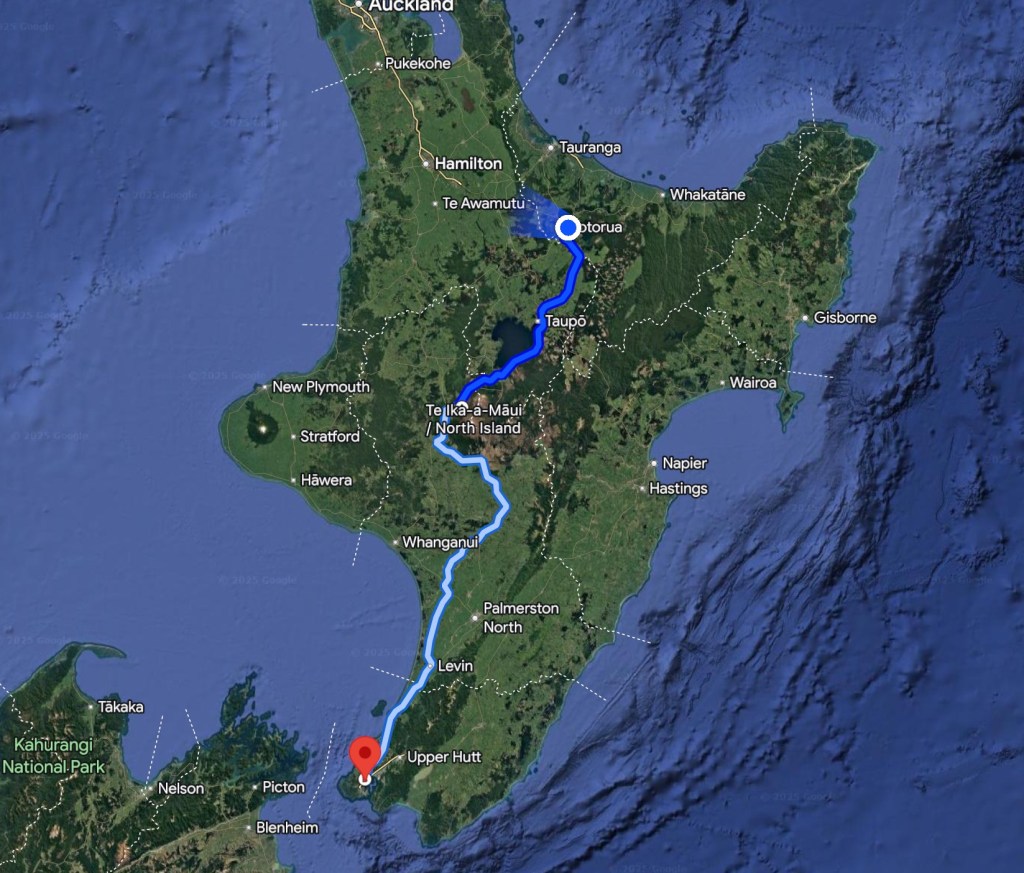
The drive passed through beautiful countryside with rolling hills.
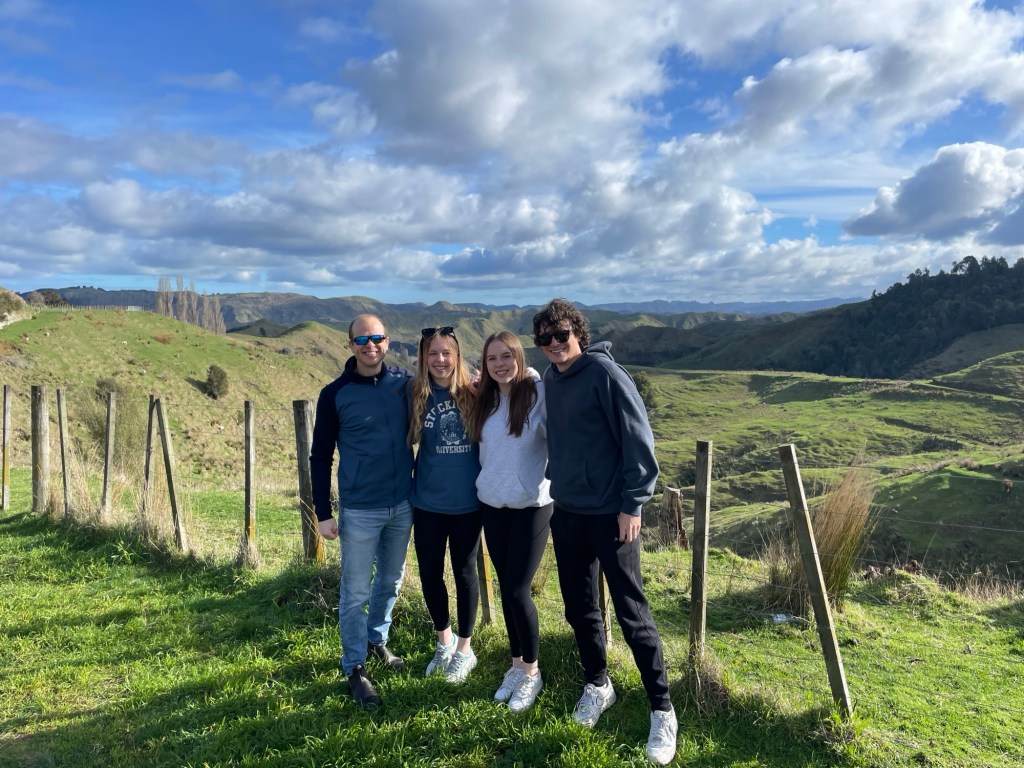
We planned our trip to include a couple of LOTR filming locations. To start, we wanted to see — from a safe distance — Mount Ngauruhoe, an active stratovolcano in Tongariro National Park. Mount Ngauruhoe was the filming location for various shots of Mount Doom in LOTR.
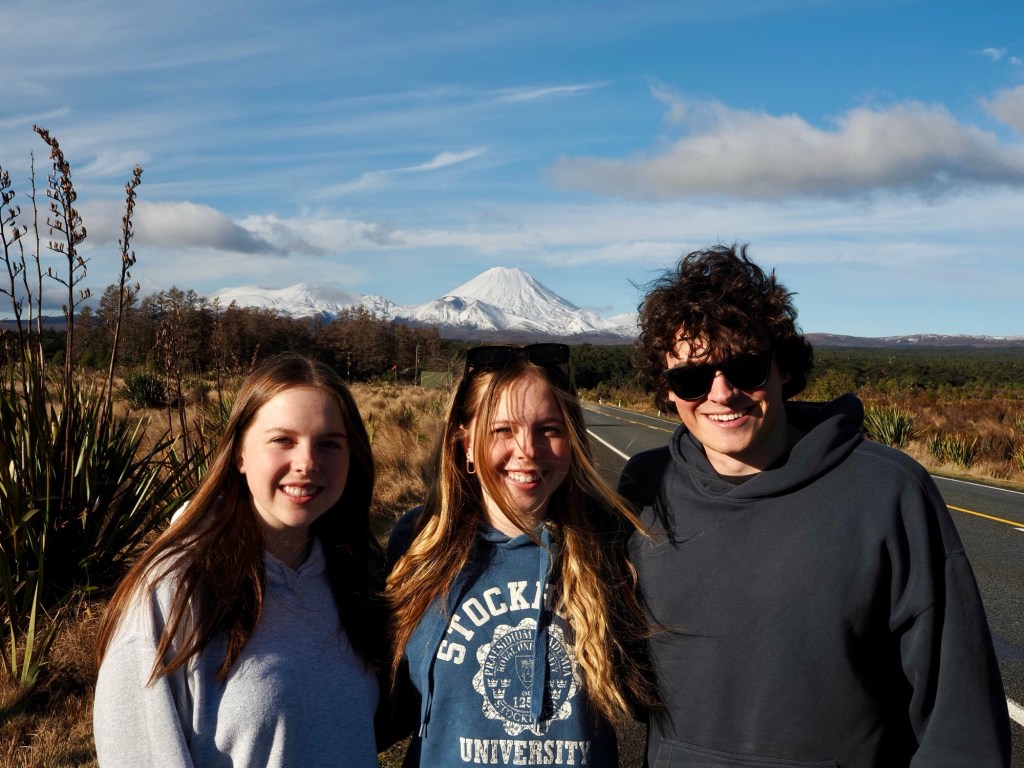
It was an impressive site, rising on the horizon. I’d thought about doing a hike in the area, but the NZ Department of Conservations described the winter conditions as “expert only” with “avalanche risks.” I’m enthusiastic, but I’m not expert, particularly by Kiwi standards.
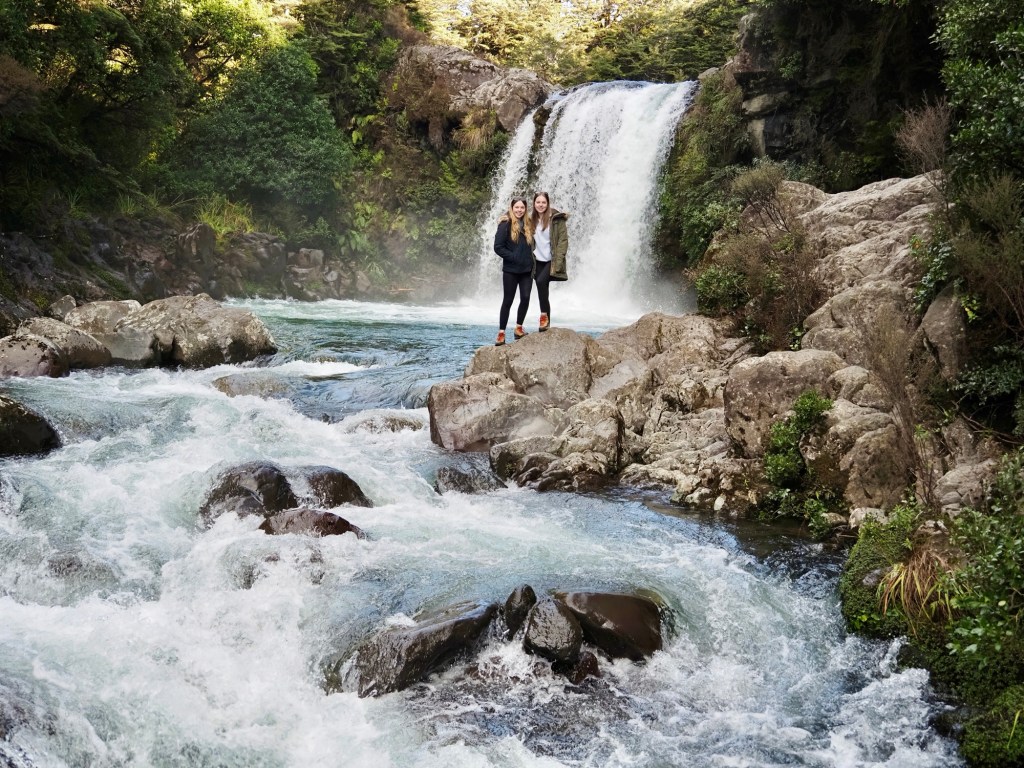
The other spot we wanted to see was nearby Tawhai Falls, which was one of the places that Gollum was filmed hunting for fish.

We didn’t see any fish, but Lydie looked really hard and found a ring (that had been on her finger).
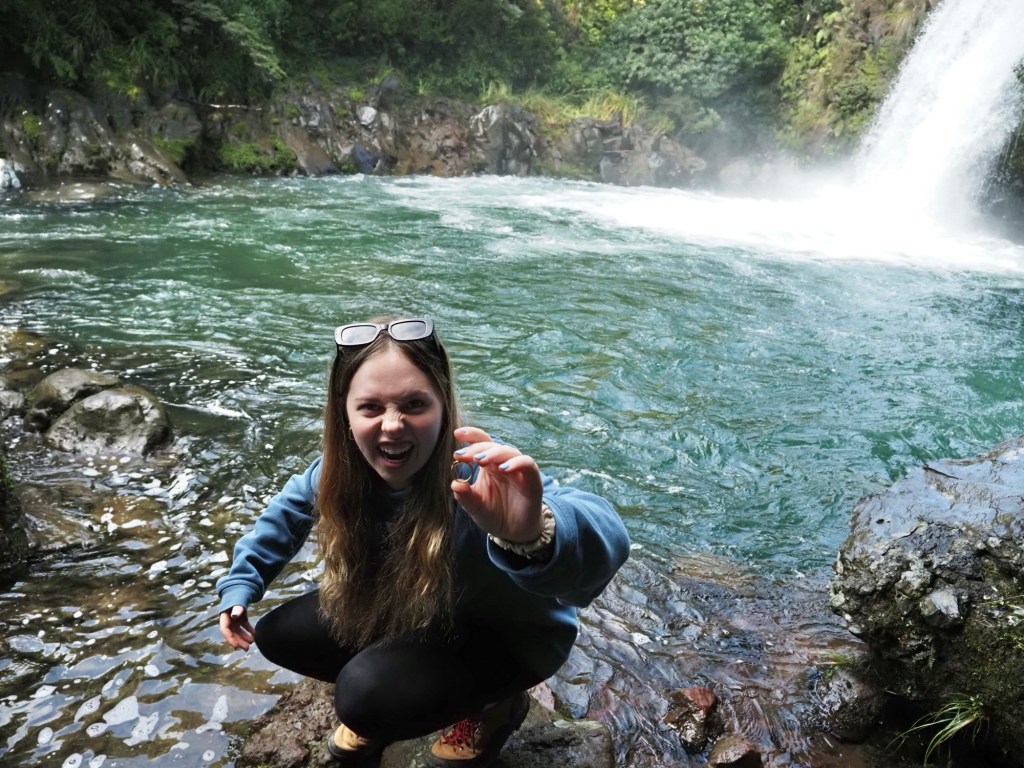
As with other LOTR sites, it was fun to see where the filming took place, but it was just as fun to see the natural beauty of the area. These places were picked with good reason. They are gorgeous.
As we drove away, took another look at mount doom rising in the distance. We were all pretty blown away with the views.

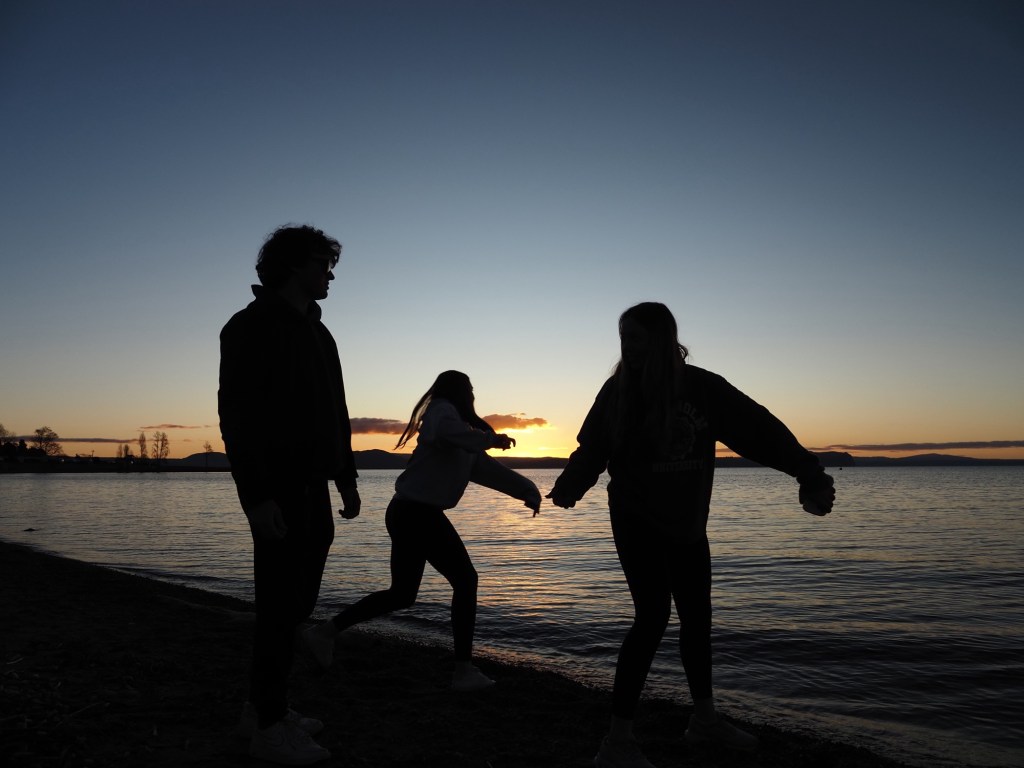
As we continued north, we reached Lake Taupo, the largest lake in New Zealand. The lake is formed from the caldera of a huge volcano that erupted 25,000 years ago. We stopped to admire the sunset and skip stones. We soon realized that the buoyant pumice stones on the banks were particularly easy to skip, as they floated.
We reached Rotorua in the dark with the smell of sulphur in the air. This is an area with hot pools and volcanic activity. This will be our home base for the next six nights, and we’re excited to see what makes this place stink!
-Will
 The Hubbards' Travel Blog