We slept well in our tiny cottage. Julie and I shared a room so small that the sides of the bed literally touched the walls so that we had to climb to the foot of the bed to get in and out. After powering up with a breakfast of Hubbard cereal, we came up with a game plan. We decided to start with a nearby hike that was just a short walk from our house. The 7-mile hike started with a short boardwalk through the marsh before plunging into an unusual forest.

This area is home to the rarest type of kiwi (the rowi), and we kept our eyes open hoping to see one. We didn’t, which was no surprise given the dense rainforest. We did see radio recorders set up to record the passage of tagged kiwis, so we knew the little guys were nearby.
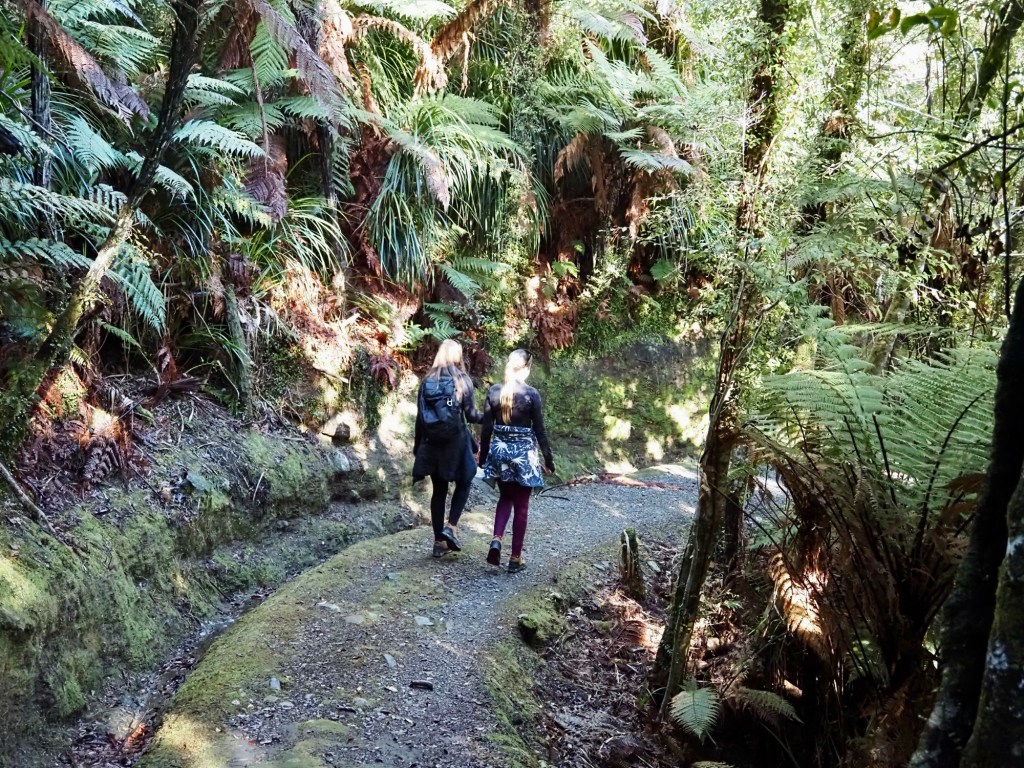
The vegetation was bizarre. We didn’t recognize the trees, and they were covered in other plants that our Northern Hemisphere eyes couldn’t place. We did recognize that the ferns were, well, ferns, but they were far bigger than what we see in the US.
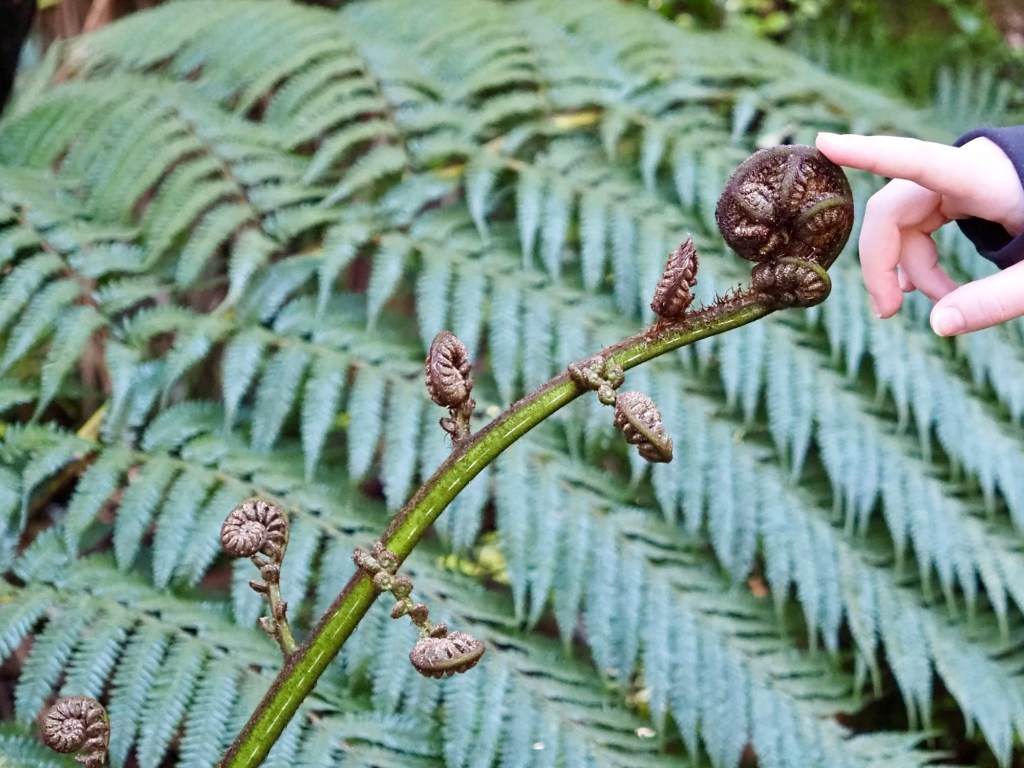
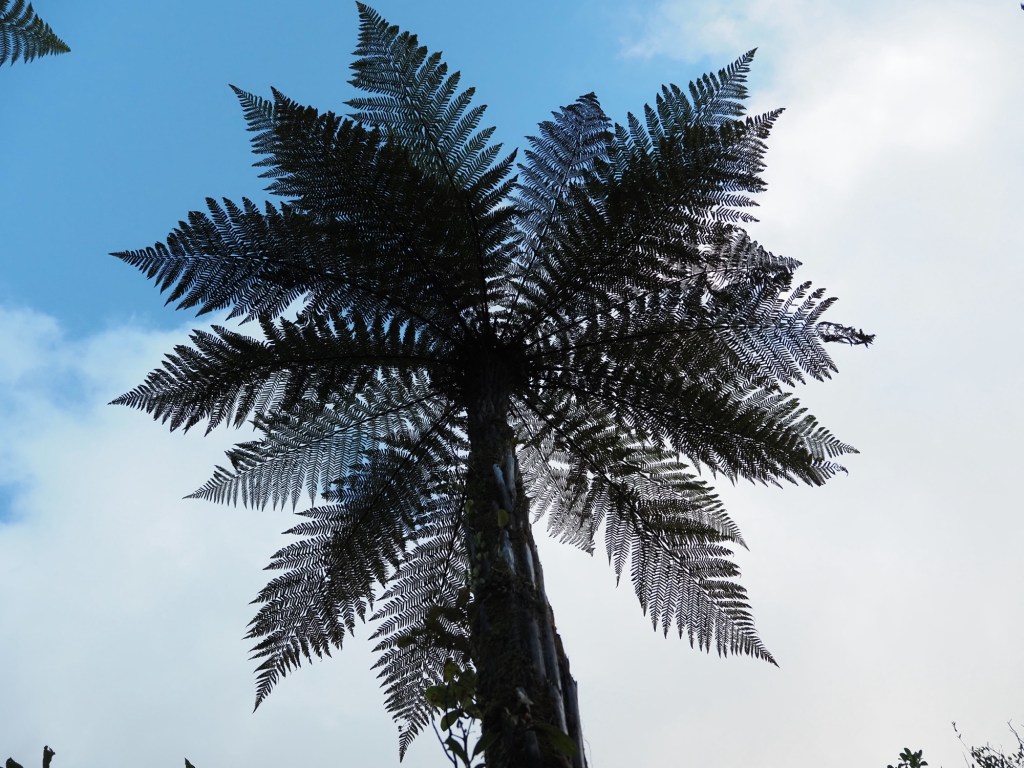
The largest ferns were the tree ferns. Their fiddle heads were more like cello heads, but they were surprisingly soft to the touch.
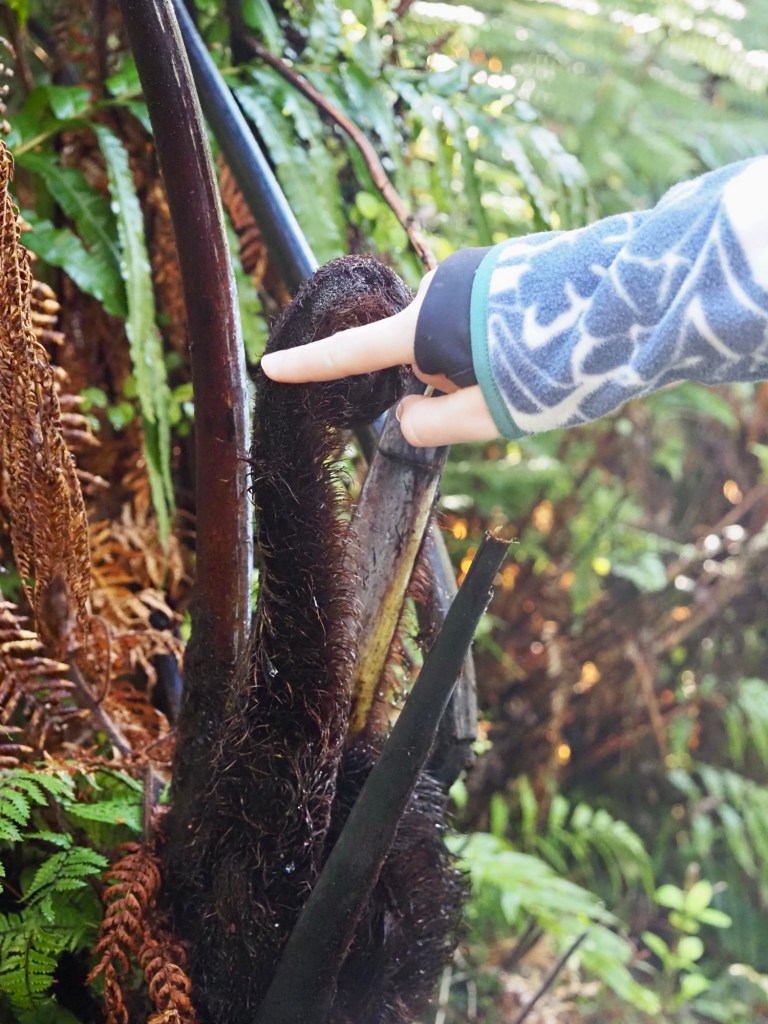
Though we didn’t know what we were looking at, the biodiversity was plain to see, including more colorful fungi.

The trail climbed to a lookout, where we encountered another kea. Then two more showed up. One got curious and came to have a close look at us.
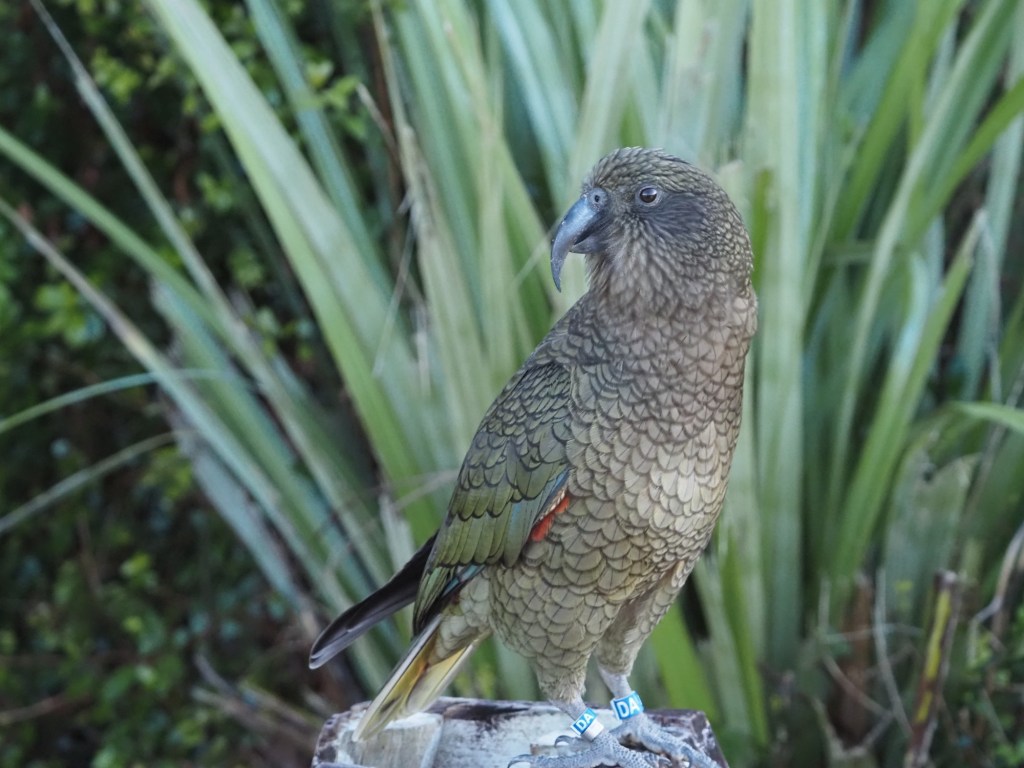
We’ve grown to love these cheeky birds, though their calls are not exactly pretty.
The lookout also offered stunning views, particularly as it was a stupendously clear day.
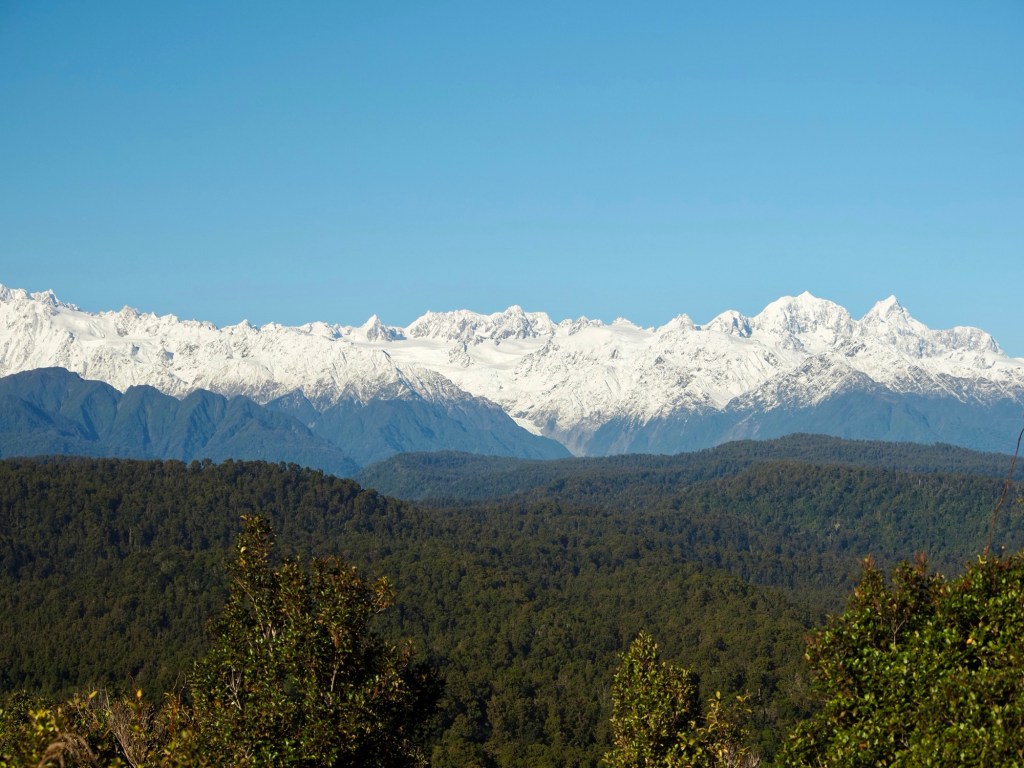
The triangular peak on the right side of the photo is Aoraki or Mount Cook, the tallest mountain in New Zealand (or Australia for that matter). These mountains are also featured in Lord of the Rings, as these are the peaks on which the beacons were lit. The valley in the center of the picture is the Frans Joseph Glacier, where we’d be going at the end of the day. (In fact, in some ways we saw it better from here than when we visited.)
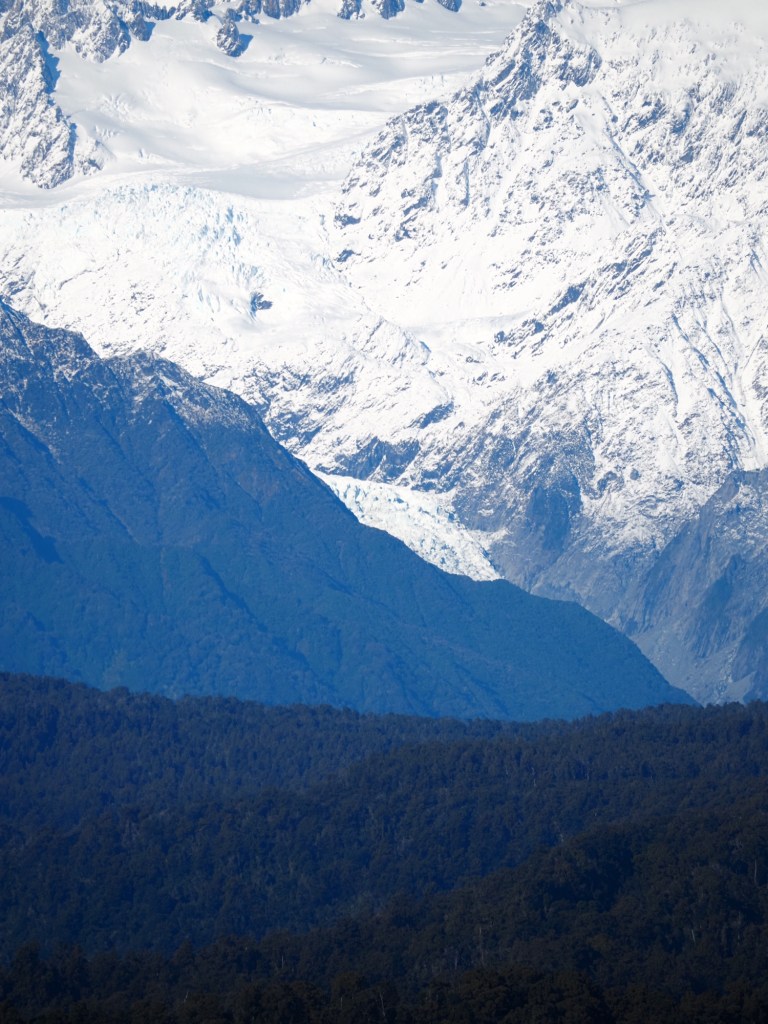
It was a surreal experience. We were looking at a glacier and snow-capped mountains while listening to the ocean and the raucous cries of the world’s only species of alpine parrot. The West Coast is truly a special place. And the day could not have been prettier. Team Hubbard was thrilled.

Eventually, we continued on the trail, winding through more primordial forest to eventually reach the Ōkārito Lagoon, a large inland waterway. In typical New Zealand fashion, there was a swing bridge.
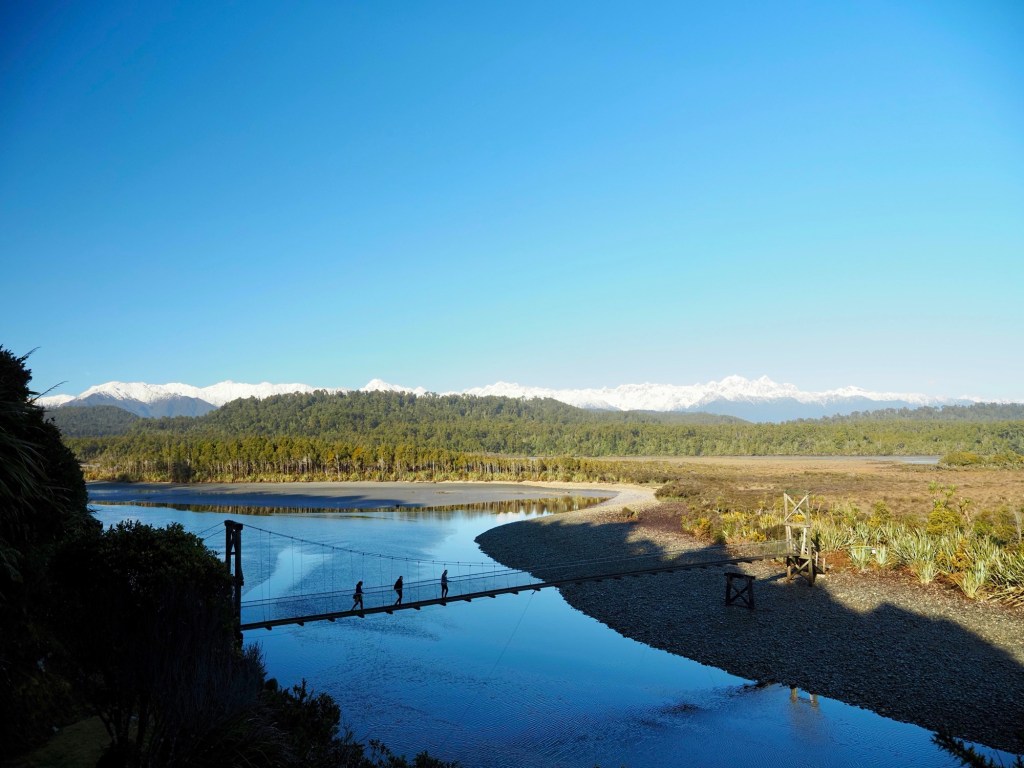
From here, the trail reached the beach. We had timed the tides so that we could walk the entire way back to Ōkārito on the beach.
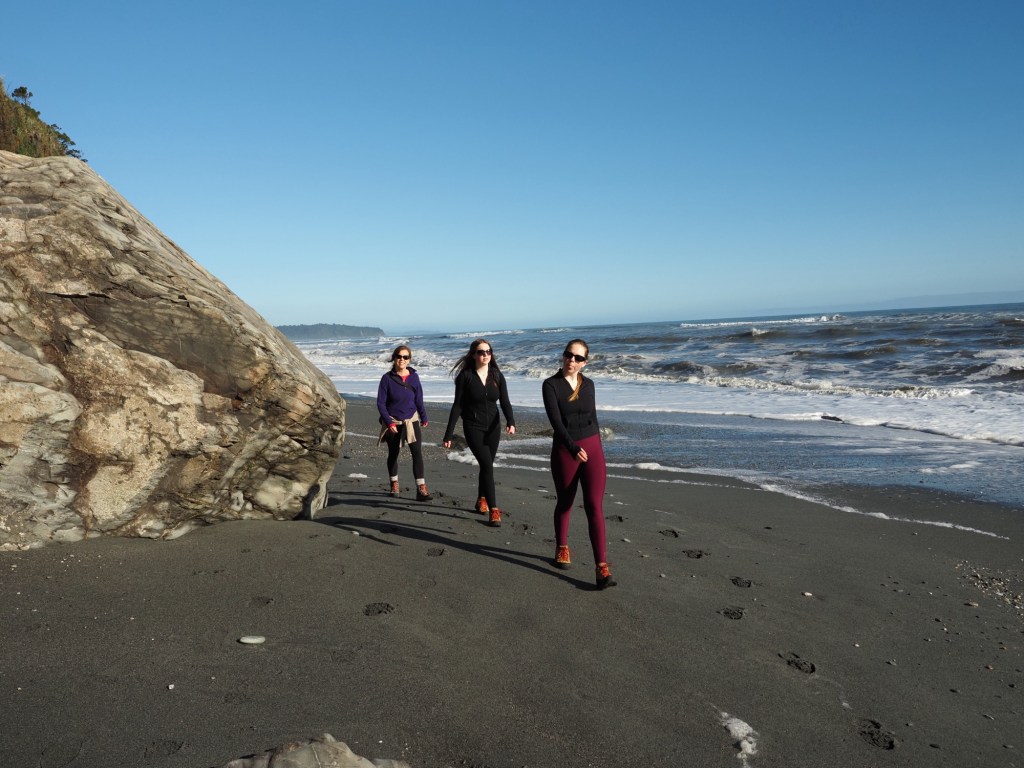
The elements are eroding the high bluffs that we’d just been hiking through, causing huge boulders to tumble to the beach. Some we went around, and some we had to climb through.
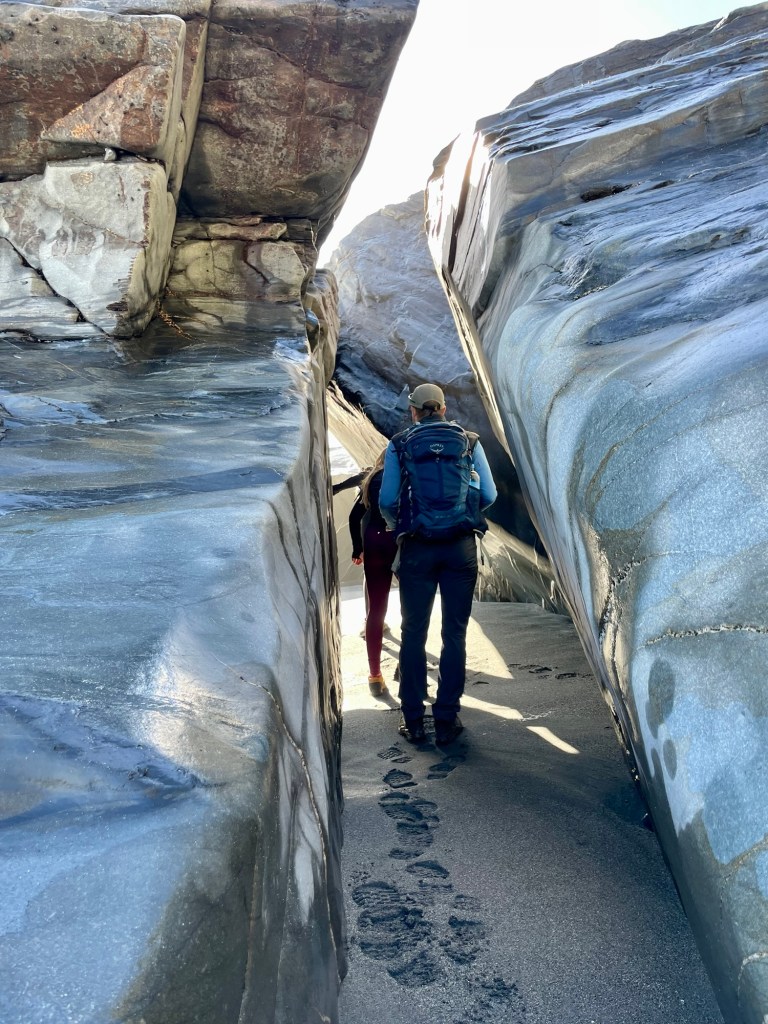
Others we had to climb on top of. Because.
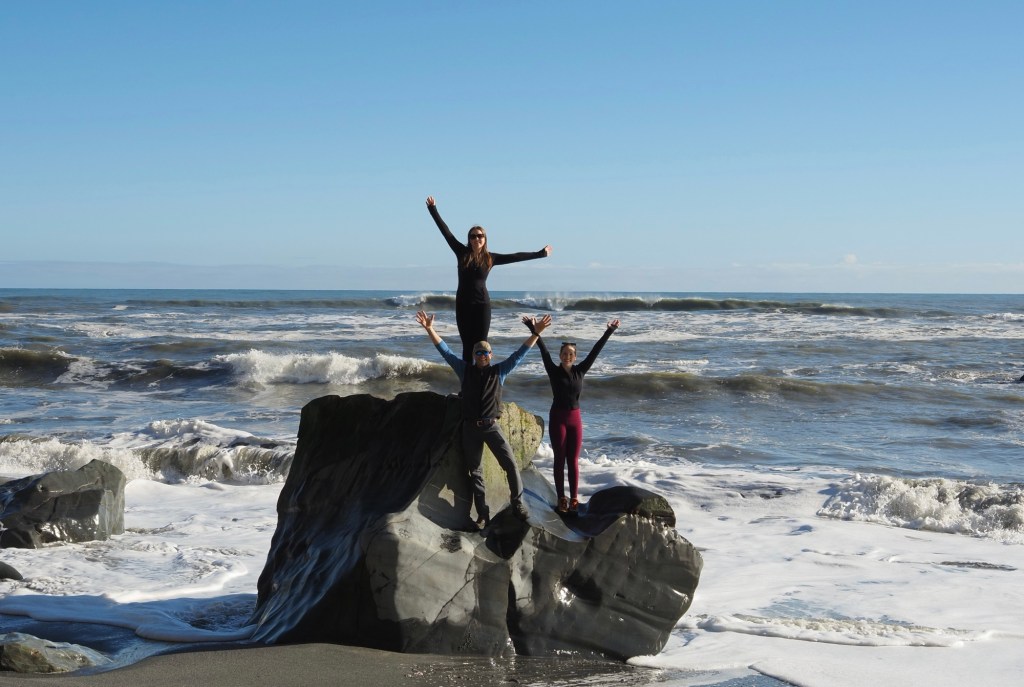
We soon reached Ōkārito. It was a dynamite hike, much different from the mountain hikes we’ve been doing. The coastal rainforest was alien and enchanting. And prior to getting to the beach portion, we only saw 2 other people. New Zealand continues to feel somewhat empty in the off season, and it’s wonderful.
We had a late lunch before driving to the Frans Joseph Glacier, where we took a short hike to see the glacier.
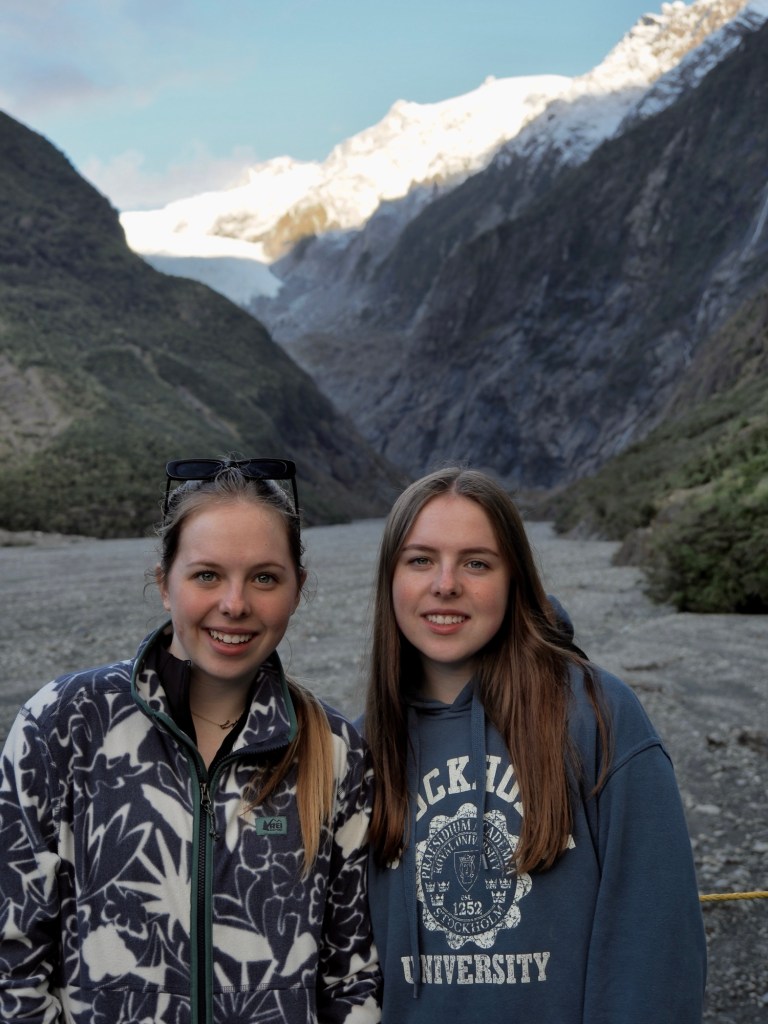
The glacier was great, though a bit anticlimactic compared to the amazing hike from the morning. Sure, glaciers are neat to see. But it’s oh-so-depressing to see the informational plaque that depicts the retreat of the glacier in recent years. And many people go to the glacier, so the trail was short and road-like. At least the ferns were pretty.
We headed back to Ōkārito for dinner. Afterwards, we returned to the beach for sunset and watched the reddening light illuminate the mountains.
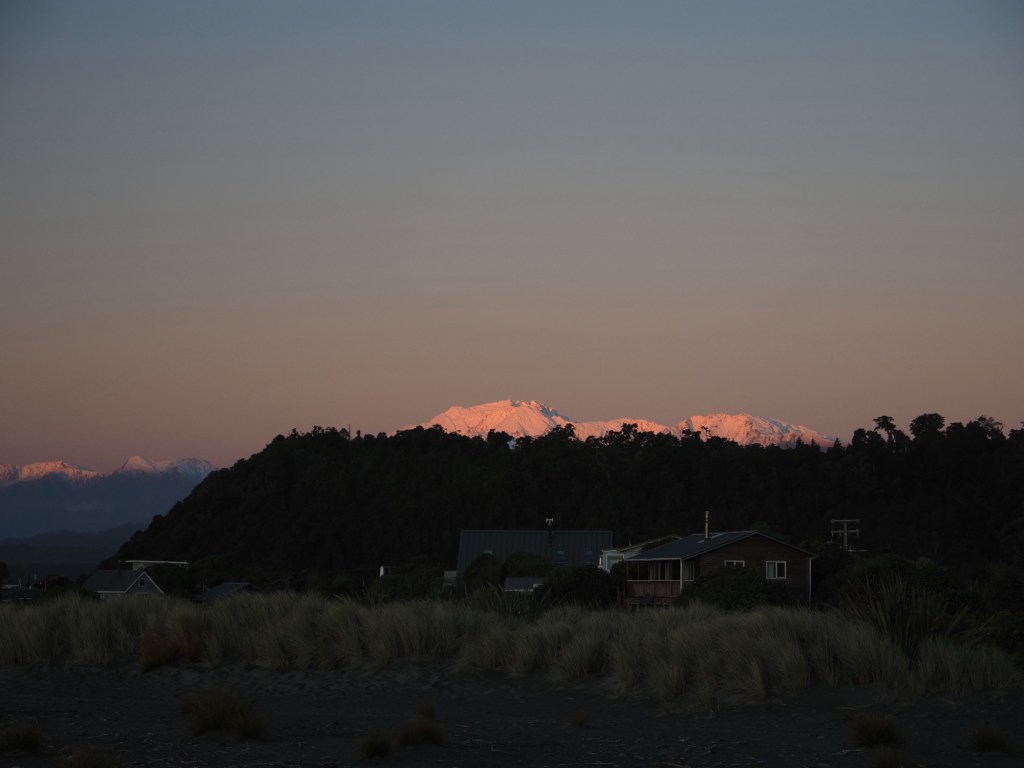
We again enjoyed the west-facing beach and watched the sun sink below the distant waves.

After dinner, we headed to the beach a third time and enjoyed an encore performance by the stars and the Milky Way.
The next morning we packed up and followed the house cleaning instructions. We took out the trash, Julie sorted our recycling in the hamlet’s communal bins behind the community garden, and Lydie buried our compost in the back garden. Ōkārito was a 10 out of 10. We’d only come to this hidden gem because wanted to be near the glacier, and lodging closer to the glacier was too expensive. What luck!
Our next destination was Hokitika, which was only about 2 hours away.
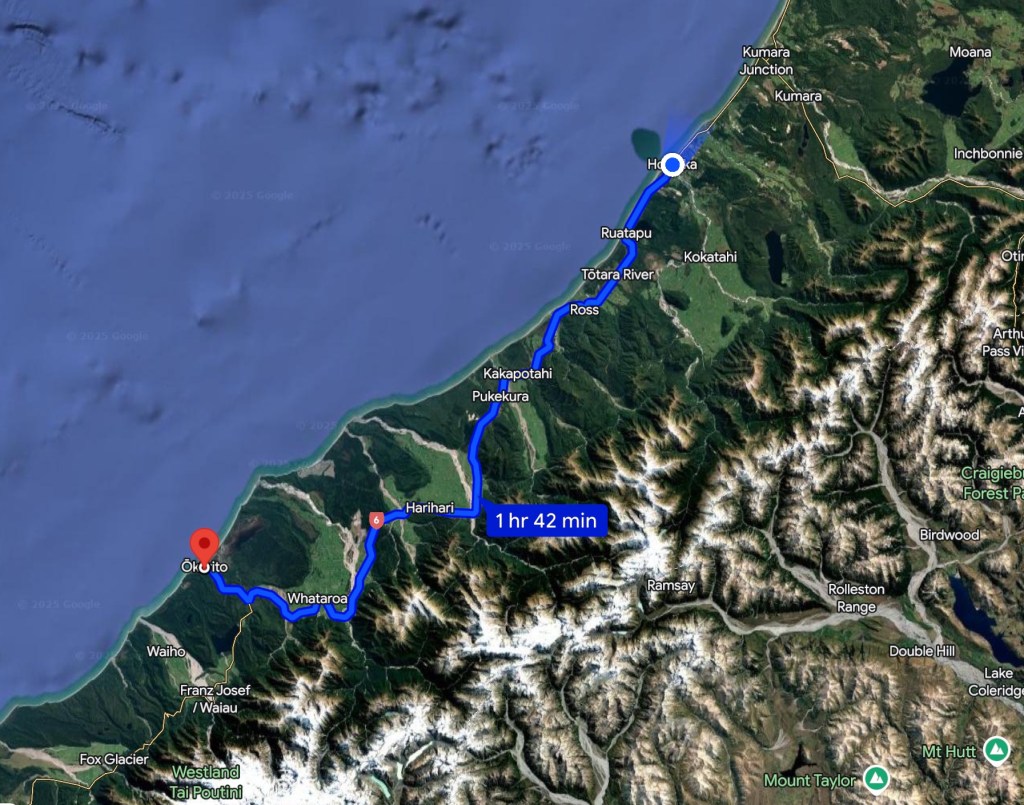
We soon arrived and got settled in. This makes house number 7 for us.
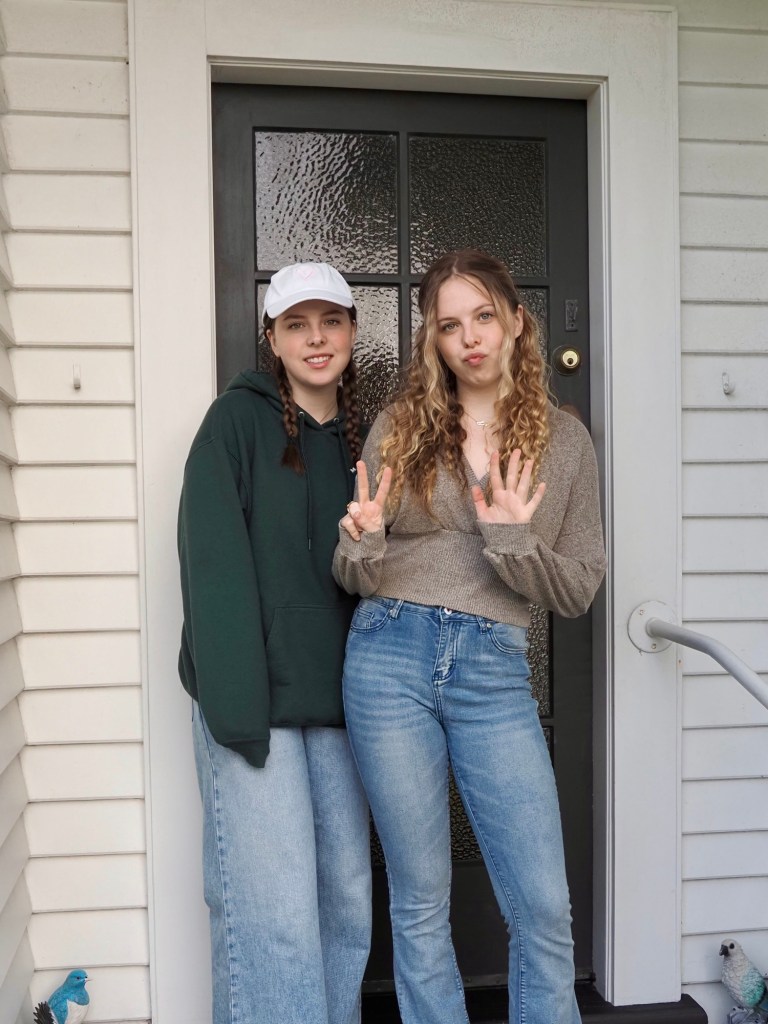
We spent the next morning of Day 22 on various logistics, mostly planning for later parts of our trip. After a late lunch, Cassie, Lydie, and I walked to town and went shopping for pounamu, which is a local semi-precious stone prized by the Māori. Lydie and Cassie founds some wonderful earrings to give Julie for her birthday. We walked down to the beach near sunset. Hokitika has a lovely beach with lots of drift wood, some of which has been erected into rough, improptu sculptures on the sand. There’s long been a sign formed from driftwood.
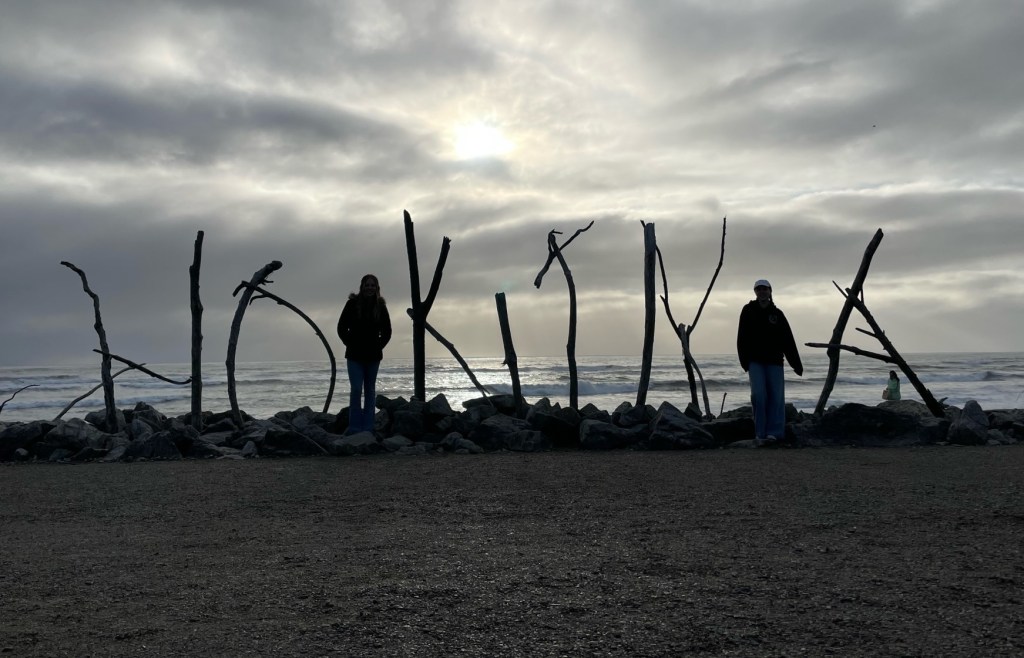
I was happy to discover that the driftwood in the sign was only loosely connected. There were no nailed or screws. The unnamed creators used only the shape of the wood and a few loose strings. I then noticed that the second “K” needed some work. As the son of an artist, I was delighted to do my part to help maintain it. Maybe I’m putting the “hoki” in Hokitika, but I like the idea that the sign is impermanent, that the alignment might need the help of strangers on occasion, and that some pieces will come and go over time.
We went home, ate dinner, and the girls gave Julie the pounamu earrings as an early birthday present. We played some cards, had a few laughs, and went to bed. It’s been a great few days.
-Will
 The Hubbards' Travel Blog