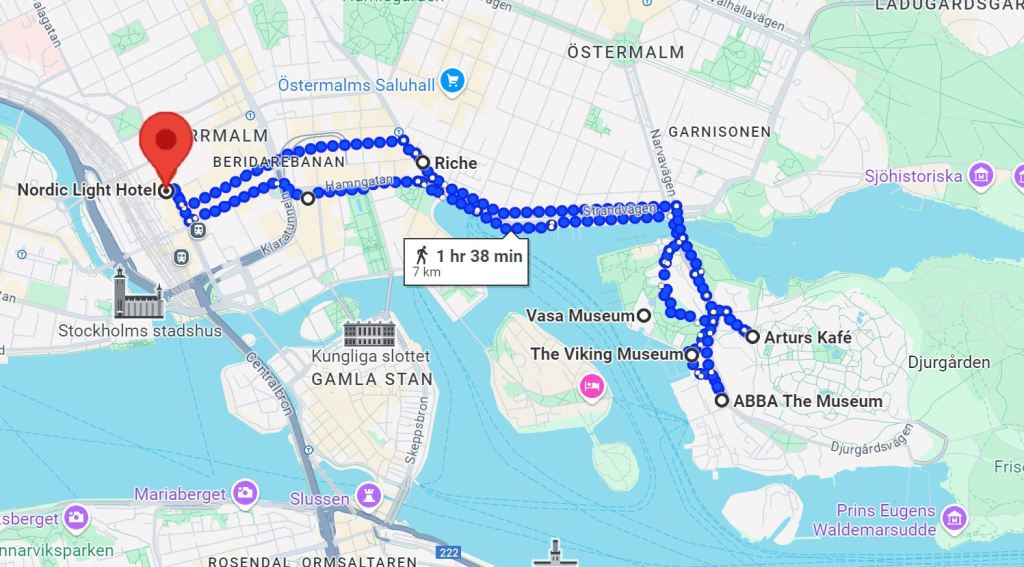
For our third day, we planned to begin exploring a third island in Stockholm: Djurgården. Our plan was to start the day at the Vasa Museum, which friends had told us was a must-do site in Stockholm. We figured we make up the rest of the plan as we went along. We grabbed a quick breakfast at the buffet in the hotel and headed out.
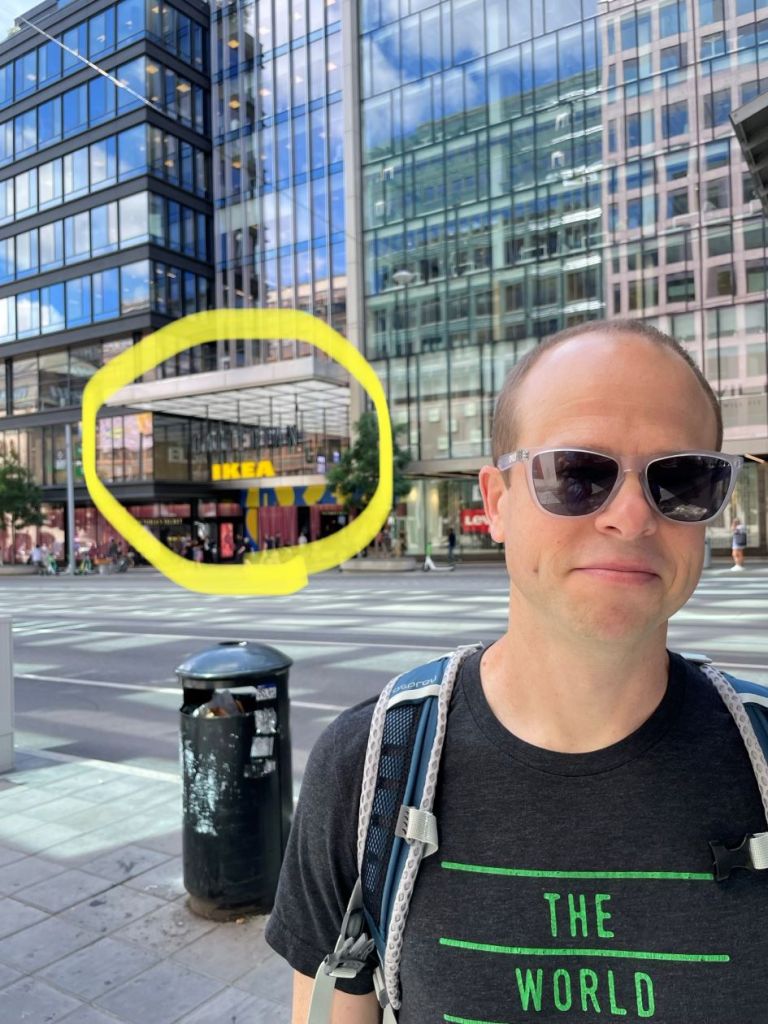
As we walked, we passed a local furniture store.
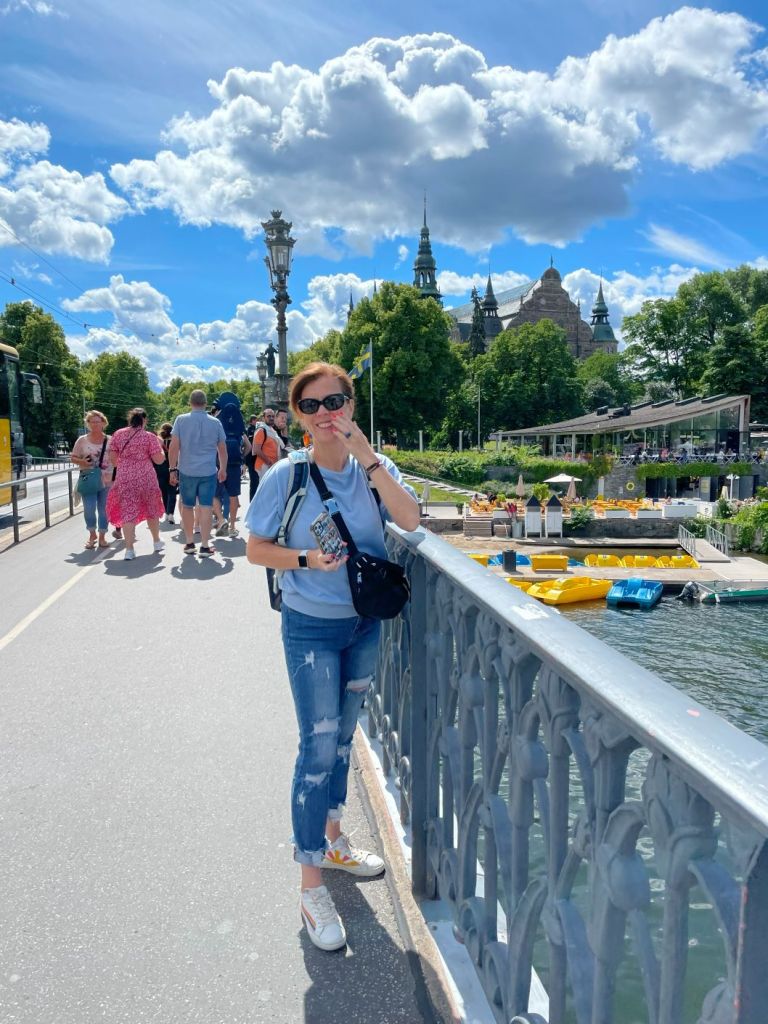
The weather was glorious, with bright sunshine and a cool breeze. Before we knew it, we were crossing the short bridge onto Djurgården.
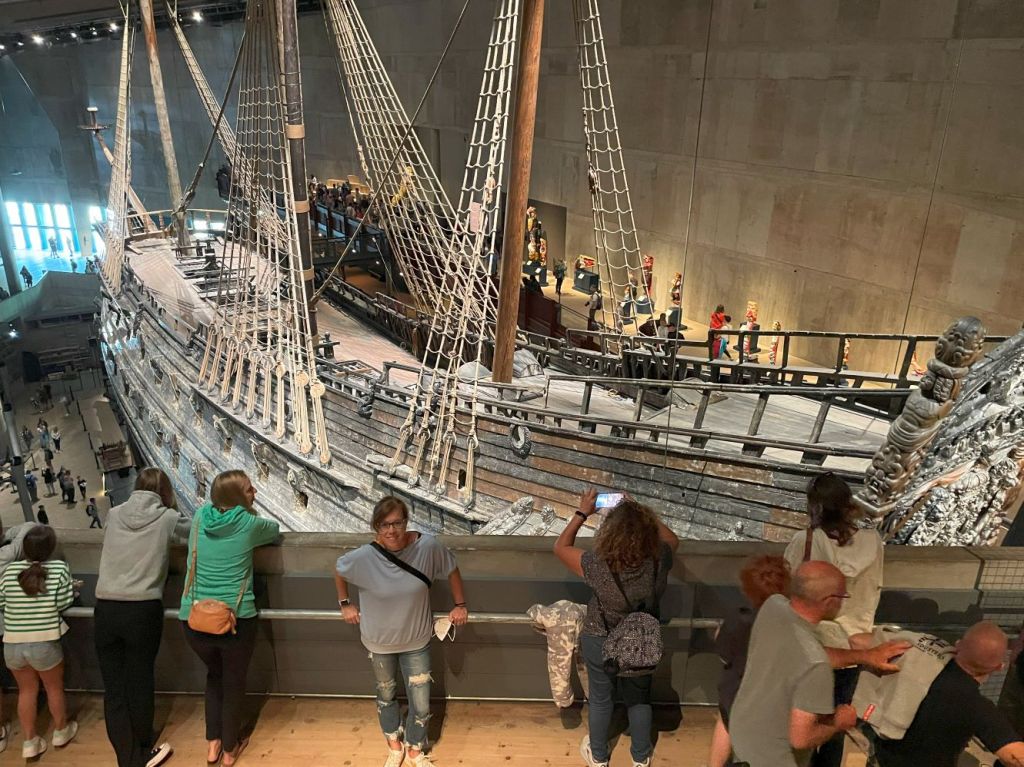
We soon reached the Vasa Museum. The museum focuses on the Vasa, a 17th century warship that sank in Stockholm harbor during its maiden voyage in 1628. The history of the ship is a bit of a lesson in humility. The ship was built as Sweden’s military power was on the rise. The plan was to build one of the most powerful ships in the world. On the orders of King Gustavus Adolphus, the ship had 56 cannons spread over two decks. This unfortunately made ship top-heavy. Shortly after launching, a light breeze caused the ship to heel towards its side. The gun ports, which were open to fire a salute, filled with water, and the ship slowly sank within sight of land. Indeed, hundreds of local Swedes watched the ship go down. There was an inquest into the sinking, but the results were inconclusive. The original shipbuilder was by this team dead, and all of the plans had been approved by the king. (Despite the sinking, King Gustavus Adolphus is credited with helping Sweden become one of the primary military forces in Europe in the 1600s.
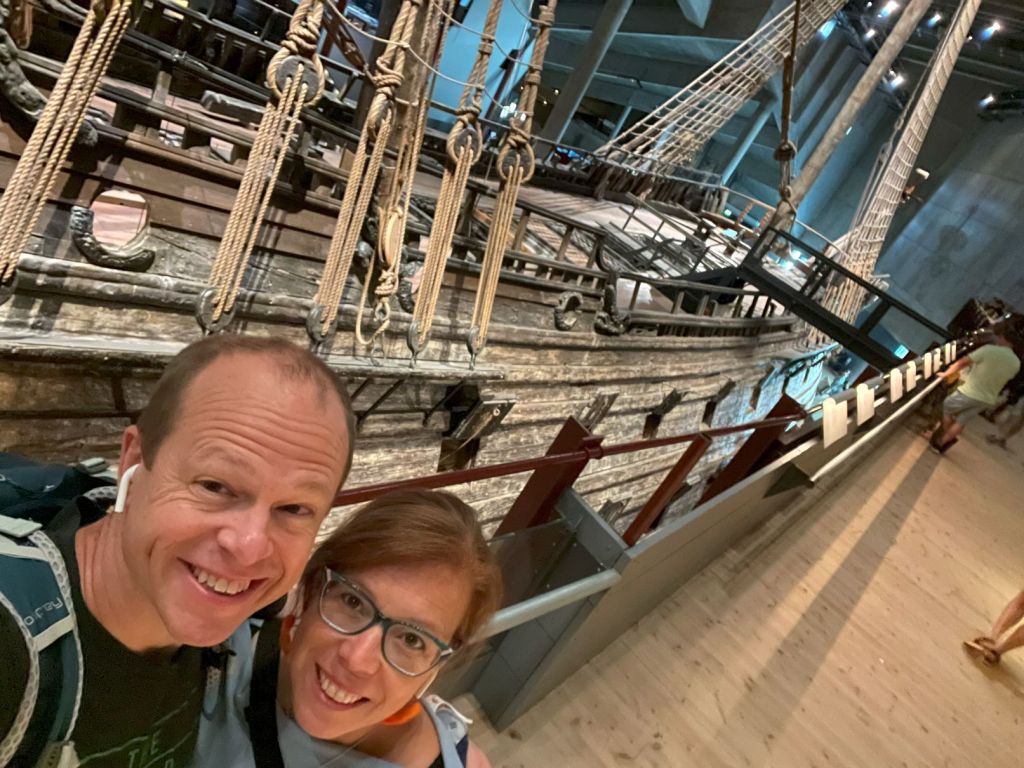
So, if the ship sank, why was it in a museum? In the 1950s, an amateur archeologist speculated that the Vasa might still be lurking on the bottom of the harbor. He thought that the cold, brackish water might have preserved the wooden ship. He spent years probing the waters, and in 1956 found the remains of the Vasa. And he was right. Even after more than 300 years, the wooden part of the ship were *very* well preserved. The ship was designed for “shock and awe” warfare. In addition to its cannons, the hull was richly carved to glorify Swedish martial prowess and also to intimidate the enemy. I’m sure the fish in the Stockholm harbor were terrified.
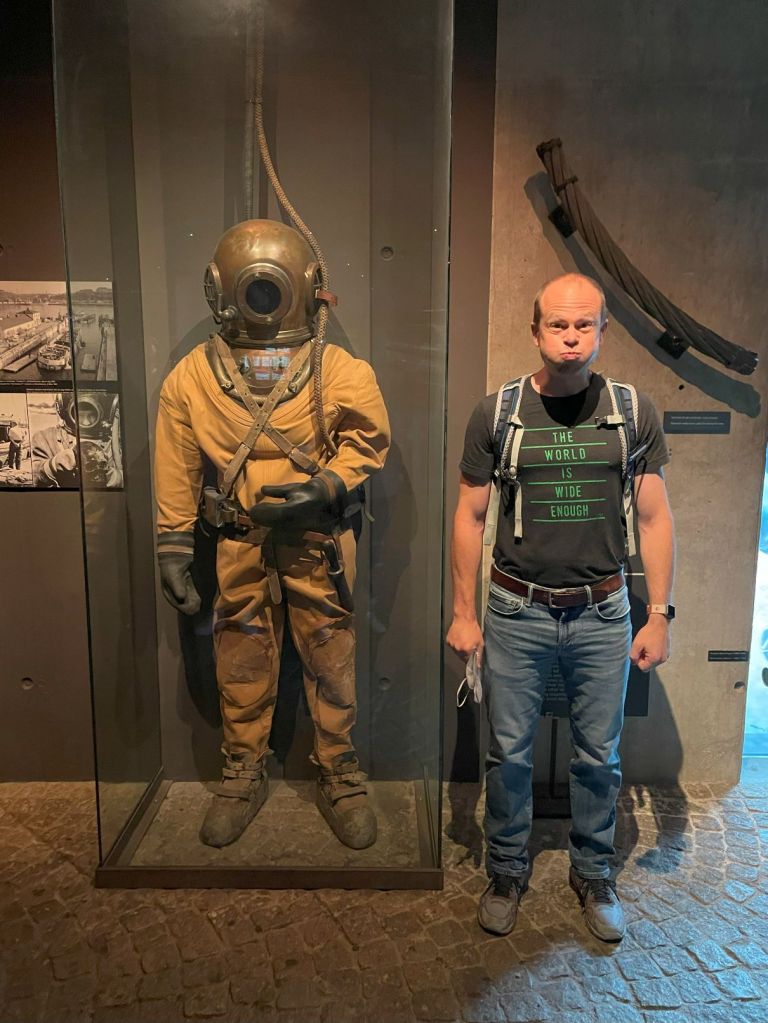
Raising the ship was no easy trick. Divers had to tunnel through the mud under the boat to pass thick metal cables under the hull. Hard pass for me.
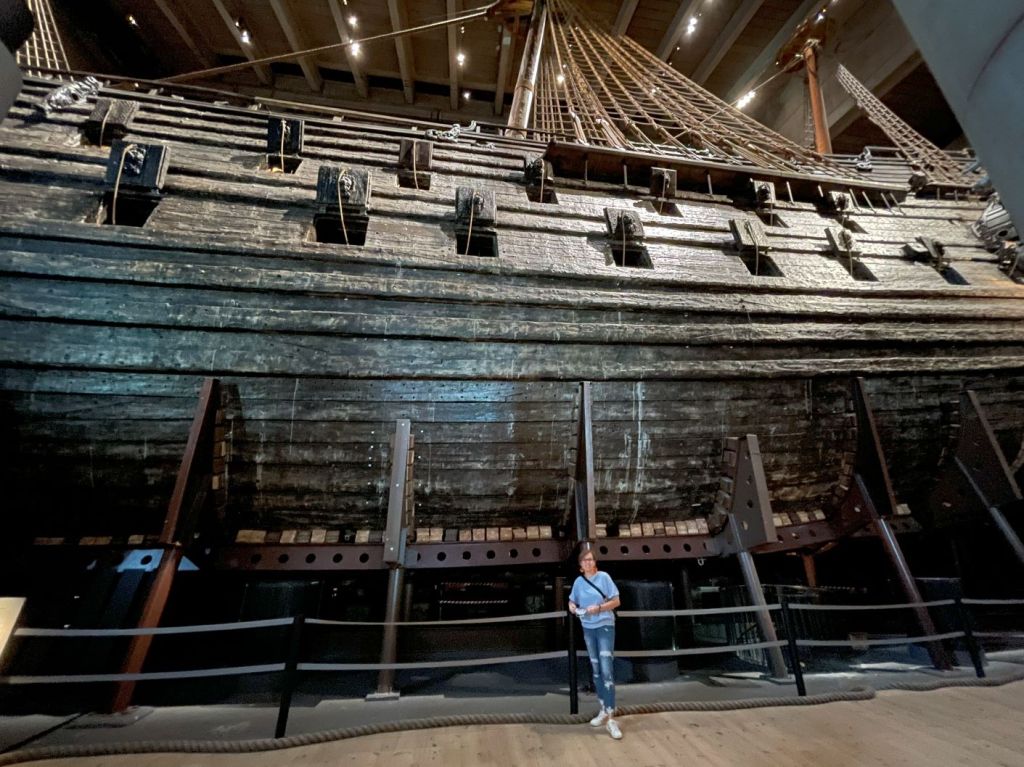
Given that the boat immediately sank, I don’t think that the Swedes achieved their goal of striking fear into their enemies’ hearts. But they did make an impressively large boat. In truth, the level of preservation was remarkable.
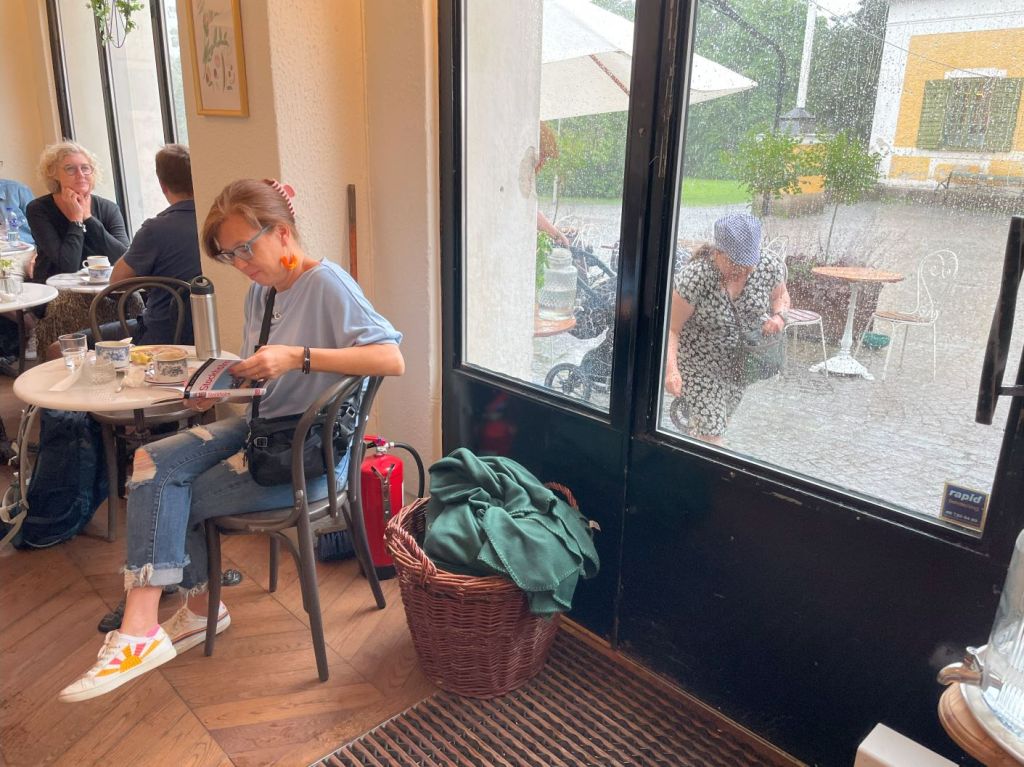
After spending a few hours admiring and deriding Swedish ship building, we set off to see what else we could find. We though we might check out Skansen, which bills itself as the world’s largest open-air museum. However, when we went outside we saw dark clouds gathering, so we ducked into a coffee shop. It was soon raining heavily, and we opted for a fika while we figured out a drier plan.
During a break in the precipitation, we scooted around the corner in search of the Viking Museum.
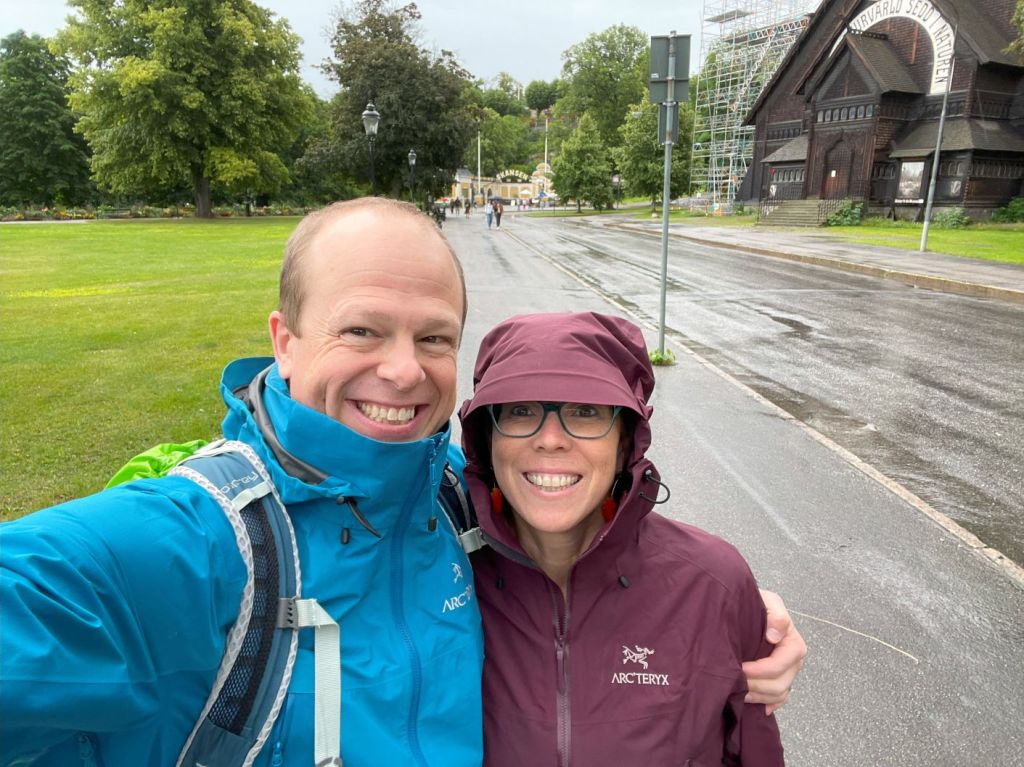
We spent the next hour or so learning about Vikings. It was actually pretty informative. For instance, most Vikings probably didn’t really wear helmets that covered parts of their faces. There’s only been a few Viking helmets recovered with face protection — a point that the museum drove home by giving everyone a chance to try on the helmets that probably didn’t really exist. History!
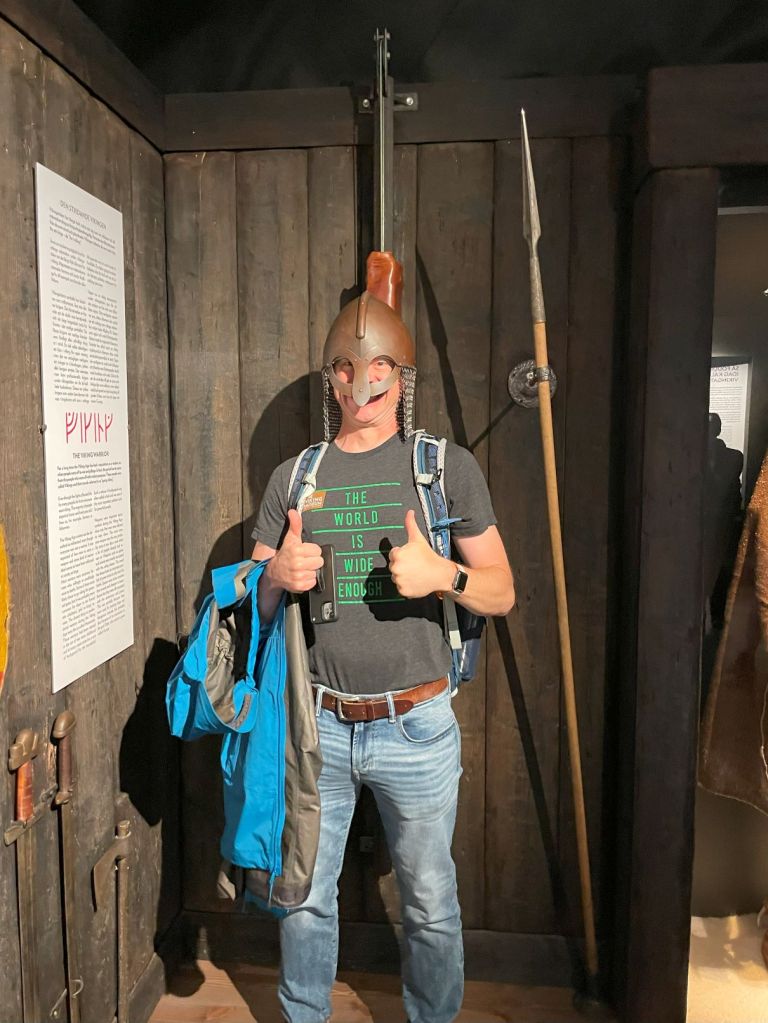
I also felt a little odd walking through a funsies museum learning about the marauding hordes that terrified big parts of Europe. Maybe it was just a museum for the nice Vikings, not the baddies. Indeed, the scariest thing I saw in the museum was probably Chrissy Teigen, who apparently is a celebrity of some sort. Julie took a picture of Chrissy while she was working on her social media profile. Little did she know that she got Will cooties from the not-a-real-Viking helmet.

The Viking museum was great fun, so Julie and I to stick with the themes of celebrities, history, and Swedes who invaded other parts of Europe. It was time to head to the ABBA museum.
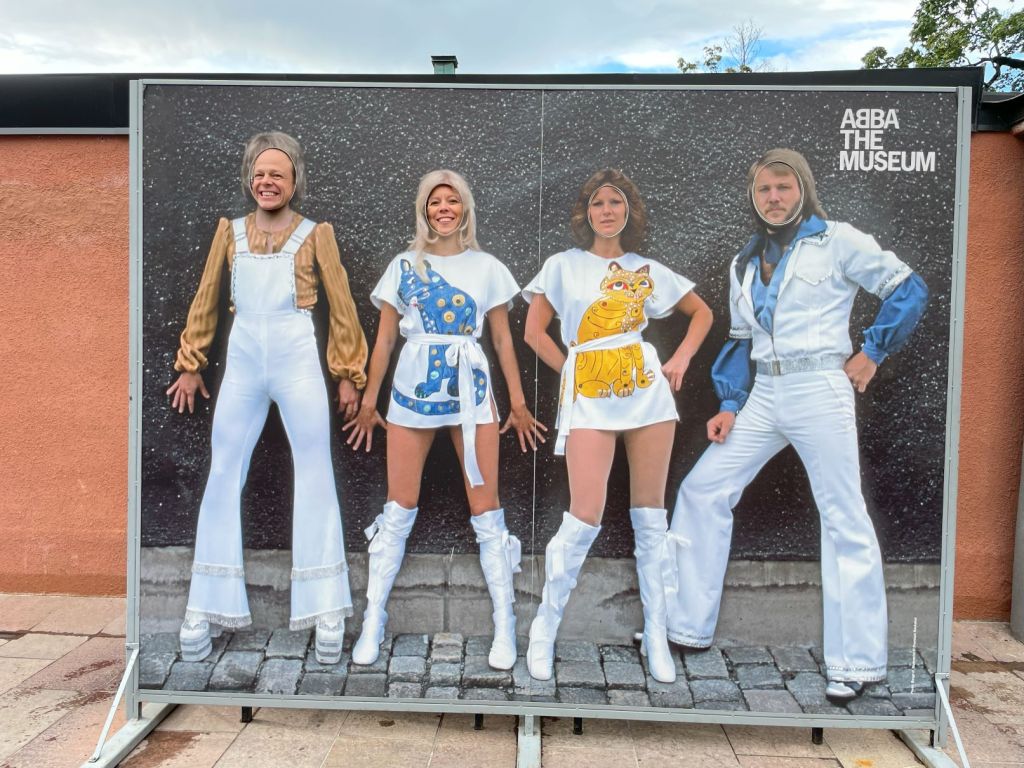
We started with a lot of energy, ready for crazy outfits and some funky Abba beats.
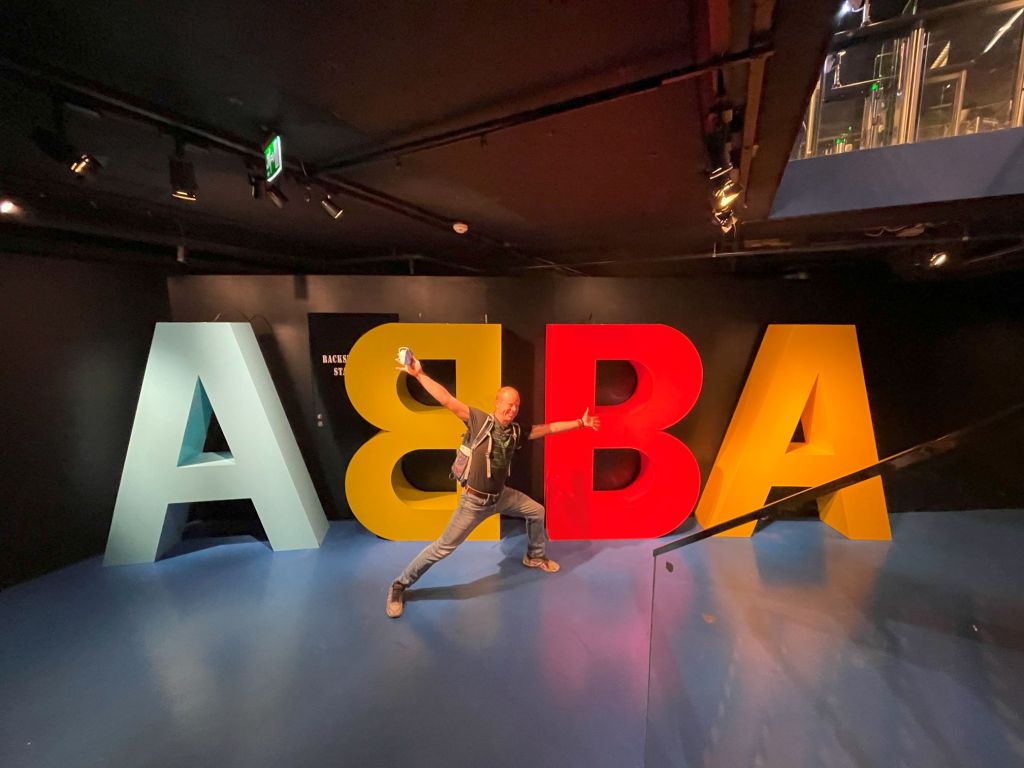
Despite our enthusiasm, I found the Abba museum a little overwhelming. There was an incredible amount of information about the band: length written descriptions, tons of collectable minutia, and outfits, outfits, outfits. If we’d stayed much longer, I would have inquired about getting some sort of college credits. Part of the problem was that we’d worked up an appetite. We started heading back towards our hotel with the hopes of finding a restaurant as we walked. Julie didn’t like my first suggestion.
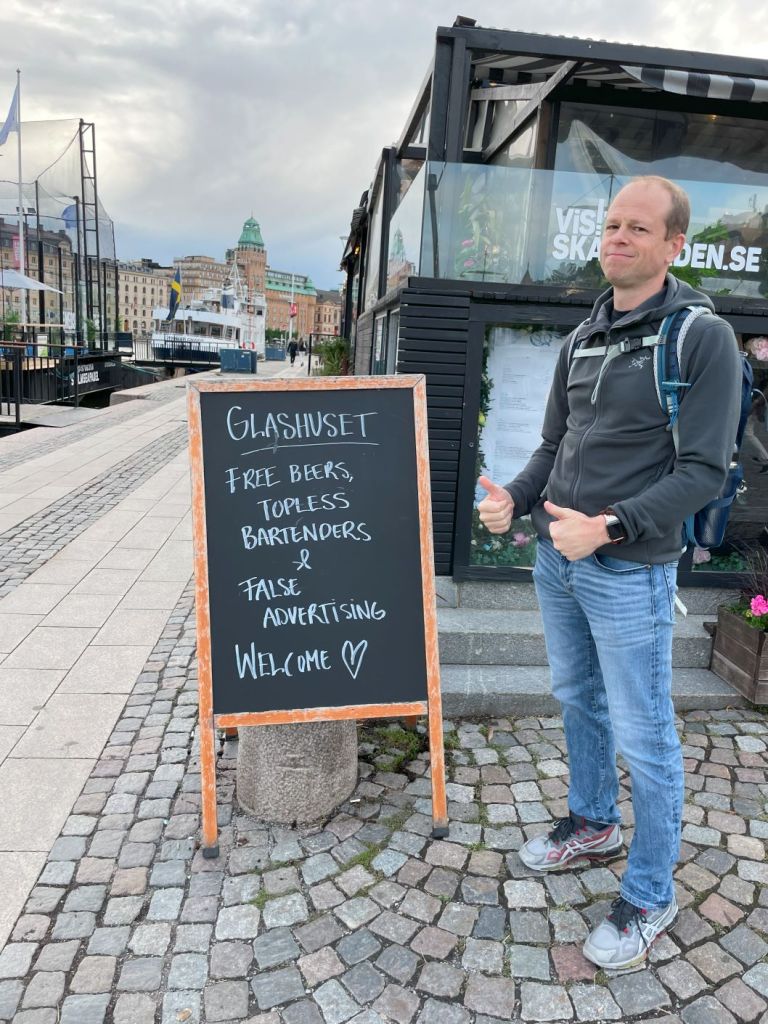
We spied a cute bar and got a couple of drinks to start our evening.
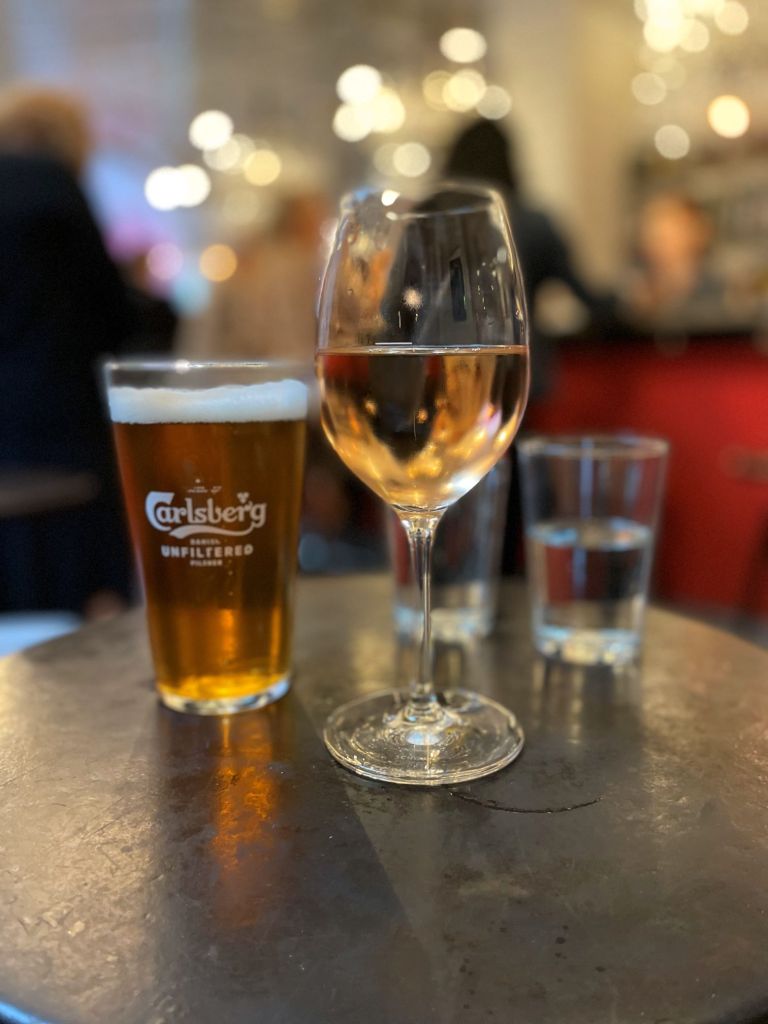
We chatted with the (fully clothed) staff, and it turned out that hallway in the back of the bar connected to a restaurant — Riche. We picked up our drinks and were soon enjoying a delicious dinner.
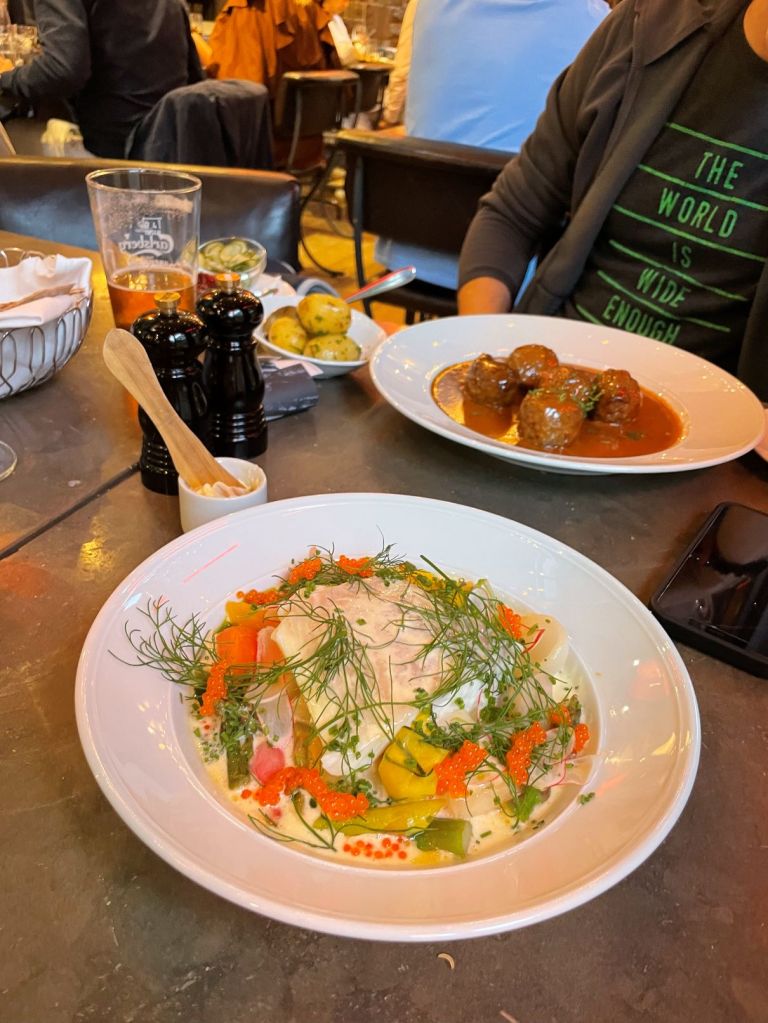
The food was amazing. If I never have meatballs that good again, I can still die a happy man. Midway through our meal, we started to suspect that we were underdressed. There were some classy looking Stockholmies in the place.

Well-fed and happy, we strolled home.
-Will
 The Hubbards' Travel Blog