We slept well our first night in Sweden and in the morning enjoyed a hearty breakfast from the hotel’s breakfast smorgasbord – lots of great bread, jam, fruit, and some weird fish things (that Julie loved). Our plan for the day was to explore Stockholm’s “Old Town” or Gamla Stan, which dates to the Thirteenth Century. Since Sweden was neutral in both World Wars, the Gamla Stan is particularly well preserved and from what we had heard, adorable. On our way there, we passed by a plaza with some sort of marching band.
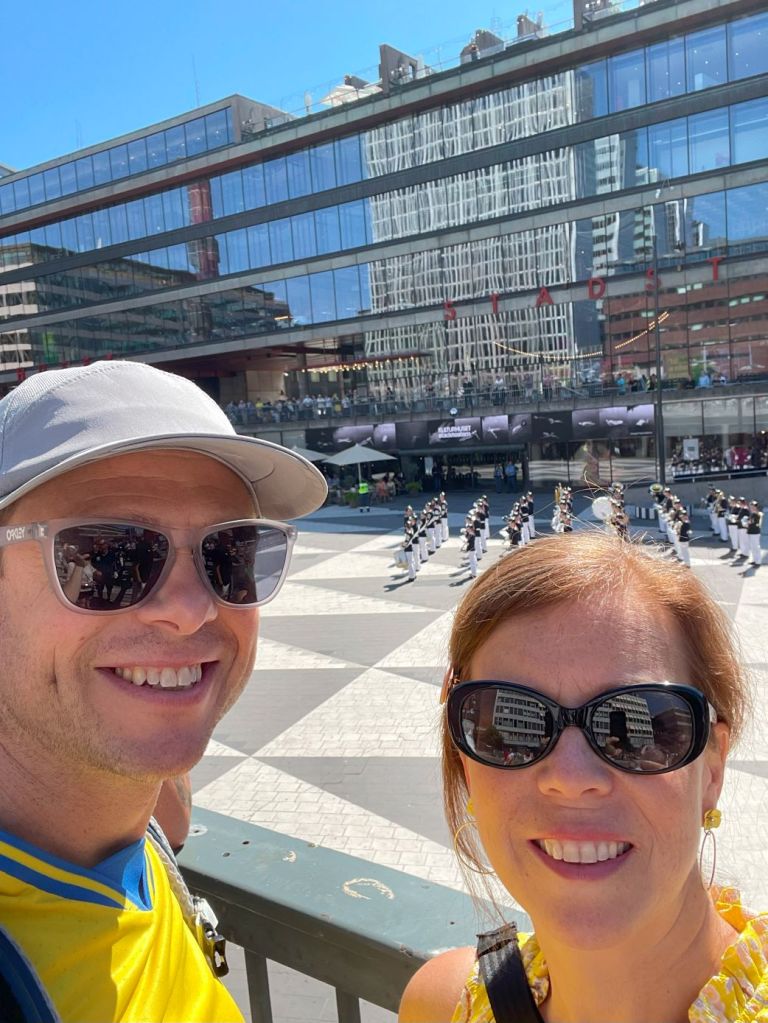
There was a pretty good crowd for some reason. To be honest, we weren’t sure why there was a band. Amused and confused, we continued on in search of Gamla Stan. To get there, we would have to cross a couple of bridges. Early Swedes founded Stockholm on a collection of small (and defensible) islands, the largest of which was Stadsholmen, which is where Gamla Stan is located on the small, defensible island of Stadsholmen. Today, Stockholm spans 14 islands, though much of the city sprawls inland as well. Our first island of the day was the tiny island of Helgeandsholmen, which is home to Sweden’s parliament.
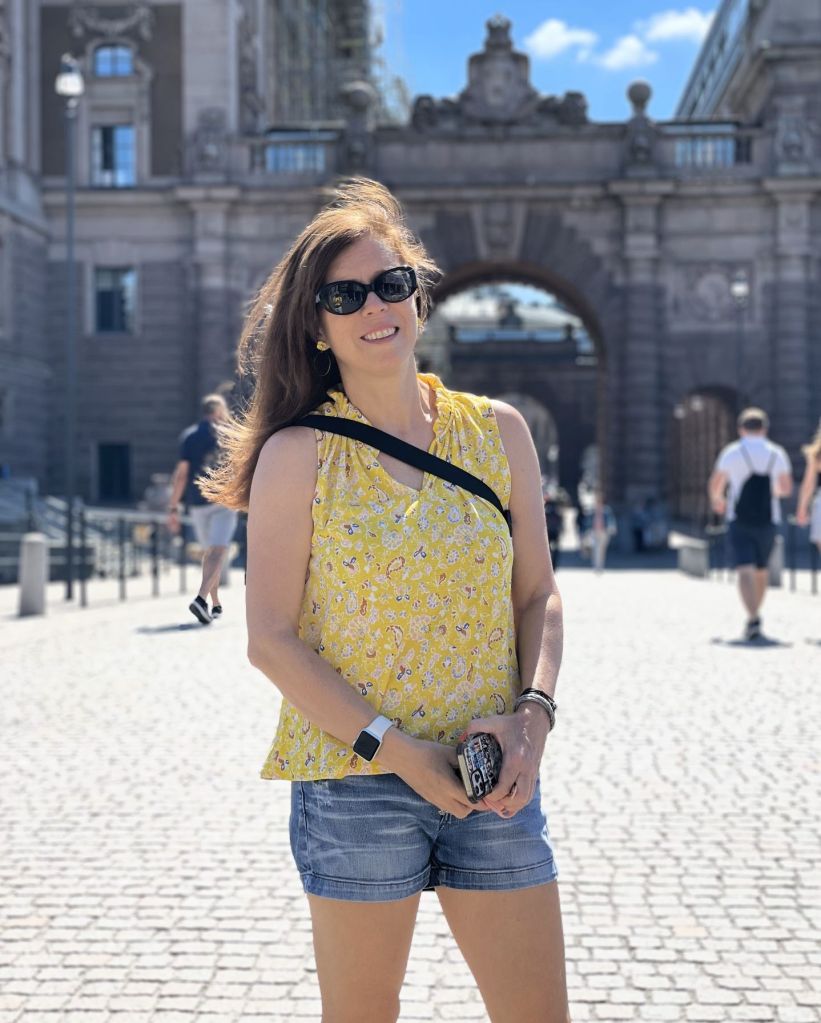
We passed through a couple of arches and crossed another small bridge to reach Stadsholmen and Gamla Stan. Our first destination was the Kungliga Slottet (or Royal Palace). When we arrived we noticed lots of people lining the roads to watch the changing of the palace guard. Hey look! It’s our friends from the plaza!
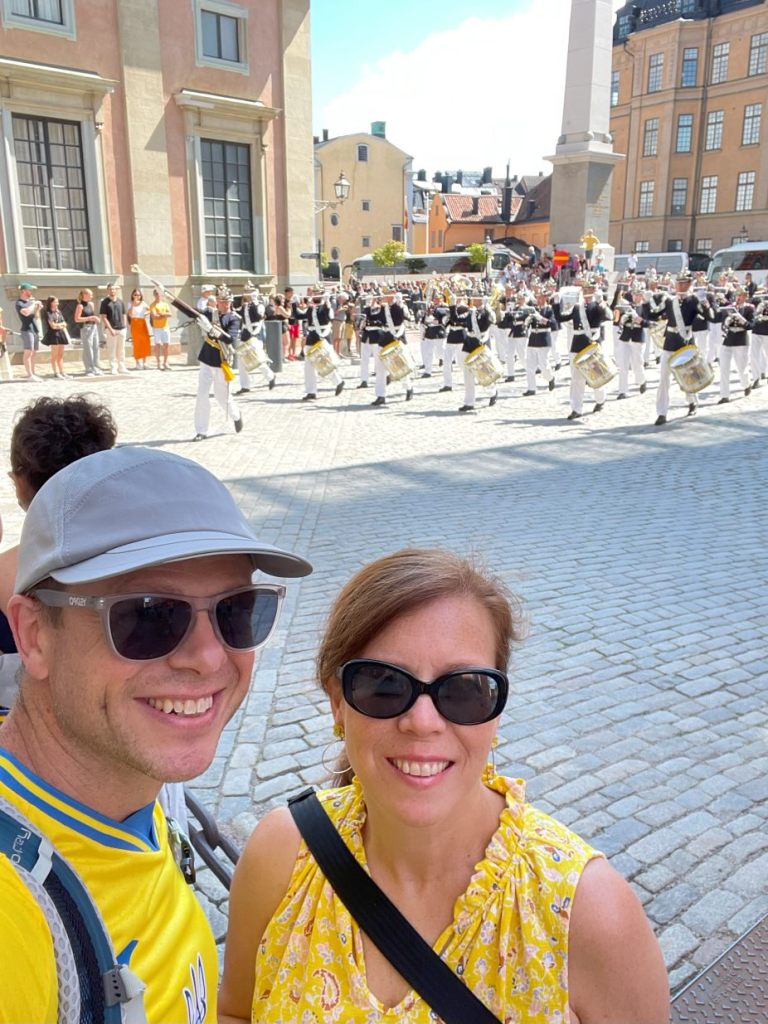
The guard successfully changed, and we headed inside the palace. Apparently, there has been some sort of castle or fort in this location since the Eleventh Century – roughly 1000 years! The martial Tre Kronor (“Three Crowns”) Castle was completed in the 1200s, but the castle grew to be more of a palace over the next centuries. (The national symbol of Sweden is three crowns.) Unfortunately, this palace burned to the ground in 1697. In its place, a new palace with more than 600 rooms was built, with the king finally moving in during the 1750s.
Our first stop was the Hall of State, where we saw Sweden’s silver throne (and lots of three-crown imagery), which dates to the 1650s.
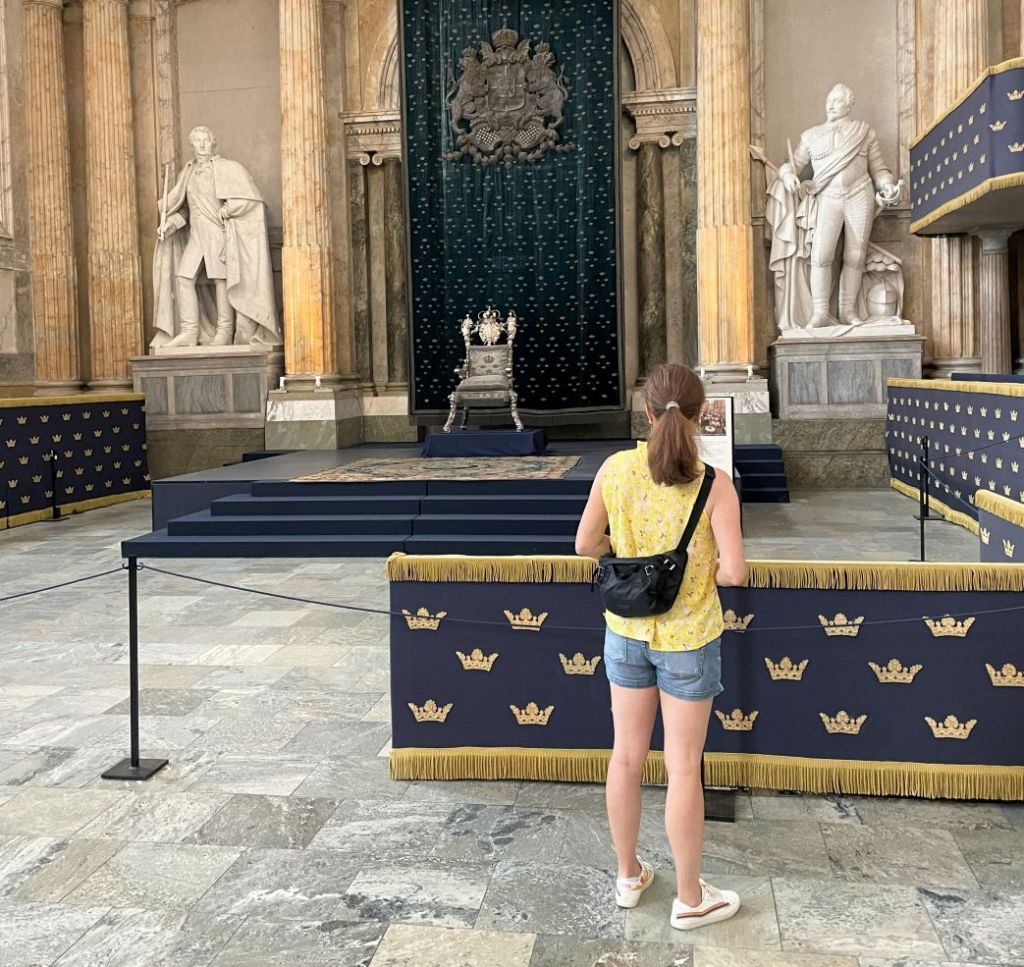
The throne was once used for coronations and state openings of parliament, but apparently nobody has sat on the throne since the 1970s. From there we went up a huge marble staircase to explore the rest of the palace.
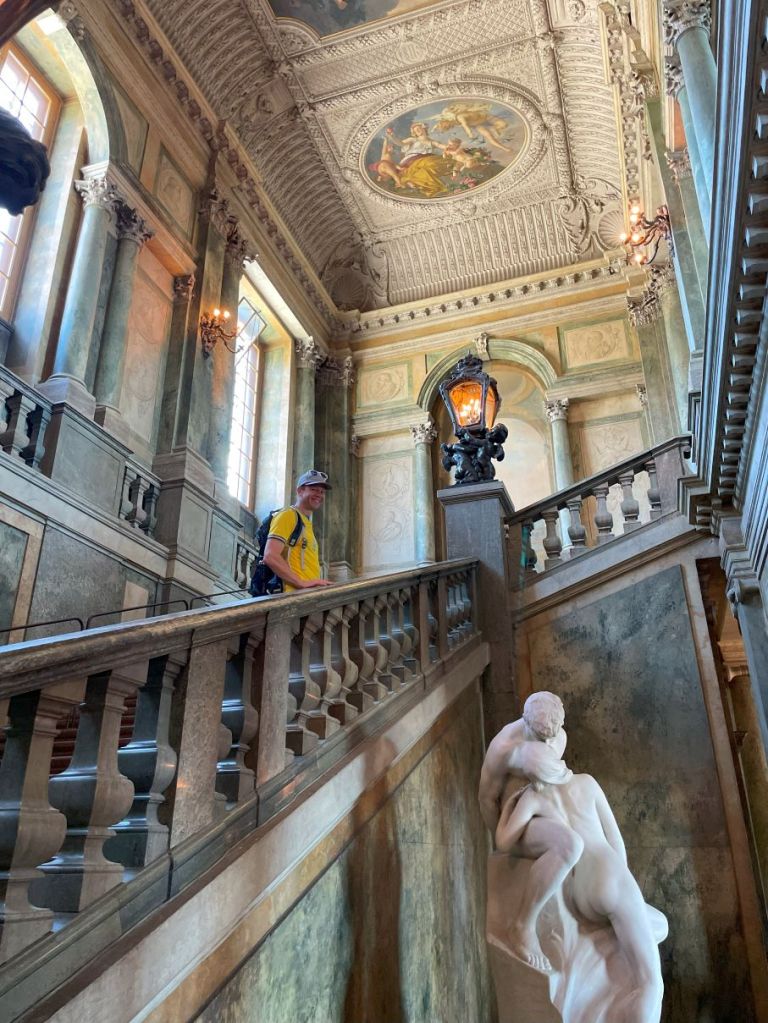
Unsurprisingly, the palace was a bit over the top. It is a palace after all. Like the peasants we are, we enjoyed poking around the lavish rooms.
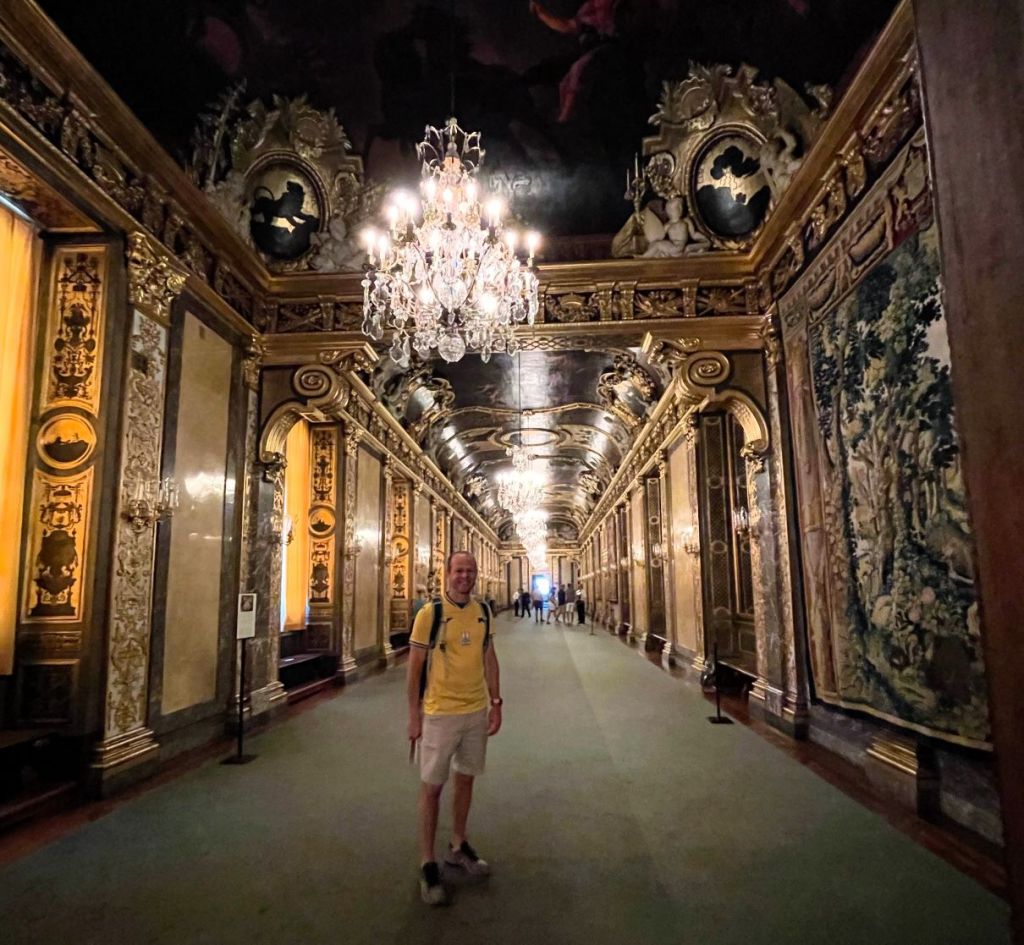
This large room is Karl XI’s Gallery, which was modeled after the Hall of Mirrors at Versailles (of course it was). The royal family of Sweden has lived at the nearby Drottingholm Palace since the early 1980s, but major functions still take place in the Royal Palace, including lavish banquets for visiting heads of state. We saw pictures of this long room filled with a massive table that ran from one end to the other — enough seats for 150 guests.
We were particularly impressed by some of the heating mechanisms, including this massive tile oven.
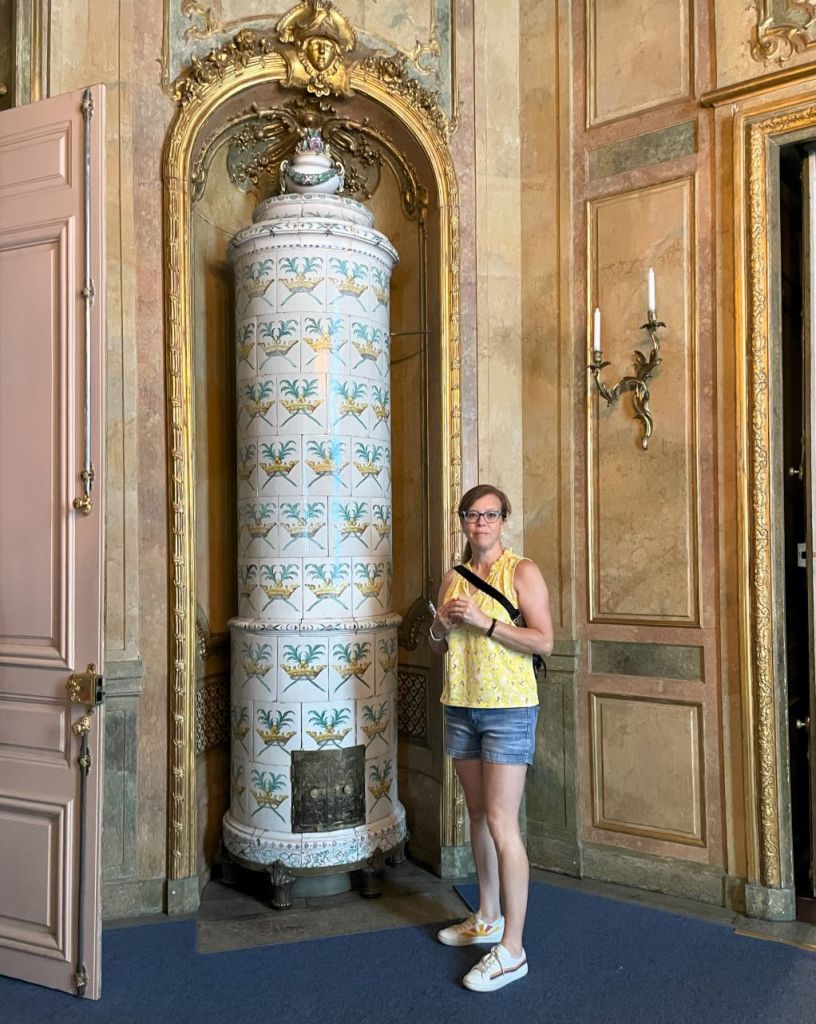
Apparently, the smoke from the fire cycles up and down through various flues, heating the masonry and tile, which provides even heat for hours. Plus, it was decorated with still more crowns.
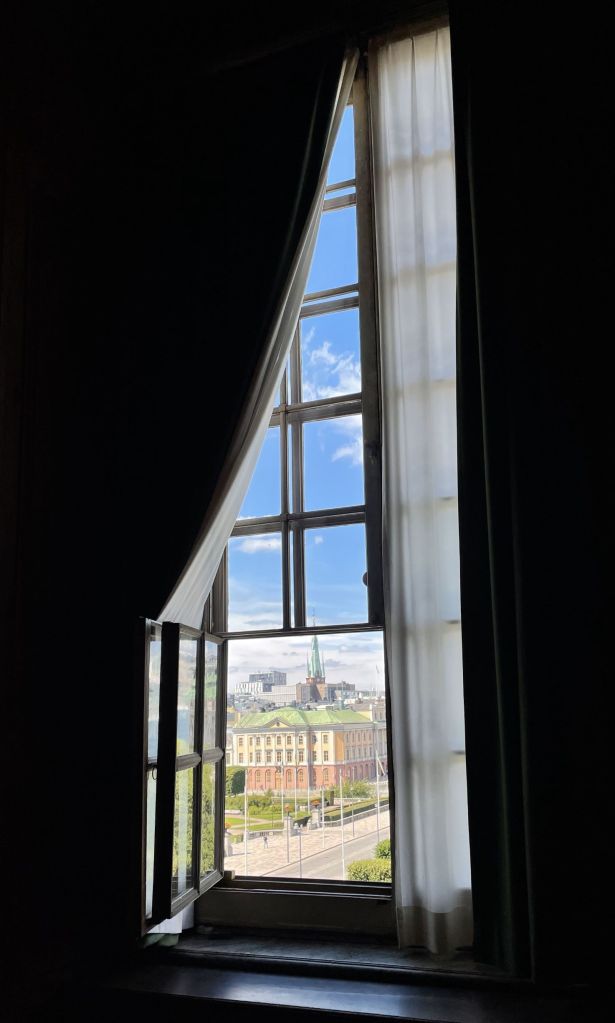
As we wound our way through the palace, occasional windows provide beautiful views of Stockholm.
Some of the rooms held various treasures that Swedish royals picked up in their travels.
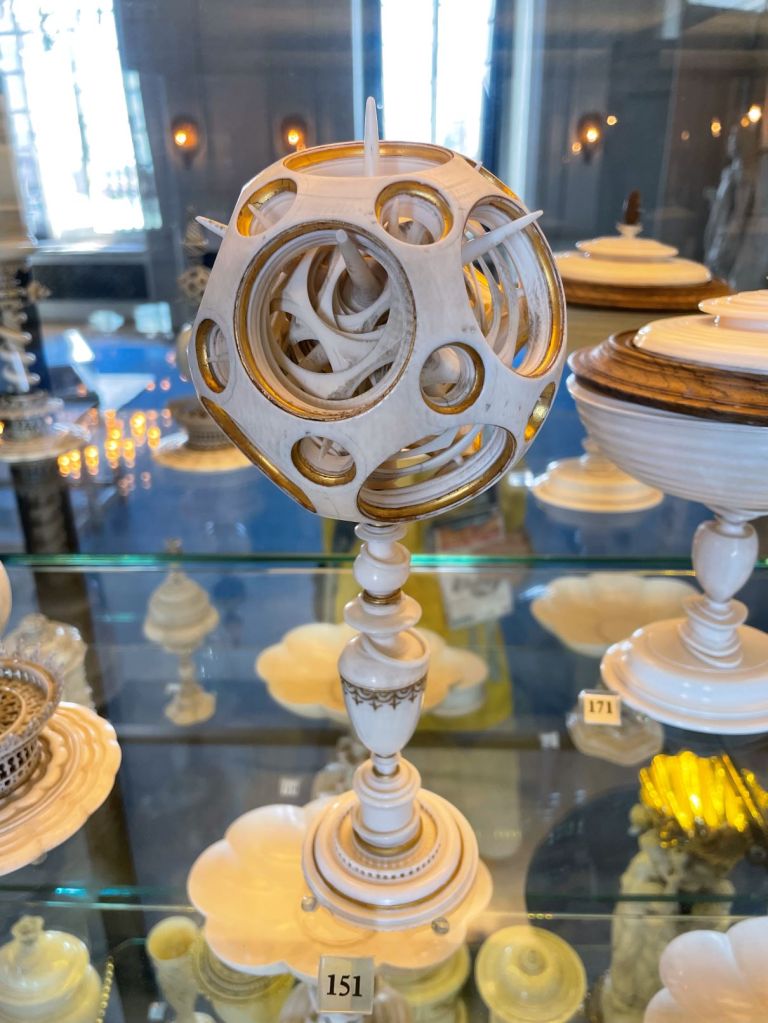
This little bauble was carved from a single piece of ivory, surely from an elephant who died of natural causes.
We finished our tour and walked outside. There, we saw an armed guard. Sweden being Sweden, the guard was a blond woman.
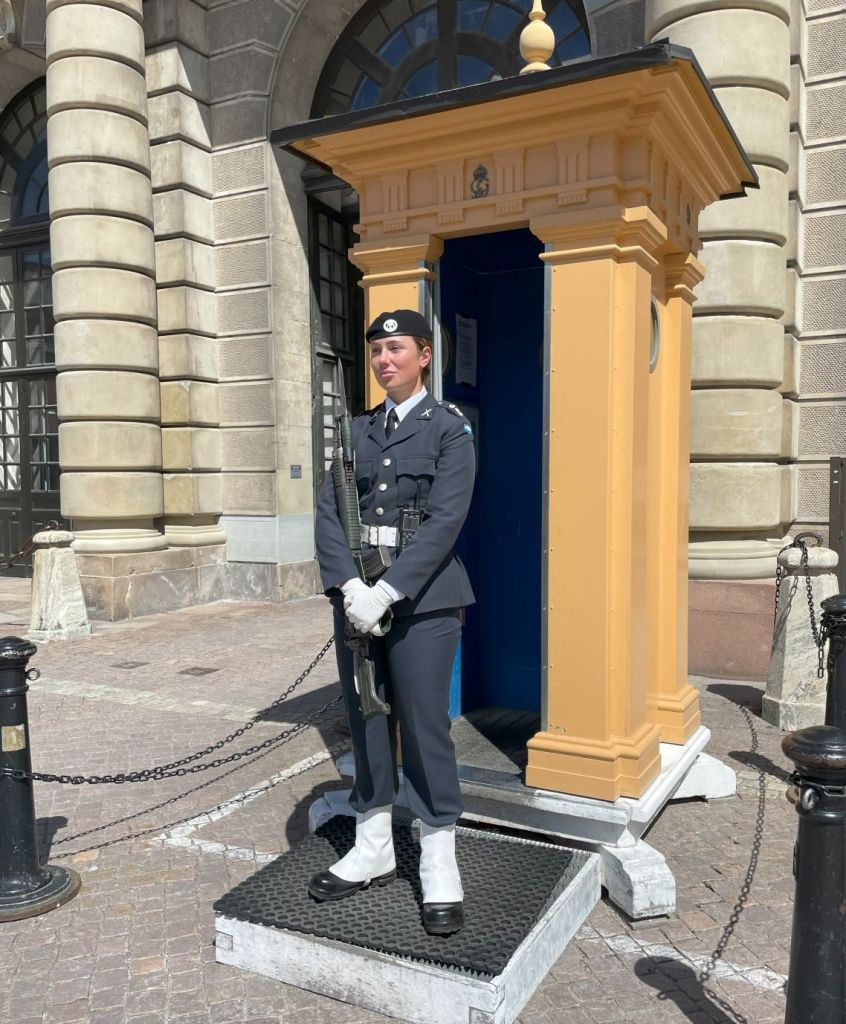
With teenaged daughters back in the US, we were delighted to see a young woman performing such a prominent duty, prompting us to take a picture to show our girls when we returned home. But since she was holding an assault rifle with a bayonet strapped to the tip, I politely asked for permission first.
We weren’t quite done, however, with the palace. Under the north side of the palace is the Tre Kronor museum, where visitors can see the foundations from the original Tre Kronor Castle. The new palace was built right on top of the ruins of the original.
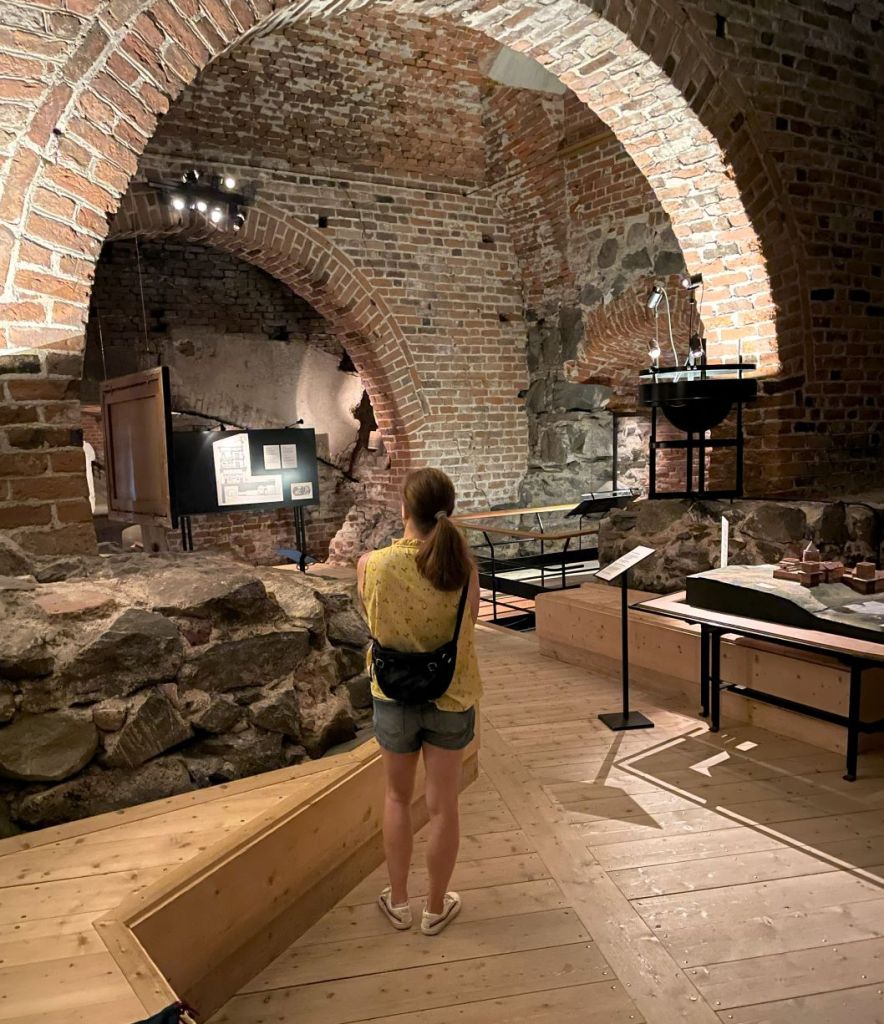
We also learned a little bit about the fire that destroyed the castle. Apparently, fire was a well-known problem in castles at the time. There was a royal Fire Marshall who was supposed to prevent these sorts of things. And there were at least two soldiers tasked with watching for fires on the night the fire stated. Apparently, the Fire Marshall sent one of the soldiers on an errand for the Fire Marshall’s wife that night, so that the fire was not discovered until it was too late. The other soldier had snuck off to the kitchen for a snack. After an investigation, the Fire Marshall and the soldiers were forced to “run the gauntlet,” that is, run down a line of solders who beat them with sticks along the way. The Fire Marshall was killed in this process. (I feel like the real villain was the wife, but I didn’t tell Julie that for fear I’d have to run a gauntlet of my own.)
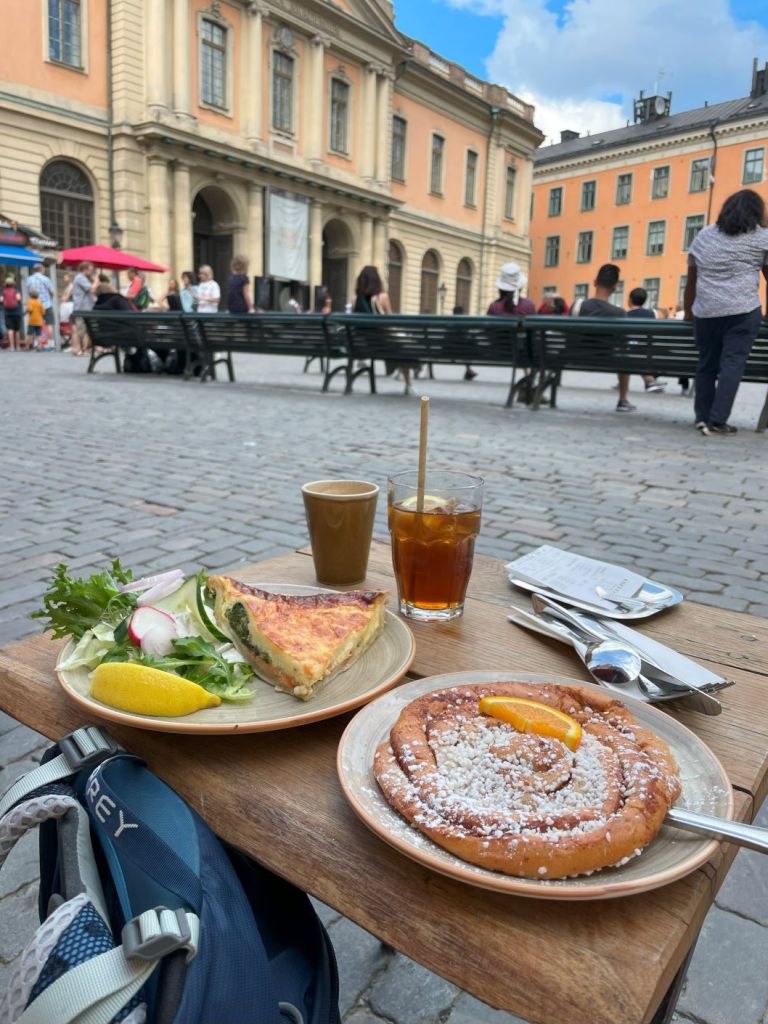
Having had a full dose of history, Julie and I needed a break. We left the palace and strolled around the old streets in search of a snack. Along the way we shopped for a refrigerator magnet – one of our go-to keepsakes from traveling. We saw quite a few magnets depicting the charming architecture of Gamla Stan, including quite a few that showed a red building next to an orange building. But we hadn’t actually seen those buildings so we decided to wait. Plus, it was time to embrace what the Swedes call “fika,” which is coffee with a snack. We found a charming little square with various cafes around the edge. We ordered, and while we were waiting, Julie took a walk through the square. When she came back, she was chuckling. When I asked why, she showed me this picture:
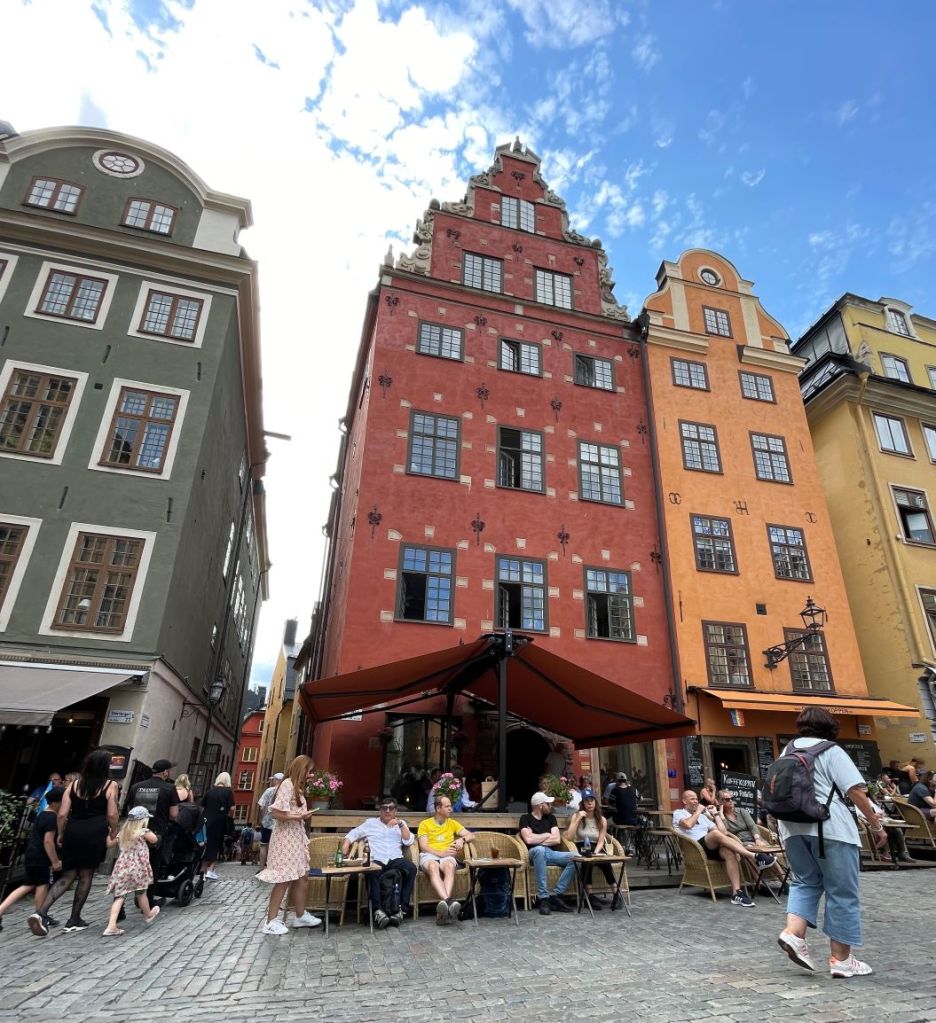
We were literally sitting at the red and orange buildings from the magnets. The red house dates to 1648, though it was built over a much older medieval cellar. Our food soon arrived and was delicious – a salmon quiche and a cinnamon bun.
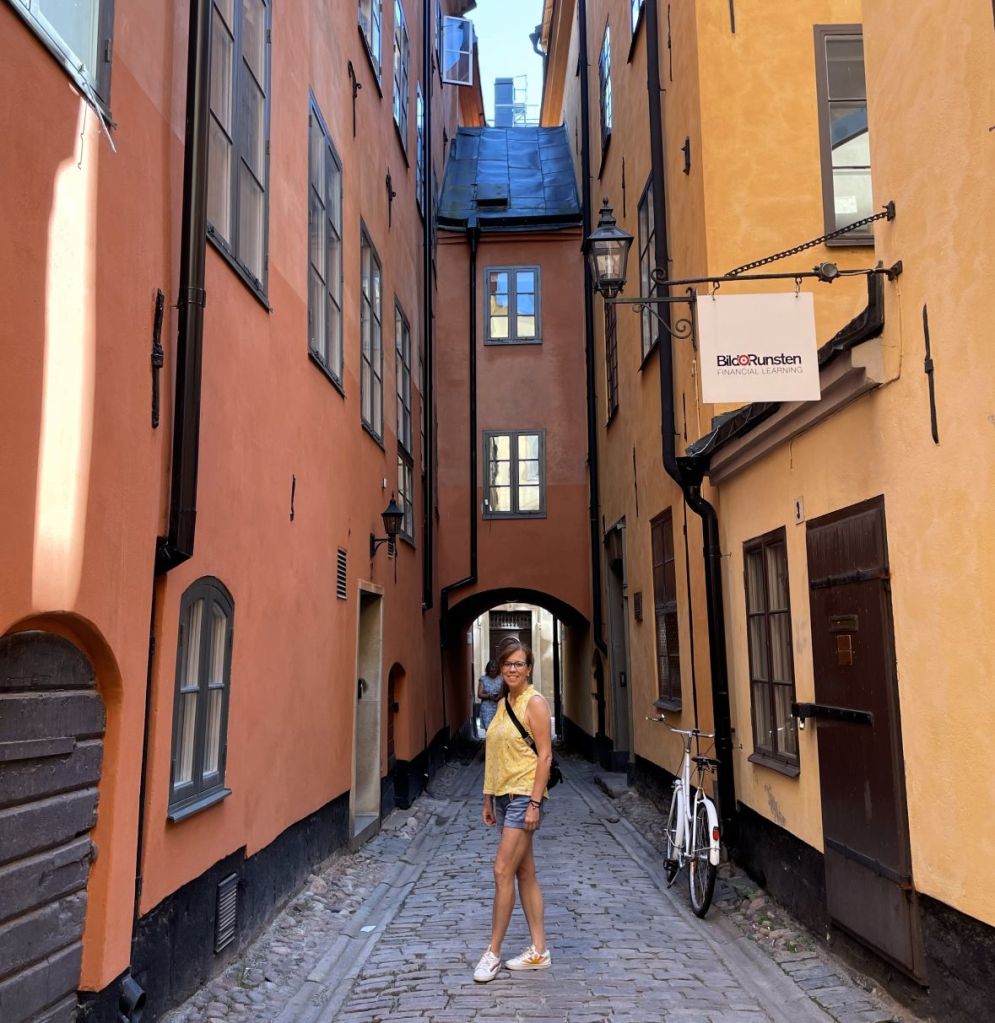
Refueled from our fika, we continued our wandering exploration of Gamla Stan. Our plan was to have no plan for a bit and instead to simply wander the charming cobbled streets.
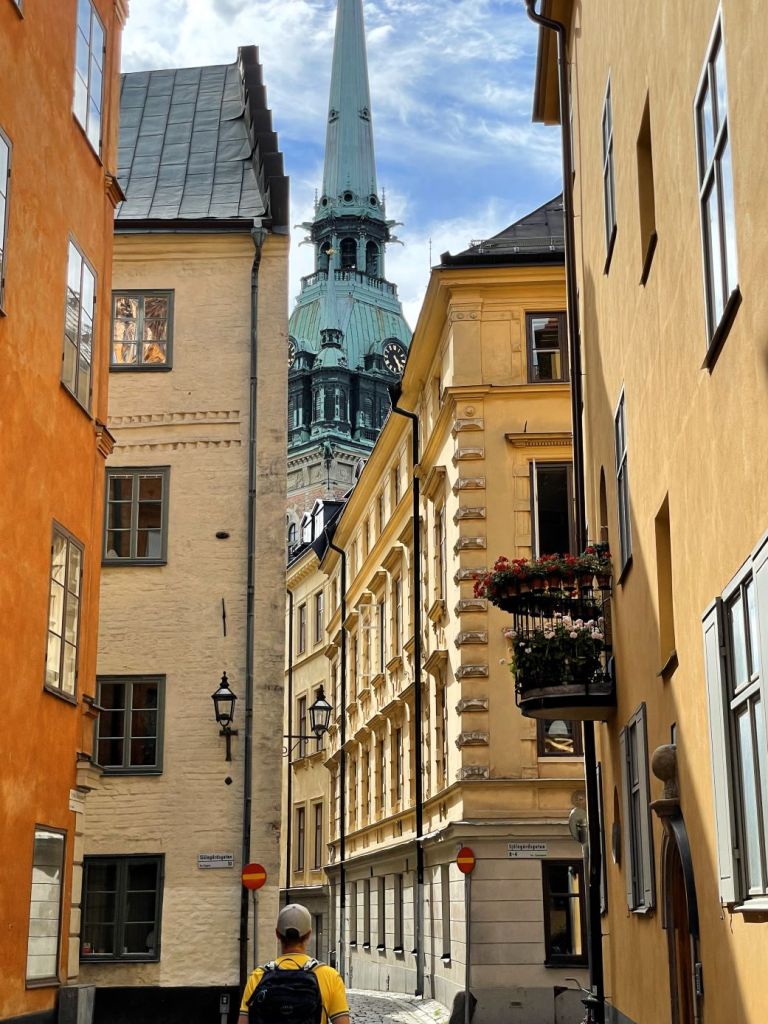
As we wandered, we spotted the steeple of the Tyska Kyrkan, which was founded in the Sixteenth Century, peaking up in the background.
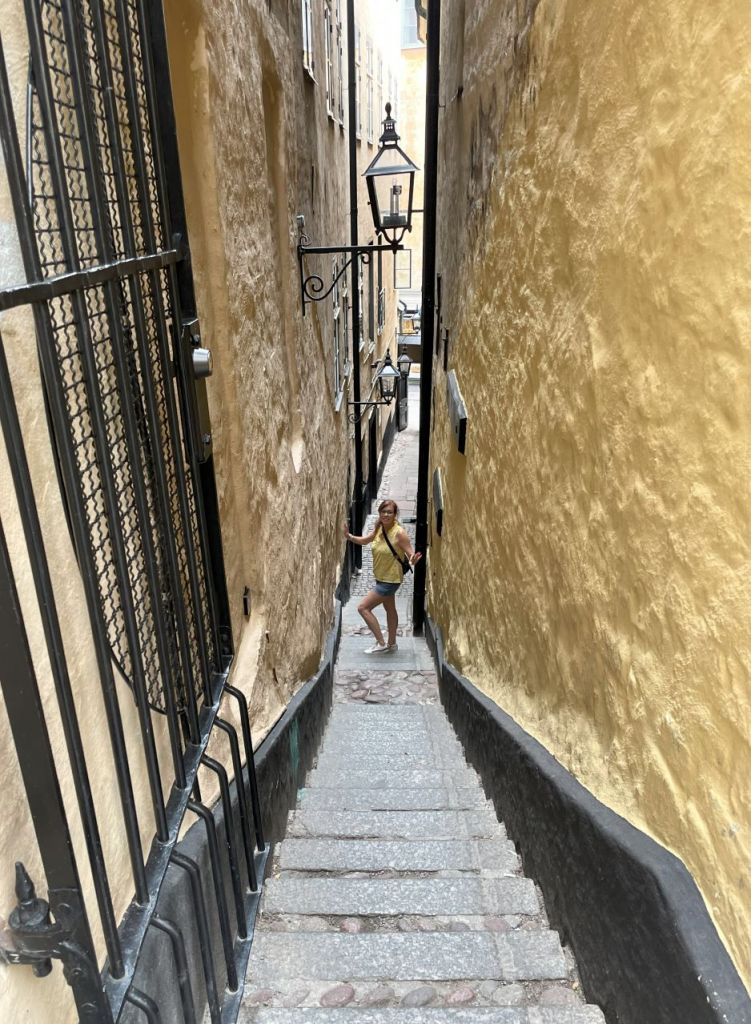
Along the way, we cut through Mårten Trotzigs Gränd, which is the narrowest “street” in Gamla Stan, with some parts being just 3 feet wide.
Wandering is thirsty work, and it had been a couple of hours since our fika. So, Julie and I stopped to refuel.

Refreshed, we went back to our aimless enjoyment of the city. We soon found ourselves down by the water, where we found an impressive sailing ship.
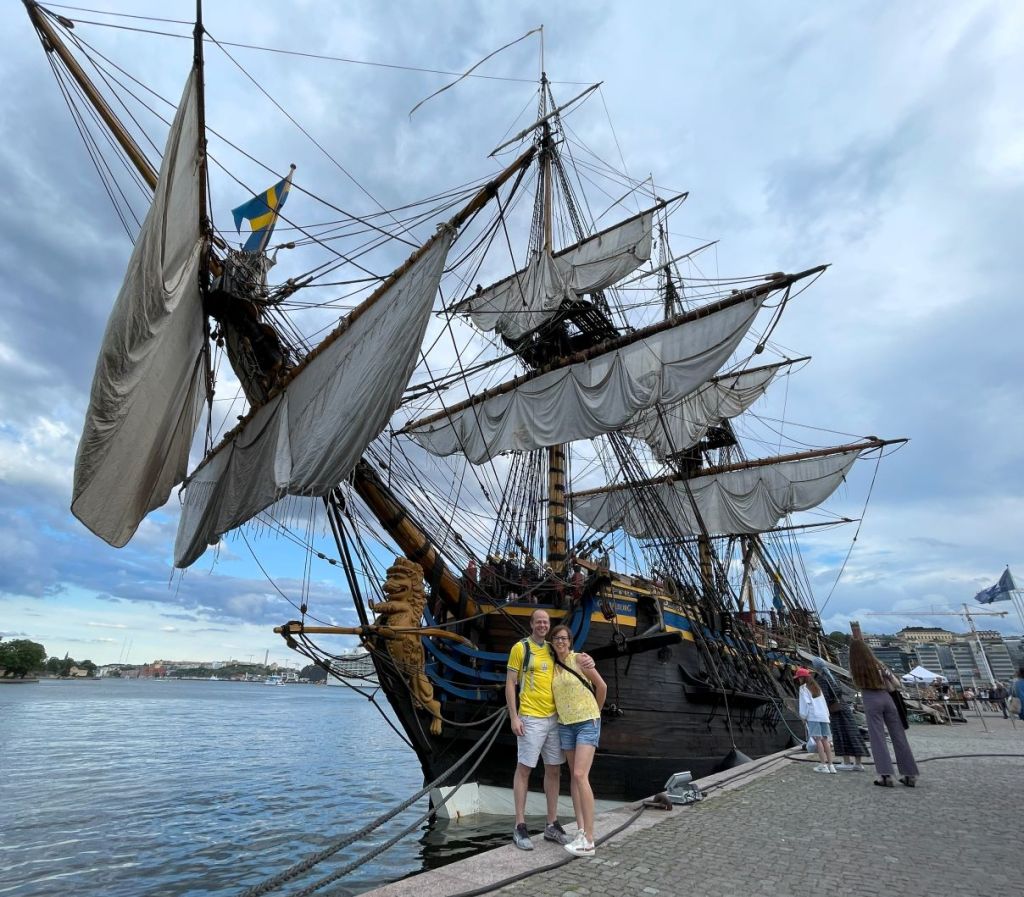
It turns out that this was the Götheborg, the largest ocean-going wooden sailing ship in the world. The ship is a replica of an Eighteenth Century ship that sank in 1745. The ship is normally moored in Gothenburg, rather than Stockholm, and the day after we saw the ship it had set sail for Copenhagen before continuing on to Barcelona.
Our first full day in Sweden was soon drawing to a close. We found a nice place to eat in Gamla Stan before heading back to our hotel for the night.
-Will
 The Hubbards' Travel Blog
One thought on “Day 2 (7.13.22): A Simple Plan in Gamla Stan”